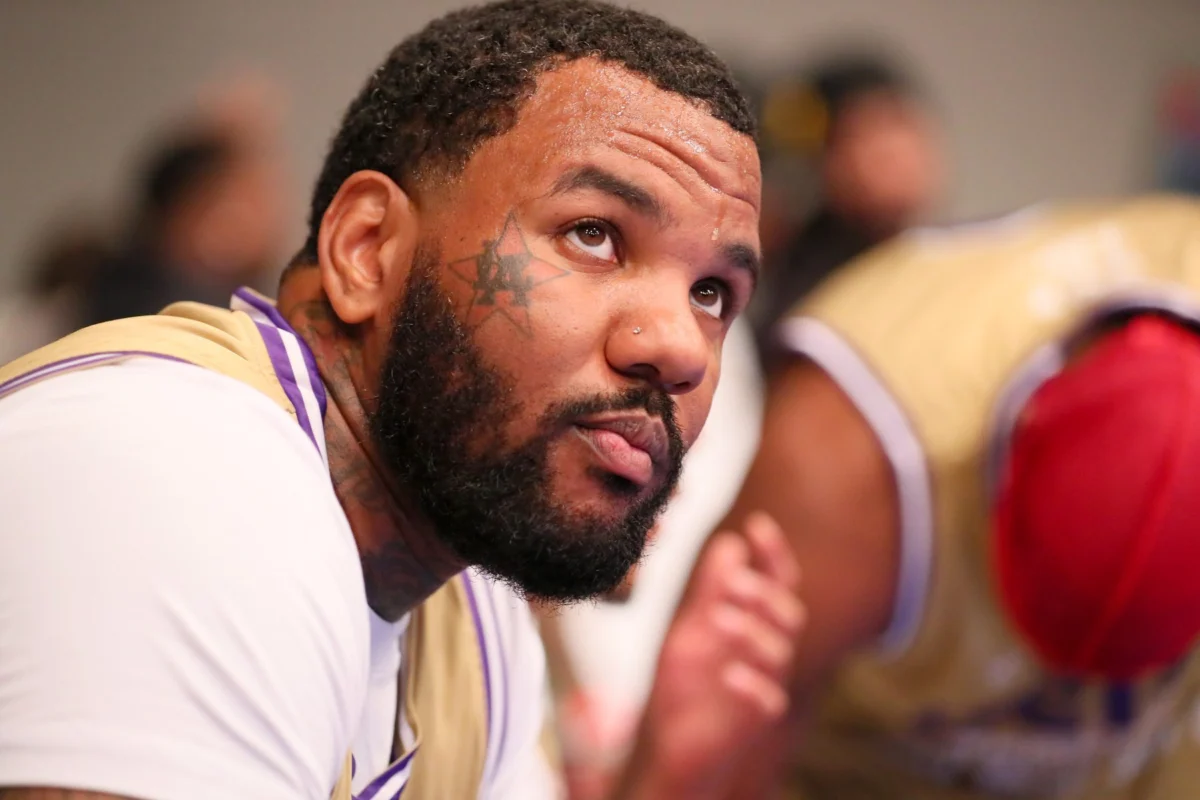
In a high-stakes legal confrontation that exposes the often-turbulent nature of music distribution and label relations, the independent record label 100 Entertainment, founded by rap icon The Game, has filed a lawsuit against Universal Music Group (UMG) and its subsidiary, Virgin Music Group. At the heart of the dispute is the 2022 studio album Drillmatic — Heart vs. Mind. The label alleges that UMG failed to honor the terms of their distribution and marketing agreement, specifically claiming the conglomerate provided only a fraction of the promised promotional capital, thereby stifling the album’s commercial potential.
The legal action, filed on September 30 in federal court, marks a significant escalation in the ongoing tension between major music corporations and the independent entities that rely on them for global reach. As the industry grapples with the complexities of digital-era rollouts, this case serves as a stark reminder of the financial stakes involved when marketing budgets—and the promises attached to them—fall short of expectations.
The Genesis of the Conflict: A Promise Unfulfilled
The collaboration between The Game (born Jayceon Terrell Taylor) and Virgin Music Group was intended to be a flagship release. Drillmatic — Heart vs. Mind, released in August 2022, was a massive, 30-track project that boasted an A-list roster of collaborators, including Ye, Big Sean, Lil Wayne, Rick Ross, and Chris Brown. Given the scale of the album, 100 Entertainment entered into an exclusive distribution deal with Virgin, which included a stipulated marketing budget of $500,000.
According to the complaint obtained by Billboard, this budget was not merely a suggestion but a contractually binding commitment essential to the album’s launch. The lawsuit alleges that UMG and Virgin Music Group unilaterally opted to spend only $179,000—roughly one-third of the agreed-upon amount.
100 Entertainment argues that the discrepancy was not a matter of standard business fluctuation but a breach of contract that fundamentally sabotaged the release. The label claims that in order to keep the project afloat, they were forced to divert their own internal resources to cover essential promotional costs, including significant portions of the music video production for the single "Stupid," featuring Big Sean. Despite the label’s attempts to recover these costs, they allege that UMG has consistently failed to reimburse them, leading to the current litigation.
Chronology of the Drillmatic Rollout
The timeline of Drillmatic is marked by high ambitions followed by a series of logistical friction points:
- Pre-Release (Early 2022): 100 Entertainment and Virgin Music Group finalize a distribution agreement, with a clear provision for a $500,000 "recoupable marketing budget."
- August 2022: Drillmatic — Heart vs. Mind is released to a crowded summer market. The album manages to debut at No. 12 on the Billboard 200, spending two weeks on the chart.
- Post-Release (Late 2022): Tensions rise as 100 Entertainment realizes that promised promotional activations—such as key digital advertising campaigns and radio pushes—remain unfulfilled.
- Ongoing (2023–2025): The label attempts to address the reimbursement of out-of-pocket expenses and the lack of promotional support through internal channels, to no avail.
- September 30, 2026: 100 Entertainment officially files a breach of contract lawsuit against UMG and Virgin Music Group, seeking damages of at least $500,000.
Supporting Data: Where the Money Didn’t Go
The core of the legal argument rests on the quantifiable impact of the missing marketing spend. Legal counsel for 100 Entertainment, Michael Trauben, has been vocal about the specific failures of the defendants. The complaint outlines that the shortfall was not limited to a single area but permeated the entire promotional strategy.
Notably, the lawsuit points out that the defendants spent zero dollars on radio promotion, a critical component for hip-hop albums of this scale to reach a mainstream audience and secure longevity. Furthermore, the "digital opportunities" that were supposed to be financed through the $500,000 fund—including targeted social media advertising, influencer campaigns, and playlisting initiatives—were either significantly scaled back or canceled entirely.
The financial claim of $500,000 represents the "diminished commercial performance" of the album. The argument is that the record’s chart position and long-term streaming numbers were artificially capped by the lack of support. In the modern streaming economy, where algorithmic discovery is heavily influenced by initial marketing velocity, failing to support a release in its first 30 days can lead to a permanent loss of market share. 100 Entertainment asserts that it lost substantial royalties, streaming revenue, and sales income that would have been generated had the marketing fund been utilized as agreed.

Official Responses and Corporate Stance
The legal response from UMG and Virgin Music Group has, to date, been one of firm denial. Prior to the formal filing of the lawsuit, the companies reportedly maintained in private legal correspondence that they had not breached the contract. This defense typically rests on the interpretation of "recoupable" expenses and the discretionary nature of promotional funds.
However, the silence from the corporate side following the filing has been notable. When approached for comment by industry outlets, representatives for UMG did not immediately provide a statement. This hesitation is common in high-profile litigation, as companies often prefer to let their legal teams address the specifics in court rather than engaging in a public relations back-and-forth.
For The Game, however, this is a matter of business survival. As an independent artist and label head, his ability to negotiate future deals depends on the perceived fairness and success of his past projects. By filing this suit, 100 Entertainment is not only seeking financial restitution but also signaling to the industry that they are prepared to defend their contractual rights against even the largest music conglomerates.
Broader Implications: The Independent vs. Major Dynamic
The Drillmatic dispute brings to light a perennial tension in the music industry: the gap between the expectations of independent creators and the operational realities of major distribution houses.
The "Distribution" Gray Area
When an independent label signs a distribution deal with a major, the lines between "distribution" and "marketing" often blur. While a distributor’s primary role is to ensure the music reaches streaming services and retail outlets, the inclusion of a marketing fund changes the relationship to one of partnership. When that partner fails to deliver on the marketing side, the independent artist is often left with the product but no engine to push it.
The Impact on Hip-Hop Culture
The Game is a veteran of the industry, having navigated the transition from the CD era to the streaming age. His career is characterized by his ability to maintain relevance through high-profile collaborations. By assembling a 30-track album with heavy hitters like Ye and Lil Wayne, he signaled a desire for a "blockbuster" release. The lawsuit highlights how even established artists can find themselves in precarious positions when they rely on the machinery of a major label for a rollout.
Precedent for Future Litigation
This case will likely be watched closely by other independent labels. If 100 Entertainment succeeds in proving that a specific, contractually promised marketing budget was not only ignored but resulted in tangible financial harm, it could set a precedent for how distribution deals are negotiated in the future. Artists and labels may begin to demand more rigid, transparent, and audit-ready marketing agreements to ensure that their promotional funds are not "siloed" or redirected by distributors.
Conclusion
As the legal proceedings unfold, the focus will shift to the discovery phase, where internal emails and marketing reports will likely be scrutinized. The central question for the court will be whether a "recoupable marketing budget" functions as a mandatory investment or a discretionary pool.
For now, the story of Drillmatic serves as a cautionary tale about the importance of contractual clarity in an industry driven by numbers. Whether the result is a settlement or a protracted courtroom battle, the outcome will undoubtedly resonate through the boardrooms of music corporations and the offices of independent labels alike, potentially shifting the balance of power in favor of those demanding greater accountability for the promotional support that defines an album’s success.