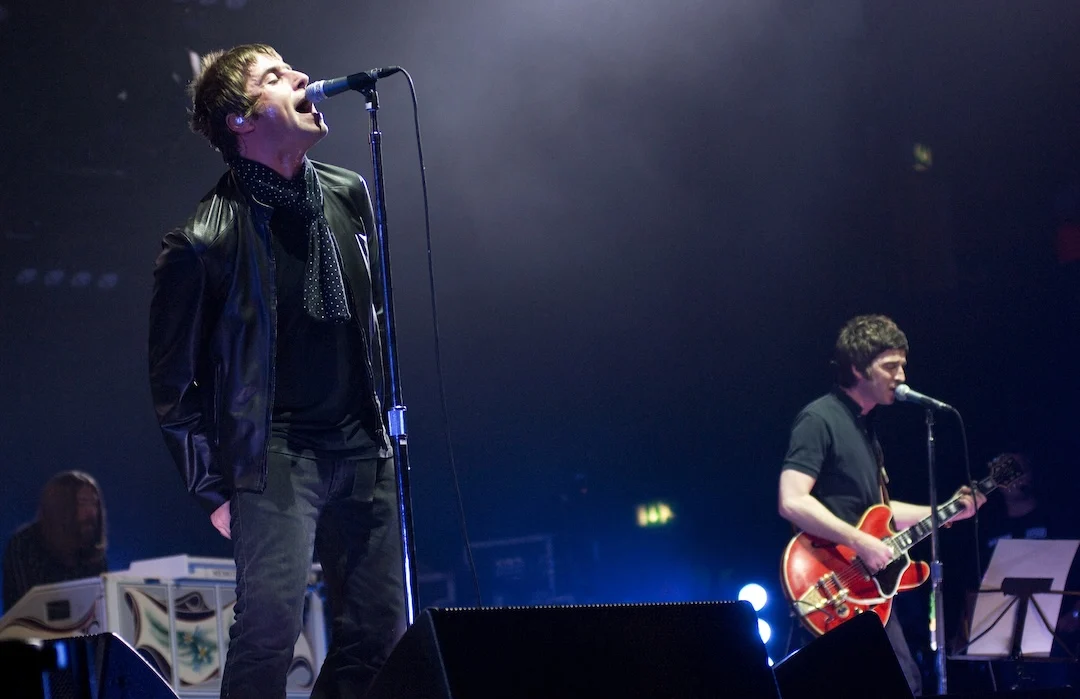
London, United Kingdom — September 30, 2026 — The Gallagher brothers may have famously urged fans not to "look back in anger," but Oasis is currently looking back with a very different emotion: litigation. In a high-stakes legal maneuver that has sent shockwaves through the music industry and the memorabilia market, the iconic Britpop band has filed an emergency injunction to halt the sale of a massive archive of private soundboard recordings.
The collection, which chronicles the band’s meteoric rise during their absolute commercial zenith, was slated to go under the hammer on October 3 at Littleton Auctions in Worcestershire. The archive, held by the band’s former Front-of-House (FOH) engineer, Huw Richards, represents an unparalleled sonic history of Oasis. However, the legal intervention has effectively frozen the auction, placing the fate of over 280 individual recording media items in the hands of the London High Court.
The Heart of the Dispute: A Sonic Time Capsule
The archive in question is nothing short of a "holy grail" for collectors. Spanning the years 1995 to 2001—a period that saw the release of seminal albums like (What’s the Story) Morning Glory? and Be Here Now—the collection captures the raw, unfiltered energy of Oasis at the height of their global influence.
According to the auction catalog, the cache includes:
- 63 full concert recordings captured directly from the house mixing desk.
- Over 100 hours of private rehearsals, soundchecks, and candid, off-the-cuff band discussions.
- Physical media comprising 209 DAT tapes, 73 cassettes, and three MiniDiscs.
The estimated value of this hoard was set at a staggering £1.6 million (approximately $2.125 million USD). For an engineer like Huw Richards, who spent nearly seven years shaping the band’s live sound, these tapes were intended to be the crown jewel of his career’s memorabilia. However, the band—represented by Oasis Partnership, Sony Music, and their own label, Big Brother Recordings—argues that these recordings are proprietary property, not personal mementos to be liquidated to the highest bidder.
Chronology of a Conflict
The friction between the band and the Richards family did not emerge overnight. Sources indicate a long, simmering disagreement regarding the ownership and potential commercialization of these assets.
- 1995–2001: Huw Richards serves as the band’s FOH engineer, acting as the architect of their live sound during their most prolific era. During this time, he systematically archives board tapes, a standard practice for sound engineers to analyze performances and refine live mixes.
- Early 2026: Conversations begin between Owain Richards (acting on behalf of his father) and representatives of the band. According to public statements from the younger Richards, the family approached the band with the intention of selling the archive to them first, keeping the collection "in the family," so to speak.
- Mid-2026: Negotiations reportedly break down. While details of the impasse remain private, it is understood that the valuation placed on the archive by the Richards family was significantly higher than the amount the band’s management was willing to entertain.
- September 2026: Littleton Auctions formally announces the "Icons and Artifacts" sale, featuring the Oasis archive as a centerpiece lot.
- September 29, 2026: Oasis, alongside their label and corporate partners, files an injunction in London, naming Huw and Owain Richards, as well as Littleton Auctions, as defendants.
- September 30, 2026: The lot is officially withdrawn from the auction pending the outcome of the legal proceedings.
The Legal and Ethical Tightrope
The case raises complex questions regarding the nature of intellectual property versus physical possession. In the world of live sound engineering, the line between "work product" and "personal property" is often blurred.
Legal analysts following the case note that the "physical media" argument is the pivot point. If the auction were to proceed, the buyer would technically own the DAT tapes and cassettes themselves. However, the content—the musical performances, the copyrighted songwriting, and the band’s image—remains strictly under the ownership of Oasis and their publishing entities.
"Even if a collector were to buy these tapes for millions of pounds, they would be buying a very expensive piece of plastic," notes legal expert Sarah Jenkins. "They cannot legally release the audio, stream it, or profit from the performance. The band holds the iron-clad rights to the IP. This makes the purchase essentially a vanity acquisition for a private individual, but it also creates a massive liability risk if that individual ever attempted to leak or distribute the files."
Supporting Data: Why This Matters
Why is the band going to such lengths to stop the sale? The answer lies in the "unfiltered" nature of the tapes. Oasis has always been a band defined by its public image, its carefully curated media presence, and its internal friction.

The 100 hours of rehearsal tapes and "band discussions" are the primary concern. In the era of digital archives, a single leak of an off-hand comment or a botched take from a 1997 soundcheck could be taken out of context, damaging the band’s carefully constructed legacy. By controlling the archive, the band maintains control over their history.
Moreover, the "Icons and Artifacts" auction contains a broader array of items that are not being contested. These include:
- Signed guitars and stage-worn clothing.
- Original tour itineraries and crew laminates.
- Platinum record awards.
- Personalized tour gifts.
These items remain permissible because they are clearly defined as memorabilia. The tapes, however, represent a deeper layer of the band’s creative process, which the band argues belongs to the collective, not the individual engineer.
Official Responses and Industry Impact
Representatives for Littleton Auctions expressed their disappointment regarding the withdrawal, stating that they were operating in good faith under the assumption that the seller had the right to dispose of the property. "We maintain the highest standards in vetting our provenance," a spokesperson noted. "We are working closely with all parties to ensure that the auction for the remaining items proceeds smoothly."
Oasis’s camp has remained largely silent, providing only a brief statement confirming that "legal action has been initiated to protect the intellectual property rights of the artists and their associated partners."
For the wider audio engineering community, the case serves as a cautionary tale. It highlights the necessity of clear, written contracts regarding the ownership of "live capture" data. Many engineers working today are now reviewing their own contracts to see who owns their digital archives—the production company, the band, or the person behind the board.
Implications for Future Memorabilia
As the legal battle moves into the discovery phase, the music industry is watching closely. This case could establish a significant precedent for how archival sound recordings are handled in the future.
If the court rules in favor of the band, it reinforces the principle that intellectual property rights supersede the right to sell physical artifacts when those artifacts contain proprietary data. If, however, the court finds that the physical tapes are the property of the engineer, it could open the floodgates for a wave of "lost" recordings hitting the market, potentially leading to a decade of lawsuits as artists scramble to buy back their own history.
For now, the tapes remain in a secure location, silent and inaccessible. The "Don’t Look Back In Anger" irony isn’t lost on the fans, but for the Gallagher brothers, this is less about the music and more about the boundaries of ownership in the digital age. The case of the Oasis archive is a reminder that in the music business, history is never just about the past—it’s about who holds the master key to the future.