Technics EAH-A1000 Flagship Wireless Headphones Review: Marrying Hi-Fi Heritage with Modern Over-Ear Luxury
014 mins
Main Facts: Technics’ Bold Bid for the Over-Ear Crown
Technics is a name synonymous with legendary turntable engineering, etching its legacy deep into the annals of audio history. However, when it comes to the highly competitive wireless headphone market, the Japanese audio powerhouse has historically played a challenger role. That narrative began to shift dramatically last year when the company’s five-star EAH-AZ100 wireless earbuds outperformed established heavyweights from Sony, Bose, Bowers & Wilkins, Apple, and Sennheiser to secure a coveted What Hi-Fi? Best Buy Award for 2025.
Now, Technics is setting its sights on the fiercely contested premium over-ear category with its new flagship offering: the EAH-A1000. Retailing at £399 / $449, these premium headphones enter a ruthless battleground dominated by class leaders like the Sennheiser HDB 630 (£400 / $500), the critically acclaimed Sony WH-1000XM6 (£349 / $450), and elite offerings from Bose and Bowers & Wilkins.
To stand out, Technics has loaded the EAH-A1000 with a sophisticated aesthetic overhaul and advanced driver technologies derived directly from its reference hi-fi speakers and award-winning earbuds. But in a market where perfection is the baseline, do these luxurious cans do enough to trouble the reigning royalty?
Chronology and Development: From Turntables to State-of-the-Art Acoustics
The journey toward the EAH-A1000 has been years in the making. While Technics spent decades refining direct-drive turntables and high-end amplification, the modern consumer audio landscape demanded a pivot toward personal, mobile listening solutions.
The Breakthrough: Last year’s release of the EAH-AZ100 earbuds proved that Technics could engineer miniature acoustics capable of defeating mainstream market dominators.
The Over-Ear Evolution: Building on the engineering lessons learned from the AZ100, Technics engineers sought to scale up their proprietary Magnetic Fluid Driver technology for a larger, 40-millimeter over-ear platform.
The Launch: Released to global markets on September 29, 2026, the EAH-A1000 represents the physical and acoustic culmination of the brand’s high-precision audio philosophy, aiming to provide a bridge between traditional audiophile gear and modern lifestyle convenience.
Supporting Data & Specifications: Under the Hood of the EAH-A1000
A deep dive into the specification sheet reveals that Technics has spared little expense in crafting a feature-rich, future-proof flagship product.
Specification
Detail
Price
£399 / $449
Bluetooth Codecs
SBC, AAC, LDAC
Bluetooth Multipoint
Yes (Advanced Three-Way Multipoint)
Battery Life
45 hours (ANC On) / 90 hours (ANC Off)
Quick Charging
15-minute charge yields 4 hours of playback
Wired Listening
Yes (via USB-C, powered mode required)
Active Noise Cancellation
Adaptive ANC (Four microphones per ear cup)
Finishes
Black, Platinum Greige
Weight
306g
Design, Comfort, and Build Quality
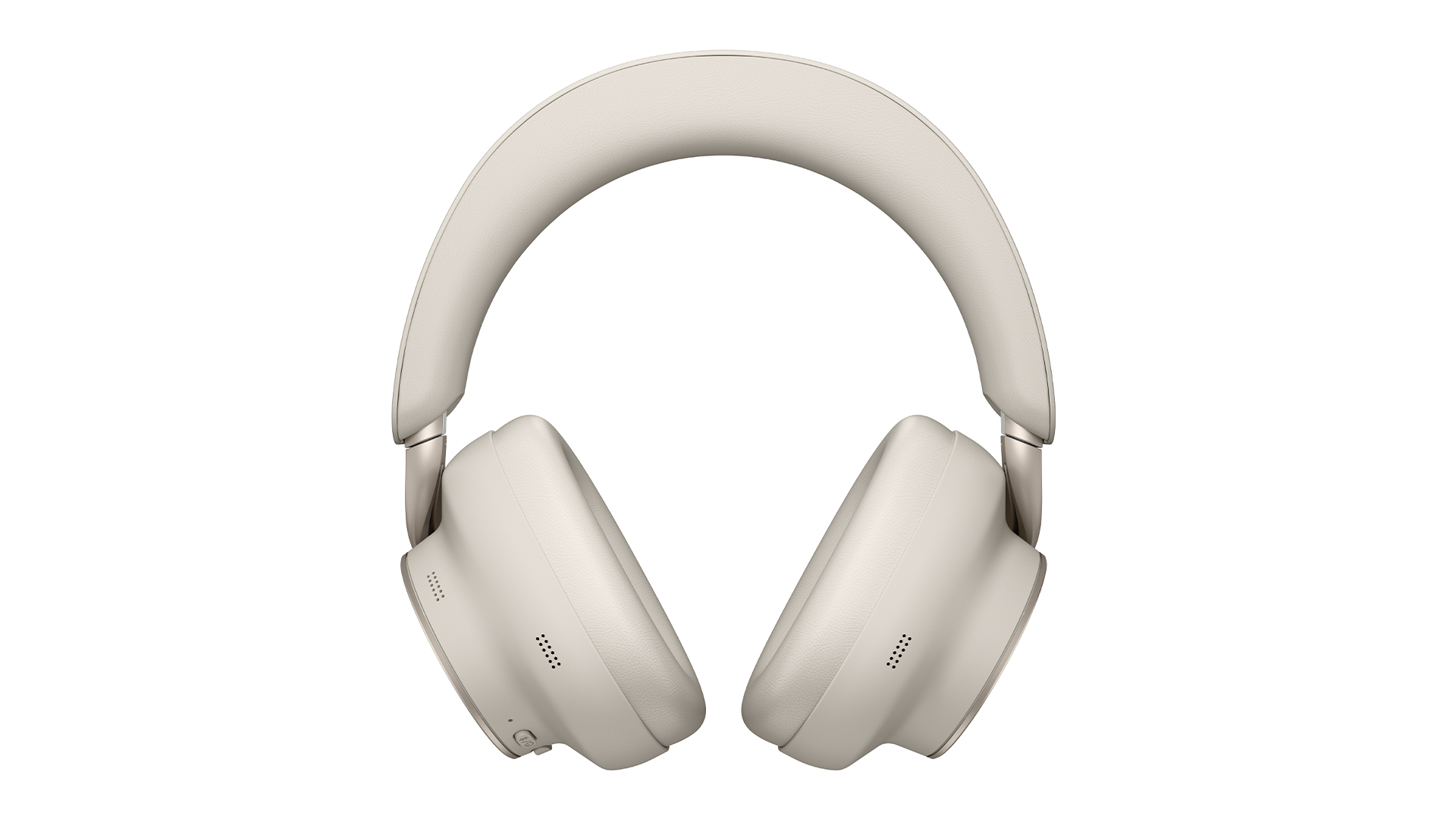
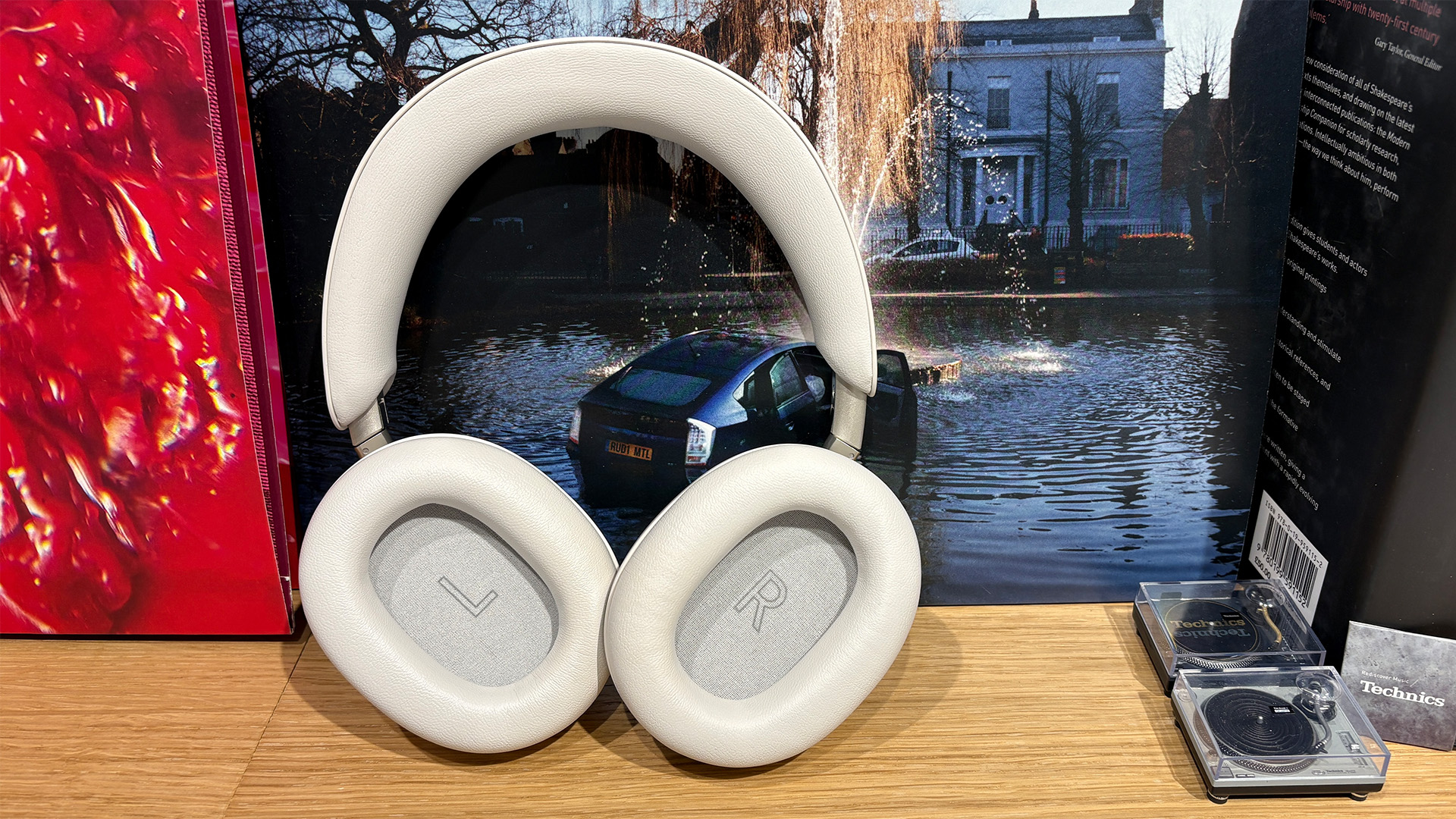
Stepping away from the somewhat blocky silhouette of its predecessor, the EAH-A800, the new EAH-A1000 introduces a remarkably sleek and elegant aesthetic. Premium metal accents, refined contours, and luxurious padding grace both the headband and ear cups.
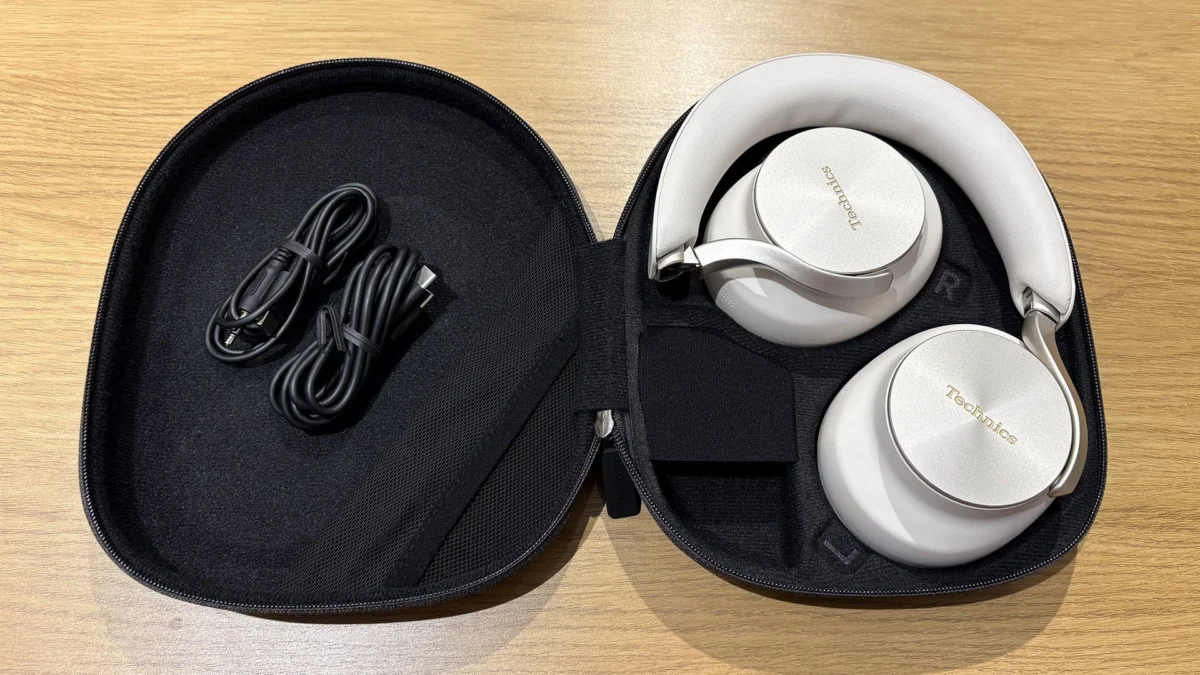
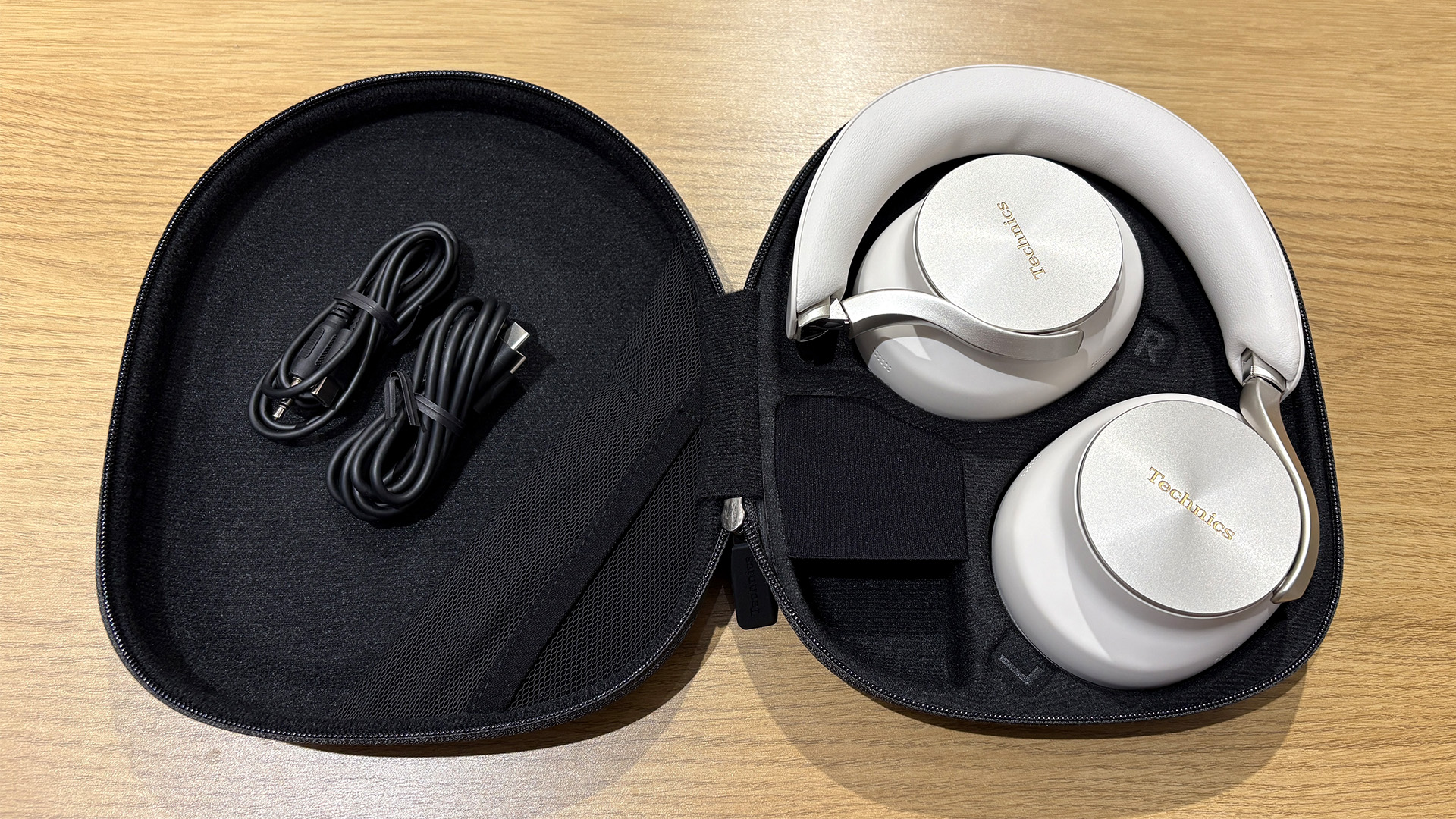
Weighing in at 306g, the headphones balance a robust build with impressive lightweight ergonomics. The metal "flow arm" slider and carefully angled hinges ensure that clamping pressure is evenly distributed across various head shapes—a massive win for users who wear glasses. While the ear cups protrude slightly more than the slim-profile Sony XM6 or Sonos Ace Ultra, the plush memory foam cushions make them a joy to wear during extended listening sessions. Furthermore, the headphones fold neatly into a compact hard-shell carry case, making them an ideal travel companion.
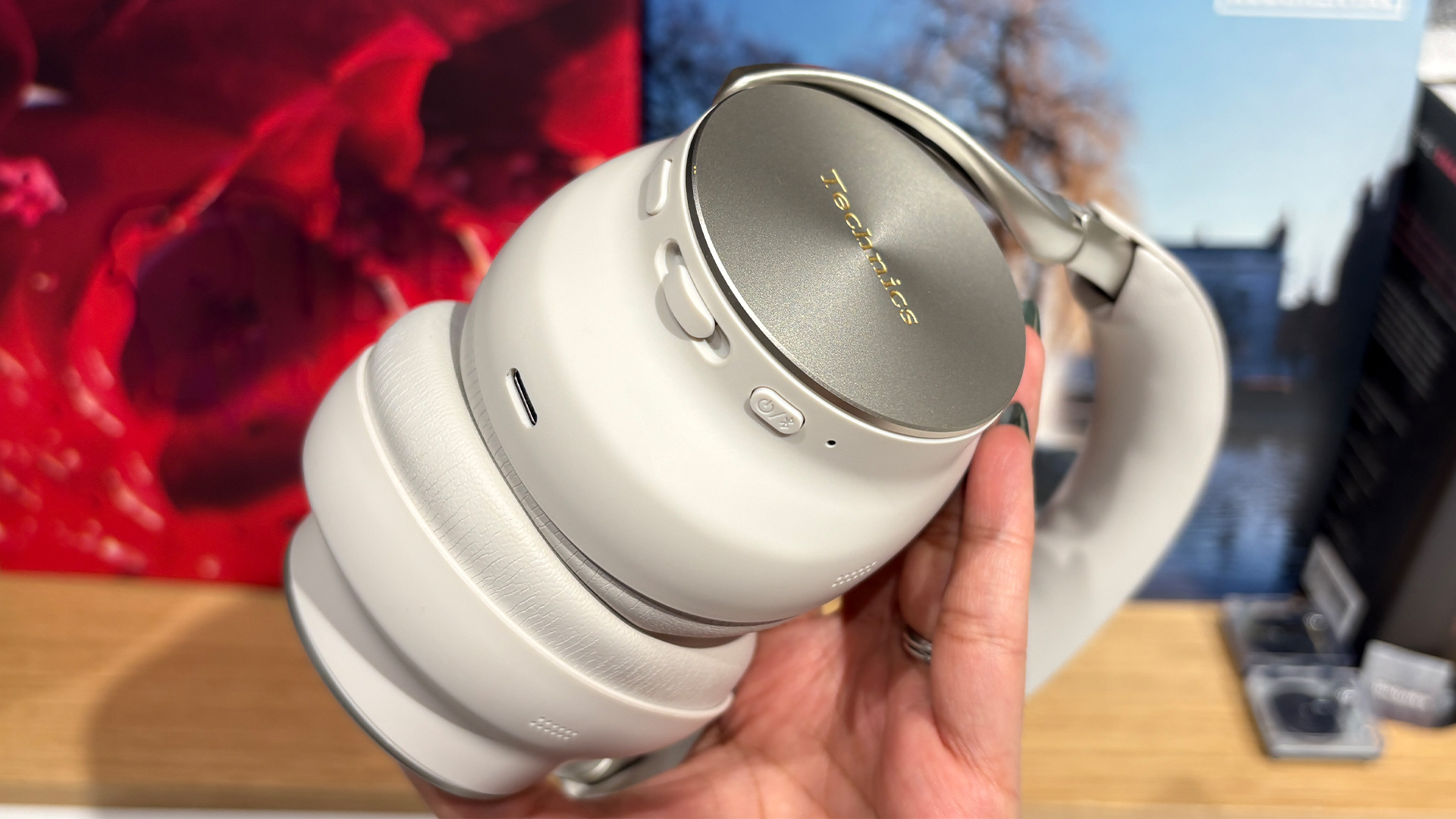
Unlike competitors that rely heavily on fickle touch panels, Technics opts for tactile, physical controls located on the right ear cup. Users are provided with dedicated buttons for power/pairing and noise modes, alongside a multi-function slider for volume control, playback management, and voice assistant activation. While the buttons respond instantly, the multi-function slider on review units felt slightly loose, detracting marginally from an otherwise upscale tactile experience.
Connectivity and Battery Dominance
Connectivity is a major stronghold for the EAH-A1000. Pairing is instantaneous and rock-solid, showing seamless reconnection behaviors with modern smartphones like the iPhone 16. Setting a new industry benchmark, the EAH-A1000 supports three-way multi-point Bluetooth connectivity, allowing users to maintain active links with three separate devices simultaneously—surpassing the traditional two-device limit imposed by almost all rivals.
For audiophiles seeking higher-fidelity streams, the inclusion of the LDAC codec enables compatibility with high-res mobile devices and portable digital audio players (DAPs) such as the Sony NW-A306 and Astell & Kern SR35. Note, however, that engaging LDAC bandwidth disables features like three-way multipoint and impacts total battery longevity.
Speaking of battery life, the EAH-A1000 absolute slays the competition. Operating on standard AAC/SBC codecs, users can expect an astounding 45 hours of playback with Active Noise Cancellation (ANC) switched on, skyrocketing to a massive 90 hours with ANC turned off. This completely overshadows the 30-hour standard set by Sony, Bose, and Bowers & Wilkins, though Sennheiser’s HDB 630 closes the gap with 60 hours under ANC. Should you ever run low, a rapid 15-minute USB-C charge pumps four hours of life back into the battery.
Noise Cancellation and Call Performance
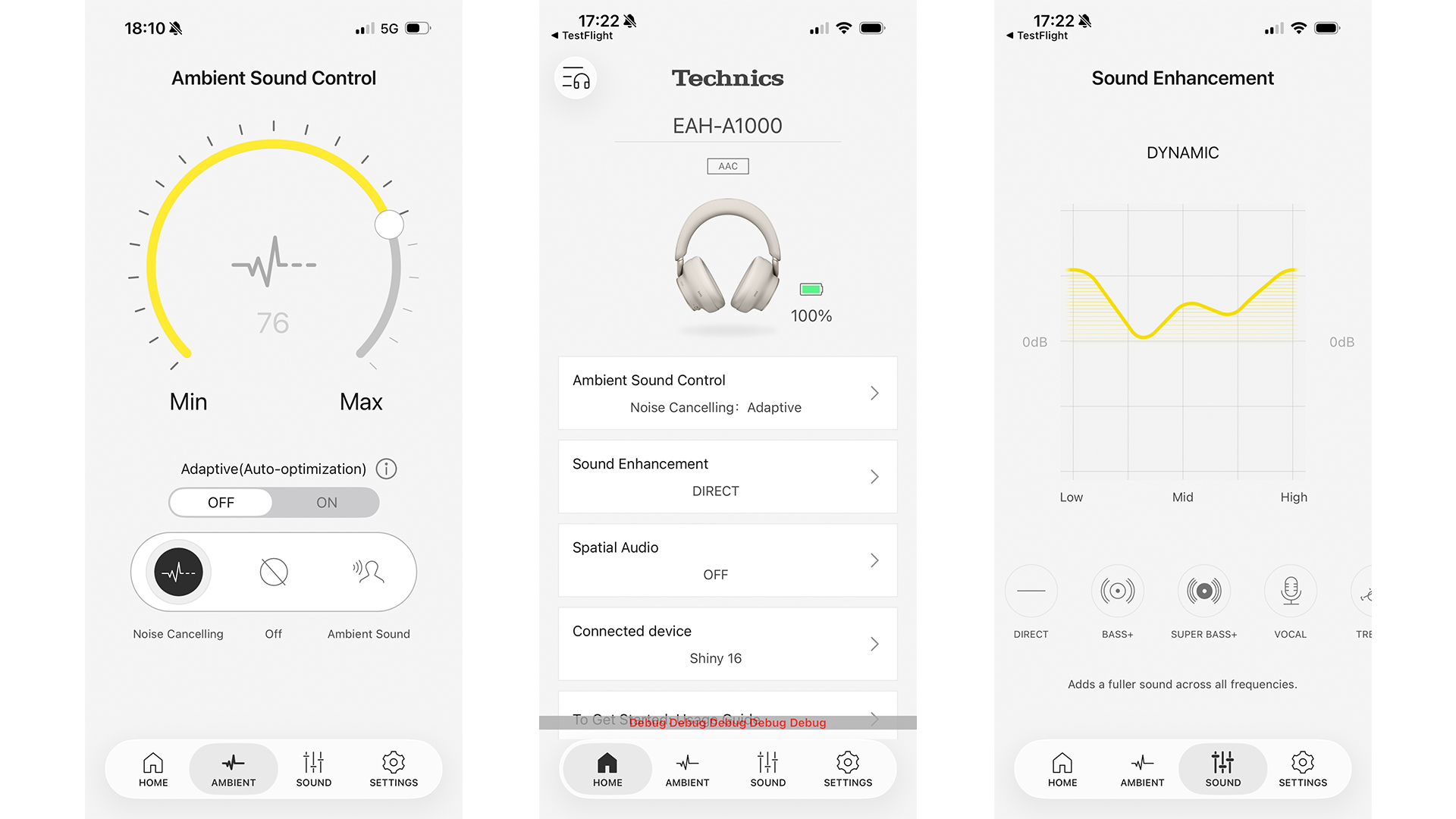
The EAH-A1000 utilizes a sophisticated adaptive ANC system driven by four microphones per ear cup, which dynamically adjust isolation levels based on ambient surroundings. Interestingly, user testing reveals that the adaptive mode outperforms the maximum manual 0-to-100 slider setting when it comes to suppressing low-frequency rumbling, such as train engines and airplane drone during long-haul flights.
However, against high-frequency distractions like sudden traffic whooshes and mid-range chatter, rivals like the Sony XM6 still maintain a slight edge. Additionally, Technics’ adaptive ANC exerts a noticeable pneumatic pressure sensation, which some users may find less natural than Sony’s ambient processing.
Transparency modes are well-executed. A customisable Ambient mode delivers a natural, unamplified environmental awareness, while a dedicated "Attention" mode zeroes in on human voices—ideal for train announcements—though it sounds slightly more artificial.
Call quality, meanwhile, is an unmitigated triumph. Microphones easily isolate the user’s voice from chaotic, high-traffic roadside environments, transmitting crystal-clear speech with virtually zero background bleed, outperforming competitors that tend to let ambient noise leak through.
Sonic Performance: Precision Meets Politeness
At the heart of the EAH-A1000’s acoustic architecture lies Technics’ newly scaled Magnetic Fluid Driver technology. Derived from the EAH-AZ100 earbuds and optimized for a larger 40mm driver format, this tech ensures linear driver movement and minimizes unwanted mass-induced vibrations. Coupled with a pure carbon-fibre rigid diaphragm, Symmetrical Surround Technology (SST) Edge speaker design, and a redesigned acoustic control chamber, the A1000 aims to deliver hyper-accurate, low-distortion audio reproduction.
Listening to Alicia Keys’ Fallin’ reveals an expansive, open soundstage where vocals soar with raw clarity and impressive top-end headroom. Shifting to James Blake’s Limit To Your Love, the headphones deliver a full-bodied presentation, pairing deep, plunging bass notes with rock-solid midrange articulation. On complex jazz arrangements like The Dave Brubeck Quartet’s Take Five, instrument separation is exemplary; the saxophone takes center stage with robust tone, while crisply struck hi-hats remain meticulously controlled in the background.
Yet, despite their technical brilliance, the EAH-A1000 exhibit a distinctly polite sonic disposition. While distortion-free and sweet-sounding, they lack the raw verve, dynamic agility, and propulsive rhythmic drive found in the Sony XM6 and Sennheiser HDB 630. Bass notes, though deep and fulsome, sound slightly soft around the edges, preferring a gentle, fatigue-free presentation over high-octane grit and attack.
Official Responses and Expert Perspectives
Reflecting on the engineering philosophy behind the flagship model, Technics’ development team noted during launch briefings: "This is the headphone we set out to create from the very beginning—a harmonious blend of our hi-fi speaker innovations and advanced personal audio engineering."
Kashfia Kabir, Hi-Fi and Audio Editor at What Hi-Fi?, summarizes the expert consensus:
"Technics’ elegant premium headphones come close to troubling the class leaders, with a comfortable design and an appealing, if slightly polite, sonic balance that will have its fans. At this level, however, rivals deliver just that bit more rhythmic precision and dynamic subtlety, leading to a more involving listening experience."
Implications for the Premium Audio Market
The release of the Technics EAH-A1000 marks a pivotal moment for the high-end wireless headphone sector. By offering class-leading battery life (up to 90 hours), groundbreaking three-way multipoint connectivity, and exquisite industrial design, Technics has proven it can rub shoulders with industry titans like Sony, Bose, and Sennheiser.
For consumers, the EAH-A1000 presents a compelling proposition. If your listening preferences lean toward a smooth, fatigue-free, highly organized sound profile paired with bulletproof connectivity and marathon battery life, these headphones are an exceptional investment at £399 / $449. However, for purists demanding raw dynamic punch, razor-sharp rhythmic timing, and aggressive transient attack, the crown remains fiercely contested—setting the stage for an even more competitive future generation from the Japanese audio icon.