HOLLYWOOD, CA – The hallowed halls of Capitol Studios, located at the base of the iconic, needle-like Capitol Records Tower in Hollywood, recently became the epicenter of the professional audio world. Last Friday, the legendary facility played host to a landmark celebration: the 35th anniversary of PMC Speakers.
The event served as more than a simple birthday party; it was a high-profile showcase of the deep-rooted symbiotic relationship between one of the world’s most prestigious recording environments and one of the most respected names in monitor design. With an audience comprised of industry titans, Grammy-winning engineers, UMG executives, and renowned recording artists, the gathering underscored a pivotal evolution in studio technology.
A Legacy of Sonic Precision: The Main Facts
Founded in 1991, PMC (Professional Monitor Company) has spent over three decades redefining the standard for studio monitoring. The anniversary event highlighted the company’s recent, extensive integration into the Capitol Studios ecosystem. This multi-million-dollar upgrade has seen the installation of over 50 PMC speaker units throughout the historic tower and the six studios at its base.
The event featured intimate live performances from the soulful Melody Gardot, Grammy-nominated vocalist and pianist Sheléa, and the dynamic percussionist Kevin Ricard. These performances were not merely for entertainment; they provided a real-time, high-fidelity demonstration of the transparency and power afforded by the newly installed monitoring systems. For the industry insiders in attendance, the sound quality served as a testament to PMC’s philosophy of "The Sound of the Artist," which prioritizes the preservation of the original recording’s intent.
Chronology: From 1991 to the Capitol Tower
To understand the significance of this anniversary, one must look at the trajectory of Peter Thomas, co-founder and chairman of PMC. In 1991, PMC introduced the BB5 XBD, a speaker that effectively launched the company into the professional audio stratosphere. The BB5 offered a level of resolution that many engineers had previously found unattainable in a studio setting.
Fast forward 35 years: PMC has evolved from a boutique British manufacturer into a global powerhouse, influencing the sound of countless film scores, rock records, and orchestral performances. The recent renovation of Capitol Studios represents the culmination of this journey. The project was not a simple swap of hardware but a meticulous, years-long effort to modernize one of the world’s most famous sonic landmarks. The transition into the Capitol building—a structure synonymous with the golden age of American music—solidifies PMC’s role as the current standard-bearer for elite studio monitoring.
Supporting Data: The Technical Architecture
The scale of the PMC installation at Capitol Studios is staggering. The equipment deployment was tailored to the specific acoustic requirements of each room, ensuring that whether a client is mixing a blockbuster film score or a delicate jazz vocal, the monitoring remains uncompromising.
Studio A: The Grand Stage
As the largest space in the facility, capable of housing a 50-piece orchestra, Studio A required a monitor system with immense headroom and transient accuracy. It is now equipped with:
- Main Monitors: PMC10-4 systems paired with custom subwoofers.
- Nearfield Monitoring: PMC6 compact monitors.
The Evolution of Studio C: Immersive Audio
Studio C has been optimized for both traditional stereo and the growing demand for immersive audio (Dolby Atmos). The setup pays homage to the company’s history while embracing the future:
- Main Channels: PMC15 XBD (left and right) and PMC15 (center). This configuration is a direct descendant of the original 1991 BB5 XBD.
- Immersive Channels: A sophisticated array of Ci140s and Ci65s for surrounds and height, anchored by dual BST subwoofers for low-frequency management.
Studios D, E, and F
The versatility of the installation continues throughout the facility. Studios D and E, dedicated to production and recording, utilize the PMC8-2 XBD system supported by additional PMC8-2 SUB subwoofers. Studio F, the primary Dolby Atmos mixing and QC suite, features twotwo.8 monitors for the front array and Wafer1 speakers for surround and height duties.
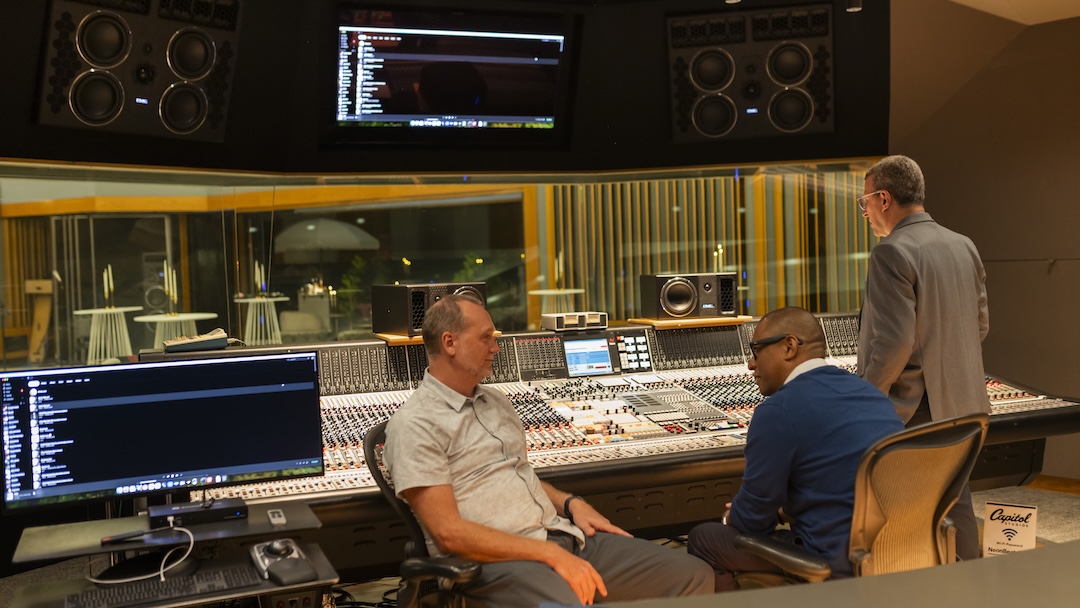
Beyond the technical suites, the integration extends to the boardroom and administrative offices, where PMC hi-fi speakers and Ci on-wall units ensure that the "Capitol sound" remains consistent even away from the console.
Official Responses and Perspectives
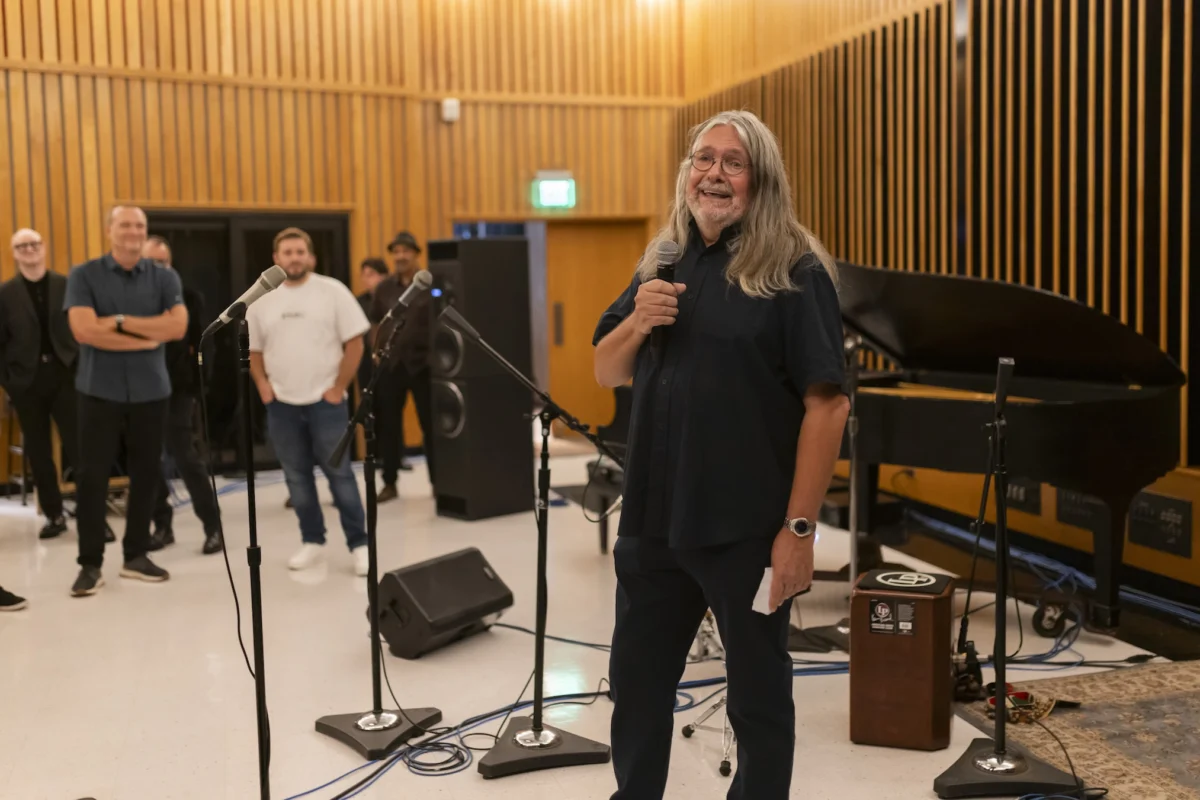
During the event, Peter Thomas took the stage to address the crowd, reflecting on the milestone. "I can’t think of a more fitting venue in which to celebrate our 35 years," Thomas remarked. "It is surely the most recognizable studio building in the world, and now, having been fitted out with our new monitors, where better to share this anniversary with our customers, friends, and the biggest names from the music industry?"
The presence of UMG executives and high-profile engineers served as an unofficial endorsement of the upgrade. For the engineers at Capitol, the transition to PMC monitors has been described as a "revelation in clarity." The ability to hear deep into the mix—to discern the subtle decay of a reverb tail or the precise placement of a snare hit—is the hallmark of the PMC design, and it is a quality that Thomas has championed since the company’s inception.
Implications for the Future of Music Production
The marriage of Capitol Studios and PMC Speakers carries significant implications for the professional audio industry. As music consumption shifts toward high-resolution streaming and immersive formats like Dolby Atmos, the demand for "truthful" monitoring has never been higher.
1. The Standardization of "High-Res" Monitoring
By installing PMC systems in a facility as influential as Capitol, the company is essentially setting a new benchmark for what professional studios should sound like. As producers and artists migrate between global studios, they will increasingly seek out facilities that offer this same level of acoustic accuracy.
2. The Immersive Audio Revolution
The decision to equip Studio C and Studio F with extensive Atmos-ready arrays highlights the industry’s shift toward spatial audio. PMC’s modular design allows for a seamless transition between stereo and multi-channel configurations, providing a blueprint for other studios looking to update their infrastructure for the next generation of listeners.
3. A Legacy Preserved
Perhaps the most profound implication is the preservation of history. By retrofitting a building that has hosted Frank Sinatra, The Beach Boys, and Nat King Cole with 21st-century monitoring technology, Capitol and PMC are ensuring that the facility remains relevant for the next 35 years. It is a bridge between the analog heritage of the past and the digital requirements of the future.
Conclusion
The 35th-anniversary celebration at Capitol Studios was more than a tribute to a company’s longevity; it was a demonstration of a shared vision. As the evening concluded with music echoing through the halls—sound that was as pristine as it was powerful—it became clear that PMC is not just providing speakers. They are providing the essential tools that allow the world’s greatest artists to translate their emotions into sound.
As PMC looks toward its fourth decade, the partnership with Capitol Studios stands as a testament to their enduring influence. In the world of professional audio, where technology changes at a breakneck pace, the constant pursuit of sonic perfection remains the only thing that truly matters. For PMC Speakers, the next 35 years have already begun, and they sound exactly as they should: flawless.