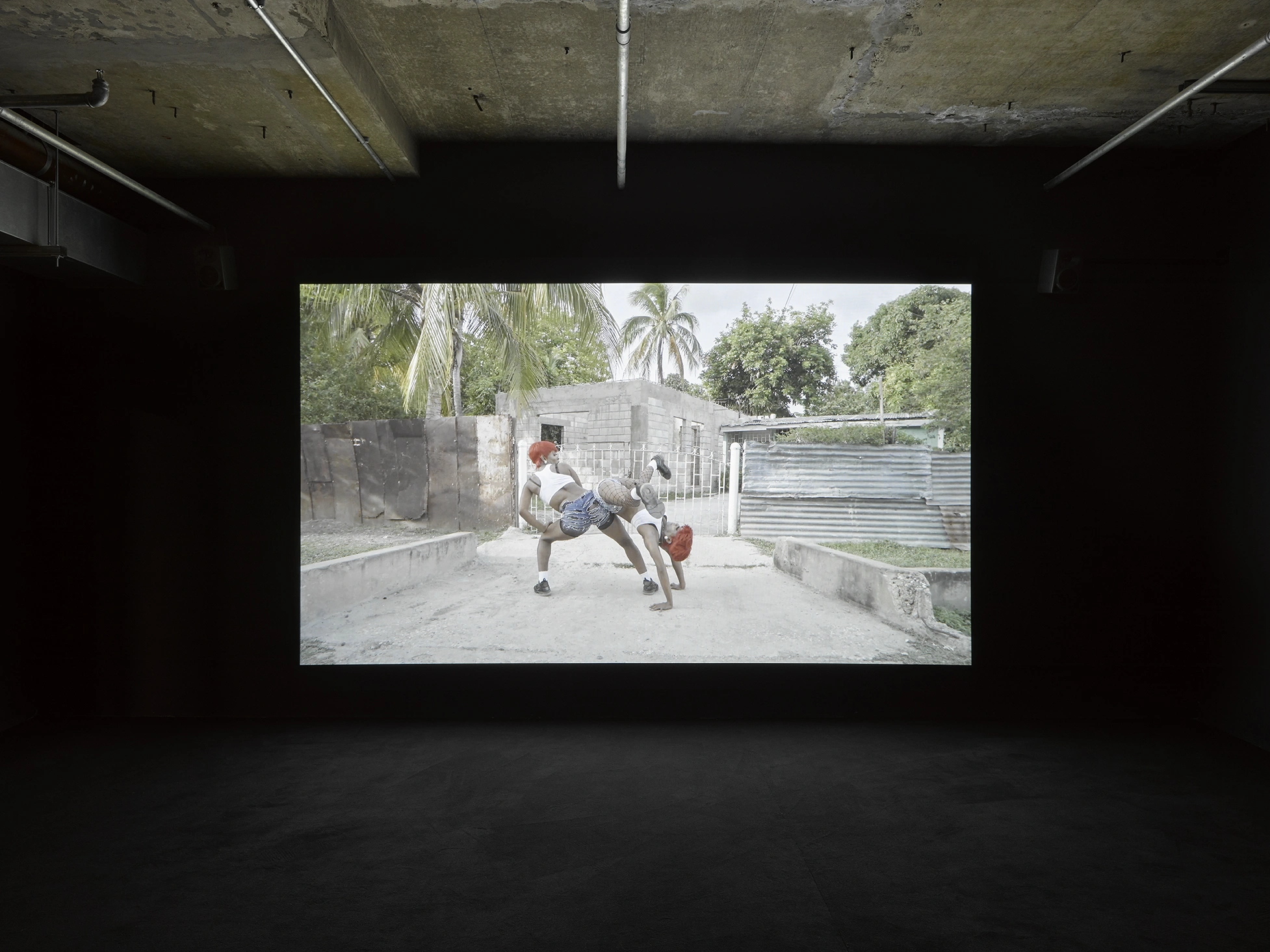
In the subterranean galleries of 180 Studios, London, the air vibrates with more than just sound. As part of the expansive The Vinyl Factory: Reverb exhibition, Argentinian artist and choreographer Cecilia Bengolea presents Shelly Belly Inna Real Life—a visceral, immersive video installation that serves as both a love letter to Jamaican dancehall culture and a profound sociological study of movement as a language of resistance.
Spanning four years of meticulous fieldwork (2015–2019), the work invites audiences to step out of the gallery space and into the streets of Jamaica, where dance is not merely performance, but a vital, breath-like necessity. Through a new, exclusive interview, Bengolea unpacks the complexities of her collaboration with dancehall icon Shelly Belly and the rigorous philosophy underpinning her choreographic practice.
The Genesis of a Kinetic Dialogue: Main Facts
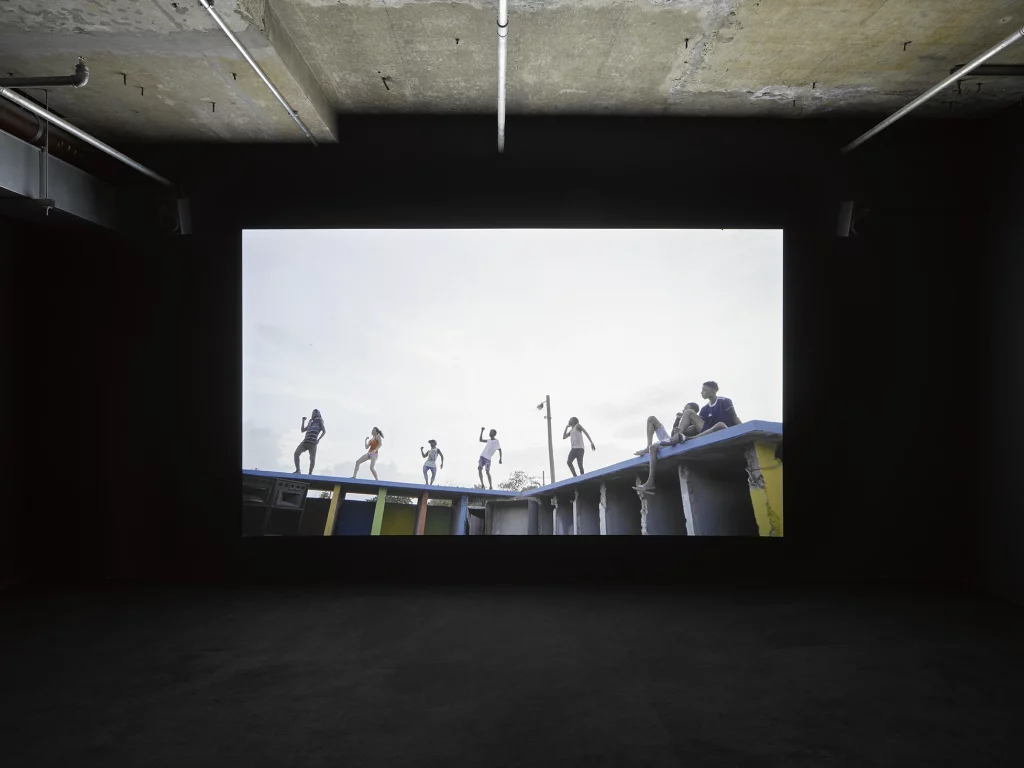
Shelly Belly Inna Real Life is a centerpiece of The Vinyl Factory: Reverb, a multi-sensory exhibition showcasing the intersection of music, technology, and contemporary art. The installation is not a passive viewing experience; it is an interrogation of the "street" as an architectural and cultural stage.
At the heart of the film is the eponymous Shelly Belly, a legendary figure within the dancehall scene. By following his movements, Bengolea documents the fluidity of dancehall choreography—a style characterized by rapid, contortionist, and highly athletic gestures that mirror the shifting social landscapes of Kingston. The work challenges the traditional art-world gaze by centering the lived experiences of the participants rather than treating them as mere subjects for aesthetic consumption.
"Dancehall is an architecture of the body," Bengolea explains. Her focus is on how the genre functions as a form of communication, a way to reclaim space, and a method of navigating the pressures of contemporary Jamaican life. By capturing the intimate moments between dancers, street-side gatherings, and the pulsating energy of the sound system culture, the film bridges the gap between the ethnographic and the artistic.
Chronology: A Deep-Rooted Collaboration
Bengolea’s fascination with dancehall is not a recent development, nor is her relationship with The Vinyl Factory. Her trajectory as an artist has been consistently defined by her ability to synthesize global street movements with institutional exhibition spaces.
2016: The Bom Bom’s Dream Precedent
Before Shelly Belly Inna Real Life, there was Bom Bom’s Dream. Collaborating with British artist Jeremy Deller, Bengolea explored the transnational reach of dancehall, specifically its unexpected resonance in Japan. The project centered on a Japanese dancer known as "Bom Bom," whose mastery of the style served as a testament to the genre’s global ubiquity. This project, featured in the seminal exhibition The Infinite Mix, established the collaborative framework that would later define her work with Shelly Belly.
2015–2019: The Fieldwork Years
The four-year period between 2015 and 2019 was dedicated to the gestation of the current installation. Unlike many artistic residencies that rely on brief visits, Bengolea immersed herself in the Jamaican scene. This period involved living within the community, earning the trust of local practitioners, and moving beyond the superficial "tourist" observation of dancehall to understand its deeper, often contentious, social roots.

2024–2025: Reverb at 180 Studios
The current exhibition, which opened in May 2024 and runs until March 2, 2025, represents the culmination of a decade of research. It serves as a rare opportunity for London audiences to engage with dancehall not as a sanitized musical genre, but as a complex, living cultural force.
Supporting Data: The Sociology of Movement
To understand the weight of Shelly Belly Inna Real Life, one must look at the data—not just of the film, but of the culture it represents.
The Police and the Performance
A significant portion of Bengolea’s recent commentary centers on the fraught relationship between the Jamaican police and the dancehall scene. Dancehall has historically been a site of tension; the "curfew" laws and the police’s historical suspicion of large street gatherings have often forced the culture into hidden, private, or highly managed spaces.
Bengolea notes, "The dance is a response to the restriction of space." When public gatherings are monitored or discouraged, the dancehall becomes a tactical environment. The speed and intensity of the movements are not accidental; they are a form of kinetic survival. By filming in the "real life" context, Bengolea captures how the dancers utilize the street as a temporary, reclaimed territory.
The Anatomy of the Genre
Dancehall is not a static style; it is an evolving lexicon. From the "Bogle" to the complex contortions popularised by Shelly Belly, the movements act as a digital record of social shifts. Data suggests that the proliferation of dancehall on global social media platforms has changed the way the dance is performed, shifting it from a localized communal ritual to a globally broadcasted performance art. Bengolea’s work acts as a documentary counterpoint, grounding these viral movements back in their original, raw context.
Official Perspectives: The Artist’s Voice
In her recent discussions regarding the exhibition, Bengolea emphasizes that her role is that of a "facilitator of movement." She avoids the pitfalls of cultural appropriation by maintaining a transparent, reciprocal relationship with her collaborators.
"When I film Shelly Belly, I am not directing him," she clarifies. "I am responding to the energy he creates. The camera is just another dancer in the room."
This approach highlights a key shift in contemporary art: the move away from the authoritative director towards the collaborative partner. By engaging directly with the street dance community, Bengolea ensures that the representation of dancehall in The Vinyl Factory: Reverb retains its integrity, its volatility, and its inherent joy.
Implications: The Future of Curated Street Culture
What does it mean to house a culture as vibrant and defiant as Jamaican dancehall within the white walls of a London gallery?
Bridging the Institutional Gap
The inclusion of Shelly Belly Inna Real Life in The Vinyl Factory: Reverb suggests a growing acknowledgment within the art world that "street" culture is, in fact, the most vital avant-garde movement of our time. By placing this work alongside other audio-visual installations, 180 Studios is facilitating a conversation that is long overdue: the recognition of the dancer as an intellectual and the dance as an archival act.
The Preservation of the Ephemeral
Dance is an inherently ephemeral medium. Once the movement is finished, it disappears. Through film, Bengolea provides a means of preservation that respects the transience of the dancehall experience while allowing it to occupy a permanent space in the cultural discourse. The exhibition invites viewers to consider the implications of moving dance out of the club and into the institution—does it lose its power, or does it gain a new platform for historical recognition?
A Call to Experience
The exhibition at 180 The Strand is a mandatory pilgrimage for those interested in the sociology of dance and the intersection of visual art and performance. As the exhibition approaches its final months in early 2025, the dialogue sparked by Shelly Belly Inna Real Life continues to resonate. It challenges us to look past the "spectacle" of street dance and see the community, the struggle, and the relentless, irrepressible human need for movement.
Exhibition Details: Plan Your Visit
For those wishing to witness this intersection of culture and choreography, the exhibition remains open at 180 Studios until early next year.
- Location: 180 Studios, 180 The Strand, London, WC2R 1EA
- Duration: May 22, 2024 – March 2, 2025
- Operating Hours:
- Wednesday – Saturday: 12:00 PM – 7:00 PM
- Sunday: 12:00 PM – 6:00 PM
- Note: The gallery will be closed for the holiday period between December 23, 2024, and January 8, 2025.
Tickets are available via the official 180 Studios website. As you walk through the installation, consider the words of Cecilia Bengolea: the dance is not just in the film—it is in the rhythm of the streets, the pulse of the community, and the persistent, unyielding heartbeat of the dancehall itself.