WATERLOO, ONTARIO – September 22, 2026 — In a significant leap forward for the burgeoning field of on-device artificial intelligence, Applied Brain Research (ABR) has officially announced the general availability of its highly anticipated ABR SDK. This comprehensive production toolkit integrates the company’s flagship Niagara automatic speech recognition (ASR) and Nith text-to-speech (TTS) model families, offering developers a streamlined pathway to building hyper-responsive, privacy-centric voice interfaces that operate entirely on edge hardware.
By removing the traditional tether to cloud-based processing, ABR’s new solution addresses one of the most persistent bottlenecks in modern consumer technology: the latency and connectivity requirements of voice-activated devices.
Main Facts: A Paradigm Shift for Edge Intelligence
The newly released ABR SDK represents a departure from the "cloud-first" architecture that has dominated voice AI for the last decade. By packaging streaming ASR and streaming TTS within a single, unified API, ABR enables developers to deploy high-performance voice capabilities directly onto embedded processors.
The core value proposition of this release is the elimination of the "network dependency." Because the speech input and output processing occur entirely locally, the interface remains functional in offline environments—a critical requirement for automotive, industrial, and smart home applications where reliability is paramount. Furthermore, this local processing model ensures that voice data remains on the device, providing a robust answer to growing global concerns regarding data privacy and the transmission of sensitive audio information to third-party servers.
The SDK currently supports a suite of major languages, including English, Spanish, Mandarin, Japanese, and Korean. Deployment is designed to be frictionless; each model is distributed as a self-contained package containing the compiled library, weights, and configuration in a single directory. Developers do not need to grapple with complex inference backends or cross-compilation hurdles, as switching languages or upgrading models is as simple as updating a file path.
Chronology of Development: From Research to Production
The road to this product release is rooted in ABR’s foundational work in state-space model architectures. The company, based in Waterloo, Ontario, has long focused on the efficiency of neural networks.
- Early Research Phase: ABR pioneered the development of the patented Legendre Memory Unit (LMU), a specialized architecture designed to handle sequential data with unprecedented efficiency. This served as the theoretical bedrock for their subsequent AI models.
- Validation: Over the past two years, ABR utilized the Hugging Face Open ASR Leaderboard to demonstrate the efficacy of its "Niagara" family. By consistently outperforming models significantly larger in parameter count, the company proved that its state-space approach could deliver high accuracy without the resource overhead typical of Transformer-based models.
- Beta Testing: During the last 18 months, ABR collaborated with select hardware partners to refine the SDK, focusing on integration with embedded application-class CPUs and testing against real-world edge hardware constraints.
- General Availability (September 22, 2026): The formal launch marks the transition from specialized research to a commercially supported, developer-ready toolkit, providing a stable C ABI with Python, Java, and C bindings.
Supporting Data: Performance Metrics and Technical Benchmarks
ABR’s performance metrics underscore why the industry has been closely watching the company’s trajectory. On standard embedded application-class CPUs, the Niagara and Nith models achieve latency figures that are near-imperceptible to the human ear.
Latency Performance
- Niagara (ASR): Produces the first text output from initial audio input in as little as 115 milliseconds.
- Nith (TTS): Produces the first audio output from initial text in as little as 147 milliseconds.
These figures are critical because, as many human-computer interaction studies have suggested, a "perceived instantaneous" response requires sub-200ms latency. By consistently falling well below this threshold, ABR’s models provide a seamless, conversational experience that feels like a natural extension of the device rather than a remote service.
Efficiency and Scaling
The "Niagara" models have demonstrated incredible density on the Hugging Face leaderboard. Specifically, the niagara-38m-batch.en model holds a mean word error rate of 9.69%, making it the most accurate model in its size class (under 100 million parameters). Meanwhile, the niagara-19m-batch.en model has gained notoriety for its ability to outperform models four to five times its size, proving that the architecture is not just efficient, but fundamentally superior for memory-constrained environments.
Official Perspectives: The Vision for "Immediate" Interaction
Kevin Conley, CEO of Applied Brain Research, emphasized that the primary design constraint for the new SDK was the human experience of time.
"A voice interface is only usable if it answers immediately, which makes real-time performance the binding constraint for edge applications," Conley stated during the launch. "ABR’s models and SDK are designed to deliver leading accuracy with the lowest latency on constrained edge hardware. Customers and hardware partners evaluating the SDK are consistently surprised by the response times and accuracy they measure."
The company’s leadership maintains that by solving the latency problem, they are effectively unlocking new categories of hardware that were previously too "dumb" or resource-poor to host meaningful conversational AI.
Implications: The Future of Ambient Computing
The implications of ABR’s release extend far beyond simple smart speakers. The combination of high-speed ASR/TTS and edge-based privacy creates a roadmap for several emerging industries:
1. Automotive and Industrial Safety
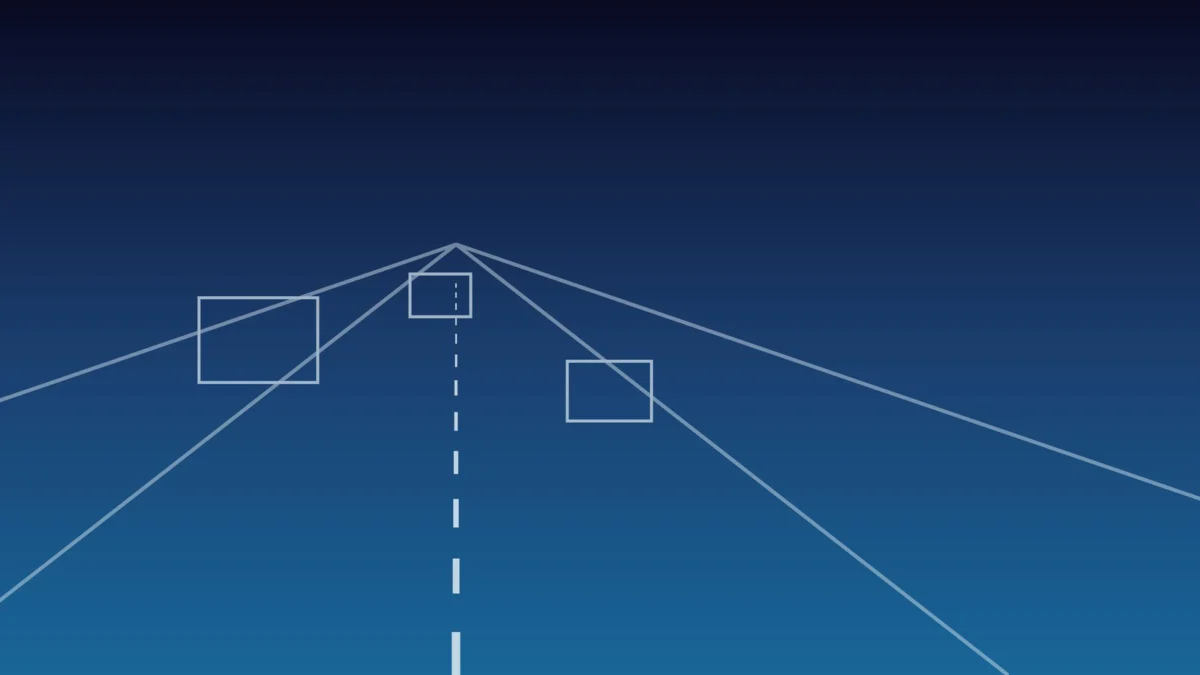
In vehicles and factory settings, voice interfaces are often the safest way to control machinery. However, network lag can be life-threatening if a command is delayed. With ABR’s SDK, a driver or operator can issue commands with millisecond precision, regardless of whether the vehicle is in a tunnel or the facility has a dead spot in its Wi-Fi coverage.
2. Personalized and Brand-Specific Interfaces
A notable feature of the new SDK is the inclusion of "custom vocabulary" and "voice cloning." By allowing product-specific terms, proper nouns, and proprietary nomenclature to be recognized—and allowing brands to generate unique synthetic voices from short reference recordings—ABR is enabling a level of customization previously reserved for massive enterprise cloud platforms. This allows a vacuum cleaner, a medical device, or a piece of consumer electronics to sound and respond like a unique, branded entity.
3. The End of "Cloud-Dependent" Intelligence
The broader tech industry is currently shifting toward "on-device AI" as a primary strategy to lower operational costs (by reducing server load) and satisfy user demand for privacy. ABR’s release accelerates this trend. By offering a solution that works on existing Linux x86-64, ARM64, and Android architectures—with plans for RTOS and microcontroller support by the end of 2026—the company is positioning itself as the middleware of choice for the next generation of ambient computing.
4. Accessibility and Inclusion
The inclusion of multiple languages (English, Spanish, Mandarin, Japanese, and Korean) ensures that this technology can be deployed globally. For individuals with motor impairments, the ability to control local hardware instantly via voice is a transformative accessibility feature. By removing the need for a subscription or a cloud account to activate these features, ABR is effectively lowering the barrier to entry for assistive technology.
Looking Ahead: Expanding the Ecosystem
While the current SDK is already highly capable, ABR’s roadmap suggests that the best is yet to come. The promise of support for Cortex-M class microcontrollers with NPUs by the end of this year is particularly significant. This will open the door for ultra-low-power, battery-operated devices—such as wearables, smart appliances, and toys—to feature high-fidelity, responsive voice control.
As the industry moves away from the era of "sending everything to the cloud," Applied Brain Research appears to be leading the charge in proving that the intelligence of the future will not live in a data center, but inside the very objects we interact with every day. Developers interested in testing the capabilities of these models can access the ABR documentation portal, while commercial partners can initiate pilot programs through the company’s established licensing channels.
With this release, ABR has not merely launched a product; they have set a new performance benchmark for what is possible when we stop waiting for the cloud and start trusting the edge.