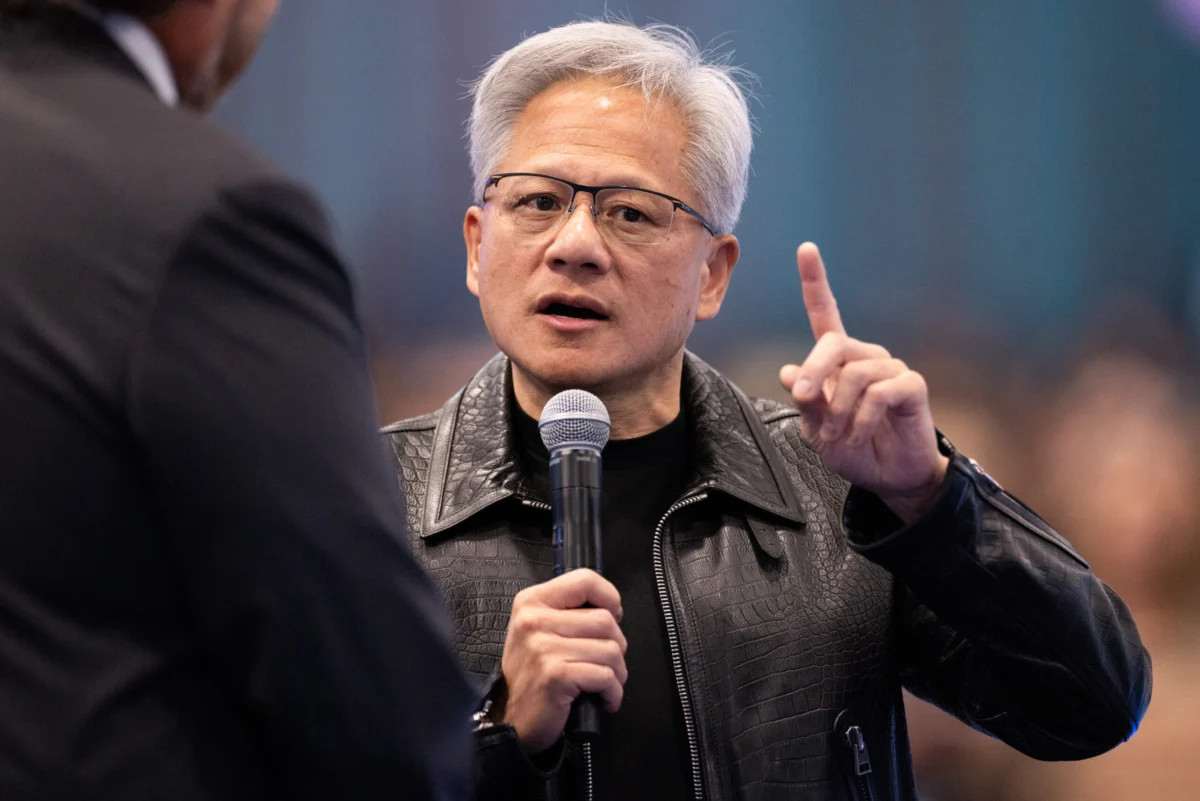
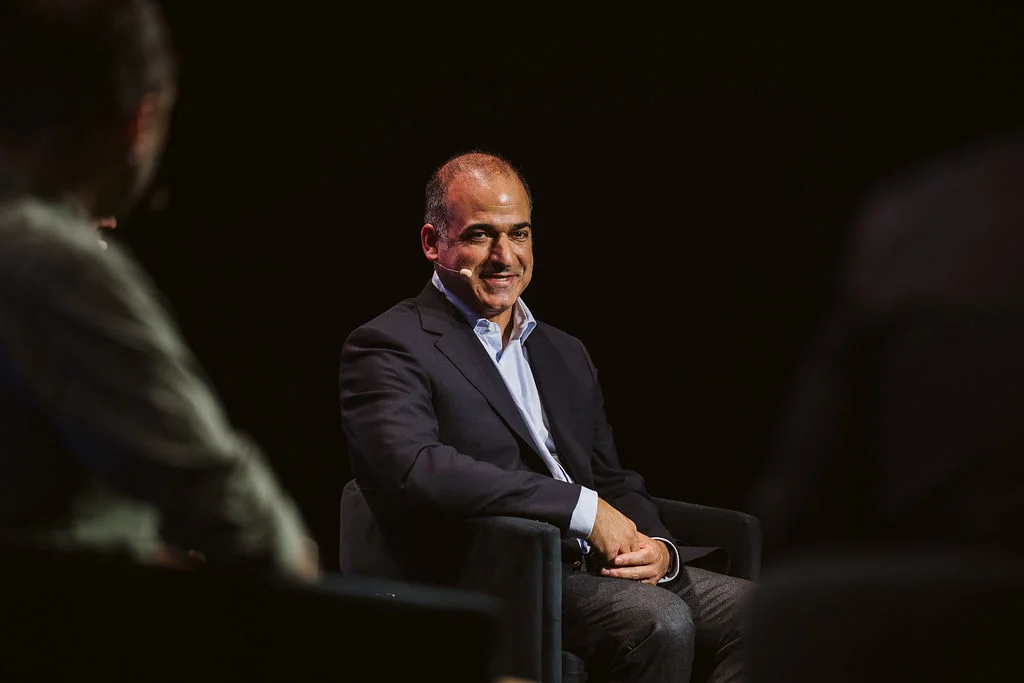
At this year’s All In conference, the atmosphere was thick with the usual cocktail of venture capital exuberance and technical speculation. Yet, beneath the surface of the grand keynotes and networking mixers, a distinct, hushed tension permeated the halls. As I moderated a panel on "World Models"—the next great frontier in artificial intelligence—I found myself navigating one of the most enigmatic corners of the modern tech landscape.
The sector is currently dominated by two heavyweights: Yann LeCun’s AMI Labs and Fei-Fei Li’s World Labs. These organizations have garnered massive valuations and breathless industry buzz. However, they share a peculiar, unifying trait: they currently rank near the bottom of the "trying-to-make-money" scale. While the potential for "spatial intelligence" is vast—promising to revolutionize everything from humanoid robotics to interactive cinematic experiences—the path to commercial viability remains obscured by a deliberate, strategic veil of silence.
The Promise of Spatial Intelligence
At its core, a world model is an attempt to give AI a foundational understanding of physical reality. Unlike Large Language Models (LLMs), which excel at predicting the next word in a sequence, world models are designed to predict the next state of a physical environment.
By automating spatial intelligence, these labs aim to bridge the gap between digital processing and the physical world. The applications are, theoretically, limitless. In the near term, we could see generative video tools that allow users to walk through photorealistic, AI-rendered environments. In the long term, this technology is the "holy grail" for autonomous systems, providing the spatial awareness required for humanoid robots to navigate cluttered warehouses, perform delicate surgery, or manage the complex physics of driving in unpredictable, real-world traffic.
A Chronology of Silence: The "Wait and See" Strategy
The trend of caginess in this space is not an accident; it is a calculated posture.
- The Inception Phase: Both AMI Labs and World Labs emerged within the last two years, riding a wave of unprecedented funding. Despite this, their public-facing roadmaps have remained remarkably lean.
- The Conference Circuit: During my recent panel, I attempted to press Michael Rabbat, a co-founder of AMI Labs and VP of World Models, on the company’s specific commercial targets. His response was emblematic of the industry’s mood: "We’ll talk about it when we’re ready to talk about it."
- The Follow-up: When I reached out via email for further clarification, Rabbat remained firm. "We’re still in a research and building phase, so we’re not talking publicly about any product plans or timeline."
This reticence isn’t limited to the labs themselves. The supply chain—the companies feeding data and hardware into these research engines—is equally kept in the dark. I spoke with Alex de Vigan, CEO of Physicl, a firm that provides specialized data sets for these models. De Vigan noted a frustrating disconnect: he knows his data is powering cutting-edge systems, but he has no idea what the end product will look like. "I wish they would tell us more," he admitted. "We could build more useful data if we knew what they were working on."
The Versatility Trap
Why the secrecy? Part of the answer lies in the sheer versatility of the technology. A single, high-performing world model could, in theory, be pivoted to serve a dozen different industries.
AMI Labs, for instance, has already experimented with manufacturing, biomedicine, robotics, and medical software through its partnership with Nabia. When a technology is this adaptable, a company is effectively "everything-everywhere-all-at-once." To commit publicly to a specific product line—say, a humanoid robotic platform—is to potentially foreclose on a more lucrative opportunity in, for example, CGI rendering or autonomous navigation.
Furthermore, there is a lack of external pressure to specialize. In the current climate, capital is cheap and accessible. As long as these labs can continue to raise funds based on the promise of their technology, there is no fiduciary impetus to lock in a specific, potentially limiting business model.
The "Dark Forest" Hypothesis
To understand the behavior of these labs, one must look toward the science fiction of Cixin Liu. In his Three-Body Problem series, he describes the "Dark Forest" theory: in a universe where civilizations are uncertain of each other’s intentions, the safest strategy is to remain silent. Any signal sent out—any "announcement"—could reveal one’s position and trigger a preemptive strike from a competitor.
This is the current reality for world model labs. If AMI Labs were to announce a breakthrough in a specific sector—such as a proprietary, next-generation Hollywood rendering system—it would immediately signal their market entry to a host of rivals. Within weeks, the space would be flooded with competitors: other well-funded startups, "neolabs" emerging from academia, and the massive, cash-rich incumbents like OpenAI and Anthropic.
The silence is, therefore, a survival mechanism. The same abundance of venture capital that allows these labs to exist also serves as their greatest threat. It empowers their competitors to replicate any successful path to market the moment it becomes visible. By staying quiet, these companies are effectively delaying the onset of intense market competition, buying themselves more time to refine their models in the "safety" of their internal research labs.
Implications: The High Cost of Ambiguity
The implications of this strategy are significant for both the industry and the public.
- Innovation Stagnation: While secrecy protects the labs, it may also be slowing down the broader ecosystem. If suppliers like Physicl are operating in the dark, they cannot optimize their services for the specific needs of the modelers.
- The "Hype" Bubble: Continued secrecy leads to an information vacuum. When there are no concrete products to evaluate, the market relies on hype. If the eventual products fail to live up to the projected, mysterious potential, the resulting correction could be volatile.
- The Talent War: The best researchers in the world are currently gravitating toward these labs, often without knowing exactly what they are building. Should these companies pivot or fail, the resulting "talent churn" could leave the industry in a state of flux.
Conclusion: The Path Ahead
The world model race is perhaps the most high-stakes game of poker currently being played in Silicon Valley. We are witnessing a period where the fundamental building blocks of future AI are being assembled, yet the blueprints remain hidden in a safe.
As the industry matures, the "Dark Forest" of AI will inevitably be cleared. Eventually, the need to generate revenue will outweigh the benefits of stealth. When that happens, the silence will break, and the true utility of these models will be tested against the cold, hard realities of the market. Until then, the labs will continue to build, the investors will continue to watch, and the rest of us will continue to wait for the first real, tangible sign that the future of spatial intelligence has finally arrived.
Russell Brandom has been covering the tech industry since 2012, with a focus on platform policy and emerging technologies. He previously worked at The Verge and Rest of World, and has written for Wired, The Awl, and MIT’s Technology Review.