Main Facts: The Next Step in UST Evolution
The ultra-short-throw (UST) projector market is evolving at a blistering pace, and Hisense is determined to remain at the vanguard. The newly released Hisense PX4 Pro arrives as the direct successor to the multi-award-winning PX3 Pro. Billed as a true "Swiss Army knife" of home entertainment, it is engineered to serve simultaneously as the beating heart of a dedicated home cinema, a casual lounge TV replacement, and an expansive gaming display.
Priced at £2,499 / $3,999 / AU$4,499, the PX4 Pro occupies a fiercely contested middle ground in the projector landscape. It utilizes a TriChroma RGB triple-laser DLP engine, enhanced by Hisense’s new Digital Laser Engine 3.0 technology. This iteration boasts a claimed peak brightness of 3,500 lumens—a 500-lumen boost over its predecessor—alongside a staggering 6,500:1 contrast ratio, a custom seven-level adjustable iris, and an expanded maximum projection size of up to 200 inches.
However, entering the market at this price point puts the PX4 Pro under intense pressure. It must contend not only with deeply discounted older hardware like its own predecessor, but also with formidable newer rivals like the AWOL Vision Aetherion Max and the Xgimi Aura 3 Max.
Chronology: Putting the PX4 Through the Paces
To determine whether Hisense has done enough to maintain its crown in the UST sector, experts put the PX4 Pro through a rigorous evaluation process in dedicated test rooms.
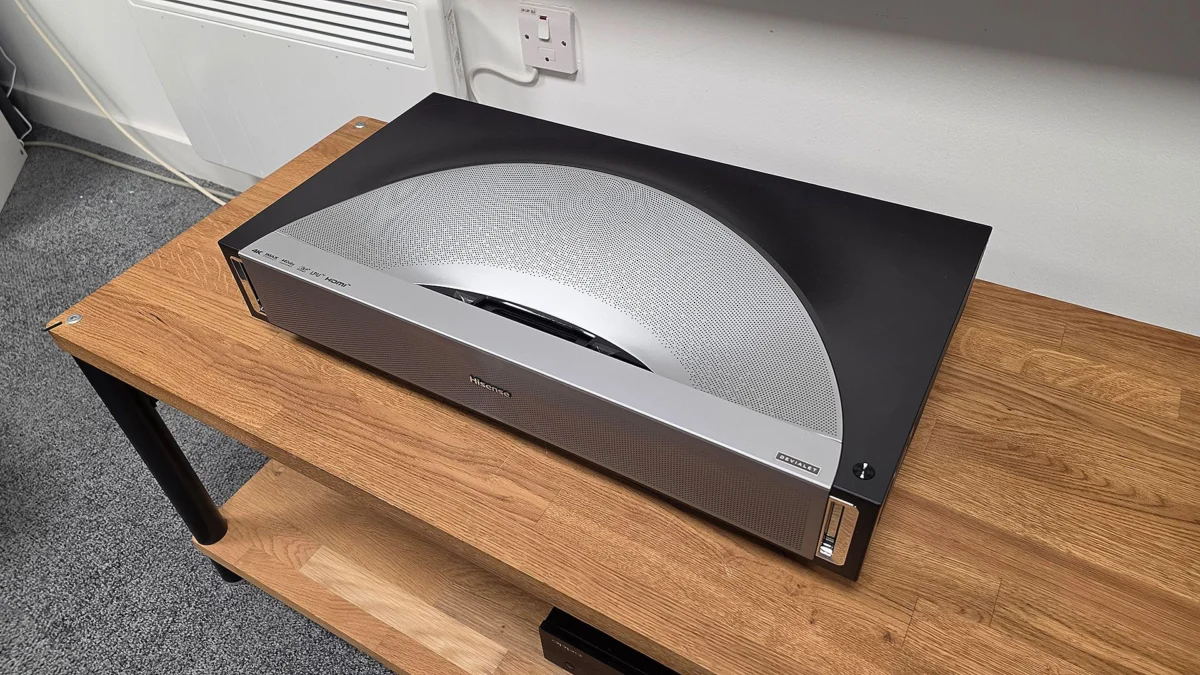
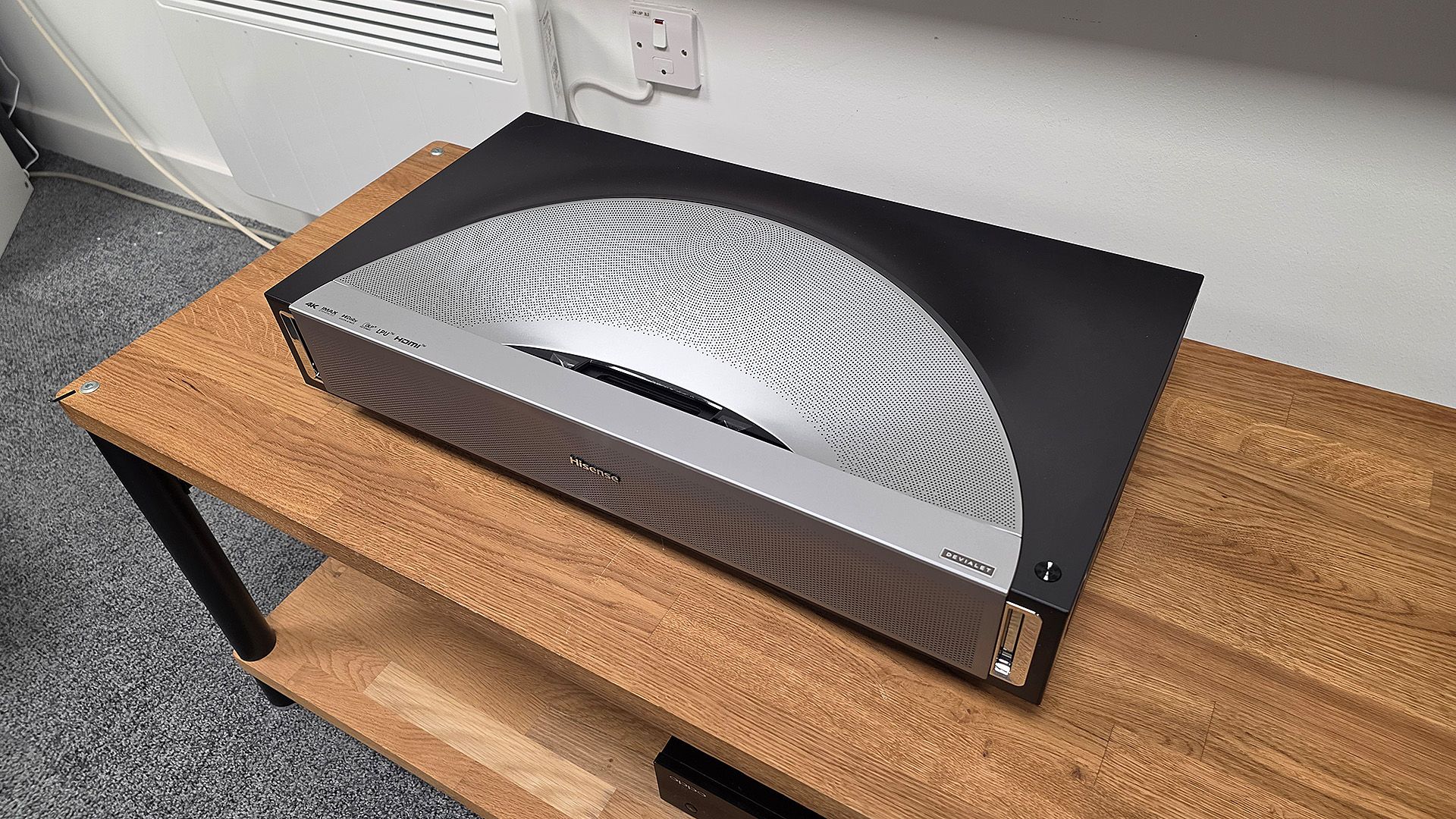
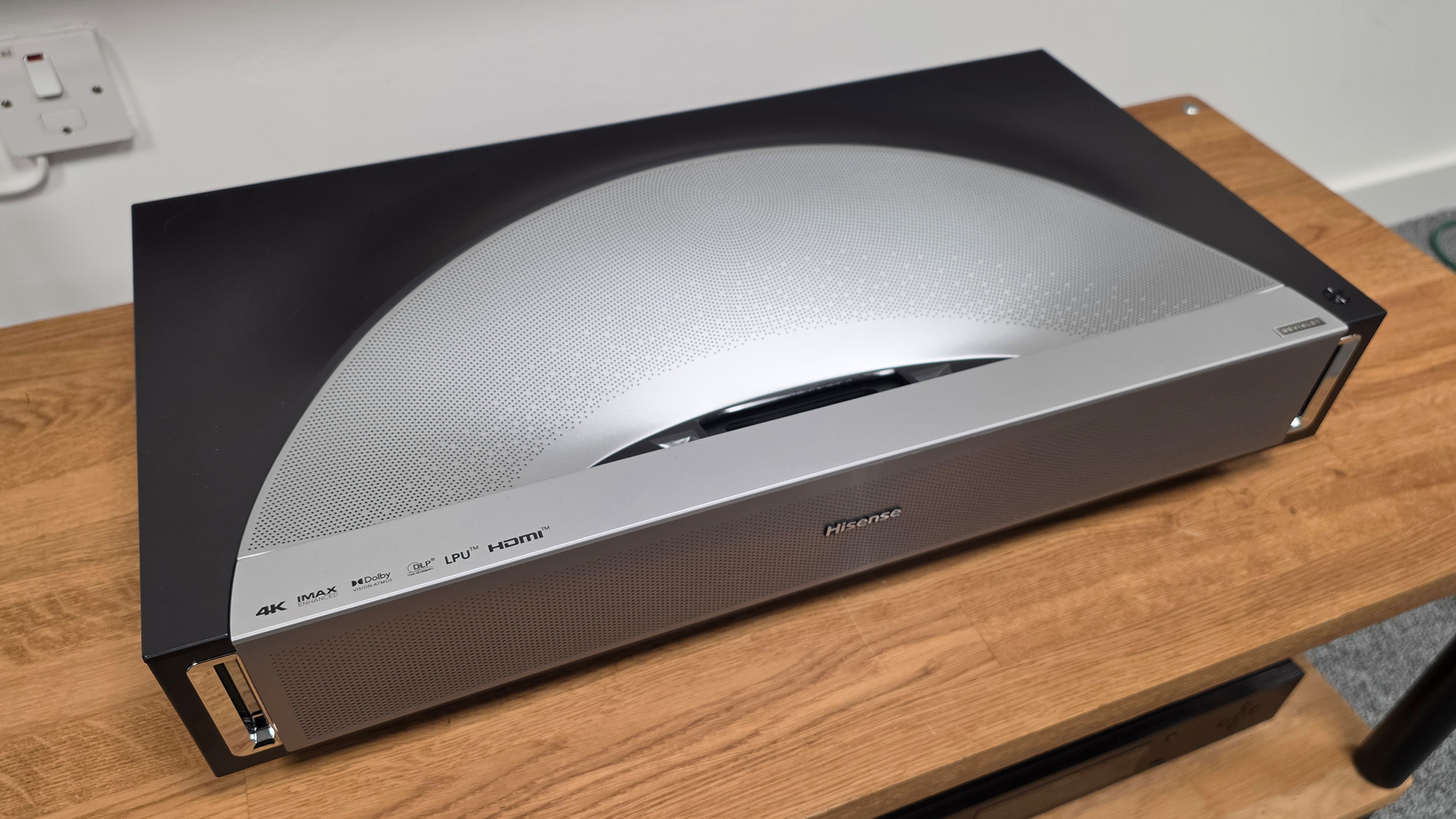
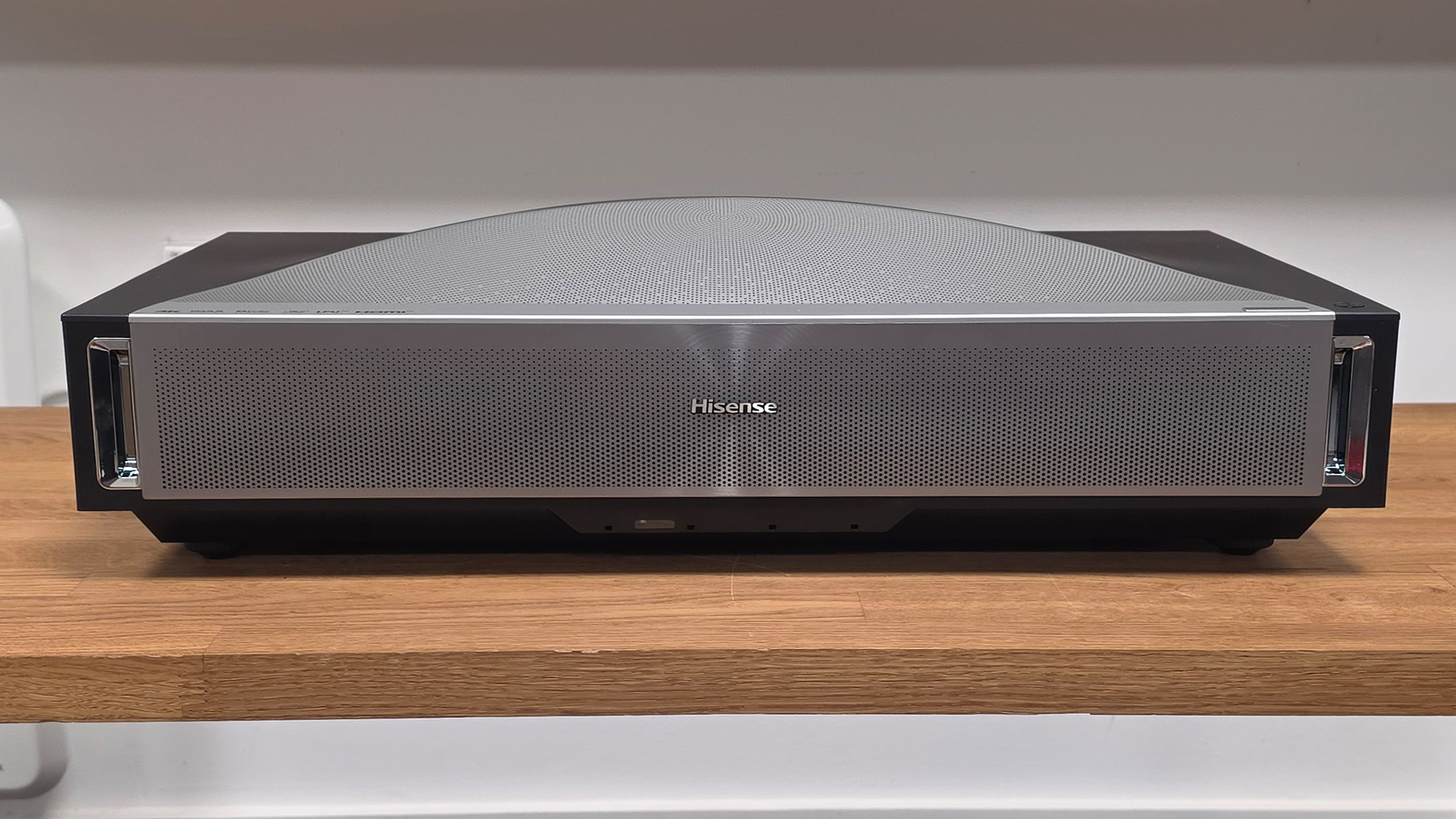
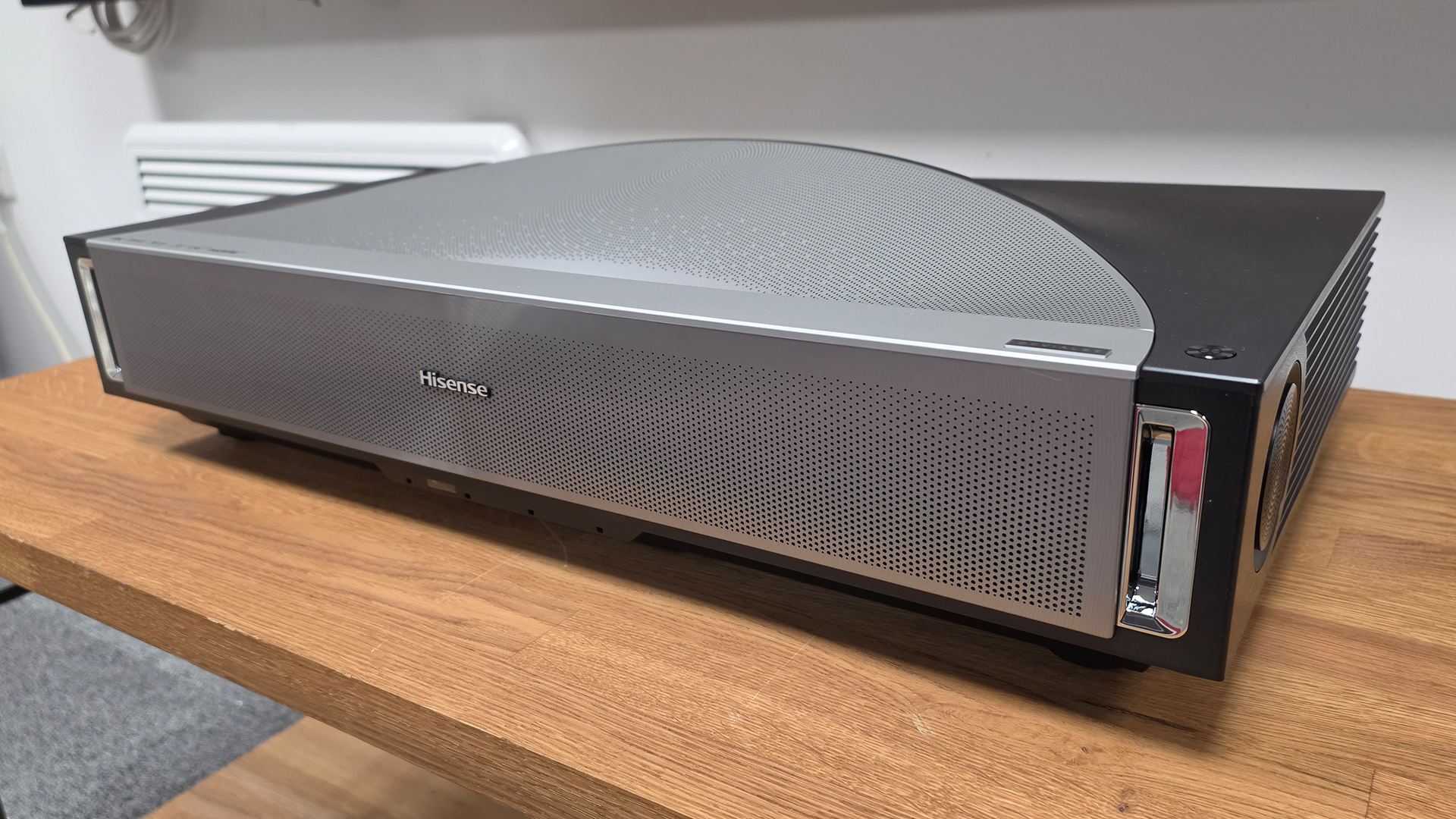
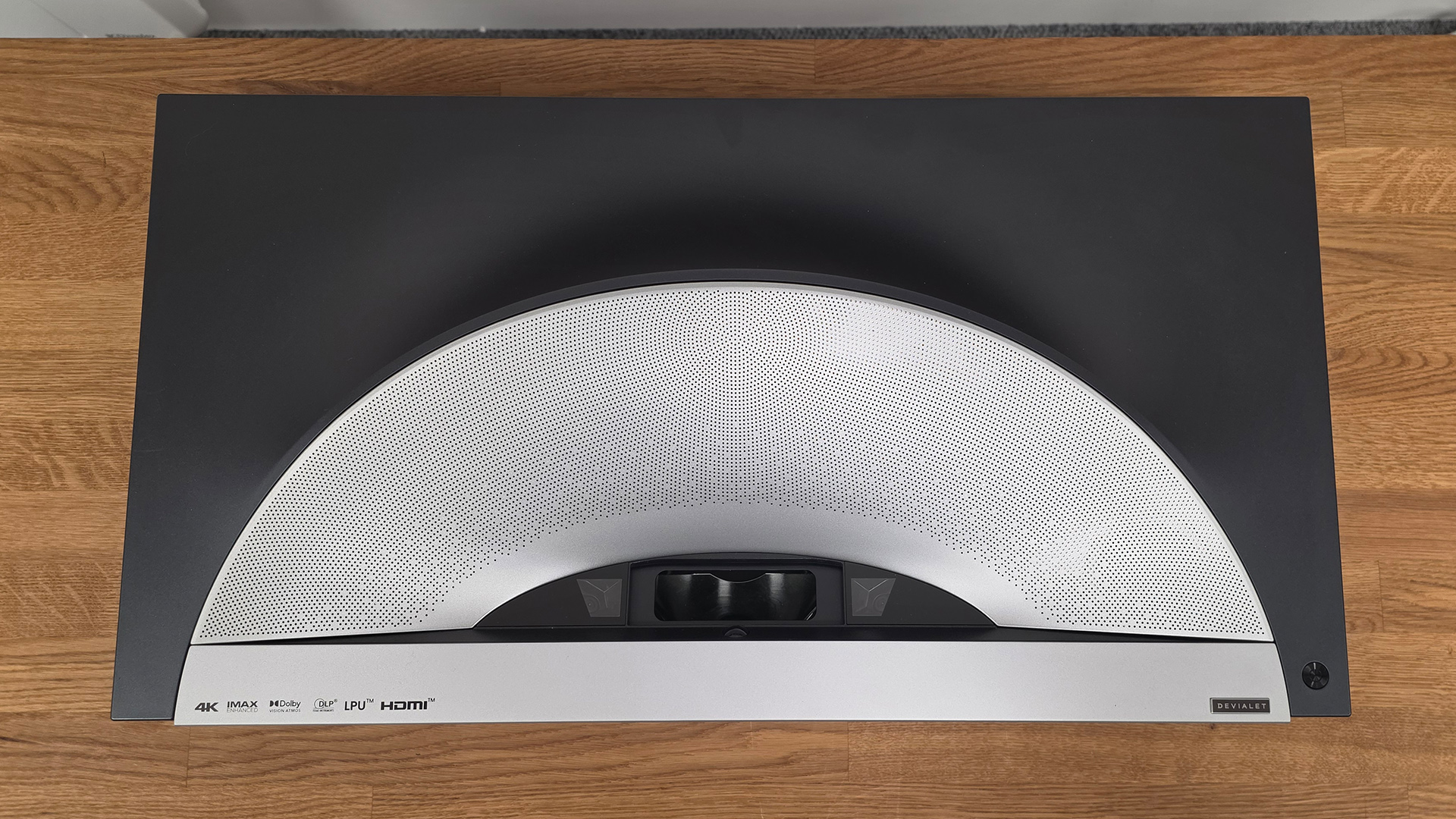
The evaluation began with the physical installation. True to Hisense’s iterative hardware rollout, the PX4 Pro retains the striking, industrial aesthetic of its lineage—described by one reviewer as resembling "what would happen if architect Frank Gehry designed a UST." Featuring a curved, amphitheater-shaped metal speaker grille housing a 66-watt, 4.0.2-channel sound system tuned by French audio brand Devialet, the unit measures 54 x 29 x 14cm and weighs 8.3kg.
Set up, unfortunately, proved to be an exercise in familiar frustration. Placing the projector on an AV rack and adjusting the physical feet is only half the battle. When attempting the automated calibration process—which requires snapping a photo of a test pattern and uploading it to a Hisense portal—reviewers encountered repeated errors. After a dozen failed attempts, the setup team was forced to manually adjust focus and geometry to achieve a usable picture.
Once operational, testing shifted to a battery of demanding physical discs and digital media. Initial viewings of 4K Blu-rays like Civil War and F1: The Movie revealed that out-of-the-box settings are overly bombastic, suffering from aggressive motion smoothing and hyper-saturated colors. However, switching to Filmmaker Mode, engaging the Warm 2 color profile, activating Dynamic Tone Mapping, and setting motion to Film unlocked the projector’s true potential.
Subsequent testing with challenging dark-mastered content, such as Sinners and Blade Runner 2049, highlighted both the immense strides Hisense has made in black-level retention and contrast, as well as lingering issues with color fidelity and occasional rainbow effects.
Supporting Data: Specifications and Performance Metrics
A breakdown of the Hisense PX4 Pro’s technical specifications reveals a robust feature set, though one with distinct hardware boundaries:
- Projector Type: TriChroma RGB triple-laser DLP (Ultra Short Throw)
- Native Resolution: 4K (via pixel shifting)
- Throw Ratio: 0.2:1 (capable of 100–120 inches from under a foot away; up to 200 inches from ~35 inches)
- Peak Brightness: 3,500 Lumens
- Contrast Ratio: 6,500:1 (claimed)
- Color Gamut Coverage: 118% of BT.2020
- HDR Support: Dolby Vision, HDR10+, HDR10, HLG
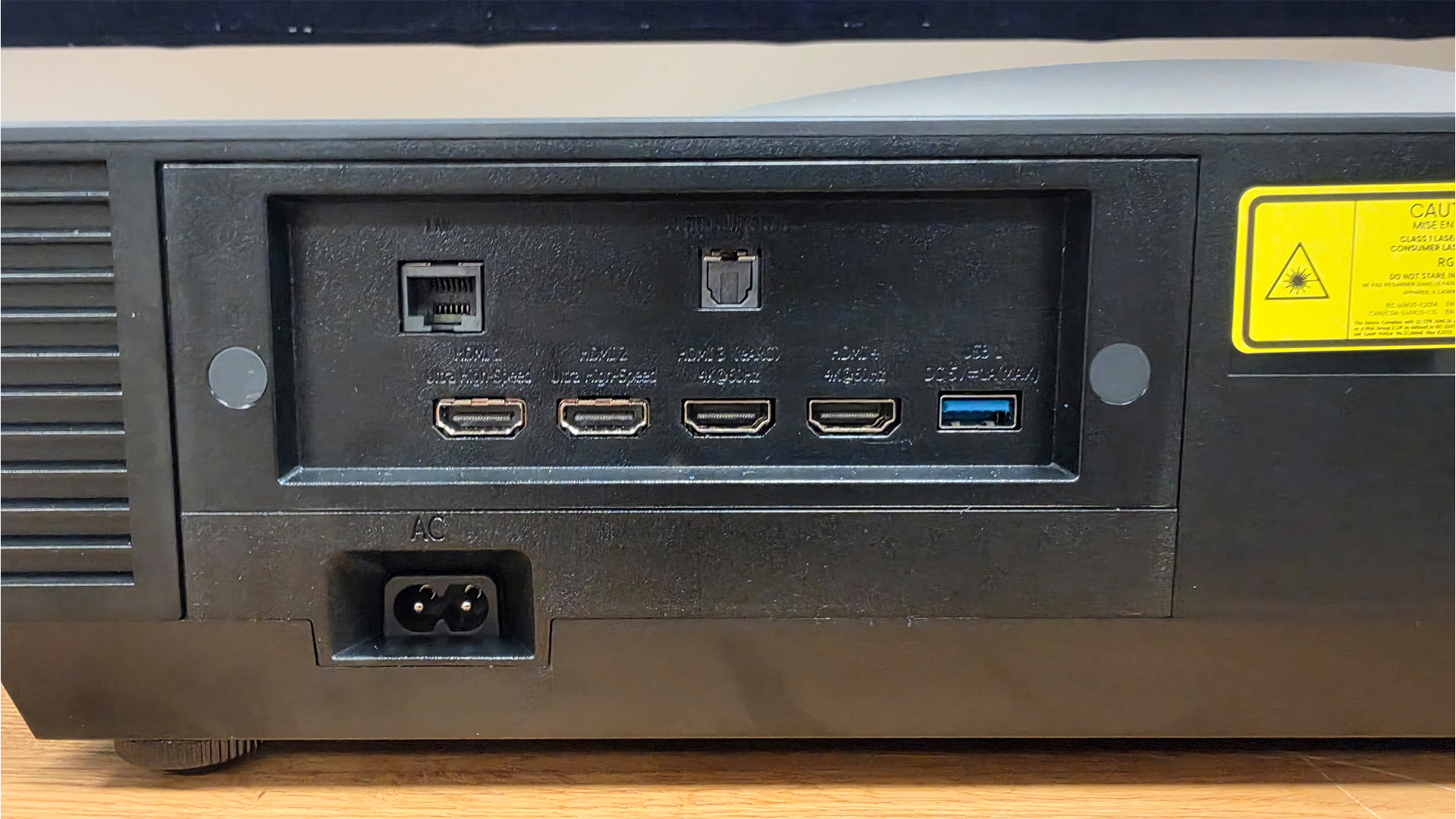
- Gaming Specs: 1080p at 240Hz, ALLM, VRR, dual HDMI 2.1 ports (capped at 4K/60Hz)
- Audio System: 66-watt, 4.0.2-channel Devialet-tuned configuration
- Operating System: Vidaa OS
Picture Quality Analysis
When properly calibrated, the PX4 Pro delivers an exceptionally three-dimensional image. In scenes featuring high-contrast environments—such as characters walking through a burning forest in Civil War—the increased brightness yields vivid reds and oranges absent in the PX3 Pro. Deep blacks are achieved without crushing shadow detail entirely, giving silhouetted elements sharp definition.
Motion handling is markedly improved; past Hisense models often struggled with jerky or jagged pans, but the PX4 Pro tracks fast-moving subjects (such as racing cars in F1) with pleasing weight and smoothness.
However, limitations emerge when handling extremely dark, warmly mastered content. In Sinners and Blade Runner 2049, minor black crush becomes apparent, and skin tones occasionally tilt toward an over-saturated, jaundiced yellow. Furthermore, sensitive viewers may notice the occasional artifact of the single-chip DLP rainbow effect during high-contrast scenes. Upscaling standard dynamic range (SDR) content, such as True Grit, is competent though occasionally prone to a "fizzy" digital grain.
Audio Performance
The Devialet-tuned 4.0.2-channel speaker system punches well above the weight of typical built-in projector audio. It imparts a genuine sense of height and horizontal tracking—jets soar overhead with noticeable verticality, and dialogue remains cleanly projected.
Yet, physical laws still apply. During intense, bass-heavy passages (such as the booming synth notes in Blade Runner 2049), the internal drivers are pushed beyond their comfort zone, introducing speaker rattle and a flabby warble that obscures mid-range frequencies. While impressive for a built-in solution, cinephiles will still want to budget for a dedicated soundbar or AVR.
Official Responses & Market Context
Hisense has positioned the PX4 Pro as a direct answer to consumer demand for higher brightness and deeper contrast in mid-tier home cinema setups. By integrating Digital Laser Engine 3.0 and a custom seven-level iris system, the manufacturer aimed to bridge the performance gap between entry-level devices and high-end flagship systems.
The projector operates on Hisense’s proprietary Vidaa OS rather than Google TV. While this interface covers mainstream streaming services like Netflix, Disney+, Amazon Prime Video, and Apple TV—and includes Freely support in the UK—it omits niche platforms such as Shudder, Hidive, and GeForce Now.
Gamers are given mixed signals by the official specifications. While Hisense heavily markets the projector’s 1080p/240Hz capabilities and ultra-low input lag via its two HDMI 2.1 ports, reviewers note a crucial caveat: 4K gaming is strictly capped at 60Hz. True 4K/120Hz pass-through remains off-limits, placing a ceiling on what next-generation console owners can achieve.
Implications: Where the PX4 Pro Fits in the Market
The arrival of the Hisense PX4 Pro creates a fascinating dynamic within the home entertainment sector. By slotting directly into the price bracket between standard entry-level USTs and ultra-premium flagships, it addresses an underserved demographic: movie enthusiasts who desire massive, high-fidelity projection but cannot stretch their budgets to accommodate top-tier alternatives like the AWOL Vision Aetherion Max.
Pros:
- Noticeably brighter, more vibrant image with enhanced color volume compared to the PX3 Pro.
- Significantly improved motion handling and black-level depth.
- Capacities for a massive projection size (up to 200 inches).
- Devialet-tuned audio system offers surprising height and spatial awareness.
- Comprehensive HDR format support (Dolby Vision, HDR10+).
Cons:
- Setup and auto-calibration processes remain frustratingly flawed, requiring manual intervention.
- Occasional color inaccuracies and minor black crush in dark cinematic scenes.
- 4K gaming is limited to 60Hz, despite the inclusion of HDMI 2.1 ports.
- Internal speakers can rattle and distort during heavy bass passages.
- Vidaa OS lacks certain niche streaming and cloud-gaming applications.
Ultimately, the Hisense PX4 Pro represents a massive step forward for the company’s UST product line. While it stops short of perfection—retaining a few quirks in color processing and setup—it stands as a highly competent, versatile display solution for anyone looking to bring a true cinematic scale into their living room without breaking the bank.