Wharfedale Unveils the Nova Series: A Masterclass in Precision-Engineered Subwoofer Design
012 mins
Main Facts: The New Wharfedale Nova Subwoofer Lineup
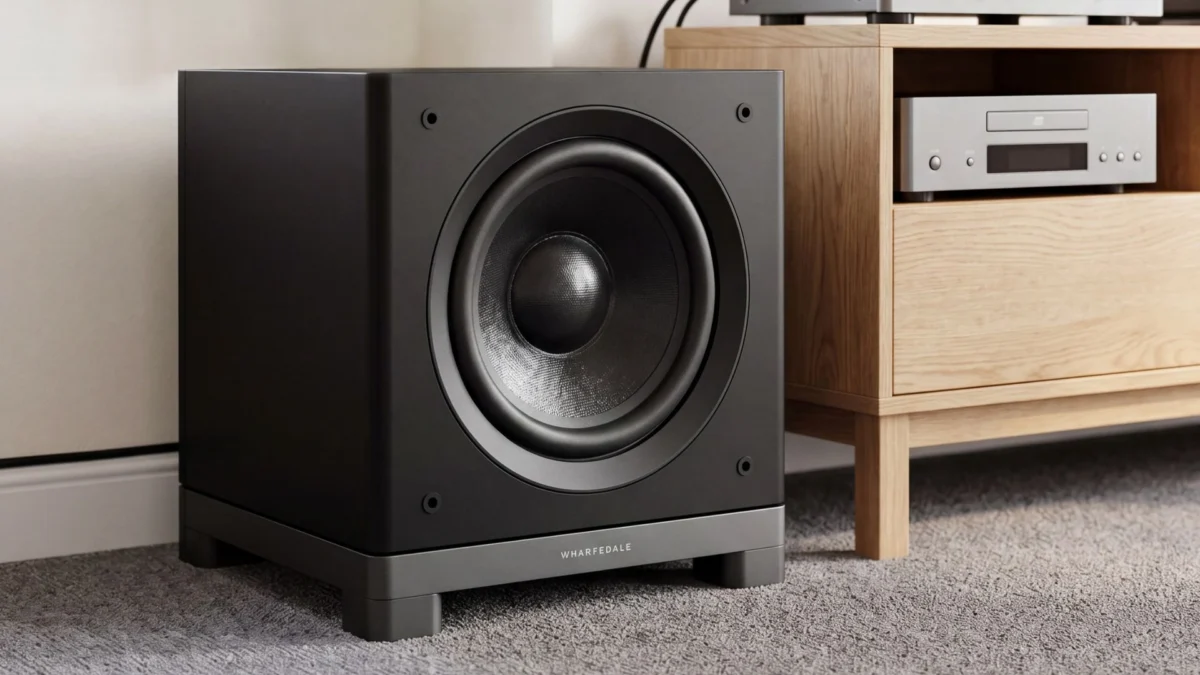
Wharfedale, a storied name in British audio engineering renowned for delivering exceptional value and musicality, has announced the global launch of its brand-new Nova Series subwoofers. Rejecting the industry-wide temptation to chase low-end depth at the absolute expense of audio integrity—an approach that often results in boomy, muddy bass—Wharfedale has explicitly engineered the Nova Series around three core tenets: balance, texture, and precision.
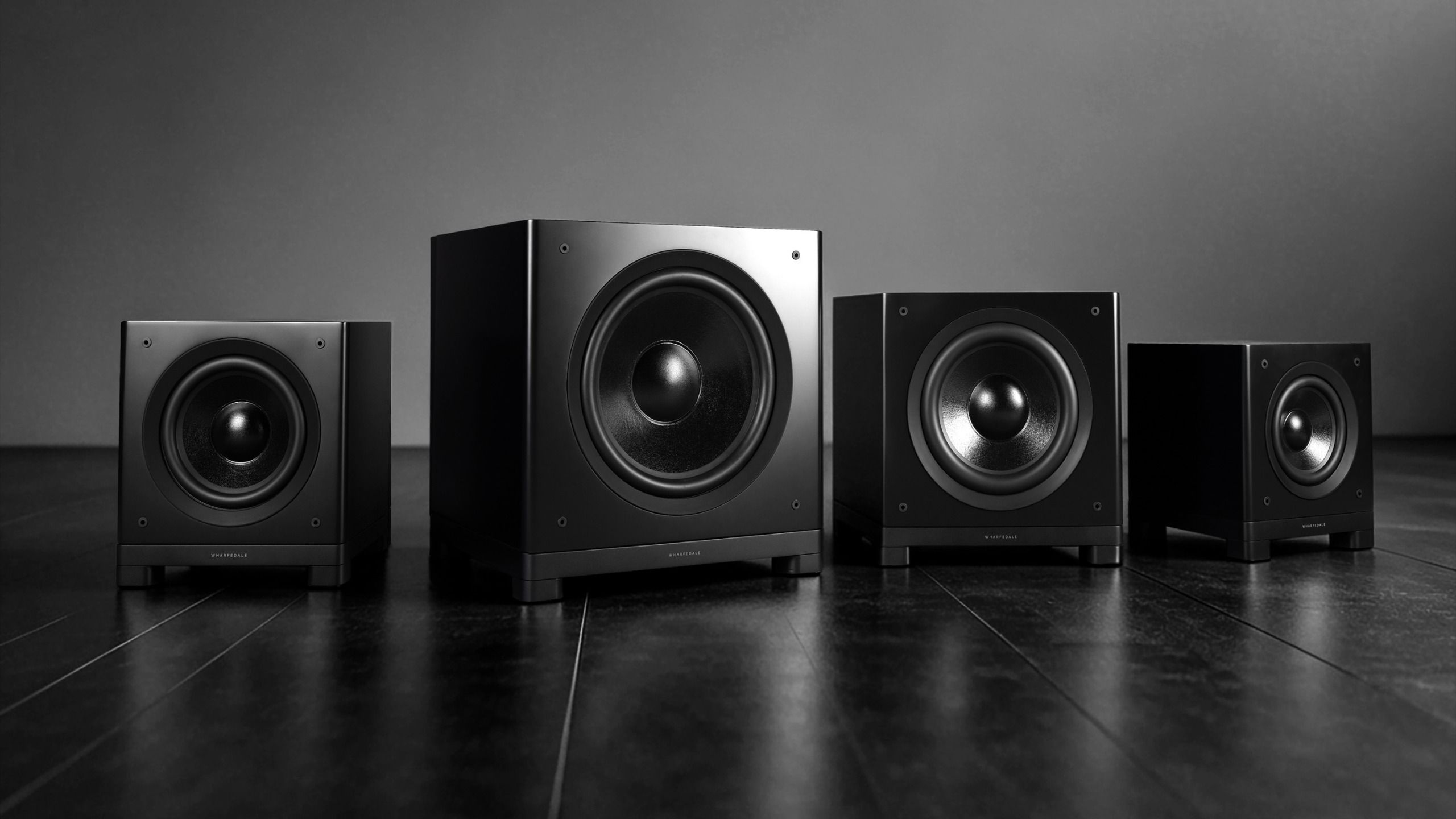
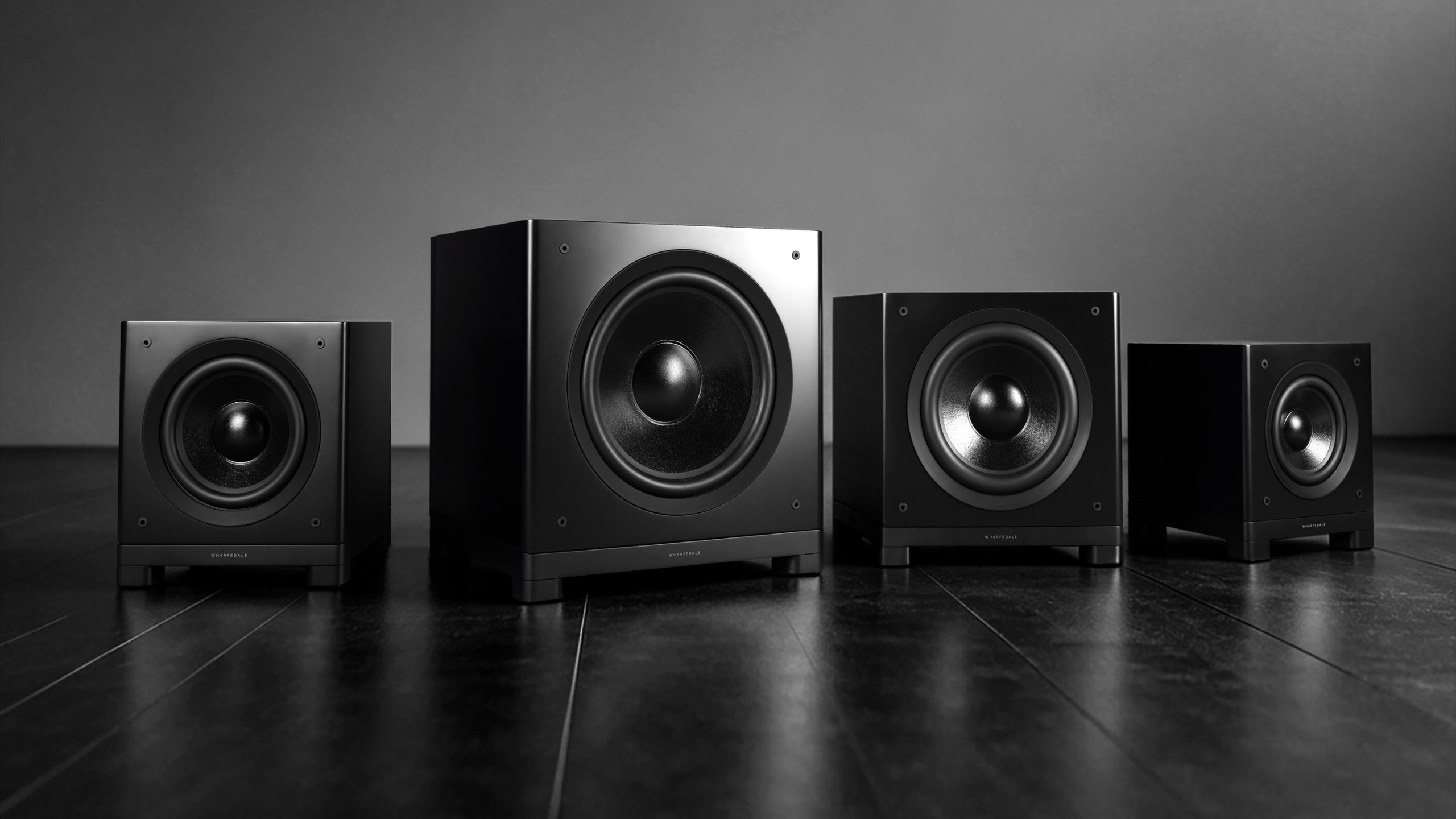
The new lineup consists of four distinct models, thoughtfully scaled to accommodate everything from compact desktop systems to massive, dedicated home theater environments. The series nomenclature directly corresponds to the diameter of each model’s primary active driver measured in inches:
Nova 8 (8-inch driver)
Nova 10 (10-inch driver)
Nova 12 (12-inch driver)
Nova 15 (15-inch driver)
While raw output capabilities and low-frequency extension scale proportionally with cabinet volume and driver size, all four models share an identical design philosophy. Every unit features newly developed long-throw active drivers, mass-loaded passive Auxiliary Bass Radiators (ABRs), advanced Class D amplification platforms, and sophisticated Digital Signal Processing (DSP) integration.
Positioned directly in the crosshairs of the competitive mid-to-high-end audio market, the Nova Series is set to launch globally in late September, with all units finished in a sleek, understated matte black aesthetic. Pricing is tiered competitively against industry benchmarks, starting at £799 / $999 / AU$1299 for the compact Nova 8 and scaling up to £1299 / $1999 / AU$2899 for the formidable Nova 15 flagship.
Chronology: The Evolution of Wharfedale’s Low-Frequency Engineering
To understand the significance of the Nova Series, it helps to examine Wharfedale’s historical trajectory in low-frequency reproduction. Founded in 1932 by Gilbert Briggs—a pioneer in loudspeaker design who built some of the earliest two-way speaker systems—Wharfedale has spent nearly a century refining how sound is captured, processed, and projected.
Historically, subwoofers faced a fundamental engineering compromise. Traditional ported (bass-reflex) designs could achieve high efficiency and deep extension, but often suffered from "port chuffing" (turbulent air noise), group delay, and a bloated, sluggish transient response. Sealed cabinet designs offered tighter, more musical bass, but required massive amounts of amplifier power and large driver excursions to reach cinematic depths.
In recent years, Wharfedale’s acoustic engineering team has focused heavily on integrating active-passive driver arrays to bypass these compromises. The development cycle for the Nova Series began several years ago, originating from a mandate to create a subwoofer platform that could perform double duty: delivering the thunderous, visceral slam required for blockbuster film soundtracks while retaining the agile, rhythmic timing demanded by intricate high-resolution music tracks.
By refining their proprietary paper-cone formulations, shorting-ring motor structures, and dual-suspension ABR systems over successive generations of product development, Wharfedale’s engineers finally locked down the cohesive hardware-software ecosystem that defines the Nova Series.
Supporting Data & Technical Deep-Dive
Wharfedale’s engineering claims are backed by an impressive array of advanced acoustic and electronic specifications across the Nova lineup.
Drivers and Cone Technology
At the heart of each Nova subwoofer is a newly engineered long-throw driver. The cones are constructed from a rigid, lightweight paper matrix treated with a proprietary chemical coating. This specific formulation dramatically increases stiffness and self-damping characteristics without adding extraneous mass. The result is a driver that maintains structural integrity under extreme acceleration and deceleration, preventing cone break-up at high output volumes while allowing for substantial linear excursion.
Motor Systems and Thermal Efficiency
To ensure linearity and control, the voice coils feature a large-diameter design that dramatically improves thermal efficiency and sustained power handling. Integrated directly into the motor structure is an aluminium shorting ring. This ring plays a crucial role in lowering electrical distortion, linearising the magnetic field, and drastically improving transient response. According to Wharfedale, this results in bass with noticeably greater definition and natural rhythmic timing.
Passive Auxiliary Bass Radiators (ABRs)
Eschewing traditional reflex ports entirely, every model in the Nova Series utilizes a downward-firing, mass-loaded ABR with a dual-suspension architecture. By utilizing a passive radiator rather than an open port, Wharfedale successfully extends low-frequency output while completely eliminating typical port artifacts, such as compression, resonance, and audible air turbulence (chuffing).
Amplification and DSP Integration
Powering the Nova subwoofers are bespoke Class D amplifier platforms delivering continuous nominal power ratings ranging from 200W to 360W depending on the model, capable of up to 80V peak output with substantial dynamic headroom.
Crucially, Wharfedale has treated the amplifier, driver, cabinet loading, and DSP as a unified, holistic ecosystem. The onboard DSP-controlled dynamic EQ is particularly clever:
At low listening volumes: The DSP dynamically boosts low-end weight and extension, ensuring that listeners don’t lose that tactile sub-bass feel during late-night viewing sessions.
At high listening volumes: The system actively manages driver excursion limits, protecting the hardware from bottoming out and maintaining a clean, strain-free output.
Official Responses and Market Positioning
Wharfedale’s marketing and engineering teams have been vocal about the philosophy driving the Nova Series, positioning the range as a direct antidote to the "boom-and-bust" subwoofers that flood the consumer electronics market.
"Too often, companies pursue low-end depth at the expense of all else," noted a Wharfedale spokesperson during the product unveiling. "The Nova Series is fundamentally focused on balance, texture, and precision. The aim is for bass that is deep and authoritative, but that complements rather than overwhelms the movies and music it’s conveying."
This design ethos places the Nova series in direct competition with established industry heavyweights. Notably, the entry-level Nova 8 is priced at £799 / $999 / AU$1299, putting it head-to-head with the Bowers & Wilkins ASW610—long considered a gold standard and frequent occupant of top positions on critical "best subwoofer" roundups.
As consumers move up the ladder, the pricing structure adapts to scale:
Nova 8: £799 / $999 / AU$1299
Nova 10: £899 / $1199 / AU$1699
Nova 12: £1099 / $1499 / AU$2199
Nova 15: £1299 / $1999 / AU$2899
Implications for Audiophiles and Home Theater Enthusiasts
The introduction of the Wharfedale Nova Series carries several significant implications for both stereo hi-fi enthusiasts and multi-channel home cinema fans.
1. The Death of the "One-Note Bass" Stereotype
For decades, budget and mid-range subwoofers earned a poor reputation among purists for producing slow, muddy bass that smeared midrange detail. By emphasizing transient response, low distortion via aluminium shorting rings, and agile Class D power delivery, Wharfedale is signaling that high-performance, musically accurate bass should not be restricted exclusively to ultra-high-end, five-figure subwoofers.
2. Flexibility Across Diverse Ecosystems
Because the Nova range spans from an 8-inch driver up to a massive 15-inch variant, it bridges the gap between disparate audio setups. A desktop or minimalist bookshelf hi-fi system can pair seamlessly with the agile Nova 8 to add a subtle foundation of warmth and scale, while a dedicated, acoustically treated home theater room can leverage the sheer air-moving capacity of the Nova 15 to reproduce room-shaking cinematic explosions without losing dialogue clarity or musical pacing.
3. Granular User Calibration
Beyond out-of-the-box tuning, Wharfedale has equipped the Nova Series with comprehensive physical and digital adjustment tools. Users retain full control over crossover frequencies, phase alignment, and level calibration, allowing the subwoofers to integrate seamlessly into complex, multi-brand acoustic environments.
Market Outlook
As these units hit retail shelves in late September, reviewers and consumers alike will be eager to test whether Wharfedale’s ambitious claims hold up in real-world acoustic spaces. If the Nova Series performs anywhere near its spec sheet, it could completely disrupt the mid-tier subwoofer landscape, establishing a new benchmark for what precision, texture, and balance look like in modern low-frequency reproduction.