Introduction: A Moment of Reckoning
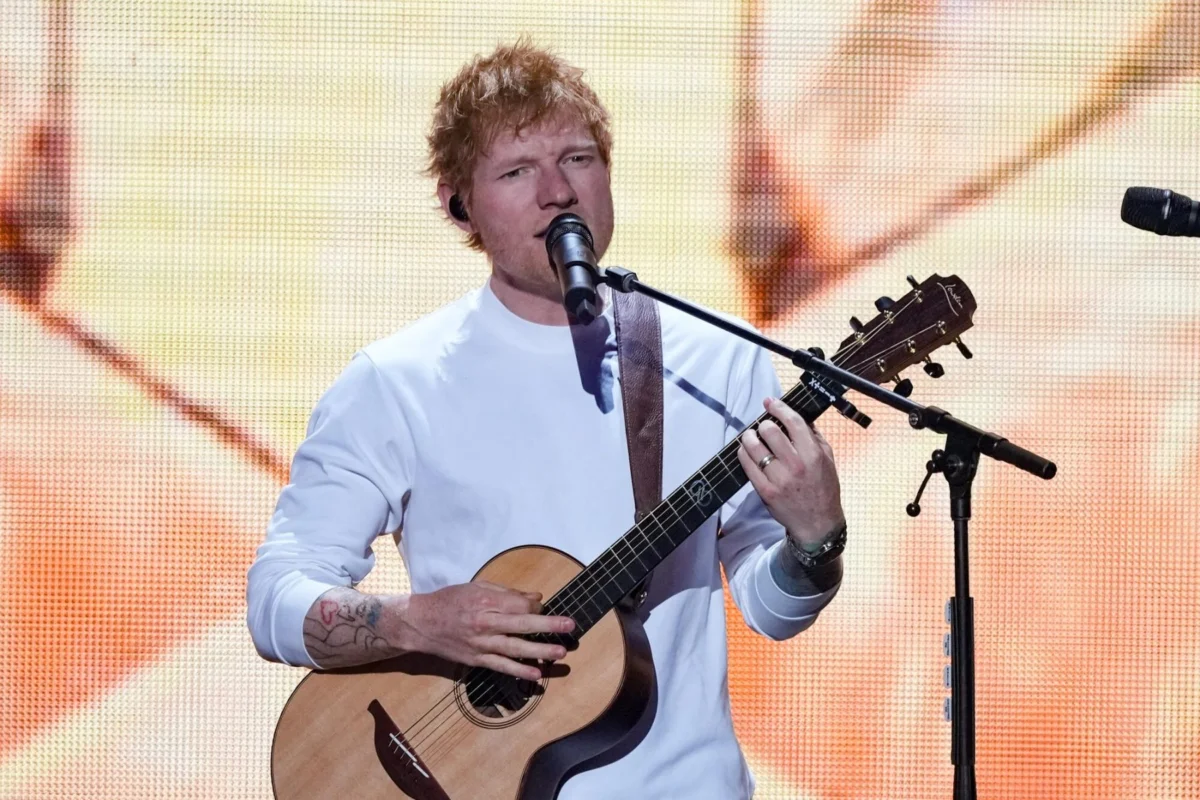
For Ed Sheeran, a global superstar whose brand has long been defined by relatability, acoustic simplicity, and a deliberate avoidance of political polarization, the weekend of September 19 marked a profound shift. Stepping onto the stage at Philadelphia’s Lincoln Financial Field, the British singer-songwriter faced an audience of 50,000, yet the atmosphere was heavy with the silence of a tour in crisis. Following a tumultuous week that saw his opening act, Macklemore, removed from the tour under pressure from venue owners—and the subsequent departure of his backing band, Beoga—Sheeran found himself at a crossroads. He was no longer just a musician; he was a focal point for a volatile global conversation.
The artist, who has frequently described himself as an "activist musician" only in the sense that he uses his platform for humanitarian causes rather than political signaling, was forced to confront a public relations nightmare. The controversy stemmed from Macklemore’s vocal support for Palestine, which triggered a domino effect of professional consequences. Sheeran, caught between his personal loyalties, the demands of venue stakeholders, and his own desire to keep his music a sanctuary for fans, chose to address the situation head-on before playing a single chord.
The Chronology of a Crisis
The descent into this controversy began when a coalition of venue owners, led by Robert Kraft, voiced strong objections to Macklemore’s public statements regarding the conflict in Gaza. The pressure to drop the rapper from the "Loop Tour" became insurmountable, leading to his abrupt exit.
The fallout was immediate and far-reaching. In a display of solidarity that caught many in the industry off guard, the tour’s other supporting acts and Sheeran’s long-time Irish backing band, Beoga, withdrew from the trek. The tour, which relies heavily on the intimacy of Sheeran’s loop-pedal performances, was suddenly stripped of its supporting infrastructure.
By Saturday, September 19, the tension in Philadelphia was palpable. Reports of heightened security surrounded the Lincoln Financial Field, and the media presence was significantly elevated. Sheeran, having already issued a brief, scrutinized statement online earlier in the week, felt that a digital response was insufficient. He decided that the only way to move forward was to speak to his fans in person, ensuring that his message of unity remained the defining narrative of the night.
Official Statements and Personal Reflections
Sheeran’s opening address to the Philadelphia crowd was a meticulously prepared, raw admission of vulnerability. Using a teleprompter to ensure his sentiments were articulated with precision, he opened by acknowledging the criticism he had faced—both regarding his music and, more pointedly, his management of the tour’s recent crisis.
"I’m used to my music being criticized, and I’m always happy to take that because I’m lucky a lot of you like my stuff," Sheeran admitted. "But this week, the criticism was about something much more important, and I’ve had to take and make difficult decisions, and I am making mistakes, and I’m so, so sorry."
He moved into a nuanced acknowledgment of the geopolitical tensions that had fueled the controversy. "What happened in Israel at the Nova music festival on October 7th was horrific and compounded centuries of Jewish pain," he stated. "What is happening in Gaza is catastrophic, unjustifiable, and disproportionate. My heart has been broken by the scale of devastation and loss of civilians’ lives, of children’s lives. And the systemic injustice we’re seeing unfold in the West Bank cannot be overlooked."
The artist’s approach was one of active listening rather than prescriptive advocacy. He noted that he was "speaking to people across the spectrum" to determine how best to provide humanitarian aid to victims on both sides of the conflict. By framing the concert as a "place where everyone is welcome," he attempted to bridge the divide between his audience members who may hold diametrically opposed views on the conflict.

Supporting Data and Tour Logistics
The practical implications of the recent departures were evident in the show’s modified production. The "Loop Tour" is famous for its technical, solitary nature, but the absence of Beoga significantly altered the soundscape. Most notably, the "B-stage" segment—which usually features Sheeran moving through the crowd—was scrapped entirely. Sheeran cited safety concerns, admitting he was uneasy about "what might happen if I stood in the middle" of the stadium given the heightened political sensitivities of the moment.
Despite these changes, the show proceeded with a sense of resilience. Sheeran introduced a new ensemble, led by violinist Alicia Enstrom, to fill the void left by his former bandmates. Whether this arrangement will persist for the remainder of the tour remains unclear, as the singer offered no long-term roadmap for his touring personnel.
The audience, however, appeared largely indifferent to the background politics. There were no visible protests inside the stadium, and the energy remained focused on the music. While Sheeran made subtle, self-deprecating jokes about his recent stint in the headlines, he was careful not to alienate his younger fans or those who came strictly for the entertainment.
Implications: The Burden of the Global Artist
As the concert approached its finale, Sheeran sat on the edge of the stage for an unscripted, deeply personal reflection. This was the moment he laid bare the toll the week had taken on his mental health and his career outlook.
"The last week of my life has been one of the worst weeks of my life," he confessed. "I really didn’t know whether this tour would carry on, I really didn’t know whether I’d get on stage again, whether I even wanted to be an artist at all."
He described a sense of isolation, noting that friends and long-time associates had "backed away" as the pressure to cancel the tour mounted. The decision to continue was, in his view, a direct response to the loyalty of his fans. "I saw 50,000 people who haven’t abandoned me," he said, fighting back tears. "I’m doing this for you. I love the unison we have here."
The implications of this episode for Sheeran’s career are complex. By taking a stance on a highly polarized global conflict, he has stepped out of his "un-controversial" comfort zone. For many artists, such a move can lead to a shrinking of their fan base, yet for Sheeran, the immediate reaction in Philadelphia suggested that his audience’s connection to him transcends current events.
Conclusion: Music as a Common Ground
The final moments of the show saw a return to normalcy, with pyrotechnics and signature hits that signaled the end of the turmoil—at least for the duration of the set. However, the shadow of the past week remains. Sheeran’s attempt to use music as a "root of love" in a time of deep division is an ambitious, if difficult, goal.
As the "Loop Tour" continues, the challenge for Sheeran will be to balance his desire for musical unity with the reality that his platform is now viewed through a political lens. Whether he can maintain his reputation as an artist who brings people together despite their ideological differences remains the central question. For now, he has chosen to stay on the stage, arguing that if the music stops, the possibility for connection—the "love" he speaks of—dies with it. By choosing to face his audience rather than hide from the controversy, Ed Sheeran has transformed a personal and professional crisis into a testament to the enduring, if complicated, power of the live concert experience.