By Jeff Dorgay | Edited and Expanded for Audiophile Review
Main Facts
The high-end audio community has long held a revered, almost mythical place for electrostatic loudspeakers. Among them, the legendary designs from Quad—specifically the historic ESL-57 and the subsequent ESL-63—stand as cornerstones of acoustic transparency, tonal purity, and point-source coherence. However, electrostatic speakers have historically carried a reputation for fragility, limited bass extension, restricted dynamic headroom, and a polite presentation that struggled to reproduce the visceral punch of rock and roll.
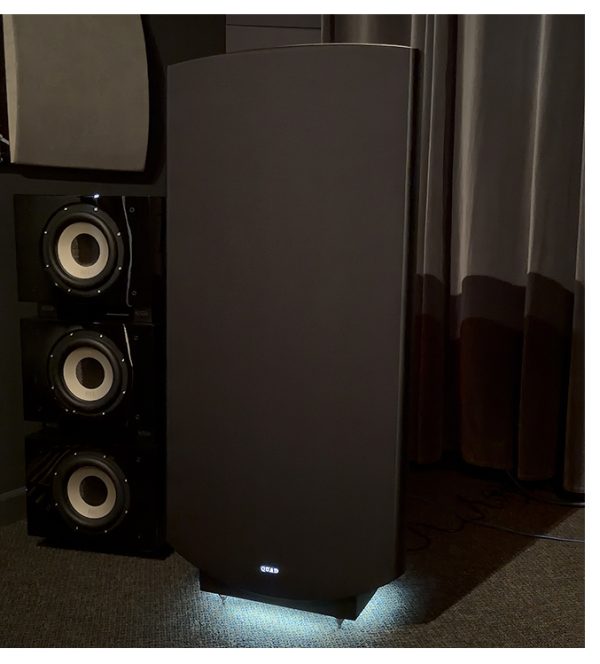
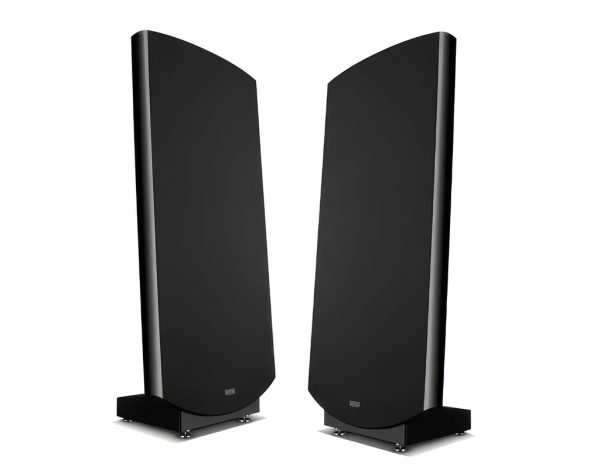
Enter the new Quad 2912X, a flagship electrostatic loudspeaker that promises to rewrite the rules of planar-magnetic and electrostatic design. Priced at approximately $18,000 per pair and distributed in North America via MoFi Distribution, the 2912X was recently showcased at a high-end audio event hosted by Upscale Audio.
During an exclusive, private listening session following the conclusion of the event, seasoned audio critic Jeff Dorgay put the new transducers through their paces. Driven by the formidable Musical Fidelity M8XI integrated amplifier (retailing for roughly $7,999 and supplied by Harmonia Distribution), the Quad 2912X demonstrated a staggering ability to retain the ethereal, hyper-detailed midrange magic of the original 1957 ESL while dramatically expanding frequency extremes, offering exceptional bass grip, and delivering dynamic swings capable of handling high-energy rock music with ease.
According to initial evaluations, the 2912X achieves roughly 92% of the original ESL-57’s haunting vocal purity, while providing modern audiophiles with the scale, power-handling, and spatial breadth required for contemporary listening habits.
Chronology: A History of "The Quad Thing" and the Road to the 2912X
To understand the magnitude of the Quad 2912X, one must trace the historical lineage of the brand and the evolution of electrostatic technology over nearly seven decades.
1957: The Birth of a Legend
When Peter Walker introduced the Quad ESL (later known as the ESL-57) in 1957, it was nothing short of a revolution. It was the first full-range electrostatic loudspeaker capable of commercial viability. Utilizing ultra-thin membranes suspended between charged stator plates, the ESL-57 eliminated the traditional box enclosure and heavy voice-coil drivers, banishing cabinet resonances and crossover distortions. For decades, pairs of original 57s and subsequent 63s have served as reference points for publications like TONE, embedding "The Quad thing"—an unmatched level of midrange purity and transient speed—into the collective memory of generations of listeners.
The Limitations of History
Despite their sonic triumphs, classic Quads came with notorious caveats. They were famously delicate. Driving them with high-powered amplifiers often resulted in arcing, blowing internal fuses, or literally frying the stator panels. Furthermore, their dipole design rolled off significantly at frequency extremes, yielding polite, lightweight bass and limited maximum sound pressure levels (SPL). Listeners wanting to crank up symphonic crescendos or classic rock records had to temper their expectations to avoid catastrophic equipment failure.
The Modern Renaissance: Upscale Audio Showcase
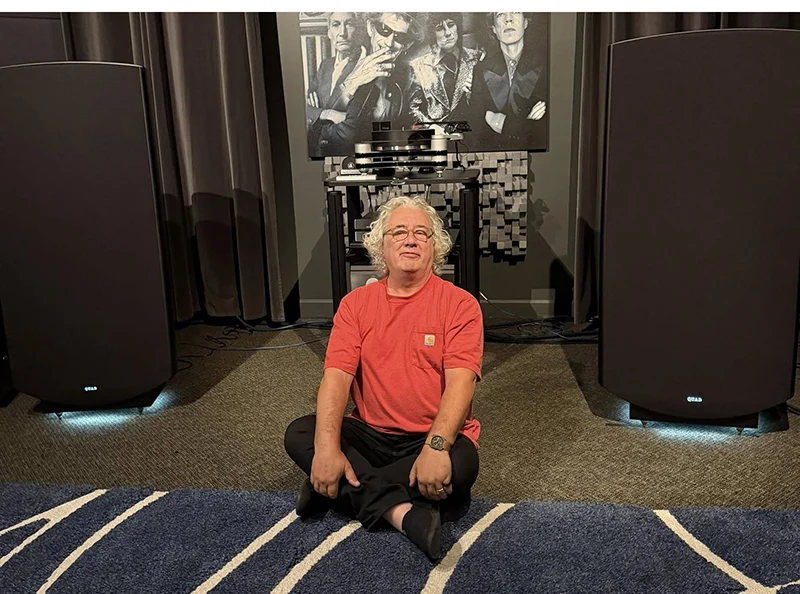
Decades later, the electrostatic concept has been continuously refined. At the recent Upscale Audio event, the culmination of these decades of engineering research was unveiled in the form of the 2912X. Following the official close of the showroom doors, an hour-long late-night listening session provided the ideal, noise-free environment to assess how far the technology has progressed. Surrounded by portraits of rock icons like the Rolling Stones, the 2912X bridged the gap between fragile vintage purism and modern high-performance demands.
Supporting Data and Technical Architecture
The technical triumph of the Quad 2912X lies not merely in updating an old design, but in solving the historical engineering bottlenecks of electrostatic reproduction: power handling, damping, and low-frequency weight.
Power, Current, and Damping Factor
A common misconception in audiophile circles is that high-power amplifiers are inherently dangerous for electrostatic speakers. While true for early vintage iterations, modern flagship Quads thrive when paired with high-current amplifiers boasting a high damping factor.
During the Upscale Audio demonstration, the speakers were tethered to the Musical Fidelity M8XI integrated amplifier. Delivering massive current and exceptional control, the M8XI provided the exact type of robust drive required by the 2912X panels. Past iterations, such as Jeff Dorgay’s personal experience driving Quad 2812s with mighty Pass XS300 monoblocks, proved that these panels scale exponentially with elite amplification. However, the M8XI represents a far more accessible, real-world solution for high-end enthusiasts.
Sonic Performance Metrics
- Midrange Transparency: Retains an estimated 92% of the legendary, uncolored vocal intimacy of the original ESL-57.
- Frequency Extension: Vastly superior extension at both the upper and lower frequency boundaries compared to historical predecessors.
- Dynamic Swing: Exceptional macro and micro-dynamics, allowing for realistic volume scaling without compression or distortion.
- Soundstage Dimensions: A massive, three-dimensional sound field with pinpoint imaging and spatial layering.
- Bass Performance: Surprising low-end grip and articulation, dismantling the myth that electrostats cannot "rock."
Cost-to-Performance Value Proposition
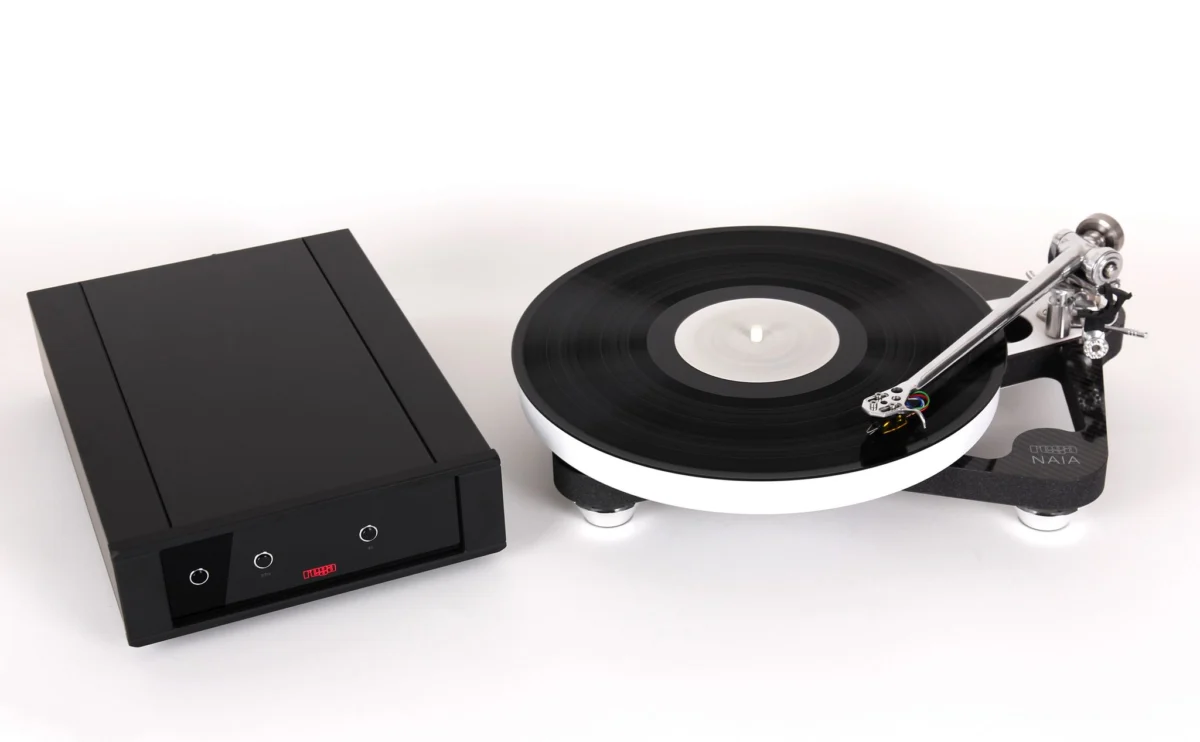
Priced at roughly $18,000 per pair for the speakers, paired with an integrated amplifier like the Musical Fidelity M8XI ($7,999), and complemented by an analog front-end in the $5,000 to $10,000 range, a complete world-class system can be assembled for the price of a Certified Pre-Owned BMW 3-Series. When compared against box speakers in the same price tier, the 2912X offers a vastly superior level of detail retrieval and a complete absence of cabinet coloration.
Comparative Analysis: Quad vs. The Planar Competition
The high-end planar speaker market is traditionally divided among three major technologies: Electrostatics from Quad, Hybrid Electrostatics from MartinLogan, and Planar-Magnetic Dipoles from Magnepan.
Quad vs. MartinLogan
While MartinLogan speakers offer stunning visual design and impressive low-end integration via traditional dynamic woofers housed in the base, they rely on a hybrid crossover design. This introduces a subtle acoustic discontinuity between the fast electrostatic panel and the moving-coil woofer. Quad’s full-range electrostatic approach maintains a seamless, uninterrupted acoustic wavefront from top to bottom, resulting in a superior level of tonal purity that hybrid designs simply cannot replicate.
Quad vs. Magnepan
Magnepans are beloved for their massive soundstages and excellent value, utilizing thin metallic traces printed on a mylar film operating within a magnetic field. However, compared to the electrostatic principles of the Quad 2912X, Magnepans often lack the ultimate transparency, lightning-fast transient snap, and micro-resolving power that define the true "Quad sound." Where Magnepans present a grand, slightly romanticized wall of sound, the Quad 2912X lays bare the finest textures of a recording with surgical, yet musical, precision.
Implications for the High-End Audio Market
The introduction and glowing reception of the Quad 2912X carry significant implications for manufacturers, retailers, and audiophiles alike.
1. The Redefinition of "Rock-Capable" Electrostats
For decades, buyers seeking high-SPL playback or heavy bass genres (rock, electronic, large-scale orchestral) were systematically steered away from electrostatic loudspeakers. The 2912X shatters this paradigm. By demonstrating that an electrostatic panel can faithfully reproduce Keith Richards’ guitar riffs on "Wicked as it Seems" at engaging, realistic volume levels without distress, Quad has broadened the demographic appeal of electrostatic speakers.
2. Matching Modern Electronics with Classic Transducers
The pairing of the 2912X with high-current, muscular modern amplification (such as the Musical Fidelity M8XI) highlights a broader industry trend: vintage-inspired transducer topologies are benefiting immensely from contemporary solid-state engineering. Audiophiles no longer need to choose between the delicate transparency of low-powered tube amps and the muscle of solid-state giants; modern designs like the 2912X bridge the divide.
3. Market Positioning and Accessibility
At an estimated $18,000 per pair, the Quad 2912X occupies the competitive ultra-fi middle ground. It challenges exorbitant six-figure horn and dynamic tower speakers by delivering reference-grade realism at a fraction of the footprint and cost. For dealers like Upscale Audio and distributors like MoFi, the 2912X represents a compelling anchor product capable of anchoring a world-class analog or digital reference system.
Conclusion: Are These Your Dream Speakers?
As Jeff Dorgay noted following his late-night immersion at Upscale Audio, hours vanish in the blink of an eye when listening to a system of this caliber. The Quad 2912X is not merely an exercise in nostalgic audio archeology; it is a profound step forward for electrostatic design.
For those who have yearned for the magical, lifelike midrange of vintage Quads but demanded modern reliability, extended frequency response, and the dynamic capability to rock out to the Rolling Stones, the 2912X answers the call. While formal review pairs will soon find their way into listening rooms worldwide, the initial verdict is crystal clear: if you are standing on the fence regarding high-end electrostatic reproduction, the Quad 2912X comes with the highest possible recommendation.
These just might be the dream speakers you have been waiting for.