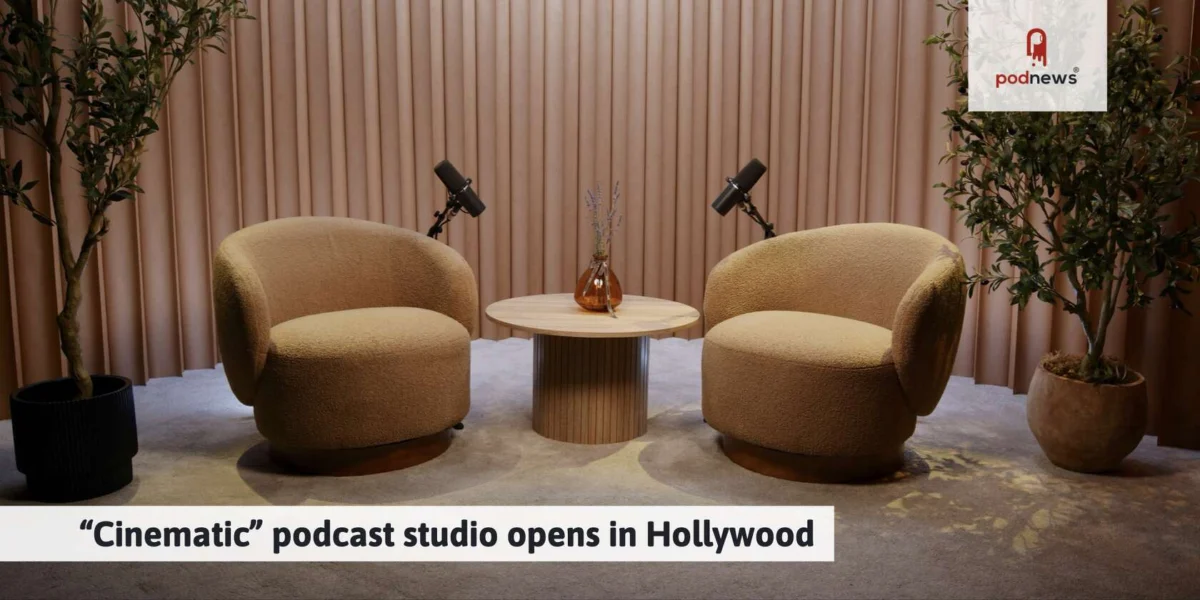
As the audio industry matures into an era defined by high-fidelity production and visual integration, the landscape of podcasting is undergoing a seismic shift. On September 10, 2026, the heartbeat of the entertainment industry—Hollywood—welcomed a new facility designed to blur the lines between traditional broadcast and cinematic storytelling. This development is not merely an architectural milestone; it represents a broader trend of professionalization within the podcasting medium, as creators strive to deliver experiences that rival prestige television.

Main Facts: A New Standard for Audio Production
The newly unveiled "Cinematic" studio in Hollywood marks a departure from the "closet-recording" aesthetic that defined the medium’s infancy. Designed to accommodate the growing demand for multi-camera video podcasts, the facility integrates high-end sound isolation, professional-grade lighting rigs, and a sophisticated aesthetic designed to look as good on a YouTube thumbnail as it sounds on a streaming platform.

For the modern podcaster, the facility addresses a critical gap: the transition from amateur creator to professional content house. By providing the infrastructure for "filmed audio," the studio allows creators to capture the nuance of human interaction—the subtle glances, the expressive gestures, and the atmospheric mood—that pure audio often fails to convey.

Chronology: The Evolution of the Podcast Studio
The journey toward this cinematic milestone has been rapid and transformative:

- 2018–2020: The "Garage Era." While high-quality audio was prioritized, video was largely an afterthought, often consisting of a single, static camera pointed at the host.
- 2021–2023: The "Video-First Pivot." Platforms like YouTube and Spotify began prioritizing video components. Studios began incorporating professional lighting and multi-cam setups.
- 2024–2025: The "Prestige Shift." Major networks and independent creators began investing in "sets" rather than "booths," prioritizing interior design and brand-aligned aesthetics.
- September 10, 2026: The unveiling of the Hollywood Cinematic Studio, setting a new benchmark for integrated production environments that cater to high-production-value serialized content.
Supporting Data: The Current Audio Landscape
The industry continues to show robust growth, with major titles dominating the charts. Data as of mid-September 2026 confirms that legacy players like The Daily (Apple Podcasts, US) and The Joe Rogan Experience (Spotify, US) remain the gold standard for audience reach.

However, the "long tail" of the industry is where the most exciting innovation is happening. New entries and niche categories—such as The Baseball History Timeline topping the charts in Ireland and Off Leash with Dr. Pete seeing significant gains in the Canadian pet and animal category—demonstrate that audiences are hungry for deep-dives and specific expertise.

Furthermore, the rise of serialized narrative audio, such as the third season of Surviving Trump, which tracks the 2026 midterms week-by-week, indicates that podcasting is increasingly becoming the preferred medium for real-time political analysis and investigative journalism.

Official Responses and Industry Sentiment
Industry leaders are viewing this shift toward "Cinematic" production as a natural progression. Rachel Corbett, Network Director of NOVA Podcasts, recently noted the importance of building a community that feels deeply connected to the talent. Reflecting on the success of We Don’t Have Time For This, which has successfully leveraged its loyal listenership into sold-out live shows across Australia, Corbett emphasized that the production value is a reflection of that community’s investment.

"It’s not just about the audio anymore," said a spokesperson for a leading audio production firm in Los Angeles. "It’s about the intimacy of the visual experience. When a listener sees the host, they build a rapport that is nearly impossible to cultivate through audio alone. This new studio is a bridge to that deeper level of engagement."

The New Wave: Notable Productions
Several shows are currently pushing the boundaries of what is possible in the medium, reflecting the versatility of the current audio environment:

Educational and Philosophical Depth
- Philosophize This!: This show continues to demystify complex thinkers, breaking down the history of human thought in a chronological, accessible manner. It proves that there is a massive appetite for "slow" content—material that demands focus rather than background noise.
The Power of Community
- We Don’t Have Time For This: Having recently signed with NOVA Podcasts, the show stands as a testament to the power of a "parasocial" connection done right. By fostering a sense of belonging, the hosts have successfully navigated the transition from digital audio to physical live events.
Media and Investigative Analysis
- Media Bubble: A brand-new entrant featuring industry veterans Irene Hulme, Ben Willee, and Peter Whitehead. By examining the Australian media landscape from three distinct professional angles, the show offers the kind of critical scrutiny that is essential in a polarized information age.
- Surviving Trump: With its focus on the 2026 midterms and Project 2025, this show illustrates how podcasts are replacing the traditional cable news cycle for younger demographics who prefer on-demand, deep-dive political content.
Narrative and Creative Experimentation
- Sara & Cariad’s Weirdos Book Club: Now in its sixth season, the show exemplifies the "star-studded" model of podcasting, where personality and guest chemistry drive engagement.
- Plot Lab: This show introduces a game-show element to creative writing, inviting guests to brainstorm stories on the spot. By integrating an interactive "Prompt Incubator" community, the show proves that podcasts can be participatory rather than just observational.
- Everybody Knows But Me: Holly’s interview with Laurie Kilmartin regarding the intersection of comedy and grief is a prime example of the "vulnerability-first" trend in podcasting, where hosts use the medium to discuss life’s most difficult transitions with humor and grace.
Implications for the Future of Podcasting
The move toward professional, cinematic studio spaces signals that the "Wild West" era of podcasting is officially over. As the market saturates, the differentiator for success is no longer just "having a show," but having a production that can compete with the visual storytelling of Netflix or Amazon Prime.

1. The Monetization Shift
High-production-value studios are expensive to operate. This will likely accelerate the shift toward premium subscriptions, exclusive video content on platforms like Patreon or Spotify, and integrated brand sponsorships that are woven into the "cinematic" nature of the show.

2. The Professionalization of Talent
We are seeing a new class of "Audio-Visual Producers." Hosts are no longer just speakers; they are directors, lighting technicians, and editors. The barrier to entry for high-quality production is rising, which may make it harder for the "garage-recording" hobbyist to reach the top of the charts, but it will raise the overall quality of the content available to the public.

3. The Live Integration
As seen with the success of shows like We Don’t Have Time For This, the studio is becoming the home base for a larger ecosystem of live events, merchandise, and community-driven platforms. The studio is the heart, but the "body" of the show now extends into the physical world.

Conclusion
The opening of the Hollywood "Cinematic" studio is a milestone that marks the maturation of an industry. Podcasting has evolved from a niche hobby into a dominant force in global media. By embracing cinematic production standards, creators are not just recording conversations—they are crafting cultural artifacts. As we move further into the latter half of 2026, the question is no longer whether podcasting will survive as a medium, but how far the boundaries of that medium can be stretched. With high-fidelity audio and professional visual storytelling now at the forefront, the future of the medium has never looked—or sounded—better.