PORTLAND, OREGON — In the realm of music journalism and high-end audio commentary, inspiration often strikes in unusual ways. For one Pacific Northwest-based vinyl enthusiast and audio writer, the spark for Sunday’s "Record of the Day" column arrived not from a press release or a scheduled listening session, but from the subconscious theatre of a midnight dream.
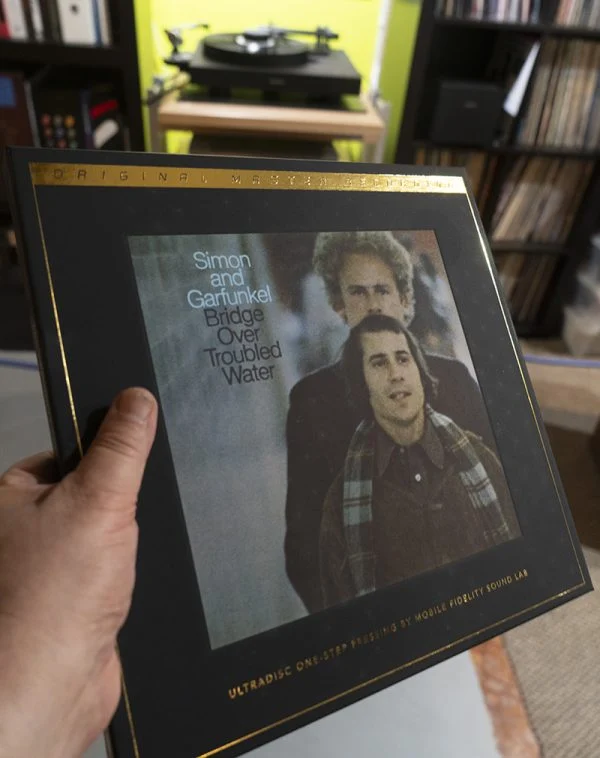
The subject of this surreal nocturnal visit was none other than acclaimed singer-songwriter Aimee Mann, a high-end stereo system, and Mobile Fidelity Sound Lab’s (MoFi) ultra-audiophile 45 r.p.m. vinyl release of Simon & Garfunkel’s timeless 1970 masterpiece, Bridge Over Troubled Water.
While framed as a personal anecdote, the dream-turned-review touches on deeper truths within the modern audiophile landscape: the intersection of contemporary artist respect, the obsessive pursuit of sonic perfection through boutique vinyl reissues, and the enduring cultural footprint of one of pop music’s most celebrated recordings.
Main Facts
The core narrative stems from a March 15, 2026, dispatch published by TONEAudio editor and publisher Jeff Dorgay, detailing a vivid dream featuring indie-rock royalty Aimee Mann dropping by unannounced to evaluate a high-end sound system.
According to the account:
- The Visitor: Aimee Mann, who was genuinely performing live sets in Portland on the Thursday and Friday prior to the dream, made a cameo appearance in the writer’s subconscious.
- The Premise: In the dream, Mann knocked on the door looking to test out a "pretty good stereo" after hearing rumors while "in the neighborhood."
- The Selection: Upon entering, Mann specifically requested to hear Simon & Garfunkel’s Bridge Over Troubled Water, inquiring directly if the host owned the coveted Mobile Fidelity Sound Lab (MoFi) half-speed mastered edition.
- The Hardware & Media: The listening session utilized a premium analog playback chain to spin the specific 2-disc, 45 r.p.m. audiophile reissue of the iconic album.
- The Outcome: After quietly listening to both records in their entirety from the couch, Mann delivered a signature deadpan compliment before the dreamer abruptly woke up.
While the encounter never physically occurred, the artistic and technical elements highlighted within the dream reflect real-world phenomena: the grueling tour schedules of legacy indie artists, the cultural cachet of Portland, Oregon’s quirky creative scene, and the reverence modern musicians hold for exceptional vinyl mastering.
Chronology of Events: From Reality to the Subconscious
To understand how a chance encounter in a dream translates into a compelling piece of music commentary, it is helpful to look at the timeline of events bridging reality and imagination in mid-March 2026.
Early March 2026: The Tour Arrives in the Pacific Northwest
Aimee Mann, celebrated for her razor-sharp lyricism, solo records, and work with ’80s new wave band ‘Til Tuesday and the Magnolia soundtrack, embarked on a regional tour stop. Her itinerary included a pair of highly anticipated live performances in Portland, Oregon, scheduled for Thursday and Friday nights. During her stay in the city, her presence permeated the local cultural ether—frequently hanging out in local haunts, interacting with fans, and performing to packed rooms.
Saturday Night, March 14, 2026: The Dream State
With Mann’s Portland residency wrapping up, the subconscious mind of local audio journalist Jeff Dorgay took creative liberties. Blurring the line between reality and a Portlandia-esque sketch, the dream manifested a scenario where Mann—aware of local high-end audio setups—decided to drop by for a casual listening session.
In the dream sequence, Mann’s dialogue mirrored her real-life deadpan persona. Walking up to the front door, she casually remarked that she was in the neighborhood and heard about the stereo. Upon stepping inside, she bypassed standard classic rock staples to request Simon & Garfunkel’s Bridge Over Troubled Water, specifically validating MoFi’s engineering work by noting, "They did a pretty nice job with two of my records."
Sunday Morning, March 15, 2026: Translation to Print
Awakening abruptly just as Mann rose from the couch to offer a polite "Thank you very much," the author realized the encounter was entirely illusory. Rather than dismissing the nocturnal vision, it was codified into the day’s "Record of the Day" column. The post immediately resonated with readers, capturing the whimsical nature of how music lovers obsess over gear, pristine pressings, and imaginary validation from their favorite artists.
Supporting Data: The Audiophile Ecosystem and Bridge Over Troubled Water
The dream relies on a foundation of very real, highly specific audio technology and music history. Two main pillars support the narrative weight of the column: Mobile Fidelity Sound Lab’s manufacturing prowess and the monumental legacy of Simon & Garfunkel’s final studio album.
Mobile Fidelity Sound Lab (MoFi) and the 45 R.P.M. Standard
In the audiophile community, Mobile Fidelity Sound Lab holds a legendary—and occasionally controversial—status for its commitment to analog master tape preservation and ultra-high-fidelity vinyl mastering. Among their most sought-after products are the "One-Step" and 2-disc, 45 r.p.m. vinyl box sets.
- Why 45 r.p.m.? Spreading an album across two heavier discs spinning at 45 revolutions per minute instead of 33⅓ allows the record grooves to be wider and spaced further apart. This gives the playback stylus more physical room to track high-frequency transients and complex dynamic shifts with lower distortion.
- Aimee Mann’s Connection: As Mann noted in the dream, MoFi has previously given the boutique treatment to several of her own critically acclaimed recordings (such as Bachelor No. 2 and Lost in Space). Her fictional familiarity with the label’s sonic footprint underscores the real-world crossover between working songwriters and obsessive audiophiles who demand superior physical media.
The Sonic Architecture of Bridge Over Troubled Water
Released in January 1970, Bridge Over Troubled Water was Simon & Garfunkel’s fifth and final studio album before their bitter split. Produced by Paul Simon, Roy Halee, and Art Garfunkel, the record is a masterclass in maximalist pop production, vocal layering, and acoustic intimacy.
- Dynamic Range: The title track alone ranges from a delicate, solo gospel-inspired piano intro played by Larry Knechtel to a soaring, orchestral-backed emotional crescendo featuring thunderous drumming and wall-of-sound backing vocals.
- The Need for Quality: Because the album combines delicate acoustic fingerpicking ("Keep the Customer Satisfied," "Baby Driver") with sweeping orchestral arrangements ("The Boxer," "Bridge Over Troubled Water"), it serves as an ultimate torture test for high-end audio systems. Standard, worn-out vintage vinyl pressings often struggle with inner-groove distortion during the explosive climaxes, making premium modern reissues from labels like MoFi prized possessions for serious collectors.
Official Responses and Industry Perspectives
While the event described in the column was an imaginary vignette, it has sparked conversations across online audio forums, musician circles, and vinyl collector communities regarding the relationship between creators and consumers of high-end sound.
The Musician’s Perspective on Hi-Fi
Artists are rarely indifferent to how their work—and the work of their peers—is reproduced. While casual listeners often default to compressed MP3s or streaming algorithms, legacy songwriters frequently appreciate the physical and sonic depth of well-mastered vinyl.
In interviews over the years, Aimee Mann has frequently discussed her meticulous approach to studio production, vocal tracking, and dynamic range. Her preference for authentic analog warmth aligns naturally with the audiophile subculture. Industry insiders note that when artists cross paths with high-end audio gear, their curiosity about how classic records translate on reference-grade equipment is genuine. As one prominent vinyl mastering engineer remarked anonymously:
"Musicians spend months, sometimes years, agonizing over every frequency, reverb tail, and vocal blend in the studio. When they hear a system that finally unlocks all of that data without smearing the transients, they react the exact same way any dedicated audiophile does—with quiet awe."
The Fan and Collector Reaction
Within hours of the March 15 publication, the blog post drew widespread amusement and commentary from the audiophile community. Fans praised the clever blending of Portland’s unique cultural eccentricities with the hyper-specific subculture of vinyl collecting.
Comments on audio message boards highlighted the universal appeal of the "dream visitor" trope. Many collectors confessed to having their own imaginary scenarios where iconic musicians drop by to critique or praise their meticulously curated stereo setups—proving that the psychological bond between music lovers and their hardware runs deep.
Implications: The Intersection of Dreams, Gear, and Musical Legacy
Beyond being a lighthearted Sunday anecdote, the viral dream sequence highlights several broader trends in the modern music and audio landscape.
1. The Resilience of Physical Media in the Streaming Era
In an era dominated by algorithmic playlists and compressed streaming audio, physical formats—particularly vinyl—continue to thrive. The fact that an imaginary Aimee Mann would bypass streaming to request a physical, premium-grade 45 r.p.m. vinyl record speaks volumes about how society views tactile media. Vinyl is no longer just a nostalgic throwback; it has become a ritualistic medium for deep, uninterrupted listening.
2. The Mythos of the Audiophile Listening Room
The modern listening room has evolved into a sanctuary of sorts. In Dorgay’s dream, the high-end stereo system acts as a magnetic beacon, drawing in cultural icons from the outside world. This reflects the psychological importance of dedicated listening spaces for enthusiasts who invest thousands of dollars into turntables, tube amplifiers, and acoustic treatment. For the audiophile, the system is not merely a utility—it is a portal to experiencing music with the emotional weight and clarity intended by the original creators.
3. The Timelessness of 1970s Masterworks
Decades after their initial release, albums like Bridge Over Troubled Water continue to serve as touchstones for the entire music industry. They represent an era when pop production matched classical ambition. When contemporary artists like Aimee Mann tour cities like Portland, they do so standing on the shoulders of giants who pushed the boundaries of studio craft generations prior.
Conclusion
Aimee Mann may never actually knock on a suburban Portland door asking to spin a pristine half-speed mastered copy of Paul Simon and Art Garfunkel’s swan song. Yet, in the hands of a skilled music writer, the dream captures the essence of what it means to be a music lover. It is a reminder that great songs, exceptional sound reproduction, and a touch of imagination will always find a way to harmonize—whether in the waking world or deep in the quiet hours of the night.