For decades, the human relationship with technology has been defined by a physical barrier: the screen. We hunch over keyboards, tap rhythmically on glass displays, and navigate digital ecosystems through the mechanical mediation of mice and touch-sensitive surfaces. But what if the interface between man and machine wasn’t a device you hold, but an extension of your own biology?
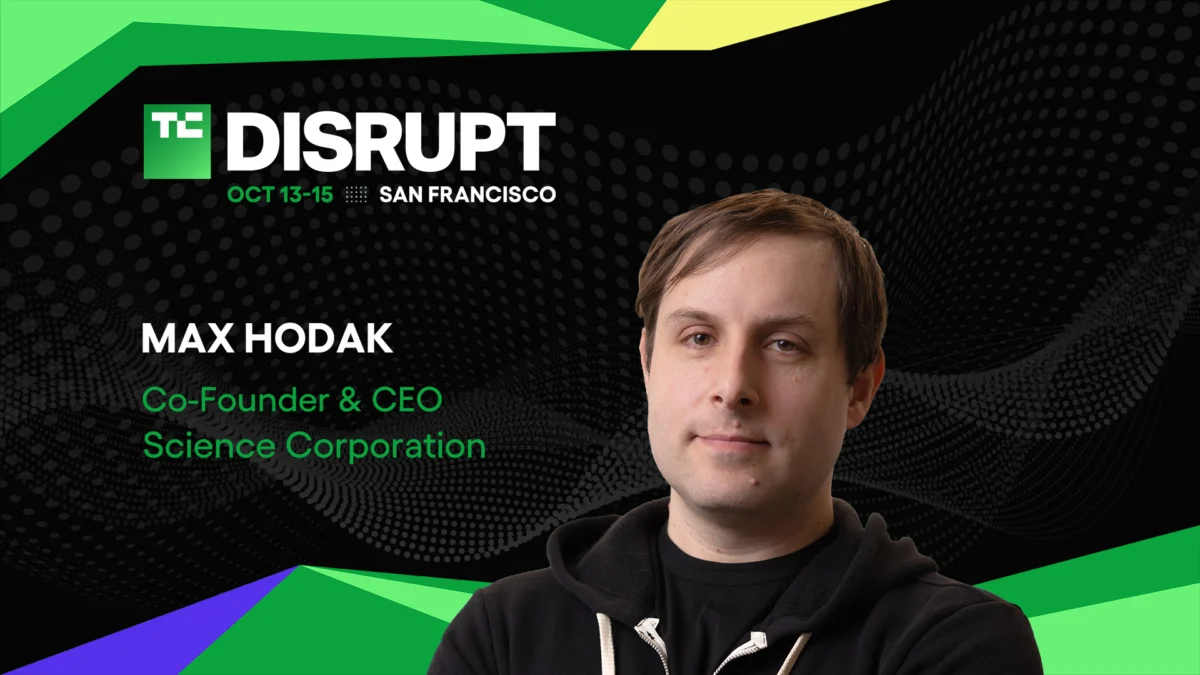
This is the question driving Max Hodak, the CEO of Science Corporation, who is set to take the stage at TechCrunch Disrupt 2026 this October. As the tech industry pivots toward a future increasingly dominated by artificial intelligence and seamless connectivity, Hodak is positioning himself at the vanguard of a movement that seeks to bypass external hardware entirely in favor of direct, biohybrid brain-computer interfaces (BCIs).
The Main Facts: A New Frontier in Neural Engineering
Science Corporation, under Hodak’s leadership, has quietly become one of the most consequential players in the nascent field of neural engineering. Having successfully secured $230 million in Series C funding, propelling the company to a $1.5 billion valuation, Science Corp is moving beyond the conceptual phase. The company has officially enlisted a top-tier neurobiologist to spearhead the first U.S.-based human trials for its proprietary biohybrid BCI technology.
Unlike earlier iterations of neural interfaces that often prioritized external control, Science Corp’s vision is deeply rooted in therapeutic restoration and cognitive augmentation. Their flagship achievement, the PRIMA implant, has already demonstrated the ability to restore a level of functional vision to patients suffering from severe retinal degradation. By pairing specialized glasses equipped with high-definition cameras with a micro-chip implanted directly into the retina, the system bypasses damaged biological pathways to transmit visual data directly to the brain.
As Hodak prepares to headline the "Beyond Screens" session at TechCrunch Disrupt, the core of his argument is clear: the next generation of human evolution will not be defined by better hardware, but by better, more intuitive connections between the human nervous system and the digital world.
A Chronological Evolution: From Neuralink to Science Corp
To understand the trajectory of Max Hodak’s work, one must look at his foundational experiences in the labs of Miguel Nicolelis—a pioneer in the field of brain-machine interfaces. Hodak’s career has been a deliberate, step-by-step commitment to the idea that the "human-computer gap" is a design flaw that can be corrected.
- Early Beginnings: A programmer since the age of six, Hodak’s transition into biomedical engineering at Duke University was marked by a fascination with the plasticity of the human brain.
- The Transcriptic Era: Before diving into neural interfaces, Hodak co-founded Transcriptic, a robotic cloud laboratory. This venture provided him with the necessary expertise in laboratory automation and complex biological infrastructure, skills that would later prove vital in the manufacturing of neural implants.
- The Neuralink Catalyst (2016): As a co-founder and the initial president of Neuralink, Hodak played a pivotal role in bringing brain-computer interfaces into the mainstream conversation. He helped navigate the regulatory, technical, and PR challenges of a company that, for many, sounded like science fiction.
- The Founding of Science Corp (2021): After his departure from Neuralink, Hodak founded Science Corporation with a distinct, more clinical focus. While Neuralink leaned heavily into the high-speed "high-bandwidth" future of AI integration, Science Corp has maintained a laser focus on immediate, high-impact medical applications, specifically in vision, cognition, and mobility.
Supporting Data and Technical Milestones
The legitimacy of Science Corp’s mission is backed by more than just vision—it is backed by tangible, peer-reviewed progress. The PRIMA implant’s success in restoring sight is perhaps the most significant milestone in the field of prosthetic vision to date.
- Clinical Efficacy: The PRIMA system works by converting light into electrical signals that the brain can interpret. This is a "closed-loop" system, meaning the interface responds dynamically to the user’s environment.
- Market Position: The $1.5 billion valuation reflects not just the technology itself, but the immense potential for intellectual property in the neuro-tech space.
- Scaling Potential: Science Corp is currently exploring how their sensor technology can be applied to other areas of the central nervous system. This includes monitoring and potentially mitigating the onset of seizures in epilepsy patients and developing deep-brain stimulation techniques for individuals suffering from Parkinson’s disease.
The company’s ability to navigate the complex regulatory pathway of the FDA while maintaining a high velocity of innovation is a testament to the infrastructure Hodak has built, merging the agility of a startup with the rigor of a medical research institution.
Official Perspectives: The "Beyond Screens" Philosophy
In anticipation of his Disrupt session, Hodak has offered glimpses into his philosophy regarding the future of interaction. He argues that the modern human experience is "screen-bound," forcing us to interpret the world through narrow, two-dimensional windows.
"We are building a bridge that allows the mind to interact with the world in a way that feels native," Hodak recently suggested. "The goal isn’t just to make a faster computer; it’s to remove the friction of the machine entirely."

This perspective is shared by many of the 10,000+ attendees expected at TechCrunch Disrupt 2026. As the conference shifts its focus toward sustainable and ethical AI, the integration of biohybrid interfaces becomes a necessary sub-topic. If AI is to become an integral part of our daily lives, it must be accessible, responsive, and, according to proponents like Hodak, deeply integrated into our sensory and cognitive processes.
The Broader Implications: A New Social Contract
The transition to a world where brain-computer interfaces are as common as smartphones carries profound implications for society, ethics, and the economy.
1. The Ethical Landscape
The prospect of "reading" or "writing" to the brain raises immediate concerns regarding data privacy. If an implant can sense a seizure or help a patient see, it is by definition collecting, processing, and potentially storing neural data. Science Corp has maintained that its focus is strictly on therapeutic outcomes, yet the industry at large will soon need to establish a "neuro-rights" framework to ensure that neural data is not exploited for commercial or state surveillance.
2. The Economic Disruption
For startups in the AI and biotech space, Hodak’s work signals a potential shift in the "Total Addressable Market." If the interface is the brain, then the market for software applications expands from screens and speakers to direct sensory input. This could reinvent fields as diverse as education, telecommunications, and entertainment.
3. The Future of Human Capability
Perhaps the most ambitious implication of Hodak’s work is the potential for cognitive augmentation. While the initial focus is on restoration—helping the blind to see or the disabled to move—the secondary application involves the enhancement of healthy individuals. This is a debate that Silicon Valley will be forced to confront: at what point does a medical device become an elective upgrade?
Joining the Conversation at Disrupt 2026
As TechCrunch Disrupt returns to the Moscone West in San Francisco from October 13–15, the conversation surrounding the future of technology will be anchored by Hodak’s presentation. With over 250 sessions and a dedicated focus on AI-centric programming, the event provides the ideal stage for such a provocative, high-stakes discussion.
For founders and investors, the "Beyond Screens" session is more than just a keynote; it is a preview of the next 20 years of technological development. Whether you are a biotech startup looking for the next breakthrough in neural hardware or an AI developer seeking a more intuitive way to deliver your models, the work being done at Science Corporation is set to redefine the boundaries of what is possible.
How to Engage:
Attendees are encouraged to review the full Disrupt agenda to ensure they don’t miss the insights Hodak plans to share. With tickets currently offering early-bird savings of up to $200 (expiring September 25), the opportunity to hear from one of the most ambitious figures in tech is accessible to the broader startup ecosystem.
As we stand on the precipice of a new era, one thing is certain: the screen, as we know it, is reaching its limit. What lies beyond is a direct, seamless connection to the digital world—a future that is being built, one neuron at a time, in the labs of Science Corporation.