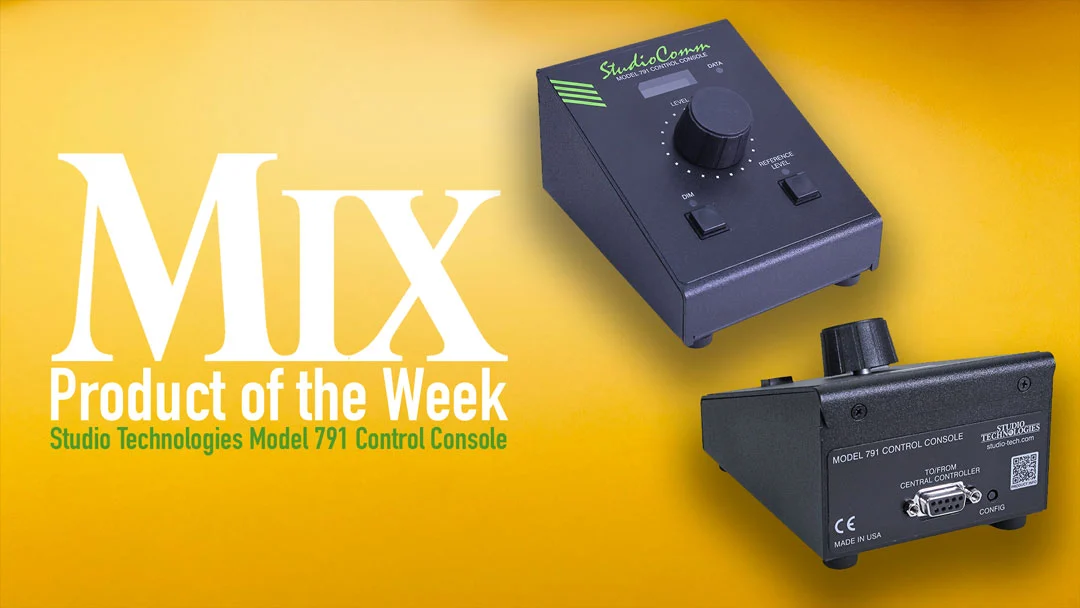
In the rapidly evolving landscape of professional broadcast and audio-for-video production, the demand for streamlined, ergonomic, and reliable control surfaces has never been higher. As production facilities transition toward increasingly complex networked audio environments, the need for intuitive interfaces that do not overwhelm the operator remains paramount. Addressing this critical requirement, Studio Technologies—a company long synonymous with high-end broadcast connectivity—has unveiled its latest innovation: the Model 791 Control Console.
Designed as a dedicated, small-format monitor controller, the Model 791 is engineered to bring professional-grade listening management to secondary positions within a facility. By prioritizing simplicity and functional precision, Studio Technologies aims to solve the "clutter problem" often faced in modern control rooms, where secondary users are frequently forced to utilize overly complex, primary-level hardware just to manage basic monitoring tasks.
The Core Functionality: Precision Meets Simplicity
The Model 791 is not intended to replace the primary console in a broadcast suite or post-production studio; rather, it is designed to augment it. At its heart, the unit provides essential monitoring controls—the "bread and butter" of audio management—in a footprint small enough to fit on any desk, shelf, or crowded workstation.
The interface features high-tactile pushbutton switches for critical functions such as "dim" and "reference level," alongside a high-quality rotary encoder for precise listening level adjustments. By isolating these specific functions, the Model 791 allows engineers, producers, or directors in secondary locations to maintain control over their audio environment without needing to navigate the complex menus or expansive feature sets found on a central controller.
Technical Specifications and Connectivity
The physical design of the Model 791 speaks to its durability and professional intent. Built into a compact, rugged steel housing, the unit is intended for tabletop placement, ensuring it remains stable despite the frantic pace of a live broadcast environment.
Connectivity is handled via a single, standard RS-485 connection. This link connects the Model 791 directly to a rack-mounted StudioComm for Dante Central Controller. This architecture is deliberate: by offloading the heavy lifting of audio routing, signal processing, and network management to the Central Controller, the Model 791 remains a lightweight, responsive interface that minimizes the latency and processing burden on the local workstation.
Chronology of Development: The Evolution of StudioComm
To understand the significance of the Model 791, one must look at the broader trajectory of the StudioComm for Dante ecosystem. Over the past decade, Studio Technologies has systematically refined its approach to networked audio monitoring.
- Early Foundations: The initial StudioComm line was built to provide robust, hardware-based control for surround sound monitoring, a challenge that was notoriously difficult in the early days of digital audio.
- The Dante Transition: As the industry moved toward AoIP (Audio over IP), Studio Technologies pivoted, integrating Audinate’s Dante protocol into their hardware. This allowed for the routing of audio signals over standard Cat-5e or Cat-6 cabling, revolutionizing studio infrastructure.
- The Scalability Shift: Recognizing that facilities were no longer monolithic, Studio Technologies began developing controllers that could be daisy-chained or networked. The introduction of the Model 792/793 and 794/795 Central Controllers marked a turning point, providing the "brains" for complex stereo and surround configurations.
- The Present Day: The launch of the Model 791 represents the "democratization" of the control surface. By allowing up to three Model 791 units to interface with a single central system, the company has effectively enabled multi-seat, multi-room control that is both scalable and economically viable.
Supporting Data: Understanding the Ecosystem
The true power of the Model 791 lies in its integration capabilities. It does not exist in a vacuum; it is a vital organ in a much larger circulatory system of audio management.
Compatibility Matrix
The Model 791 serves as the remote "hand" for several of the company’s flagship rack-mount processors. Its primary compatibility includes:
- The Model 792/793 Central Controllers: These units facilitate the management of 16-channel surround and complex stereo formats. For large-scale immersive audio post-production, the 791 provides the localized control necessary to jump between reference levels quickly.
- The Model 794/795 Central Controllers: Optimized for 5.1 surround and stereo environments, these controllers are the standard in many broadcast news and sports trucks.
Networked Audio Flexibility
Because the system is based on Dante, it supports not only digital AES3 audio but also accommodates analog signal integration. This hybrid approach is critical for legacy facilities that are in the process of upgrading to IP-based infrastructures. The ability to monitor both legacy analog sources and modern Dante streams from the same interface—the Model 791—provides a bridge that many other controllers simply cannot offer.
Official Industry Perspectives
While the press release from Studio Technologies focuses on the technical merits of the unit, industry experts have been quick to note the implications for studio workflow design.
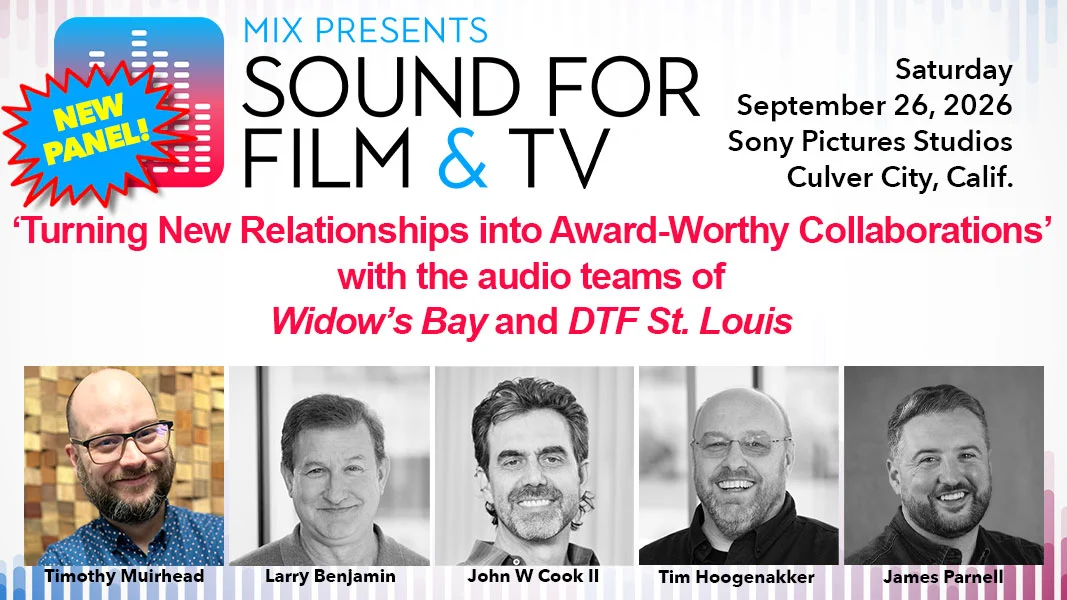
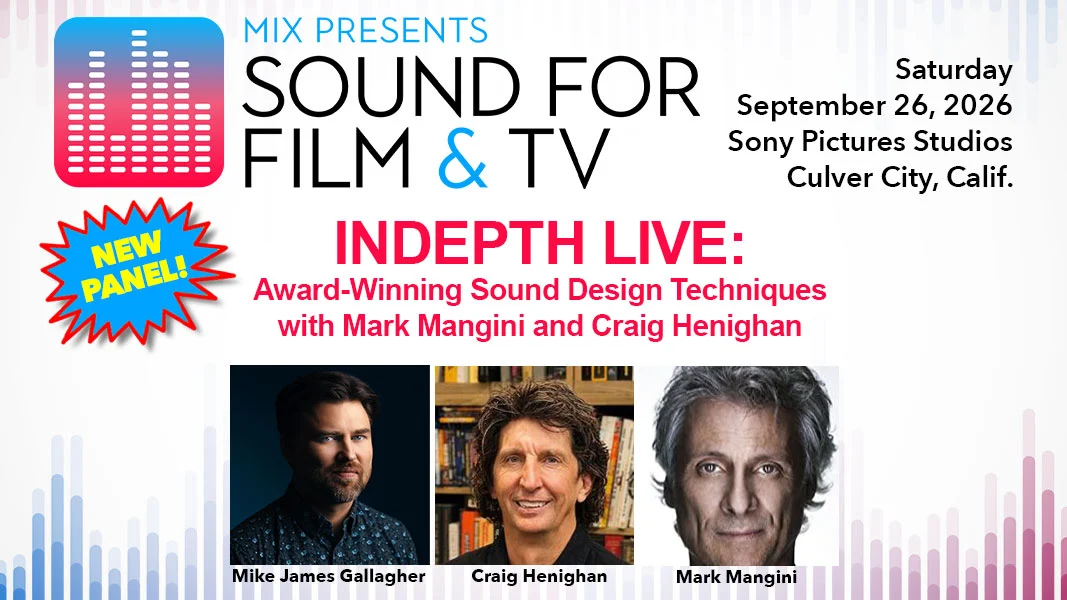
In recent conversations at major industry gatherings like the Mix Sound for Film & TV event, consultants have highlighted the trend toward "decentralized production." Producers are no longer confined to the main mixing desk; they are often found in adjacent booths, production offices, or even remote locations within the same building.
"The Model 791 is an acknowledgment of how we actually work today," says one industry systems integrator. "It’s not just about the person at the big console. It’s about the person who needs to check the mix, verify the level, and make a quick adjustment without interrupting the lead mixer. By keeping the interface simple, Studio Technologies has removed the barrier to entry for high-quality monitoring in secondary spaces."
Studio Technologies’ design philosophy has consistently favored "hard-wired" controls over software-based GUIs (Graphical User Interfaces). The company maintains that in a high-pressure broadcast environment, a physical button is superior to a mouse click. The Model 791 reinforces this ethos, ensuring that the latency between the intent to adjust a level and the actual adjustment is virtually zero.
Implications for Future Workflow
The introduction of the Model 791 has several far-reaching implications for the pro audio sector:
1. Cost-Effective Scaling
For years, facilities requiring multi-seat monitoring had to invest in redundant, high-cost central controllers. By allowing up to three Model 791 units to communicate with a single Central Controller, studios can now scale their monitoring capability for a fraction of the cost of previous iterations.
2. Enhanced Ergonomics
The "desktop clutter" factor is a legitimate issue in modern production. By utilizing a small, dedicated footprint, the Model 791 frees up valuable desk space for other essential gear—controllers, tablets, and communication hardware. This ergonomic efficiency directly correlates to operator fatigue reduction and increased productivity.
3. Standardization Across Facilities
Large broadcast networks often struggle with consistency. If a producer moves from one studio to another, they are often faced with completely different control interfaces. By deploying the Model 791 as a standardized secondary controller, networks can ensure that the "user experience" is identical, regardless of which suite or facility a staff member is working in. This reduces training time and minimizes errors during high-stakes live productions.
4. The Resilience of Hardware
As software-defined radio and virtualized broadcast infrastructures continue to gain ground, there is a lingering fear of system instability during critical moments. The Model 791’s reliance on a physical, dedicated RS-485 connection is a nod to reliability. It is a "set it and forget it" device that doesn’t require software updates, driver installations, or complex network configuration to function once the initial system is set up.
Conclusion: A Small Device with Large Ambitions
The Model 791 Control Console is a testament to the idea that in professional audio, the most powerful tool is often the simplest one. By stripping away the unnecessary and focusing purely on the essential tasks of monitoring—dimming, referencing, and adjusting levels—Studio Technologies has provided a necessary update to the modern audio workspace.
Whether in a broadcast truck, a post-production dubbing stage, or a corporate media facility, the Model 791 represents a sophisticated bridge between the complexity of Dante-based networking and the human need for simple, tactile control. As the industry moves toward further decentralization, tools like the Model 791 will be the linchpins that keep the audio workflow fluid, reliable, and—most importantly—under the total control of the operator.
As we look toward the remainder of 2026 and beyond, the adoption of such modular, task-specific hardware will likely set the benchmark for how we design the control rooms of the future. Studio Technologies has once again demonstrated that understanding the workflow is just as important as understanding the circuitry.