AMSTERDAM, Netherlands — September 11, 2026 — In an era where streaming platforms, global podcasts, and multi-channel broadcast environments dominate the media landscape, the battle for audience attention has shifted to a fundamental metric: clarity. As content consumption habits fragment across diverse hardware—from high-end home theaters to mobile devices and smart speakers—the challenge of ensuring that every word of dialogue is understood has become a critical pain point for content creators and engineers alike.
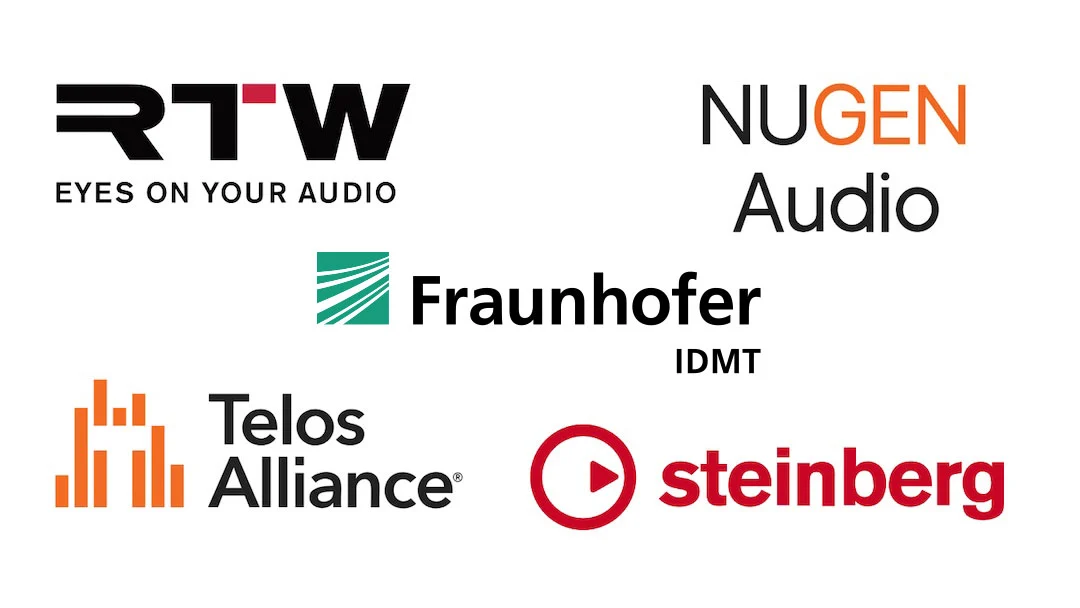
At IBC 2026, a landmark collaboration was unveiled that promises to reshape this landscape. A coalition of industry-leading audio metering manufacturers—Nugen Audio, RTW, Steinberg, and Telos Alliance—has officially joined forces with the Fraunhofer Institute for Digital Media Technology (IDMT) to launch the LMMG Dialog Intelligibility Implementation Agreement. This initiative marks a pivotal shift toward the standardization of how we measure, interpret, and present the intelligibility of spoken content.
Main Facts: The Genesis of the LMMG
The formation of the LEAP Meter Manufacturers Group (LMMG) represents a rare instance of competitive industry players aligning to solve a common technical dilemma. At the heart of this cooperation is "LEAP" (Listening Effort Assessment and Prediction), a sophisticated AI-driven technology developed by Fraunhofer IDMT.
Unlike traditional audio metering, which focuses on peak levels or loudness (LUFS), LEAP is designed to mirror the human auditory system. It evaluates the perceived intelligibility of dialogue, offering audio professionals a concrete, objective measurement of the "listening effort" required by an audience to parse speech. By formalizing the LMMG Dialog Intelligibility Implementation Agreement, these manufacturers are ensuring that when a sound engineer in a post-production suite measures a mix using a Nugen tool, they receive the exact same qualitative data as a broadcast technician monitoring a live stream on an RTW device.
Chronology: The Road to IBC 2026
The journey toward this agreement began long before its formal announcement in Amsterdam.
- Pre-2024: As the loudness wars subsided, the industry identified a "clarity crisis." Despite meeting R128 or ATSC A/85 loudness standards, viewers consistently reported frustration over "mumbled" or "buried" dialogue.
- 2024–2025: Fraunhofer IDMT pioneered the research behind LEAP, moving beyond signal-level analysis to psychoacoustic modeling. They began working with initial industry partners to refine the algorithm’s accuracy in real-world scenarios.
- Early 2026: Recognizing that fragmented implementation would lead to market confusion, Nugen Audio, RTW, Steinberg, and Telos Alliance engaged in high-level discussions. They concluded that if the industry were to adopt LEAP, it required a "Common Language" to be useful for the end user.
- September 11, 2026: The LMMG is officially inaugurated at IBC 2026, with the publication of the implementation agreement defining the DIU (Dialog Intelligibility Unit) scale and standardized display requirements.
Supporting Data: Why Standardized Metrics Matter
To understand the necessity of this agreement, one must look at the limitations of existing technology. Traditional meters measure energy, not semantics. A mix can be perfectly "loud" according to current broadcast standards while being entirely unintelligible due to improper frequency masking, excessive background noise, or poor source quality.
The DIU Scale Explained
Under the new LMMG agreement, all compliant software and hardware will utilize the Dialog Intelligibility Unit (DIU).
- The Scale: 0 to 100.
- The Interpretation: Higher values (approaching 100) denote high intelligibility and low listening effort. Lower values indicate that the viewer must strain to parse the dialogue.
- Standardization: The agreement mandates how non-dialogue content—such as music beds or sound effects—is handled during the measurement process, ensuring that the "DIU" reading specifically isolates the speech components.
Without this agreement, Manufacturer A might display a "Clarity Index" of 80, while Manufacturer B might show a "Speech Score" of 0.8, leading to mass confusion for engineers working across multiple platforms. By aligning on terminology, scaling, and color-coding, the LMMG creates a universal "fuel gauge" for dialogue quality.
Official Responses: A Unified Front
The reaction from the participating stakeholders highlights the collaborative spirit of this endeavor.
"The goal was never to create another proprietary standard," said a spokesperson for the LMMG coalition. "The goal was to provide the industry with a reliable, consistent, and scientifically backed metric. By working with Fraunhofer IDMT, we have bridged the gap between complex psychoacoustic research and the practical, daily needs of the mixing engineer."
Industry experts are calling the move a "watershed moment." By removing the ambiguity of how intelligibility is calculated, the LMMG allows for tighter quality control in automated broadcast workflows. It is no longer a matter of opinion whether a mix is "clear enough"; it is now a matter of objective, measurable data that can be tracked, logged, and audited.
Implications for the Industry
The implications of this agreement are far-reaching, touching every sector of the audio ecosystem.
For Television and Streaming
Streaming platforms are under constant pressure to deliver content that is accessible. The LMMG standard provides a benchmark that platforms can use to verify content before it hits the delivery server. If a piece of content falls below a target DIU threshold, it can be flagged for re-mixing, significantly reducing viewer complaints and potential regulatory scrutiny regarding accessibility.
For Podcasting and Digital Media
Podcasts often lack the oversight of traditional broadcast environments. The integration of LMMG-compliant metering into affordable digital audio workstations (DAWs) means that independent creators can now access the same high-level diagnostics previously reserved for large-scale studios. This democratizes quality, allowing the smallest creators to ensure their message is delivered with maximum impact.
For the Future of AI in Audio
The LMMG agreement also paves the way for intelligent, adaptive audio processing. If an AI system can objectively measure DIU, it can theoretically adjust the mix in real-time. Imagine a smart TV that, upon detecting a low DIU value in a broadcast, automatically enhances the mid-range frequencies to improve vocal clarity without user intervention. The standardization of DIU is the prerequisite for these "self-correcting" audio systems.
Technical Challenges Ahead
While the agreement is a massive success, the LMMG acknowledges the work ahead. The handling of multi-lingual content, different microphone placements, and the extreme variability of consumer playback devices remain technical challenges. However, by establishing a "common foundation," the group has ensured that future iterations of the LEAP algorithm can be deployed across the entire ecosystem simultaneously, rather than being siloed behind proprietary hardware walls.
Conclusion: A New Standard for Clarity
The formation of the LMMG and the introduction of the DIU scale represents a maturation of the audio industry. We have moved past the era where loudness was the only benchmark for quality. Today, the focus is squarely on the content—the dialogue itself.
By standardizing how we measure intelligibility, the industry is not just improving technical workflows; it is improving the experience of the listener. Whether in a living room, on a subway, or in a professional screening room, the promise of the LMMG is simple: your content should be understood the way it was intended. As this agreement gains traction, it is likely to become the de-facto standard for post-production, broadcast, and streaming, signaling a new, clearer chapter for global media.