AMSTERDAM, Netherlands — As the broadcast and streaming landscape continues to evolve toward increasingly complex immersive formats, the perennial challenge of dialog intelligibility has moved to the forefront of post-production priorities. At the 2026 International Broadcasting Convention (IBC) in Amsterdam, Nugen Audio, a leader in advanced audio analysis and loudness tools, announced the official launch of DialogCheck v1.2. This update represents more than a simple iteration of software; it signifies a milestone in the industry-wide push for unified, objective standards in measuring speech clarity.
For years, mixing engineers, editors, and Quality Control (QC) departments have operated within a fragmented ecosystem, often relying on subjective assessment to determine if dialog is "clear enough." With the release of v1.2, Nugen Audio is positioning its tool as the bridge between creative intent and objective, data-driven compliance.
The Core Mandate: Why DialogCheck v1.2 Matters
At the heart of the v1.2 update is the integration of evolving industry standards. The audio industry has long struggled with the lack of a "universal meter" for intelligibility—a measurement that can account for the wide variance in acoustic environments, from high-end home theaters to mobile devices.
Nugen Audio’s latest release is the direct result of a collaborative, cross-manufacturer initiative aimed at establishing a shared framework for verifying spoken-word clarity. By incorporating support for these emerging benchmarks, DialogCheck v1.2 allows post-production facilities to move beyond the "listen-and-guess" method of quality control. The goal is to provide a common language for mixers and QC teams, ensuring that content remains accessible and intelligible regardless of the playback medium.
"The industry has been calling for consistency," a Nugen spokesperson noted during the press briefing at the RAI Amsterdam. "With v1.2, we aren’t just offering another meter; we are offering a foundation for compliance that aligns with the collaborative work being done by leading manufacturers and broadcasters globally."
A Chronology of Innovation: From v1.1 to v1.2
To understand the significance of the v1.2 release, one must examine the rapid trajectory of the DialogCheck suite throughout 2026.
The v1.1 Foundation
Earlier this year, Nugen Audio debuted DialogCheck v1.1, which served as a crucial architectural upgrade. This release was largely focused on expanding the technical ceiling of the tool to accommodate the rise of immersive audio formats.
Key features introduced in v1.1 included:
- Immersive Audio Expansion: Support for configurations up to 9.1.6 channels, addressing the needs of high-end cinematic and streaming deliverables.
- Session Timeline Offset: A highly requested workflow enhancement, this feature allowed engineers to accurately analyze projects that do not start at the traditional zero-hour mark—a common headache in long-form episodic television and feature film editing.
- Analytical Depth: v1.1 deepened the software’s insight into spectral balance and loudness, allowing engineers to visualize how dialog sits within the mix relative to non-speech elements.
The v1.2 Evolution
Building upon that infrastructure, v1.2 shifts the focus from "capability" to "standardization." While v1.1 provided the engine, v1.2 provides the map. By integrating the new unified intelligibility metrics, the software transforms from a diagnostic tool into a compliance utility, enabling facilities to generate automated reports that confirm content meets specific clarity thresholds before it ever reaches a distributor’s platform.
Supporting Data: The Technical Landscape
The necessity for DialogCheck v1.2 is underscored by the current state of audio delivery. As streaming platforms demand tighter control over loudness (ITU-R BS.1770) and dynamic range, the "dialog problem" has become more acute.
Measuring Intelligibility
Dialog intelligibility is historically difficult to measure because it relies on the interaction between the speech signal and the surrounding soundscape. Nugen’s algorithm processes the audio to separate the speech components from the background texture, noise floor, and music beds. By comparing the speech-to-noise ratio against a psychoacoustic model of human hearing, DialogCheck provides a score that correlates with listener perception.
Workflow Integration
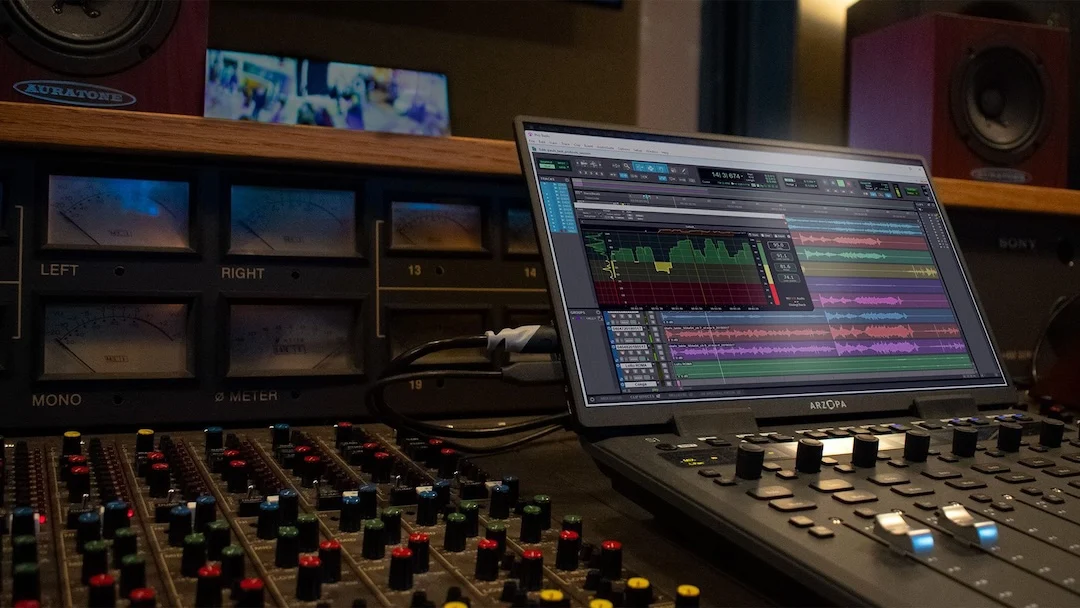
The tool is designed to integrate seamlessly into existing Digital Audio Workstation (DAW) environments, including Avid Pro Tools and Nuendo. This integration is vital for the "QC-as-you-go" methodology, where engineers can identify problematic sequences during the mix rather than catching them at the final delivery stage. For a studio producing a series with 20+ episodes, this level of automation saves hundreds of man-hours in manual re-mixing and re-QCing.
Official Responses and Industry Sentiment
The announcement at IBC 2026 was met with significant interest from the engineering community. During the show, industry leaders participating in the speech intelligibility initiative praised the move toward a vendor-neutral standard.
"For too long, we have been working in silos," said a senior sound supervisor for a major streaming platform. "If my studio uses one methodology to measure clarity and the broadcaster uses another, we are destined for friction. Nugen’s commitment to integrating these emerging standards into DialogCheck v1.2 is a proactive step toward removing that friction."
The sentiment across the RAI exhibition floor was clear: the era of subjective QC is drawing to a close. As the industry faces mounting pressure from consumer advocacy groups regarding the clarity of television audio, tools like DialogCheck are transitioning from "optional luxuries" to "essential infrastructure."
The Implications: A New Era for Post-Production
The release of DialogCheck v1.2 holds significant implications for the future of broadcast and streaming.
1. The Death of Subjective Mixing?
While creative intent will always remain the domain of the mixer, the "technical safety net" provided by v1.2 ensures that the mix is never compromised by acoustic anomalies. This does not mean that every show will sound the same; rather, it means that every show will be audible.
2. Streamlining the QC Pipeline
For streamers like Netflix, Disney+, and Amazon Prime, the cost of rejected assets due to poor audio quality is astronomical. By providing a tool that checks for compliance against these new, unified standards at the source, Nugen Audio is effectively helping studios reduce their rejection rates. This shift toward "compliant by design" workflows is likely to become the industry norm over the next 24 months.
3. Accessibility as a Driver
Beyond technical compliance, there is a broader humanitarian implication. As content travels globally, it is often downmixed from complex immersive formats to stereo for mobile and tablet devices. In these downmixes, dialog often loses its presence. DialogCheck v1.2 empowers engineers to optimize their mixes specifically for these downmix scenarios, ensuring that content remains accessible to all viewers, including those with hearing impairments.
Conclusion: Looking Ahead
As IBC 2026 concludes, the industry is left with a clear takeaway: the tools of the trade are catching up to the complexity of the art form. Nugen Audio’s DialogCheck v1.2 is not just a software update; it is a signal that the broadcast and post-production industry is finally ready to treat dialog intelligibility with the same mathematical rigor as loudness and peak levels.
For the working professional, this means less time spent debating the nuances of vocal clarity and more time focused on the creative storytelling that makes the content resonate in the first place. With v1.2, Nugen Audio has provided the industry with a reliable, consistent, and forward-thinking solution to one of the most enduring problems in audio post-production.
As we look toward 2027, it is likely that these "still-evolving" standards will solidify, and when they do, users of DialogCheck will find themselves already ahead of the curve, equipped with a toolset that has been built for the future of sound.