In the heart of Tennessee’s sonic landscape, a new standard for modern production has emerged. Located just eight miles west of downtown Nashville in the quiet, scenic Bellevue neighborhood, Covered Bridge Recording has quickly established itself as more than just another studio in a city known for them. Opened less than a year ago, the 3,000-square-foot facility represents a fundamental shift in how creators approach production, having been designed from the ground up specifically to house and optimize immersive audio.
As the industry pivots toward spatial formats—most notably Dolby Atmos—Covered Bridge Recording serves as a blueprint for the future of professional studio design. By prioritizing high-end acoustic architecture and cutting-edge monitoring systems, the studio is attracting a diverse clientele ranging from podcasters and audiobook narrators to film composers and world-class recording artists.
The Genesis of a Vision: Chronology and Development
The journey to establishing Covered Bridge Recording was not a matter of retrofitting an existing space, but rather a deliberate act of architectural and technical creation. Spearheaded by studio manager and engineer Grace Ritter and her partners, the project began with a singular goal: to create a facility that removed the friction between inspiration and professional-grade output.
Ritter, whose formative years were spent interning at the legendary Blackbird Studio in Nashville, brought a deep understanding of high-end sonic environments to the table. Her path toward this venture was cemented when she became Dolby Atmos-certified through the prestigious MixHer program. This training provided her with the technical framework necessary to conceptualize a studio that could handle the complexities of spatial mixing without compromising the traditional analog workflow that defines the "Nashville Sound."
The property, which originally housed a modest mastering suite, underwent a total transformation. Over the course of its development, the team expanded the footprint to include a sprawling complex. The build-out involved extensive acoustic treatments and structural modifications to ensure that the primary control room met the rigorous specifications required for Dolby Atmos certification. By working in concert with industry leaders—including Dolby, Vintage King, and Genelec—the team ensured that every square inch of the facility was optimized for precision.
Technical Foundations: The Science of Sound
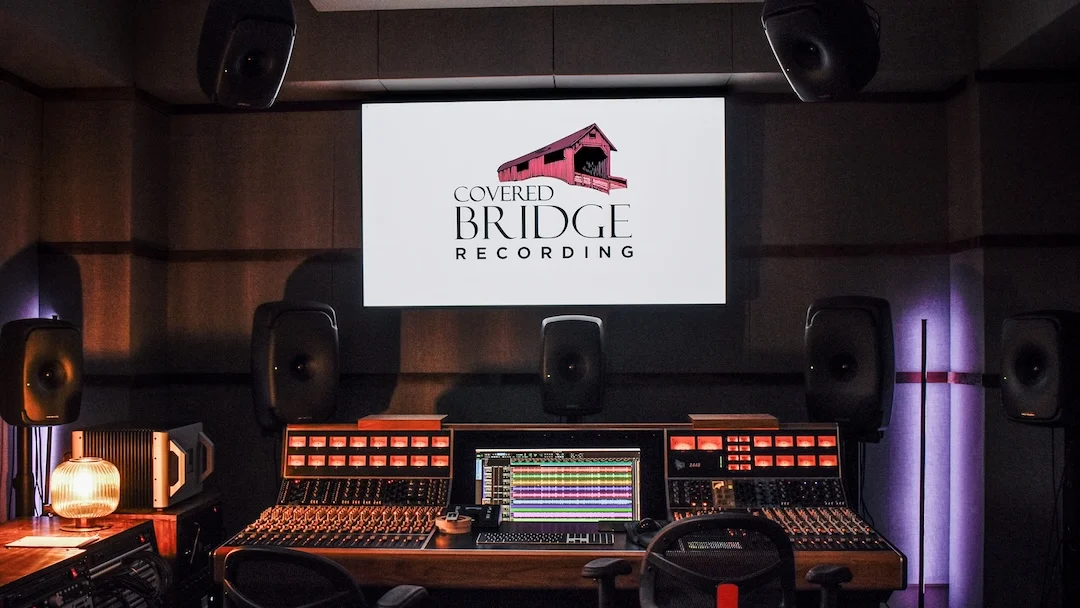
At the core of Covered Bridge Recording’s mission is the belief that immersive audio should be a foundational element, not an afterthought. The centerpiece of "Studio A" is a robust API 2448 recording console. This analog heart, known for its warm, punchy, and versatile signal path, acts as the command center for the studio’s digital-heavy immersive monitoring environment.
The monitoring system is perhaps the most impressive technical achievement of the facility. The studio employs a sophisticated Genelec 9.1.4 Smart Active Monitoring (SAM) system, a setup that provides unparalleled transparency and spatial accuracy.
- Left and Right Mains: Genelec 8361A SAM monitors.
- Center, Surrounds, and Overheads: Genelec 8351B monitors.
- Low Frequency: Dual 7380A Smart Active subwoofers, configured as a clustered system to ensure uniform low-end response across the entire listening position.
This complex array is managed by the Genelec 9320A SAM reference controller. This device is critical to the studio’s workflow, as it allows engineers to seamlessly transition between the immersive 9.1.4 environment, traditional stereo console playback, and digital stereo workflows. This versatility is what makes the studio a "Swiss Army knife" for producers; an artist can track a live band through the API console, mix in full spatial surround, and immediately switch to a stereo mix for streaming platforms without recalibrating their ears to a different monitoring system.
Beyond the Control Room: A Multi-Functional Ecosystem
While the technology is the engine, the facility’s layout is its soul. Covered Bridge Recording has been engineered to accommodate a vast range of creative needs, recognizing that the modern music business requires more than just a place to track drums.
The complex is divided into distinct zones, each tailored for a specific stage of the creative process:
- The Live Room and Isolation Booths: Designed for high-fidelity tracking of everything from full bands to intimate vocal performances.
- Specialized Rooms: Dedicated spaces for piano, synthesizers, and podcast/mix production.
- The Producer Lounge: A space designed for collaboration and client comfort, crucial for the long hours inherent in record production.
Beyond the technical spaces, the studio leans heavily into the "destination" concept. Understanding that creative burnout is a common industry challenge, the facility includes a full kitchen, a comfortable living room, and extensive outdoor amenities. The grounds feature an outdoor performance venue, a stage, pickleball and basketball courts, a pool, and dart facilities. By providing tour bus and trailer parking behind a secure perimeter, the studio has made itself an ideal location for artists who want to go "off-grid" to focus entirely on their craft.
Official Perspectives: The Philosophy of Immersive
Grace Ritter, reflecting on the studio’s inception, emphasizes that the decision to prioritize immersive audio was about future-proofing the artist’s work. "From day one, we designed Covered Bridge Recording around immersive audio," Ritter stated. "We wanted a studio where artists and engineers could walk in and immediately begin working at the highest professional level, whether they’re recording a band, mixing a record or creating immersive content."
This collaborative spirit extended to their partnerships with industry giants. The involvement of Vintage King—a premier provider of high-end audio equipment—ensured that the signal chain remained pristine. The collaboration with Dolby was equally vital, as it ensured that the room’s acoustic geometry would translate accurately to the consumer-grade spatial audio systems that have become standard on mobile devices and home theater setups.
Implications for the Nashville Recording Industry
The opening of Covered Bridge Recording is a significant data point in the evolution of the Nashville studio market. Historically, Nashville has been defined by its legacy studios—spaces with decades of history and "vibe." However, as consumer habits shift toward high-fidelity spatial experiences, the demand for studios capable of producing that content has skyrocketed.
Covered Bridge represents the "second wave" of Nashville studios: facilities that respect the analog tradition but are built on a digital-first foundation. The implications for the local market are threefold:
- Retention of Talent: By providing a world-class facility that rivals the best in Los Angeles or New York, Nashville can keep its top-tier engineers and artists from migrating to coastal hubs for complex mix projects.
- Creative Diversification: The inclusion of podcast suites, video/photo shooting capabilities, and film scoring infrastructure acknowledges that the modern creator is a multi-disciplinary artist. The studio is no longer just a place to make records; it is a content production hub.
- The "Destination" Model: The studio’s focus on recreation and wellness, alongside the technical build, suggests a shift in business strategy. By offering an all-inclusive, secure, and private environment, Covered Bridge is positioning itself as a retreat. This is increasingly attractive to A-list talent looking to escape the pressures of high-traffic urban studios.
The Path Forward
As Covered Bridge Recording looks toward its first full year of operation, the momentum is palpable. With the industry’s ongoing transition to streaming-based spatial audio, the studio’s investment in the Genelec 9.1.4 system appears to be a prescient move.
The studio is currently operating as a comprehensive creative campus. Whether it is a film scoring team needing the precision of an Atmos room, a band looking for the character of an API console, or a writer seeking a retreat-like environment to finalize a podcast series, the facility is equipped to handle the entire lifecycle of a project.
For the Nashville audio community, Covered Bridge Recording is more than a new building; it is a statement of intent. It proves that the future of audio production is not about choosing between the warmth of the past and the spatial possibilities of the future—it is about integrating them into a single, cohesive, and professional environment. As the studio continues to refine its offerings and host a new generation of creators, it is certain to remain a focal point of innovation in the "Music City."