Main Facts: A Masterclass in Arena Audio Production
In the summer of 2026, the landscape of British rock was dominated by the return of one of its most enigmatic and enduring figures. Richard Ashcroft, the legendary frontman of The Verve and a formidable solo artist in his own right, recently concluded a triumphant, sold-out arena tour across the United Kingdom. While Ashcroft’s commanding stage presence and era-defining discography were the primary draws for the thousands of fans in attendance, the tour’s success was underpinned by a sophisticated and meticulously engineered audio production provided by Britannia Row Productions.
Britannia Row, a global leader in live sound reinforcement, was tasked with translating Ashcroft’s studio-polished anthems into a raw, powerful, yet crystalline arena experience. The production featured a comprehensive d&b audiotechnik PA system, cutting-edge DiGiCo control surfaces, and a unique monitoring philosophy that eschewed modern industry standards in favor of a traditional, high-energy stage environment.
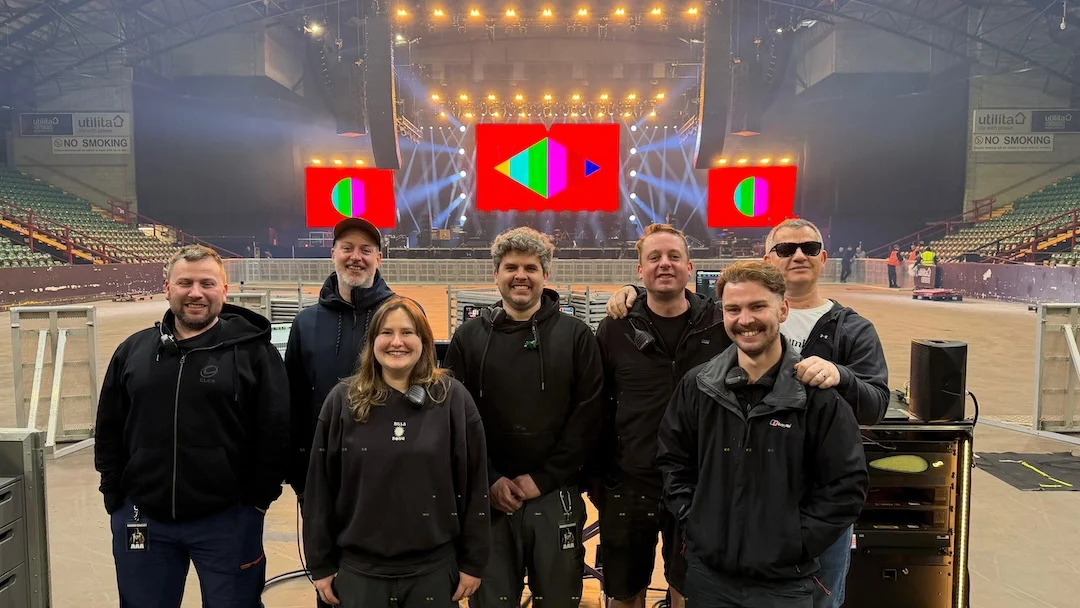
Led by a veteran crew including Front of House (FOH) Mixer Eds John, Monitor Engineer Matt Lewis, and System Designer Craig Burns, the tour represented a fusion of "old-school" rock sensibilities with the absolute pinnacle of modern digital processing. The result was a sonic environment that allowed Ashcroft’s distinctive, gravelly baritone to sit atop a dense, orchestral rock mix, ensuring that every seat in the house—from the front row to the furthest rafters—experienced the full emotional weight of hits like "Bittersweet Symphony," "The Lucky Ones," and "A Song for the Lovers."
Chronology: From Pre-Production to the Final Encore
The journey of the 2026 tour began long before the first truck arrived at an arena loading dock. The partnership between Richard Ashcroft’s camp and Britannia Row was forged during a rigorous pre-production phase at the company’s specialized warehouse facilities. This period was critical for Eds John, who was utilizing Britannia Row’s services for the first time.
Phase 1: Warehouse Prep and System Design
In the weeks leading up to the tour, the technical team worked to build a scalable rig that could adapt to the varying acoustic profiles of the UK’s premier venues, including the O2 Arena in London and the AO Arena in Manchester. System Designer Craig Burns utilized advanced modeling software to map out the d&b audiotechnik SL Series PA, ensuring that the transition from the warehouse to the road would be seamless.
Phase 2: Rehearsals and Sonic Refinement
As the band—which included a full string section—commenced rehearsals, Eds John and Matt Lewis focused on the "no-IEM" (In-Ear Monitor) requirement. This decision dictated the entire stage layout, requiring a careful balance of floor wedges and side-fills that could provide the necessary volume for the performers without creating a muddy "wash" that would interfere with the FOH mix.
Phase 3: The Arena Run
Throughout July 2026, the tour moved through the UK’s major cities. Each day followed a disciplined schedule: early morning load-ins, meticulous system tuning using d&b’s ArrayProcessing, and afternoon soundchecks where Ashcroft’s vocal effects—specifically his signature delays—were dialed in for the specific room acoustics. The tour culminated in a series of high-profile dates that were widely praised by critics for their exceptional sound quality, a rarity in the often-difficult acoustic environments of concrete-and-steel arenas.
Supporting Data: The Technical Blueprint
The audio architecture of the Richard Ashcroft tour was a sophisticated blend of hardware and software. To understand the scale of the production, one must look at the specific components chosen by the engineering team.
The Front of House Command Center
Eds John’s FOH setup was a study in "powerful minimalism." His primary interface was the DiGiCo Quantum 338, a console favored for its immense processing power and ergonomic workflow. However, the "secret sauce" of the 2026 tour was the integration of the Fourier Transform Engine.
The Fourier Transform Engine allowed John to run studio-grade VST3 plugins with ultra-low latency, effectively bringing a world-class studio rack into the live environment. "Fourier was a game changer for me," John noted. "I have everything I need in one box, and with the DiGiCo integration, I really don’t need anything else."
Plugin Chain Details:
- Vocals: Waves Renaissance Compressors for dynamic control and Waves F6 RTA EQs for surgical frequency management.
- Subgroups: A dedicated subgroup for Ashcroft and another for backing vocals, both processed through Waves C6 Multiband Compressors.
- Master Bus: The Waves SSL Buss Compressor provided the final "glue" for the mix.
- Spatial Effects: Valhalla reverbs were utilized for the lush vocal and string tails, while Sonnox reverb was reserved specifically for the acoustic guitar to maintain its natural resonance.
The PA System and Coverage
The tour utilized the d&b audiotechnik SL Series, specifically the GSL and KSL modules. This system is renowned for its full-bandwidth directivity control, which was essential for keeping sound off the stage and focused on the audience.
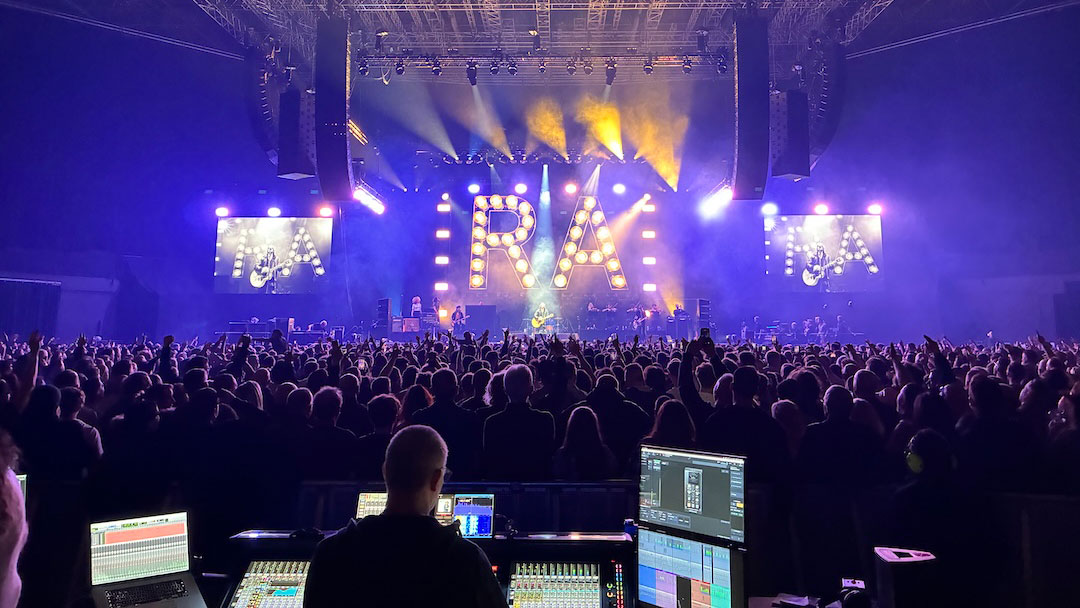
Craig Burns employed ArrayProcessing, a d&b software function that optimizes the tonal balance and level distribution across the entire coverage area. This was particularly vital in venues with low trim heights or challenging balconies, where traditional line arrays often struggle to provide consistent high-frequency response.
Capturing the Performance: Microphones
The microphone selection reflected a commitment to organic sound:
- Lead Vocals: The Shure Beta 58a. While a "standard" mic, its high gain-before-feedback was essential for a stage without IEMs.
- Drums: A suite of Earthworks microphones, chosen for their rapid impulse response and ability to capture the "air" around the kit.
- Strings: A hybrid approach using DPA 4099 clip-on mics for clarity and Schertler dynamic mics for body and warmth.
Official Responses: Insights from the Crew
The success of the tour was not just a matter of equipment, but of the philosophy held by the crew. The engineers emphasized the importance of clarity and the unique requirements of Ashcroft’s performance style.
Eds John, FOH Mixer, highlighted the specific challenge of mixing a voice as iconic as Ashcroft’s:
"Richard’s voice has so much character, and it needs to be crystal clear. I tend to sit his vocal right on top of the mix. This doesn’t mean the band is mixed quietly—far from it—but that vocal needs to pop out. Richard’s a huge fan of vocal FX, especially delay. They’re constantly bubbling under until he’s ready… then the delays take your head off!"
John also praised the support from Britannia Row, noting, "This was my first tour using Brit Row. I’ve been massively impressed by the care that goes into the prep of the whole system and by the team assembled to support us both on the road and at the warehouse."
Craig Burns, System Designer/Engineer, elaborated on the logistical hurdles of the arena circuit:
"The idea for this tour was to ensure that the audience got the best possible experience no matter where they were sat, with minimal spill onto stage. The only difficulties we faced were acoustics and low trim height in arenas. With the PA being positioned correctly and the desired trim heights secured, we were able to achieve great results in rooms which didn’t initially sound great."
Implications: The Future of Arena Rock Audio
The Richard Ashcroft 2026 tour serves as a significant case study for the live sound industry, offering several implications for future large-scale productions.
1. The Resurgence of Wedge Monitoring
In an era where In-Ear Monitors (IEMs) are almost universal, Ashcroft’s insistence on using floor wedges is a bold move. It proves that with the right PA technology (like the cardioid patterns of the d&b SL Series) and a skilled monitor engineer, it is possible to achieve a high-decibel, high-energy stage environment without compromising the FOH mix. This "visceral" stage feel often translates to a more energetic performance from the artist.
2. The Normalization of Plugin Servers
The seamless integration of the Fourier Transform Engine with DiGiCo consoles marks a shift in how FOH engineers approach processing. The ability to use the same plugins in an arena that were used in the recording studio is closing the gap between the "album sound" and the "live sound," providing fans with a more authentic experience.
3. Precision Engineering vs. Acoustic Limitations
The tour demonstrated that "bad" room acoustics are no longer an insurmountable obstacle. Through the use of advanced system modeling and ArrayProcessing, Britannia Row was able to deliver consistent audio quality in venues that have historically been criticized for their echo and lack of definition.
4. Britannia Row’s Strategic Position
By successfully executing a high-stakes tour for a legacy artist like Ashcroft, Britannia Row has reaffirmed its position as a premier provider in the post-pandemic, high-demand touring market. Their ability to provide not just gear, but a highly specialized team capable of managing complex string arrangements and non-traditional monitoring setups, sets a high bar for their competitors.
In conclusion, Richard Ashcroft’s 2026 UK tour was more than a series of concerts; it was a technical triumph. It showcased how the marriage of a legendary voice and cutting-edge audio engineering can create a profound, immersive experience that honors the past while embracing the technological future of live music.