It is a technology that touches almost every aspect of modern life, yet it remains one of the most misunderstood and underappreciated pillars of the 21st-century economy. Every time you tap a transit card, pass through a toll booth, or unlock a secure door with an employee badge, you are interacting with Radio-Frequency Identification (RFID). Despite its ubiquity, if you were to poll the average person on the street, the vast majority would struggle to define how it functions or why it matters.
This invisibility is, in many ways, by design. However, we are currently witnessing a profound shift. What began as a specialized tool for supply chain management has evolved into "RAIN RFID," a technology poised to bridge the widening gap between the physical world and the digital intelligence of modern Artificial Intelligence (AI).
The Core Facts: What is RAIN RFID?
At its simplest level, RFID is a wireless communication technology that uses radio waves to identify and track objects. While the term "RFID" covers a broad spectrum of protocols, "RAIN RFID" refers specifically to the standards-based, passive Ultra-High Frequency (UHF) technology that has become the industry standard.
A RAIN RFID system comprises three primary components:

- The Tag (Endpoint): A microscopic integrated circuit (IC) connected to a tiny antenna. These tags contain no battery, no switch, and require no maintenance. They are "passive," meaning they remain dormant until they enter the range of a reader.
- The Reader: A device that transmits a radio-frequency signal. When a tag enters this field, it "harvests" just enough energy to power its circuit.
- The Backscatter: The tag responds by reflecting the radio signal back to the reader, transmitting a unique digital identifier.
This "backscatter" technique allows for data capture at distances of up to ten meters without requiring a direct line of sight. Unlike barcodes, which must be scanned one at a time and manually aligned with an optical reader, RAIN RFID can identify thousands of items per second as they move through a warehouse, down a conveyor belt, or across a loading dock.
A Chronology of Connectivity: From Radar to Global Standards
The lineage of RFID is long and storied, tracing its origins to the "friend or foe" radar transponders utilized by military aircraft during World War II. However, the technology as we recognize it today took shape over several decades of iterative engineering.
- 1960s–1980s: Research into passive identification matured, moving from laboratory curiosity to commercial viability.
- 1990s: The first wave of standardization brought RFID into the mainstream, primarily for industrial asset tracking.
- Early-to-Mid 2000s: The development of the EPCglobal Gen2 air-interface protocol marked a turning point, creating a unified language for RFID communication that eventually became the ISO/IEC 18000-63 international standard.
- 2014: The "RAIN" moniker was officially adopted. A consortium of industry leaders—including Impinj, Google, Intel, and Smartrac—recognized that "RFID" had become too broad a term. They needed a name that carried the same weight as "Wi-Fi" or "Bluetooth," specifically to denote standards-based, passive UHF RFID. The name is a nod to "RAdio IdentificatioN" and the "cloud," highlighting the connection between physical items and the digital applications that manage them.
Impinj: The Architect of the Digital Twin
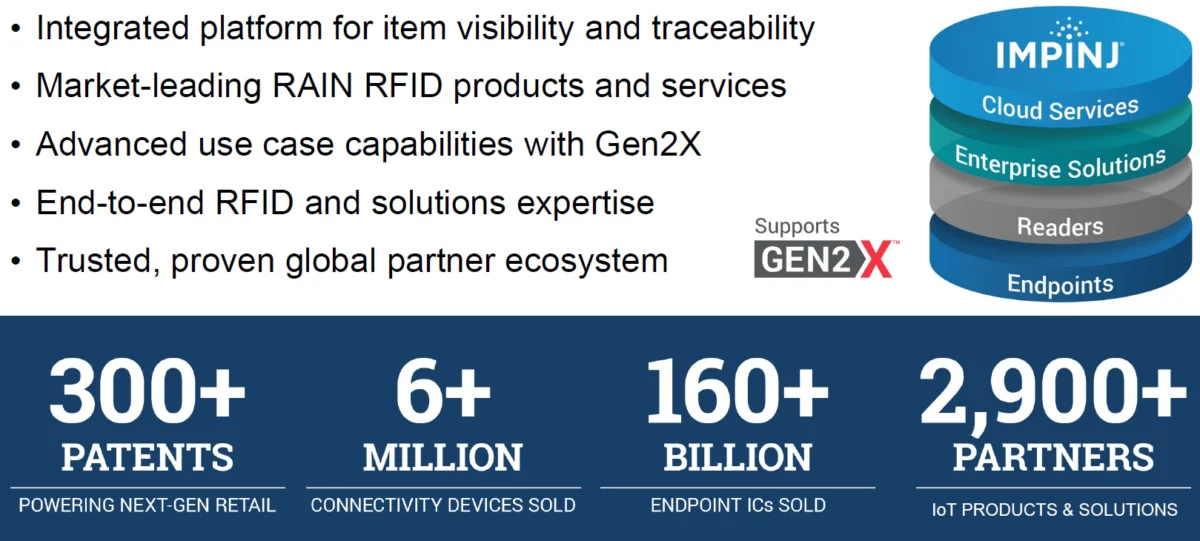
For the past 26 years, the Seattle-based company Impinj has been the primary engine driving the RAIN RFID ecosystem. Unlike hardware-focused firms that only manufacture tags or readers, Impinj has built a vertical stack that includes endpoint ICs, reader ICs, cloud-based software, and enterprise-level solutions.
In a recent discussion, Matt Branda, VP of Product and Solution Marketing, and George Dyche, VP of Endpoint IC Product Management, underscored that the company’s mission is no longer just about "identification." It is about "physical intelligence."

Impinj’s role has been to facilitate the creation of a "digital twin" for every physical object. By assigning a unique digital identity to a pair of shoes, a box of pharmaceuticals, or an airline bag, the company allows enterprises to see the real world in real-time. This visibility is the missing link for AI, which, despite its immense reasoning power, is functionally blind to the physical world unless it is fed accurate, continuous data.
Supporting Data: The Scale of the Opportunity
The shift toward total item-level visibility is not merely a theoretical exercise; it is an economic necessity for modern supply chains. Consider the following data points that highlight the necessity of this transition:
- Throughput Efficiency: Whereas a manual barcode scan takes seconds per item, a RAIN RFID portal can process an entire pallet of hundreds of items in a fraction of a second.
- The 1% Threshold: According to Impinj CEO Chris Diorio, despite the industry having enabled connectivity for more than 160 billion items over the past two decades, less than 1% of the world’s total everyday objects are currently connected. This suggests that we are effectively at the "end of the beginning" of the adoption curve.
- Operational Precision: Major retailers like Walmart and Inditex have already implemented these systems to reach near-100% inventory accuracy, moving from weekly manual counts to real-time, automated monitoring.
Advancing the Standard: Gen2X and Beyond
Innovation within this space continues with the introduction of "Gen2X." As Matt Branda and George Dyche explained, Gen2X is not a replacement for the current standard but a "toolbox of enhancements" designed to meet the demands of the next decade.
These enhancements include:

- Improved Discrimination: The ability to more effectively isolate specific tags in crowded environments, reducing "noise" and false positives.
- Cryptographic Authentication: Combatting the global epidemic of counterfeiting by ensuring that the item being scanned is not just an item, but a verified item.
- Privacy and Robustness: Strengthening the security of the data stream while ensuring that communication remains error-free in the complex, metallic, and radio-dense environments of modern factories.
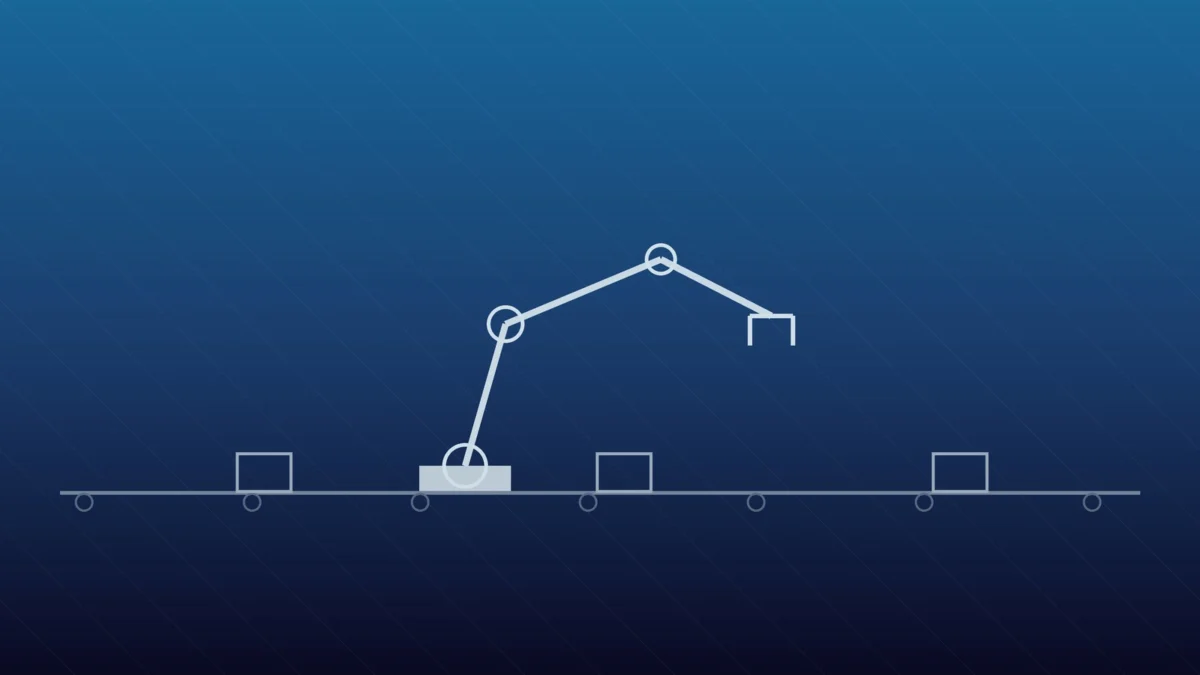
These advancements are critical because the use cases are moving beyond simple inventory. Tomorrow’s applications include autonomous warehouse robotics, "frictionless" retail environments where checkout lines are eliminated, and high-precision healthcare workflows that track surgical instruments and medication dosage.
Implications: Building the "Physical Intelligence" Layer
The most profound implication of this technology is the maturation of the Internet of Things (IoT). While early IoT efforts were focused on connecting "devices" (smart thermostats, cameras, and watches), RAIN RFID is focused on connecting "things"—the actual products that move through the global economy.
This creates a "Physical Intelligence" layer. For AI to make autonomous decisions, it requires answers to fundamental questions that it currently cannot resolve on its own:
- Presence: Is the item in the building?
- Location: Which shelf, bin, or shipping container is it in?
- Authenticity: Is this product genuine?
- History: What has been the journey of this specific item from the factory to the consumer?
Without RAIN RFID, AI is forced to operate on "guesstimates" and outdated manual logs. With it, the data becomes actionable, trustworthy, and continuous.

Conclusion: A Milestone for the Future
As Impinj marks the tenth anniversary of its IPO—a milestone celebrated by CEO Chris Diorio at the Nasdaq podium—the industry stands at a crossroads. The technology has evolved from a niche industrial tool into a foundational layer for the global digital economy.
The fact that less than 1% of items are currently connected serves as both a sobering reminder of the work ahead and a massive invitation for future growth. As these tags are increasingly embedded directly into the fabric of clothing, the structure of packaging, and the components of consumer electronics, they will become truly invisible. In a delicious irony, as the world becomes increasingly "visible" to the digital systems that govern it, the physical components that enable this visibility will vanish into the background of our everyday lives.
The era of manual tracking is ending. The era of total, automated, physical intelligence has begun.