The resurgence of vinyl in the modern era is often attributed to nostalgia, but for the true audiophile, the shift back to analog is rooted in a pursuit of sonic fidelity that digital formats have struggled to replicate. While streaming services offer convenience, the physical interaction with a high-quality record—the tactile nature of the needle meeting the groove—often reveals nuances, spatial cues, and emotional depth previously obscured by compression. This report examines three seminal albums that define this auditory experience: Tomasz Stańko’s Balladyna, Bill Connors’ Of Mist and Melting, and the modern classic Raising Sand by Robert Plant and Alison Krauss.
The Vanguard of European Jazz: Tomasz Stańko’s Balladyna
Main Facts and Historical Context
Recorded in 1976, Balladyna stands as a pillar of the European jazz movement. A native of Poland, trumpeter Tomasz Stańko utilized this record to cement his influence across the continent, particularly in Finland and beyond. The album features a powerhouse quartet: Stańko on trumpet, Tomasz Szukalski on tenor and soprano saxophone, Dave Holland on double bass, and Edward Vesala on drums.
Sonic Performance and Engineering
The pressing quality of the modern reissue of Balladyna is nothing short of exemplary. In audiophile circles, "silence" is a premium commodity, and this pressing achieves a noise floor so low it is virtually indistinguishable from a master tape. The spatial imaging is profound; the soundstage does not merely sit between the speakers but extends deep behind and wide beyond them.
The challenge of recording a trumpet lies in its transient intensity—the propensity for the instrument to "cackle" or distort when hitting high frequencies. The engineering on Balladyna avoids this trap entirely. In "First Song," the percussion is rendered with pristine clarity, leaving ample "air" around the strikes. The bass is tight and focused, providing a rhythmic foundation that allows the trumpet to explore various tonal "shades" without ever overpowering the ensemble. It is a "Row H" recording—a perspective that feels like a live performance from a comfortable seat in the middle of a concert hall, rather than an aggressive, close-mic mix.
The ECM Legacy: Bill Connors’ Of Mist and Melting
Chronology and Cultural Impact
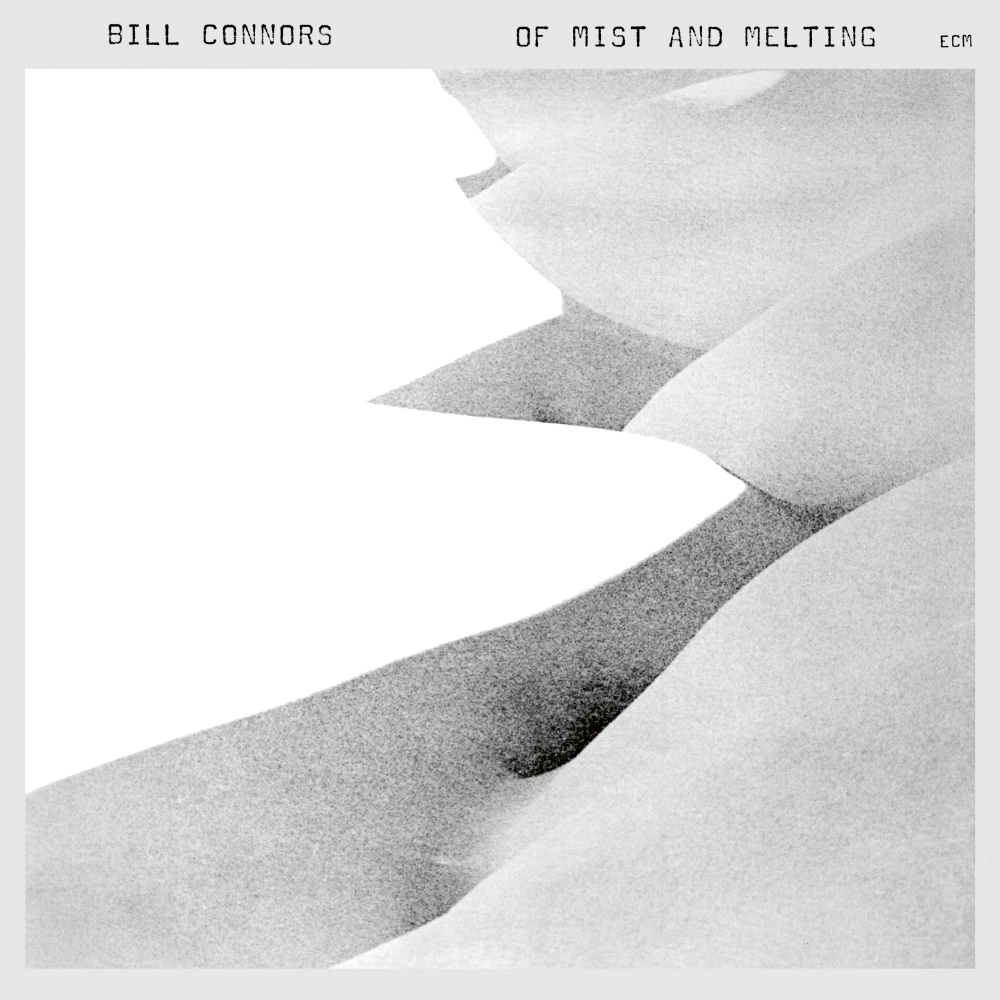
Following the success of Balladyna, the ECM label continued its dominance in the late 1970s. Bill Connors’ 1977 release, Of Mist and Melting, represents a specific "ECM magic" that many collectors in the United States, particularly those in the Midwest, may have missed during the initial release window. With a personnel lineup including Connors on guitar, Jan Garbarek on saxophones, Gary Peacock on bass, and Jack DeJohnette on drums, this record remains a masterclass in jazz arrangement.
Technical Analysis: The Art of Space
The silence of the vinyl surface on this record is startling. Upon dropping the needle, the listener is met with a void so absolute that one might instinctively check their preamp settings. When the music begins, it does so with a sense of deliberate pacing.

In "Melting," the percussion occupies a space clearly defined outside and behind the speaker plane, while the saxophone sits with a seductive, centered presence. The transition into nylon-string guitar is the album’s hallmark—a delicate, intimate shift that demonstrates the recording’s ability to capture micro-details.
The track "Aubade" (a morning love song or a poem about lovers separating at dawn) captures the essence of the album’s emotional tension. The haunting, high-register saxophone notes mirror the feeling of an unsettled dawn, while the drum work by Jack DeJohnette provides a cathartic, textured finish. The album is a cerebral, complex, and intricate journey that rewards the listener for their patience and attention.
A Modern Classic: Plant and Krauss’s Raising Sand
Supporting Data: A Record-Breaking Collaboration
Released in 2007, Raising Sand became an instant cultural phenomenon, sweeping the 51st Annual Grammy Awards with wins for Album of the Year and Record of the Year. Its crossover appeal, blending Robert Plant’s rock-and-roll pedigree with Alison Krauss’s bluegrass and gospel foundations, earned it platinum status in the U.S., U.K., and Sweden.
The Debate: CD vs. Vinyl vs. High-Resolution
The primary point of contention regarding Raising Sand is the format of consumption. Many listeners found the original CD release to be sonically compressed, lacking the dynamic range necessary to fully realize the subtle arrangements of guitarist Marc Ribot and bassist Dennis Crouch.
Comparing the formats reveals a distinct advantage for the vinyl edition:
- The CD/Streaming Experience: Often perceived as "flat," with limited soundstage depth and a lack of weight in the low end.
- The Vinyl Experience: The LP allows the soundstage to open up laterally. The vocals are more "fleshed out," possessing a three-dimensional quality that feels more human and organic. The bass response is significantly meatier, providing a foundation that fits the Americana aesthetic of the record.
- The High-Res Factor: While 24/96 digital files are arguably superior to standard CD or streaming, the vinyl edition retains a unique "palpability"—a tonal richness that digital formats have yet to fully replicate.
Tracks like "Rich Woman" benefit immensely from the weight and sustain of the vinyl format, while "Killing the Blues" showcases harmonies that sound angelic and lifelike. The vinyl encourages a full-album listen, whereas the compressed digital version often fails to hold the listener’s engagement beyond the first few tracks.

Implications for the Modern Audiophile
The common thread linking these three albums is the intersection of high-level musicianship and high-fidelity production. The implications for the modern collector are clear: the format through which one listens to music fundamentally changes the perception of the art itself.
The Role of ECM Records
The consistency of the ECM label, as evidenced by both Balladyna and Of Mist and Melting, serves as a benchmark for the industry. Their commitment to quiet pressings and reference-level sonics has allowed these recordings to maintain their relevance five decades later. They are not merely "reissues"; they are preserved historical artifacts.
The "Humanity" of Analog
The shift toward vinyl is, at its core, a search for humanity in recorded music. Digital compression, while efficient, often strips away the "saturations" and "tones" that make an instrument sound like it is physically present in the room. As demonstrated by Raising Sand, even modern recordings are often mastered with a "CD-first" mindset that benefits from the breath and space of a well-pressed vinyl record.
Conclusion: A Call to Explore
For the uninitiated, the leap into high-end analog listening may seem daunting, but the reward is a deeper connection to the music. Whether it is the intricate, cerebral jazz of the 1970s or the polished, cross-genre Americana of the 2000s, the vinyl format provides a window into the studio that other media simply cannot match.
These three albums—Stańko’s Balladyna, Connors’ Of Mist and Melting, and Plant/Krauss’s Raising Sand—are not just "worthy additions" to a collection; they are essential listening for anyone who wishes to understand the potential of recorded audio. They serve as a reminder that the best music is not just heard—it is experienced, felt, and savored. As the vinyl revival continues to mature, it is evident that these records will stand the test of time, remaining as significant fifty years from now as they are today.