
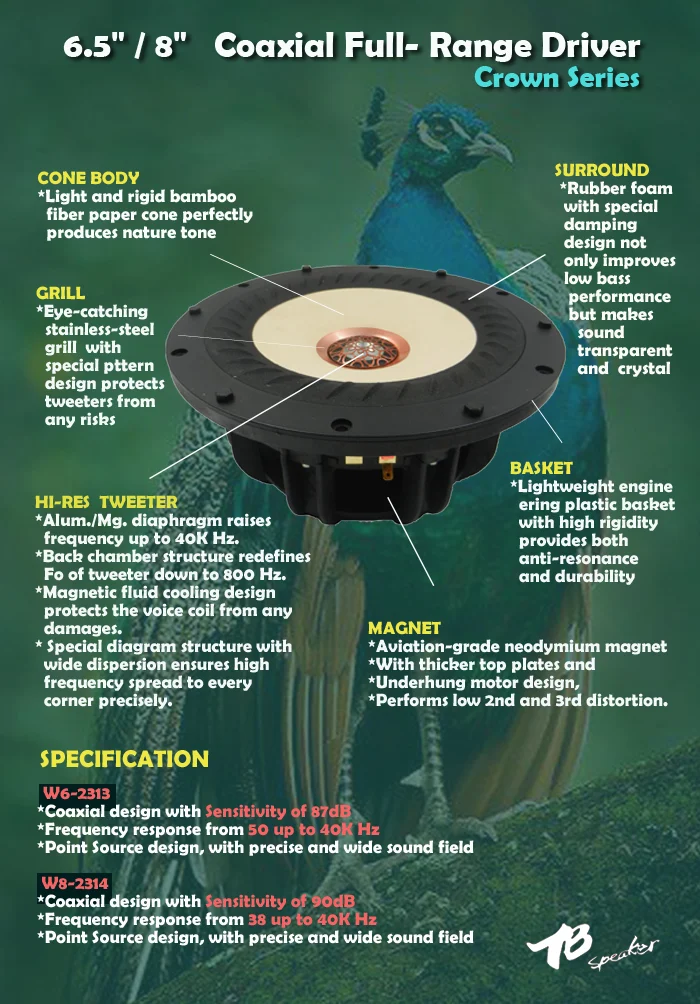
The world of high-fidelity DIY audio is currently witnessing a significant shift in driver technology, spearheaded by Tang Band Speaker Co., Ltd. (TB Speaker). With the release of their latest series of coaxial drivers—ranging from compact 3-inch units to robust 8-inch variants—the company has reignited the perennial debate regarding the superiority of point-source design in home audio reproduction. These drivers, designed to align the acoustic centers of the high and low frequencies, promise to resolve the phase and time-alignment issues that have historically plagued traditional multi-driver speaker systems.
As enthusiasts and engineers alike delve into the specifications of this new lineup, the community has begun a rigorous, crowdsourced investigation into their potential, their limitations, and their ultimate role in the future of custom speaker building.
Main Facts: A New Frontier in Point-Source Engineering
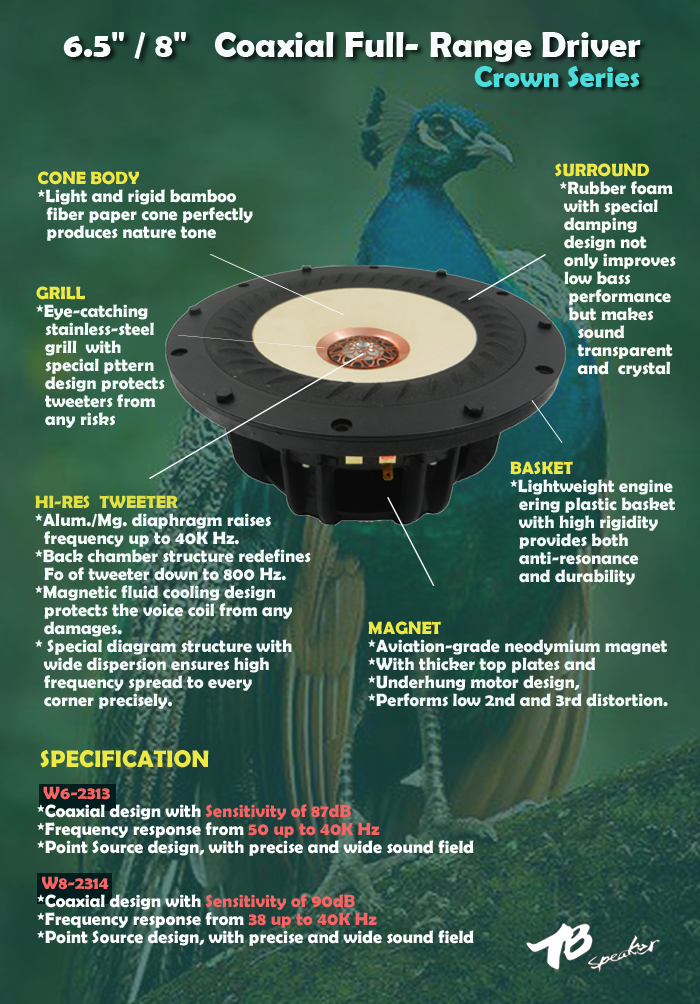
Tang Band’s new coaxial lineup is characterized by a high-tech approach to driver integration. The most prominent models, the 6.5-inch and 8-inch drivers, distinguish themselves with unique surround geometries and specialized designer grilles protecting the integrated tweeters.

Unlike standard two-way bookshelf designs where the tweeter is physically offset from the woofer—a configuration that inevitably leads to lobing and phase interference at the crossover point—the coaxial design places the tweeter at the center of the woofer’s acoustic axis. This effectively turns the woofer cone into a waveguide for the tweeter, theoretically creating a seamless, single-point sound source.
Key technical highlights include:
- Size Versatility: The line covers a spectrum from 3 inches to 8 inches, catering to everything from desktop near-field monitors to full-sized tower speakers.
- Controlled Breakup: Early technical analysis suggests that the cone breakup of the woofer section is exceptionally well-controlled, a hallmark of Tang Band’s recent manufacturing advancements.
- Sensitivity: The drivers offer competitive sensitivity ratings, making them viable candidates for a wide range of amplification, including low-power tube setups.
- Design Aesthetics: With their "funky" surround shapes and integrated tweeter grilles, the units are as visually striking as they are technically ambitious.
Chronology: The Community Reaction
The introduction of this line was met with immediate interest on audiophile forums, particularly within the DIY audio community.
June 21, 2018: The news first broke on prominent audio forums, with early adopters identifying the potential for these drivers to serve as a "killer" choice for mini-tower designs. Users began performing Transmission Line (TL) simulations, with initial reports suggesting an F3 frequency response as low as 28Hz, though these early simulations were later refined as more accurate Thiele/Small parameters were integrated into the models.
June 22, 2018: Discussion shifted toward the practicalities of crossovers. Experienced builders noted that while the manufacturer provides some data, the actual voicing of the system rests entirely on the designer’s ability to craft a sophisticated crossover network. The comparisons to established industry benchmarks, such as the SEAS Prestige coaxial drivers, began in earnest.
June 25, 2018: The community reached a fever pitch of technical scrutiny. Some users reported placing orders for the 6.5-inch units to begin prototype testing. The conversation turned to the potential for three-way systems, with veteran designers suggesting that even these capable coaxials could benefit from a dedicated woofer, allowing the coaxial unit to operate purely as a midrange/tweeter assembly.

Supporting Data: Performance and Simulation
The promise of these drivers is supported by the physics of their construction, but they are not without technical hurdles.
The Crossover Challenge
One of the most critical aspects of the DIY process for these drivers is the design of the passive crossover. Because the manufacturer’s documentation leaves the crossover frequency open to experimentation—suggesting a range from 800Hz to 40kHz—the onus is on the builder.
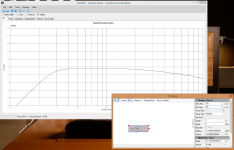
Early simulations using a first-order filter, combined with a Zobel network and an L-pad to attenuate the tweeter, have shown promising frequency response curves. However, builders caution that these models are preliminary and do not yet account for the complex baffle diffraction that will occur once the driver is mounted in a real-world enclosure.
Low-Frequency Capabilities
In a 20-liter vented box tuned to 45Hz, the 6.5-inch unit is capable of reaching an F3 of approximately 40Hz. This is a remarkable feat for a driver of this size, making it a highly attractive option for center-channel speakers or compact home theater systems where space is at a premium.
The Waveguide Effect
A crucial observation made by experienced builders is the role of the woofer cone as a waveguide. To maintain the integrity of this waveguide, the cone should not be forced to travel excessively. This is why many designers recommend crossing these drivers over to a dedicated subwoofer or dedicated bass-driver at approximately 350Hz, rather than asking the coaxial unit to handle the full range of bass frequencies.
Official Responses and Expert Perspectives
While Tang Band has not issued a formal "white paper" on these specific drivers, the consensus among industry veterans is that this lineup represents a high-water mark for the brand.
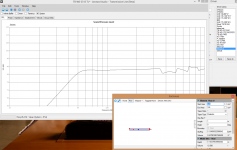
Scottmoose, a frequent contributor to audio design discussions, notes that while the frequency response graphs provided by the manufacturer appear almost "too good to be true," the drivers remain a significant point of interest. The debate often centers on whether Tang Band can compete with high-end, established players like SEAS. While SEAS provides a proven, albeit pricier, solution, Tang Band’s offering at the ~186 Euro price point represents a disruptive value proposition for the DIY market.
The general sentiment among experts is one of cautious optimism. The drivers are viewed as an excellent platform for "active" enthusiasts—those using miniDSP or other digital signal processing (DSP) to handle crossover duties, which bypasses many of the traditional difficulties of building passive filters.
Implications: The Future of DIY High-Fidelity
The arrival of the Tang Band coaxial line has several profound implications for the audio industry:

1. The Democratization of Point-Source Audio
Point-source audio has historically been the domain of expensive, boutique brands. By making high-quality coaxial drivers accessible at a mid-range price point, Tang Band is allowing DIYers to build systems that rival commercial speakers costing several times more.
2. The Shift Toward Active Systems
The complexity of the crossover requirements for these drivers is pushing the DIY community toward active amplification and DSP. This is a positive development, as it allows for better room correction and tighter integration between the tweeter and the woofer than can typically be achieved with a static passive network.
3. A Challenge to the "Three-Way" Status Quo
By demonstrating that an 8-inch coaxial driver can handle the midrange and high frequencies with such precision, these drivers are encouraging designers to think about "hybrid" systems. The ideal configuration may not be a simple two-way bookshelf speaker, but rather a narrow-baffle, three-way floorstander where the coaxial driver handles everything above the 300Hz-400Hz range.

4. Continued Evolution
As more builders complete their prototypes, the community will gain access to more real-world measurements—specifically off-axis response data, which is critical for understanding the true imaging capabilities of these drivers. The "first-builder" phenomenon is currently in full swing, and the results of these early builds will dictate the long-term popularity of the line.
In conclusion, Tang Band’s new coaxial series is not merely a collection of new hardware; it is a catalyst for a new wave of experimentation in speaker design. Whether they will ultimately be remembered as a "raging success" or a "memorably underwhelming" experiment depends on the ingenuity of the builders currently working in their home workshops. However, one thing is certain: the goal of perfect, point-source sound has never been more attainable for the average enthusiast.


