The landscape of professional audio is undergoing its most significant transformation since the transition from mono to stereo. As spatial audio moves from a niche luxury to a mandatory industry standard, educational institutions are racing to update their infrastructure. Leading this charge is SAE Institute Amsterdam, which recently announced the integration of the Audient ORIA—a dedicated immersive audio interface and monitor controller—into its state-of-the-art Dolby Atmos teaching space.
This strategic move marks a milestone in the long-standing partnership between SAE Institute and Audient, ensuring that the next generation of engineers, producers, and sound designers is equipped to handle the complexities of three-dimensional soundscapes.
Main Facts: The Integration of Audient ORIA at SAE Amsterdam
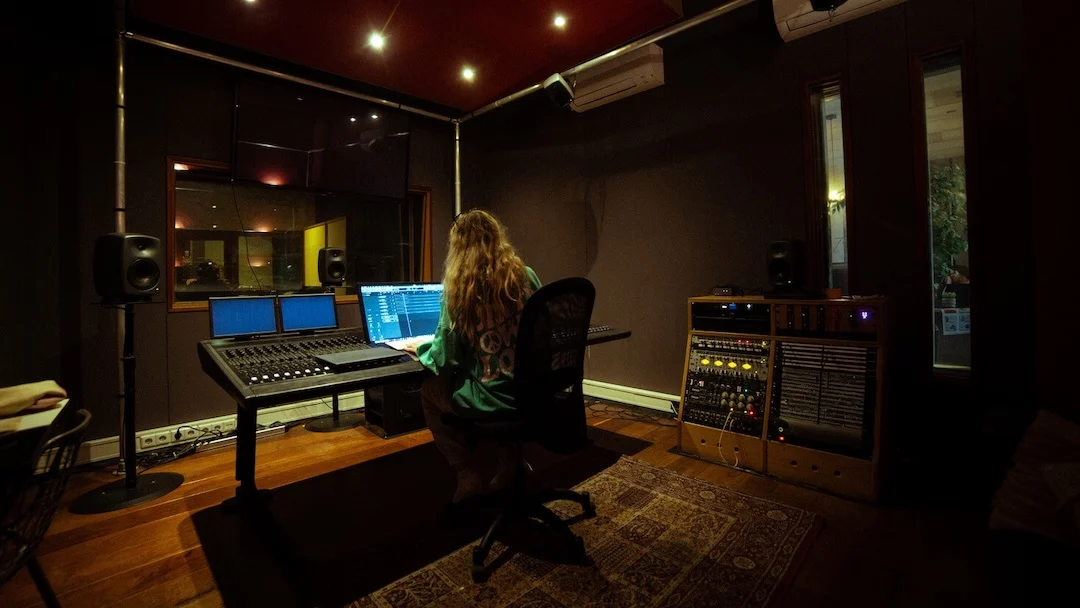
SAE Institute Amsterdam, a cornerstone of the global creative media education network, has officially unveiled its brand-new Dolby Atmos suite. Central to this facility is the Audient ORIA, a device specifically engineered to bridge the gap between traditional audio production and the intricate requirements of immersive formats.
The installation serves as the "central engine" for a multi-speaker environment designed to meet the rigorous certification standards set by Dolby Laboratories. By selecting the ORIA, SAE Amsterdam has streamlined its workflow, moving away from fragmented systems toward a unified solution that handles both high-fidelity audio conversion and complex monitor management.
The decision was driven by the necessity of providing students with a "real-world" environment. As streaming giants like Apple Music, Amazon Music, and Tidal mandate Dolby Atmos versions for new releases, and as the gaming and film industries increasingly rely on object-based audio, the ability to mix in 7.1.4 or 9.1.6 configurations has become a core competency for audio graduates.
Chronology: A Legacy of Collaborative Innovation
The installation of the ORIA is not an isolated event but the latest chapter in a decades-long relationship between SAE Institute and Audient. To understand the significance of this new Atmos room, one must look at the pedagogical journey of an SAE student, which is mirrored by the progression of Audient hardware throughout the campus.
The Foundational Years
For years, SAE Amsterdam has utilized Audient’s desktop range to introduce students to the fundamentals of signal flow and preamplification. Students typically begin their journey with the Audient iD4 and iD44. These portable desktop interfaces are praised for their "Class-A" console mic preamps, providing students with a professional-grade sound from day one.
Intermediate Production and Connectivity
As students move into more complex production scenarios, they transition to the rackmount Audient iD48. This stage of the curriculum focuses on interconnectivity, teaching students how to link live rooms to production studios. During this phase, the use of ASP880 eight-channel mic preamps becomes critical, allowing for large-scale multitrack recording sessions in the campus’s "Studio 1."
Advanced Analog Mixing
Before entering the immersive realm, students reach a pinnacle of analog education in "Studio 3," which houses the Audient ASP8024 Heritage Edition large-format console. This is often a student’s first encounter with a true inline desk, teaching them the nuances of tactile mixing, bus routing, and the "British Sound" that Audient is famous for.
The Present: The Immersive Leap
The 2024-2026 expansion saw SAE Amsterdam identifying a gap in the curriculum regarding spatial audio. Recognizing that the industry was moving faster than traditional educational models, the faculty initiated the "Immersive Initiative." This culminated in the July 2026 announcement of the ORIA installation, completing the technological circle from simple stereo interfaces to the most advanced immersive monitor controllers on the market.
Supporting Data: Technical Specifications and Calibration
The choice of the Audient ORIA was dictated by specific technical requirements inherent to Dolby Atmos production. Unlike standard stereo setups, immersive rooms require precise time alignment, phase correction, and frequency balancing across a minimum of 12 speakers (in a 7.1.4 setup).
The Calibration Factor
A standout feature of the ORIA that influenced SAE’s decision is its integrated Advanced Speaker Processing. Giacomo Piscitelli, Head of the Audio Department at SAE Institute Amsterdam, highlighted that the built-in tuning features were paramount. The ORIA allows the faculty to load calibration profiles directly onto the hardware’s DSP.
- Sonarworks Integration: The ORIA features a partnership with Sonarworks, allowing for seamless room calibration.
- The Dolby Curve: The hardware enables the engineering team to align the room specifically to the "Dolby Curve," a target frequency response required for official Dolby Atmos certification.
- Latency Management: By processing the calibration on the interface itself rather than via a software plugin on the computer, the system maintains ultra-low latency—a critical factor for recording and real-time monitoring.
Hardware Versatility
The ORIA provides 16 outputs via balanced analog connections or AES digital outputs, making it compatible with a wide range of active monitors. It also features dual ADAT inputs, allowing for expansion, and a dedicated Word Clock output to act as the master clock for the entire digital studio—ensuring jitter-free performance across the network.
Official Responses: Insights from SAE Leadership
The integration of the ORIA is part of a broader strategic vision for SAE Institute across Europe. Giacomo Piscitelli, Head of the Audio Department at SAE Institute Amsterdam, has been vocal about the importance of this technological upgrade.
"Across our SAE region, including Germany, Switzerland, and Austria, there was a clear decision that immersive audio had to become part of the student experience," Piscitelli explained. He emphasized that the goal is not just to have the equipment, but to have the right equipment that mirrors the professional world.
Regarding the selection of the Audient ORIA, Piscitelli noted: "The built-in tuning and calibration features were especially important. They allowed us to work with the right external partners while still using ORIA as the central system to align the room to the Dolby curve and Dolby requirements."
The faculty’s philosophy is rooted in "employability." By the time an SAE student reaches the Atmos suite, they have already mastered stereo theory. The ORIA provides the interface for them to apply that knowledge to a three-dimensional space. "We want our students to graduate with experience on the systems and workflows they will actually encounter in the industry," Piscitelli added.
Implications: The Future of Audio Engineering and Education
The installation of the Audient ORIA at SAE Amsterdam carries weight far beyond the walls of the campus. It signals a permanent shift in how audio education must be structured in the late 2020s.
1. The Normalization of Spatial Audio
By making Dolby Atmos a standard part of the curriculum rather than an elective "extra," SAE Amsterdam is acknowledging that stereo-only engineers may soon find themselves at a competitive disadvantage. The ORIA makes this transition accessible, providing a tactile, hardware-based workflow that simplifies the complex routing of spatial audio.
2. Industry-Ready Graduates
The "Dolby Atmos" badge on a resume is becoming a requirement for post-production houses and high-end recording studios. Graduates who have spent hundreds of hours on an ORIA-driven system will enter the workforce with a deep understanding of object-based metadata, bed tracks, and the binaural rendering processes used in modern streaming.
3. A Blueprint for Other Institutions
SAE Amsterdam’s success with the Audient ecosystem provides a blueprint for other media schools. The progression from the iD4 to the ORIA demonstrates a scalable model for audio education. It proves that institutional consistency—using the same preamp technology and software drivers across all levels of study—reduces the "technical friction" for students, allowing them to focus on the creative aspects of sound.
4. Economic Impact on the Dutch Creative Sector
Amsterdam remains a global hub for electronic music and media production. By upgrading its facilities, SAE Institute ensures that the local talent pool remains world-class. As more Dutch studios adopt Atmos for dance music and cinema, the influx of ORIA-trained graduates will provide the necessary human capital to sustain the region’s creative economy.
In conclusion, the installation of the Audient ORIA at SAE Institute Amsterdam is more than just a gear upgrade. It is a calculated investment in the future of sound, ensuring that as the audio industry moves into the third dimension, its future practitioners are already there, waiting to lead the way.