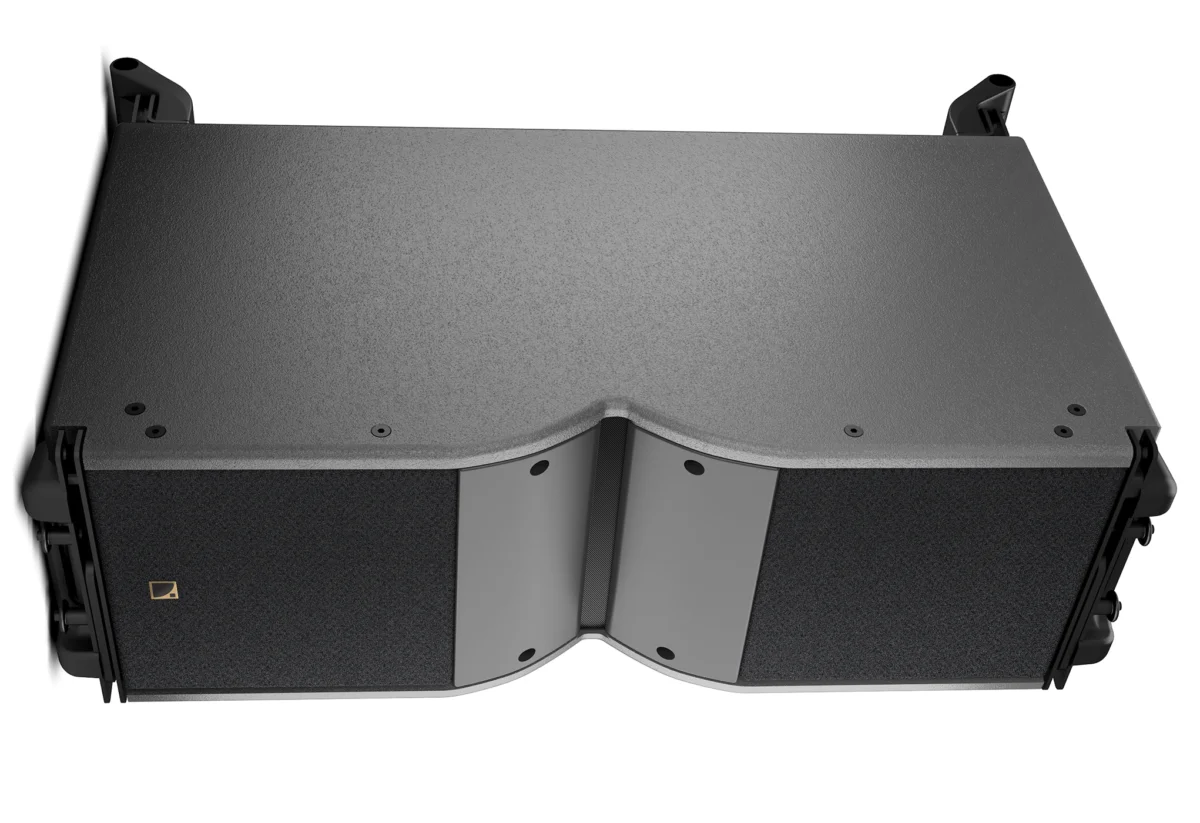
For decades, the professional audio industry operated under the assumption that size was synonymous with performance. If you wanted to fill a stadium or a large concert hall, you needed massive, heavy cabinets capable of moving immense volumes of air. However, the last decade has seen a paradigm shift. Today, compact line arrays—defined by low-frequency drivers of 8 inches or smaller—have moved from niche solutions to the industry standard for a vast majority of live sound applications.
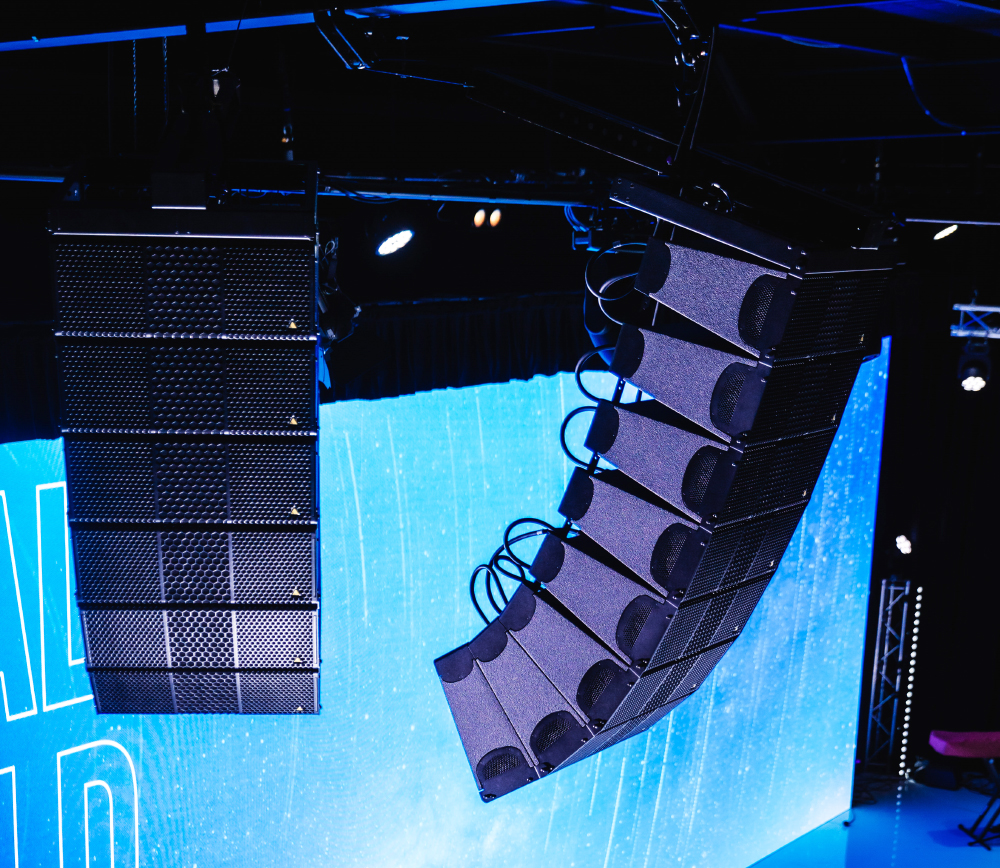
This evolution represents a significant leap in transducer technology, DSP (Digital Signal Processing) integration, and mechanical rigging efficiency. For production companies, venue owners, and system integrators, these systems offer a compelling trifecta: improved sightlines, reduced transport costs, and superior audio precision in challenging acoustic environments.

The Strategic Shift: Why "Smaller" is the New "Better"
The adoption of compact line arrays is not merely a trend; it is a calculated response to the logistical and acoustical demands of modern production. Traditional large-format arrays often present challenges in smaller to mid-sized venues, where their massive physical footprint can obstruct stage views and their weight can exceed the rigging capacity of aging or temporary structures.

Compact systems, conversely, provide a scalable solution. A single array can provide primary coverage for a standard club or theater, while the addition of more modules allows the system to grow with the venue’s requirements. Furthermore, smaller modules permit tighter splay angles between cabinets, allowing for more precise vertical steering of the sound field. This capability is particularly advantageous in acoustically “difficult” rooms, where minimizing reflection off balconies or reflective walls is essential for maintaining speech intelligibility and musical clarity.

Chronology of Innovation: The Road to High-Output Compacts
The trajectory of line array development began with the massive systems of the late 1990s. As early as 2005-2010, manufacturers began to experiment with "mini" or "micro" arrays, though these were often limited by the power-handling capabilities of smaller drivers at the time.

The turning point occurred around 2015, when the proliferation of high-excursion neodymium magnets and advanced Class-D amplification allowed engineers to extract "big box" output from 6-inch and 8-inch drivers. By 2020, the integration of proprietary networking protocols like Dante and MILAN, alongside sophisticated FIR (Finite Impulse Response) filtering, enabled these compact units to compete with their larger predecessors. Today, we are seeing the maturation of these technologies, where smart, self-powered systems can monitor their own health and performance in real-time, effectively blurring the line between compact and concert-grade power.

A Technical Deep-Dive: The Current Landscape
To understand the current state of the market, one must look at how leading manufacturers are tackling the challenges of small-format audio.

Adamson Systems Engineering: The CS7 and IS7
Adamson has been at the forefront of this evolution with their CS7 and IS7 models. The CS7 is a prime example of the "intelligent loudspeaker" trend. It utilizes a redundant MILAN network scheme and provides on-board DSP and amplification. Its Controlled Summation Technology is designed to eliminate the low-mid lobing that has historically plagued two-way line source systems. By using dual 7-inch Kevlar transducers, the CS7 manages to pack high-end performance into a 38-pound package.

The Self-Powered Revolution: RCF, QSC, and Meyer Sound
Many modern compact arrays, such as the RCF HDL 6-A and the QSC L Class LA108, embrace the self-powered paradigm. The benefit here is the elimination of external rack-mount amplifiers, which simplifies deployment and reduces cabling complexity. RCF’s use of proprietary FiRPHASE DSP provides linear phase response, ensuring that the sound is time-coherent across the entire frequency spectrum. Similarly, the Meyer Sound LINA series remains a benchmark for precision, utilizing a constant-directivity horn manifold that ensures consistent coverage across the array’s length.

The Three-Way Configuration: JBL and Electro-Voice
While many compact systems are two-way, brands like JBL (VTX A8) and Electro-Voice (XLD281) have pushed the envelope by introducing three-way designs. By dedicating specific drivers to midrange frequencies, these systems provide a more natural vocal reproduction and lower distortion at high SPL (Sound Pressure Level) levels. This approach is more complex to design but offers a level of clarity that is often unmatched by simpler, two-way configurations.
Supporting Data and Comparative Metrics
When evaluating these systems, engineers focus on several key metrics:

- Weight-to-Output Ratio: Systems like the TW AUDiO ELLA6, weighing only 12 pounds, represent the extreme end of the portability spectrum, ideal for corporate events. Conversely, systems like the L-Acoustics Kara II offer higher SPL (142 dB) for larger concert applications, albeit at a higher weight (57 lbs).
- Vertical Dispersion: Most compact modules offer a 10-degree vertical dispersion, but the splay increments are vital. Manufacturers like JBL and d&b audiotechnik offer fine-grained adjustments (often down to 1-degree increments), which are critical for "shaping" the beam of sound to match the venue’s seating geometry.
- Networking: The move toward proprietary or open-standard networking (Dante/MILAN) is now standard for premium compact systems. This allows for remote monitoring of temperature, signal integrity, and driver health, reducing the need for technicians to physically climb to the rig for troubleshooting.
Official Manufacturer Perspectives and Design Philosophies
Industry leaders emphasize that the "compact" label is no longer a compromise. Representatives from firms like Martin Audio note that the use of "Resolution" software allows their WPM (Wavefront Precision) system to be optimized for specific venue requirements by varying the number of amplifier channels per cabinet. This provides a flexible "resolution" approach, where the user can choose the level of control based on the budget and the size of the event.

Similarly, the team at Bose Professional emphasizes the "DeltaQ" technology, which allows for the changing of directivity per module. This means that an array can be tailored to be narrower at the top (for long-throw) and wider at the bottom (for near-fill), optimizing the sound energy exactly where it is needed and reducing unwanted reflections off walls.

Implications for the Future of Live Sound
The rise of compact line arrays has several profound implications for the professional audio industry:
- Democratization of Audio Quality: Small, regional production companies can now provide "stadium-level" clarity in smaller venues. The barrier to entry for high-quality audio has been lowered as these systems become more accessible and easier to deploy.
- Sustainability and Logistics: With rising fuel costs and stricter environmental regulations, the smaller footprint of these arrays is a significant advantage. Fewer trucks and lighter equipment mean a lower carbon footprint for touring productions.
- The Rise of Hybrid Events: As the line between broadcast and live performance continues to blur, the precision of compact line arrays is essential. They are easier to hide from camera sightlines, making them the preferred choice for television productions, corporate galas, and houses of worship.
Conclusion: Making the Choice
Selecting the right compact line array requires a deep understanding of one’s specific operational needs. For companies that move between ground-stacking and flying, systems like the DAS Audio EVENT-28A, with its "Fast Set Splay" rigging, offer a clear advantage in setup speed. For those focused on high-end touring, the d&b audiotechnik CCL series or the L-Acoustics Kara II provide the processing power and reliability required for demanding, high-stakes environments.

Ultimately, the "compact" revolution has proven that great sound is not defined by the size of the box, but by the intelligence of the engineering within it. As transducer materials continue to improve and digital networking becomes more seamless, these systems will only become more powerful, efficient, and essential to the future of live performance. Whether you are a system designer, a rental house owner, or an audio engineer, the current market of compact line arrays provides more tools than ever to deliver exceptional audio experiences in any space, regardless of its size.