If you remember the ritual of racing home after school, dropping your backpack, and rushing to the wall-mounted family landline to secure a few minutes of uninterrupted gossip with your best friend before dinner, you are likely part of the last generation to experience such analog social intimacy. For today’s children, that experience has been replaced by the persistent, glowing tether of the smartphone—a device that brings the world into their pockets, often accompanied by the heavy baggage of social media, infinite scrolling, and digital distraction.
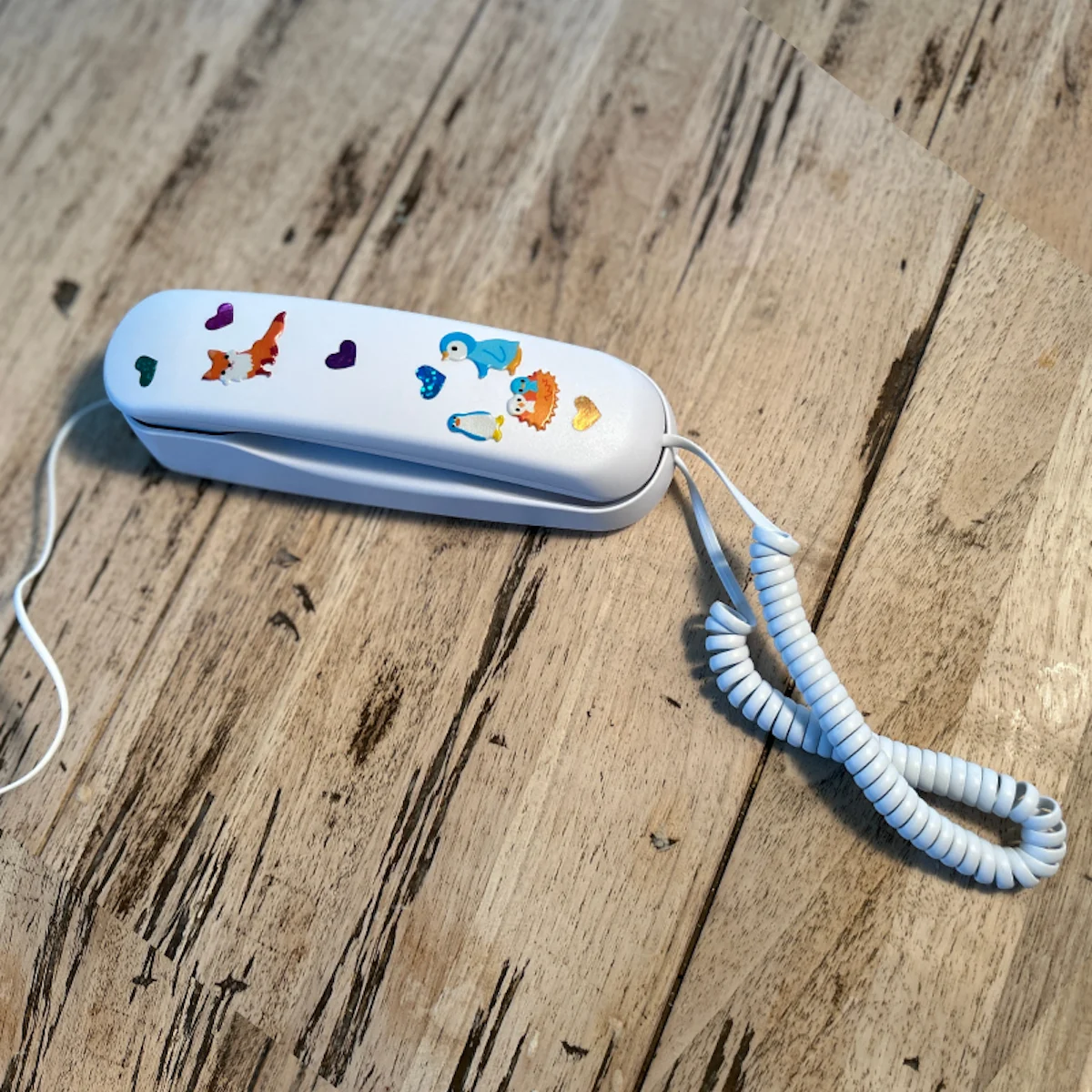
Pinwheel, a tech company dedicated to child-centric design, is attempting to bridge this gap. On Tuesday, the company announced the launch of "Pinwheel Home," a modern, Wi-Fi-enabled reimagining of the classic landline. Designed specifically for children aged 5 to 10, the device aims to provide the benefits of voice-based connection without the hazards of the modern smartphone ecosystem.
Main Facts: A New Tool for Old-School Communication
Pinwheel Home is not merely a nostalgic prop; it is a functional communication tool built for a generation that is increasingly being shielded from the pressures of high-speed, screen-heavy devices. Unlike traditional landlines that required physical copper wiring and legacy phone jacks, the Pinwheel Home operates entirely over Wi-Fi.
The product is launching in two distinct iterations:
- The Spark ($68): A minimalist model available in white, black, blue, and purple.
- The Classic ($79): A retro-inspired handset model that includes customizable stickers, offered in pink, black, and white.
Functionality is intentionally limited. By removing texting, web browsing, and social media applications, Pinwheel has created a "voice-only" environment. This, the company argues, fosters more meaningful, one-on-one dialogue, allowing children to develop communication skills—such as tone modulation, active listening, and social etiquette—without the crutch of an emoji or the anxiety of public digital performance.
Chronology: The Evolution of Pinwheel’s Ecosystem
Pinwheel’s entry into the hardware market did not happen overnight. The company has spent years building a reputation as a safer alternative to mainstream tech giants.

- Initial Expansion: Pinwheel first gained market traction by selling kid-friendly smartphones, which utilize proprietary software to limit the "app-store-addiction" model prevalent in standard devices.
- The Wearable Pivot: Recognizing that children need different levels of connectivity depending on their environment, the company launched a smartwatch last year. That device notably included an AI chatbot, signaling the company’s interest in integrating emerging technology into safe, controlled environments.
- The Current Launch: With the introduction of Pinwheel Home, the company has effectively "bookended" the child’s day. The smartwatch provides mobile safety, the smartphone provides a transitional tool, and the Home unit provides a dedicated, stationary anchor for household connectivity.
- Future Outlook: The company has already committed to an aggressive roadmap, promising future software updates that will include three-way calling and, perhaps most importantly, integration with their existing watches and smartphones. This would allow a child to maintain a single phone number across all devices, ensuring that when they are home, their "smart" access is funneled through the restricted Pinwheel Home unit.
Supporting Data: The Case Against the Screen
The launch of Pinwheel Home arrives at a critical juncture in the public discourse surrounding child development and technology. Parents are increasingly vocal about the "screen-time crisis," a sentiment backed by a growing body of academic research.
A recent study from the University of Georgia highlighted a troubling correlation between social media consumption and linguistic development. Researchers found that children who spend significant time on social platforms tend to show weaker vocabulary acquisition, struggling more with word recognition and pronunciation. The passive consumption of algorithmically curated content, it seems, is a poor substitute for the active, generative work of a phone call.
Furthermore, the American Psychological Association (APA) and other health organizations have repeatedly linked excessive screen time to long-term behavioral, emotional, and social challenges. The constant stimulation of the smartphone—the "doomscrolling" cycle—is diametrically opposed to the cognitive needs of a developing child.
In this light, Pinwheel Home acts as a technological "circuit breaker." By forcing a return to voice, the company is attempting to reclaim the "after-school call" as a developmental milestone rather than a digital distraction.
Official Responses and Safety Controls
Safety remains the cornerstone of Pinwheel’s marketing. Recognizing that parents are the ultimate gatekeepers of a child’s digital life, the company has built the entire ecosystem around the "Caregiver Portal."
Through this portal, parents wield total control:

- Contact Approval: No anonymous or unapproved callers can reach the child.
- Spam Filtering: The system automatically blocks robocalls and junk contacts.
- Scheduling: Parents can set "quiet hours" or calling windows, ensuring that the phone does not become a source of nocturnal disruption.
- Voicemail and Speed Dial: These features allow for easy navigation for younger children who may not yet be familiar with complex dial pads or contact lists.
For families, the cost of entry is modular. Calls between two Pinwheel Home devices are free via the "Pinwheel Circle." For families wishing to connect to standard phone lines, service plans are available at $6.99 per month for five approved contacts or $9.99 for unlimited calling.
Implications: A Global Shift in Digital Childhood
The release of the Pinwheel Home is part of a broader, international movement to reconsider how much of the internet we allow children to access. Globally, governments are taking unprecedented steps to curb digital exposure. Australia, for instance, has moved toward restrictive bans on social media for minors, and the United Kingdom has signaled that it may follow suit with similar legislation.
In this climate, Pinwheel is not alone. It joins a burgeoning category of "dumb-tech" for kids, competing directly with products like the $100 Wi-Fi-enabled Tin Can. The success of these devices suggests that a significant market segment of parents is suffering from "smartphone fatigue." They are looking for ways to provide their children with the independence to communicate without granting them the keys to the entire internet.
The Societal Trade-off
The implication of this shift is profound. If the landline becomes a standard fixture in the modern smart-home, it represents a tacit admission that our current digital environment is fundamentally incompatible with the psychological well-being of young children. By separating "connectivity" from "internet access," companies like Pinwheel are forcing a distinction that was largely ignored during the rapid proliferation of the smartphone.
Whether the Pinwheel Home can truly replicate the charm of the 1990s kitchen-wall phone remains to be seen. However, in an age of constant connectivity, the most "disruptive" feature a phone can offer might just be the ability to be truly quiet when not in use.
Pinwheel Home is currently available for purchase through the company’s official website, with an Amazon launch slated for the coming fall. As the market for screen-free communication matures, industry watchers will be looking to see if these devices become a household staple or a niche solution for the tech-conscious parent.