Sir Anthony Hopkins, a titan of the silver screen whose career spans over half a century, is preparing to unveil a side of his artistry that has remained largely in the shadows of his cinematic triumphs. Known globally for his chilling portrayal of Hannibal Lecter in The Silence of the Lambs, his poignant performance in The Father, and his regal presence in the Thor franchise, Hopkins is now pivoting to his first love: composition. In a landmark collaboration, the legendary actor has signed a major record deal with Decca Classics, with his debut album, Life Is a Dream, slated for release on August 21.
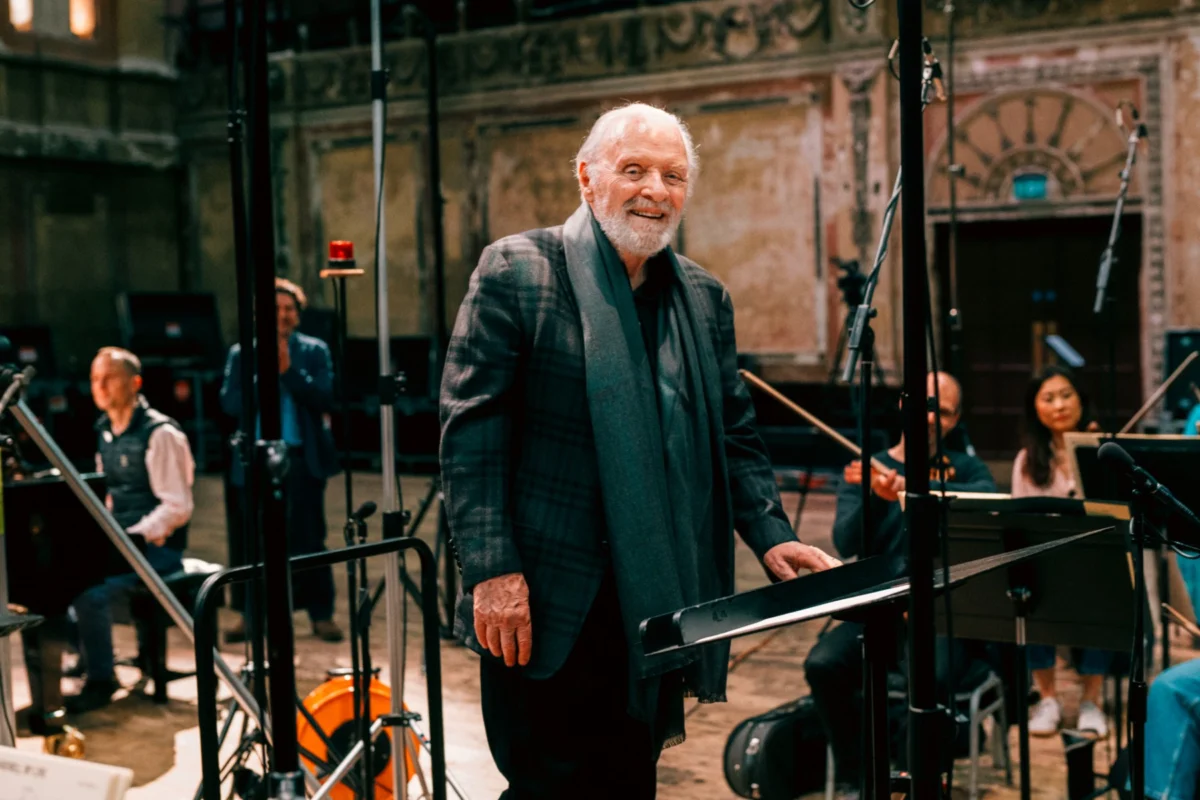
The project is not a vanity endeavor; it is the culmination of a lifelong devotion to the piano and the pen. Conducted by the world-renowned Gustavo Dudamel—who is set to transition from his tenure at the Los Angeles Philharmonic to the New York Philharmonic this September—the album features the Philharmonia Orchestra bringing six decades of Hopkins’ private compositions to life.
A Lifelong Passion: The Genesis of the Artist
While audiences recognize Hopkins for his ability to embody complex characters, the man himself has long been defined by his relationship with music. Born in Wales, Hopkins began his foray into the world of melody at the tender age of four. Heavily influenced by the works of Beethoven and Chopin, he was a prodigy of sorts, writing his own musical arrangements by the time he reached his teenage years.
“Music was my first desire, my first wish,” Hopkins remarked in a recent statement. “I’ve been composing music all my life. Some of these pieces have lived with me for decades, and I still find myself returning to them.”
This lifelong dedication to composition challenges the conventional narrative of the actor-turned-musician. Rather than a recent hobby, music has served as a parallel narrative to his acting career, a private sanctuary where he could translate his internal experiences into orchestral movements.
Chronology: From the Liverpool Playhouse to the Global Stage
The compositions included in Life Is a Dream represent a sweeping survey of Hopkins’ creative evolution. The collection is anchored by pieces that track the trajectory of his life, beginning with his early years as an aspiring actor.
A centerpiece of the album is “Bracken Road,” a movement from his 1947: Suite for Solo Piano and Orchestra. Composed in 1963, when a young Hopkins was cutting his teeth at the prestigious Liverpool Playhouse, the piece serves as a bridge between his past and his present. It captures the atmosphere of a young artist on the cusp of greatness, blending the classical discipline of his training with the dramatic sensibilities that would soon make him a household name.

The album also features a more intimate, contemporary side to the composer. Pieces like “Stella Aria,” written for his wife, and “Tara,” composed for his niece, highlight his capacity for emotional vulnerability. These tracks suggest a man who uses music as a primary language for expressing love and familial devotion. The final recordings were completed in April at the iconic Alexandra Palace in London, marking a significant milestone in his artistic legacy.
Supporting Data and Previous Accolades
While Life Is a Dream is being marketed as his full-length debut, Hopkins is no stranger to the classical charts. His reputation as a composer was bolstered significantly in 2012 when he received the Classic Brit Award for Album of the Year. This accolade was bestowed for the title track of And the Waltz Goes On, a composition performed by the legendary violinist André Rieu and the Johann Strauss Orchestra.
That success proved that his musical sensibilities resonated with a global audience, providing the necessary momentum for the Decca Classics partnership. The upcoming album features an impressive roster of virtuosos, including cellist Gregorio Nieto and pianist Sergio Tiempo, whose technical prowess aims to elevate Hopkins’ compositions to a level that satisfies the most discerning classical critics.
Official Responses: A Visionary Collaboration
The significance of this partnership has not been lost on the leadership at Decca Classics. Laura Monk, President of the label, expressed her enthusiasm for the project, noting that the recording sessions in London were a transformative experience.
“His depth of talent and classical music knowledge, honed over a lifetime, is a joy to celebrate with this new album,” Monk said. “Hearing his incredible compositions come to life… was a once-in-a-lifetime experience that we are excited to bring to the world.”
Gustavo Dudamel, who conducted the Philharmonia Orchestra for the album, offered a profound assessment of Hopkins’ work. “Sir Anthony Hopkins is one of those rare artists whose creative voice transcends any single medium,” Dudamel noted. “The same depth of imagination, humanity, and emotional truth that has defined his extraordinary work on stage and screen is present in his music. Anthony approaches music with the heart of a storyteller and the instincts of a poet.”
For Hopkins, the project is framed by a sense of humility and gratitude. “My whole life is a dream,” he stated. “Signing with Decca is the honor of a lifetime. It has been a true privilege to collaborate with the distinguished Philharmonia Orchestra… With the graceful precision of his [Dudamel’s] baton, he transformed each note with profound and indelible meaning.”

The Implications: Music as a Second Act
The release of Life Is a Dream carries several implications for the cultural landscape. Firstly, it forces a re-evaluation of Hopkins as a multi-hyphenate artist. In an era where celebrities often release music that feels detached from their core identity, Hopkins’ work is deeply rooted in his personal history and formal classical training.
Secondly, the collaboration signals a broader trend of classical labels seeking to bridge the gap between high-art composition and the immense reach of mainstream icons. By platforming Hopkins’ work, Decca Classics is not only honoring a legendary actor but also introducing a wider demographic to the beauty of orchestral arrangement.
Furthermore, the album’s focus on themes of memory and time—evidenced by the inclusion of pieces written decades apart—positions the project as a meditation on the passage of life. It invites listeners to view the actor not just as a vessel for other writers’ scripts, but as a creator of his own sonic world.
Looking Ahead
As August 21 approaches, the anticipation for Life Is a Dream continues to build. The fusion of Hopkins’ cinematic gravitas with the technical brilliance of the Philharmonia Orchestra and the visionary leadership of Gustavo Dudamel promises an auditory experience that is both intimate and grand.
Whether the album will lead to future compositions or live concert performances remains to be seen. However, for a man who has spent his life capturing the imaginations of millions through the lens of a camera, this transition to the concert hall feels like a natural, if long-awaited, evolution. Sir Anthony Hopkins has spent decades playing characters defined by their complexity; with this album, he invites us to listen to the complexity of the man behind the mask.
In a final reflection on his work, Hopkins noted that the music is designed to create a "pictorial landscape that invites the listener to feel and imagine something uniquely personal." As he moves from the theater to the recording studio, the world will soon learn that for Sir Anthony Hopkins, the music was never just a hobby—it was the dream all along.