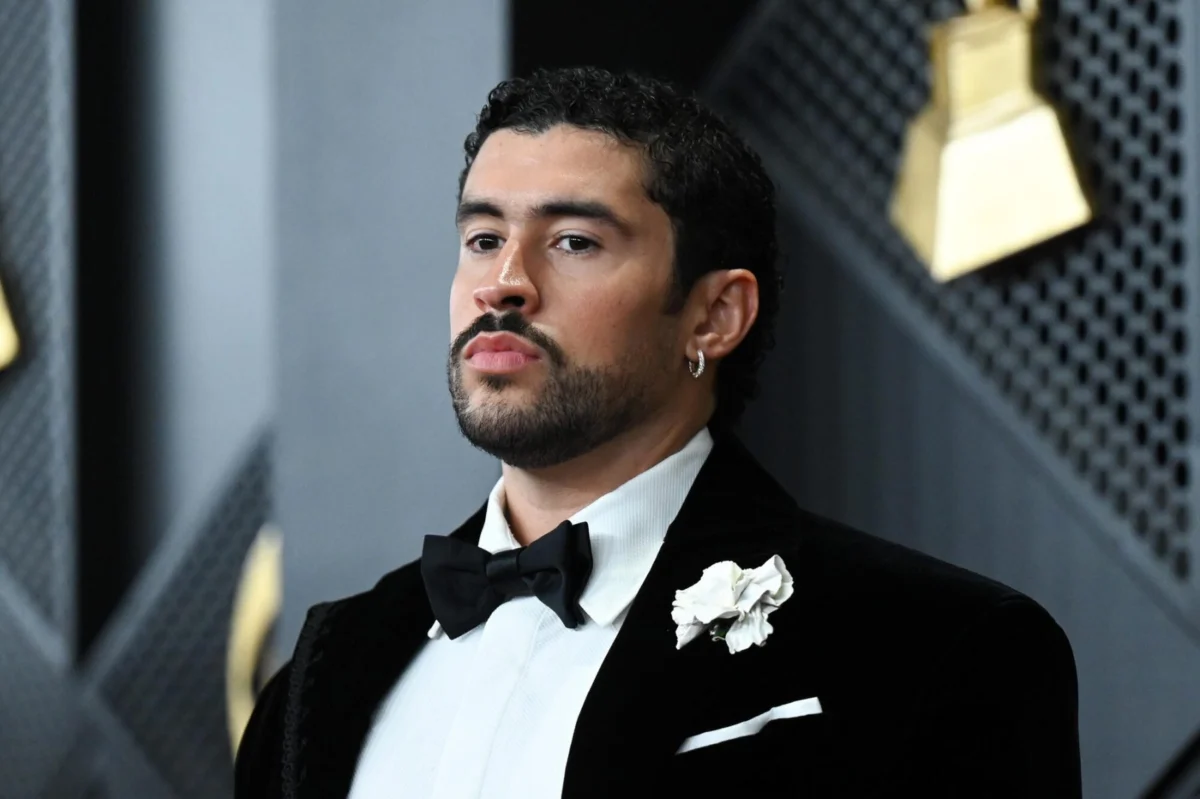
The Supreme Court of Puerto Rico has delivered a significant legal verdict that could reshape how artists interact with personal vocal recordings, ruling that Carliz De La Cruz Hernández may continue her lawsuit against global superstar Bad Bunny over the unauthorized use of her voice. The case, which centers on the iconic “Bad Bunny baby” tagline, has become a landmark dispute concerning the intersection of celebrity, digital rights, and the commercial exploitation of personal identity.
In a decision finalized on Wednesday, July 8, the island’s highest court clarified the scope of the litigation. While the court allowed the plaintiff’s claims regarding the 2022 hit song "Dos Mil 16" to move forward, it simultaneously barred similar claims regarding the 2015 track "Pa Ti," citing the expiration of the statute of limitations. This ruling marks a pivotal development in a case that has captivated the music industry and raised fundamental questions about intellectual property and the right of publicity.
The Chronology of a Disputed Tagline
The origins of the dispute date back to 2011, when Benito Antonio Martínez Ocasio—known globally as Bad Bunny—began a multi-year, on-and-off romantic relationship with De La Cruz Hernández. During the early stages of his ascent in the music scene, in 2015, the couple collaborated on a personal project. At the singer’s request, De La Cruz Hernández recorded a voice memo on her phone, uttering the now-ubiquitous phrase: “Bad Bunny baby.”
For years, that specific audio clip served as a sonic brand identity for the artist. It was integrated into various recordings, providing a recognizable "producer tag" that signaled the start of a Bad Bunny track. However, the legal friction surfaced in 2023 when De La Cruz Hernández filed a formal lawsuit against the artist and his label, Rimas Entertainment.
Her complaint alleged that the recording was used in commercial music productions without her explicit consent or proper financial compensation. She argued that the usage of her voice was not merely artistic, but served as a commercial identifier that helped build the Bad Bunny brand. The legal journey reached a critical juncture in 2024 when lower courts initially debated whether a voice recording could truly constitute "advertising."
Establishing the Legal Framework: The Right of Publicity
At the heart of the litigation is Puerto Rico’s right of publicity law. Generally, such statutes protect individuals from having their likeness or voice used for commercial gain without their permission. Historically, this legal doctrine has been applied strictly to traditional advertising—such as using a celebrity’s voice in a television commercial for a soft drink or an automobile.
Under traditional interpretations, music recordings—the songs themselves—are often treated differently under copyright law, and vocal samples are rarely subject to "right of publicity" claims. However, this case has challenged that precedent.
In 2024, a lower court judge in Puerto Rico issued a groundbreaking ruling, finding that De La Cruz Hernández’s voice on the track "Dos Mil 16" functioned essentially as an advertisement. The court reasoned that the buzz surrounding the inclusion of her voice—fueled by social media speculation about the former couple’s relationship—generated significant interest in the album Un Verano Sin Ti. Consequently, the court found that the vocal sample was used to drive sales and market the product, placing it squarely within the realm of commercial exploitation.

The Supreme Court’s Ruling: A Mixed Outcome
The Puerto Rico Supreme Court’s recent decision upholds the lower court’s reasoning regarding the 2022 track. Writing for the majority, Justice Mildred G. Pabón Charneco affirmed that the lower courts did not err in their assessment of the commercial nature of the usage.
“They did not err in determining that the facts presented regarding the commercial or business exploitation of Ms. De la Cruz Hernández’s voice were sufficient to draw attention to the product in question or to inform the public about it through the media,” Justice Pabón Charneco wrote.
However, the Court was careful to prune the scope of the case. By dismissing the claims related to the 2015 track "Pa Ti" due to the statute of limitations, the justices have effectively narrowed the battlefield. The lawsuit will now proceed exclusively concerning the usage of the voice recording on Un Verano Sin Ti.
Furthermore, the Supreme Court took a surprising step by reviving copyright claims that had previously been dismissed. Justice Pabón Charneco noted that because the voice memo was "fixed in a tangible medium," it potentially qualifies for copyright protection.
“Ms. De la Cruz Hernández alleged in her complaint that the recording of her personal, distinctive and incomparable rendition of the phrase was misused and that it was used without proper attribution,” the opinion stated. “Therefore, we conclude that the plaintiff has presented sufficient facts to eventually offer evidence justifying this claim.”
The Dissenting View: A Warning for Future Litigation
The ruling was not unanimous. Justice Angel Colón Pérez filed a vigorous dissent, arguing that the majority’s interpretation stretches the definitions of both the right of publicity and copyright law to a dangerous degree.
In his dissenting opinion, Justice Colón Pérez suggested that none of the causes of action invoked by the plaintiff were legally valid under Puerto Rican law. His position reflects a broader concern among some legal scholars that allowing such claims could have a "chilling effect" on artistic creativity. If every individual whose voice or image appears in a creative work could sue based on "right of publicity" theories, the music and film industries could face a deluge of litigation that threatens the collaborative nature of artistic production.
Implications for the Music Industry
The implications of this decision are profound, particularly for artists who frequently utilize "tags," samples, and field recordings.

1. The Blurring of Advertising and Art
This case highlights the increasing difficulty in distinguishing between artistic content and commercial branding. As social media creates a feedback loop where an artist’s personal life and their musical output are inextricably linked, courts are struggling to determine where an artist’s "right to create" ends and an individual’s "right of publicity" begins.
2. The Power of the "Tag"
For years, producer tags—short, audio signatures—have been a staple of hip-hop, reggaeton, and electronic music. If these tags are now legally classified as potential commercial endorsements or independent copyrightable works, artists may need to implement much more rigorous clearance processes, including written contracts for even the most informal, spontaneous recordings.
3. Statute of Limitations
The court’s decision to enforce the statute of limitations on the 2015 track serves as a crucial reminder of the importance of timely litigation in intellectual property disputes. It suggests that while the law may protect individual voices, it also requires those seeking redress to act with reasonable speed once they become aware of an alleged infringement.
What Lies Ahead
As the case moves toward trial regarding the 2022 usage, both sides remain tight-lipped. Representatives for both Bad Bunny and De La Cruz Hernández have yet to issue official statements following the July 8 decision.
Legal observers will be watching closely to see how the "copyright" aspect of the case is handled. If the court ultimately determines that a brief, spontaneous voice memo constitutes a copyrightable work, it could set a massive precedent for the industry. It would suggest that any person who contributes even a few seconds of audio to a session could hold a form of ownership over the final product, potentially opening the door for a wave of similar lawsuits from former collaborators, ex-partners, and friends of artists.
For Bad Bunny, the stakes are not merely financial; they touch upon the artistic narrative of his most successful era. For De La Cruz Hernández, the ruling is a significant vindication of her right to control how her voice is deployed in the public sphere. As the music world watches, the case of De La Cruz Hernández v. Martínez Ocasio stands as a stark reminder that in the modern era of celebrity, the lines between personal history and professional product are thinner than ever.