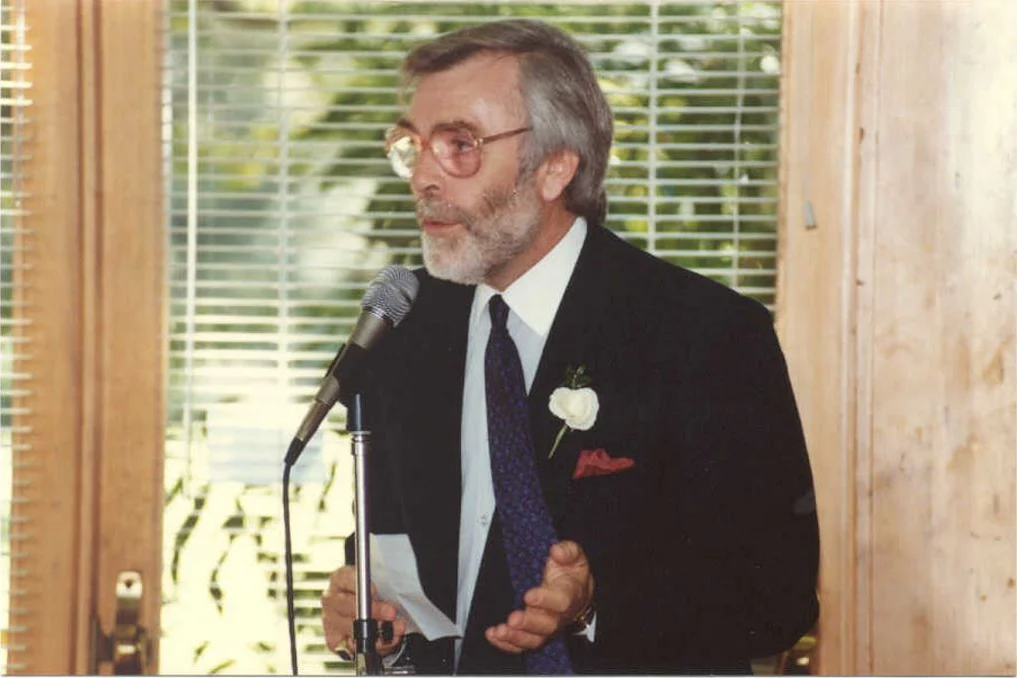
Brian Potter, a prolific Grammy-nominated songwriter and producer whose melodic sensibilities defined a golden era of pop and country crossover, passed away on June 30 in Granada Hills, California. He was 87. According to his daughter, his death followed a long struggle with vascular dementia and Alzheimer’s disease.
Potter’s career was a testament to the transformative power of a well-crafted hook. As a central figure in the mid-70s music industry, his collaborative partnership with Dennis Lambert created a blueprint for radio-friendly production that bridged the gap between R&B, pop, and country. From the iconic production of Glen Campbell’s Rhinestone Cowboy to the polished grooves of the Four Tops and Player, Potter was a silent engine behind some of the most enduring hits of the 20th century.
A Global Foundation: From Essex to the U.S.
Born in Essex, England, Potter’s musical journey began in the vibrant, post-war British music scene. Unlike many of his contemporaries who remained rooted in local movements, Potter had an international vision. His early years were marked by a rigorous education in the craft of touring and performance; most notably, he spent time as the drummer for rock-and-roll pioneer Chuck Berry during his tours of the U.K. and Europe.
By 1965, Potter had pivoted toward songwriting. His breakthrough came with "Whatcha Gonna Do About It," a track he co-wrote with Ian Samwell for the Small Faces. The single’s ascent to No. 14 on the U.K. Official Singles Chart signaled that Potter had a keen ear for the shifting tastes of the youth market.
The trajectory of his life changed irrevocably when he crossed paths with Dennis Lambert, an American singer-songwriter stationed in Europe with the U.S. Army. The chemistry between the two was immediate. Recognizing that the American market offered a broader canvas for their ambitions, Potter made the pivotal decision to relocate to the United States, effectively launching one of the most successful production duos of the 1970s.
Chronology of a Chart-Topping Partnership
The Lambert-Potter partnership was characterized by a meticulous approach to production and a relentless focus on song structure. Their first major success, the 1969 anti-war anthem "One Tin Soldier," demonstrated their ability to capture the zeitgeist. While originally recorded by The Original Caste, it was the 1971 version by Coven—featured in the cult classic film Billy Jack—that cemented the song’s status. A subsequent rendition by Skeeter Davis earned a Grammy nomination for Best Female Country Vocal Performance, proving the duo’s versatility across genres.
Throughout the early 1970s, the pair became a powerhouse, particularly after the Four Tops departed Motown. Potter and Lambert stepped in to revitalize the group’s sound. The resulting albums, including Keeper of the Castle (1972), yielded hits like the title track and the soul-pop classic "Ain’t No Woman (Like the One I Got)."
Their influence expanded further with the launch of their own imprint, Haven Records, through Capitol. It was during this tenure that they undertook what would become their most famous project: the 1975 concept album Rhinestone Cowboy by Glen Campbell. The title track, penned by Larry Weiss and polished by the production duo, became a defining song of the decade. The success of the project earned Potter a Grammy nomination for Producer of the Year and solidified his reputation as a master of the crossover hit.
Supporting Data: A Legacy of Hits
The sheer breadth of Potter’s discography is staggering. His work in the 1970s represents a period where the lines between Top 40, R&B, and Adult Contemporary were intentionally blurred to maximize reach.
Key Chart Performances (Billboard Hot 100):

- Hamilton, Joe Frank & Reynolds: "Don’t Pull Your Love" (No. 4)
- The Grass Roots: "Two Divided By Love" (No. 16)
- The Righteous Brothers: "Dream On" (No. 32)
- Tavares: "It Only Takes a Minute" (No. 10)
- Player: "Baby Come Back" (No. 1)
These songs were not merely hits; they were sonic markers of the decade, featuring the sophisticated arrangements and tight vocal harmonies that became synonymous with the "Lambert/Potter sound." Even as producers, they maintained a level of quality control that saw them guiding acts like Player to the very top of the charts with the inescapable soft-rock anthem "Baby Come Back."
Diversification: Musicals and Theme Parks
As the 1980s approached and musical trends began to shift, Potter displayed remarkable adaptability. Moving away from the high-pressure environment of the record labels, he explored the narrative potential of music. He co-wrote Score, a musical focused on the life of Abe Saperstein, the founder of the Harlem Globetrotters.
Potter’s commitment to his Buddhist faith (SGI-USA) led him to collaborate with composer Wayne Green on two major musical revues: This is America: A Musical Revue (1988) and This is America: The New World (1989). These productions were not small affairs; they toured more than 10 cities, showcasing Potter’s ability to scale his work for live audiences.
In the 1990s, he transitioned into the world of entertainment design. Through the Landmark Entertainment Group, he wrote over 20 songs for the Japanese theme park Puroland and consulted for Universal Studios Hollywood. His contributions to the park’s atmosphere included the iconic Beetlejuice’s Rockin’ Graveyard Revue and The Blues Brothers Show, proving that his gift for melody was just as effective in a theme park setting as it was on the airwaves.
Implications and Industry Recognition
Brian Potter’s death marks the closing of a chapter for the songwriter-producer archetype of the 20th century. In 2025, in a final nod to his historical significance, Potter and Lambert were nominated for induction into the Songwriters Hall of Fame in the non-performing songwriters category. This recognition served as a validation of a career that spanned nearly six decades and touched almost every facet of the entertainment industry.
The industry’s reaction to his passing has been one of deep respect for his craft. Unlike the flashier celebrity producers of today, Potter belonged to an era where the song was king, and the producer was the craftsman responsible for polishing the jewel. His work with the Four Tops and Glen Campbell remains a masterclass in production, and his later work in theme park entertainment highlights a willingness to evolve and find new applications for his creative energy.
Personal Legacy and Final Arrangements
Beyond the charts and the accolades, Brian Potter leaves behind a legacy of family and community. He is survived by his wife of 55 years, Karen; his daughter, Courtney; his stepdaughter, Mary Shirley; and two brothers.
The Potter family has requested that, in lieu of flowers, donations be made to the Alzheimer’s Association or the Motion Picture & Television Fund, organizations that provide essential support for those suffering from the conditions that Potter faced in his final years. A celebration of life is scheduled for the fall, where friends, colleagues, and family will gather to honor a man whose melodies provided the soundtrack for millions of lives across the globe.
Brian Potter’s life serves as a reminder of the enduring nature of a well-written song. From the backrooms of London clubs to the glitz of Capitol Records and the creative expanse of Universal Studios, he navigated the music business with a rare combination of humility, technical precision, and an unwavering commitment to the craft. While the hits may have been products of their time, the skill behind them was timeless.