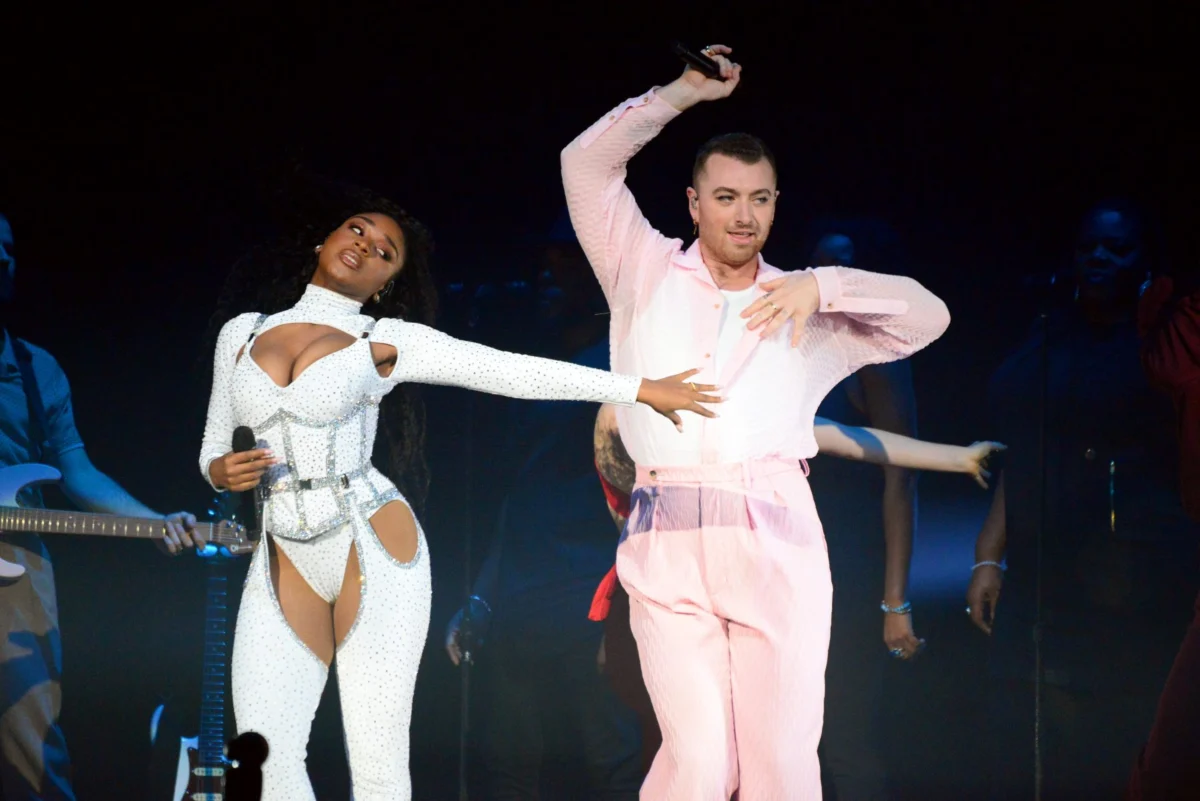
The high-stakes legal battle surrounding the 2019 global hit "Dancing With a Stranger" has entered a critical new phase. Sam Smith and Normani, the superstar duo behind the chart-topping collaboration, have filed a formal motion for summary judgment, requesting that a federal judge dismiss the lingering copyright infringement lawsuit against them once and for all.
The litigation, which has already seen a reversal of fortunes in the appellate courts, centers on claims by songwriter Jordan Vincent that the duo’s track—which peaked at No. 7 on the Billboard Hot 100—improperly appropriated the hook from his 2015 song, also titled "Dancing With Strangers." As both parties prepare for a pivotal August hearing in Los Angeles, the case has become a lightning rod for broader discussions regarding the intersection of songwriting originality, the "striking similarity" standard, and the complex mechanics of copyright in the digital age.
A Chronology of the Dispute
The saga began in 2022, when Jordan Vincent initiated legal action against Smith, Normani, and their team of co-writers and publishers. Vincent alleged that the structural and melodic core of "Dancing With a Stranger" bore too much resemblance to his earlier work to be coincidental.
The case hit a significant hurdle in 2023 when a federal judge initially dismissed the lawsuit, siding with the defendants. However, the legal trajectory shifted dramatically last year when an appeals court revived the litigation. The appellate panel determined that there existed a legitimate, triable dispute regarding whether the two songs featured "substantially similar" hooks—specifically revolving around the titular phrase "dancing with a stranger."
Following the revival, the case entered a second, more grueling phase of discovery. During this period, the defense sought to narrow the scope of the claims. Most notably, Vincent conceded that there is no evidence to suggest the songwriting team behind the Smith/Normani hit had ever heard his 2015 track. This admission is a legal turning point; because there is no proof of "access," the plaintiff is now forced to meet the much higher legal bar of "striking similarity." To prevail, Vincent must convince the court that the songs are so identical that independent creation is a mathematical and logical impossibility.
The Defense’s Argument: The "Meager Similarities" Doctrine
In the summary judgment motion filed on Tuesday, July 7, legal counsel from the powerhouse firm Davis Wright Tremaine—representing Smith, Normani, and their creative team—argued that Vincent’s case is fundamentally flawed. They contend that the plaintiff fails to meet the "demanding standard" required to prove copyright infringement in the absence of evidence of access.
The Problem of "Scènes à Faire"
The defense’s core argument rests on the principle that the phrase "dancing with a stranger" is a common trope in popular music, ineligible for copyright protection. They point to a long history of the phrase appearing in music, citing tracks by Cyndi Lauper (1989) and Regina (1997). By arguing that these elements are "freely floating" in the musical zeitgeist, the defense maintains that the similarities are merely superficial.

"The similarities amount to a four-word phrase—which has appeared in more than fifteen songs before plaintiff’s song—and some unprotected pitches and rhythms in each song’s otherwise different melodies," the filing states. The attorneys emphasize that for a copyright claim to hold weight, the expression must be unique and complex enough to rule out coincidence, a standard they argue the plaintiff has not even approached.
The "Fatal Defect" in the Plaintiff’s Copyright
Beyond the melodic arguments, the defense has introduced a new, aggressive strategy: attacking the validity of Vincent’s own copyright. The motion alleges that Vincent’s "Dancing With Strangers" contains unauthorized samples of "The Ha Dance" by Masters at Work and "Think (About It)" by Lyn Collins. If the court finds that the plaintiff’s work is built upon unlicensed, infringing material, it could effectively invalidate his standing to sue for copyright infringement, presenting a potentially fatal blow to the entire case.
The Plaintiff’s Stance: A "Fingerprint" of Theft
Opposing the motion, AJ Fluehr, representing Jordan Vincent, has maintained that the similarities are far more than coincidental. In the filed response, Fluehr argues that the shared DNA of the two songs goes beyond the lyrical title, pointing to "virtually identical" pitch sequences and melodic contours.
"There are no works in the history of the world which have anything close to the selection and arrangement shared by both songs," Fluehr asserted in the filing. He characterized the similarities as a "fingerprint" linking the two compositions. Addressing the defense’s argument regarding the commonality of the phrase, Fluehr suggests that the specific aesthetic context in which the phrase is used creates a unique protected expression.
Furthermore, Fluehr attempted to undermine the credibility of the defense’s claim of "independent creation" by referencing Sam Smith’s past legal history. He pointed to the 2015 incident where Smith added Tom Petty as a co-writer on "Stay With Me" following concerns over its similarity to Petty’s "I Won’t Back Down." Fluehr argues that this historical context suggests a pattern of borrowing, though the defense has dismissed this line of reasoning as "outlandish" and entirely irrelevant to the specific merits of the current dispute.
Implications for the Music Industry
This case is being closely watched by the music industry, as it highlights the recurring tension between established artists and independent songwriters. If the case proceeds to a jury trial, it could set a significant precedent regarding how courts define "striking similarity" in the age of streaming.
The Burden of Proof
The legal burden placed on the plaintiff in this case is exceptionally high. Without evidence of "access"—the "smoking gun" of copyright litigation—a plaintiff is effectively fighting an uphill battle against the presumption of independent creation. If the court grants the summary judgment, it will reinforce the protections for artists who write songs within established pop tropes and conventions, potentially deterring "copycat" lawsuits that rely on shared titles or common lyrical themes.

The Role of Sampling and Crediting
The defense’s focus on the plaintiff’s own unlicensed samples serves as a reminder of the "unclean hands" doctrine in intellectual property law. By highlighting potential infringements in the plaintiff’s work, the defense is shifting the narrative from a question of "Did Smith steal from Vincent?" to "Does Vincent have a valid copyright to begin with?" This strategy could become a blueprint for future defense teams facing similar accusations.
Looking Ahead: The August Hearing
As the industry awaits the August hearing in Los Angeles, the outcome remains uncertain. The federal judge faces a binary choice: either grant the motion for summary judgment and bring the long-running dispute to a definitive close, or deny it, thereby forcing a jury trial that could expose the defendants to significant reputational and financial risk.
There remains, of course, the possibility of a settlement. In the world of high-stakes music copyright, settlements are often preferred to avoid the unpredictability of a jury, which may not always align with the technical nuances of musicology presented by expert witnesses.
Regardless of the final outcome, the "Dancing With a Stranger" case stands as a stark illustration of the litigious environment surrounding modern pop music. As the definition of what constitutes an "original" melody continues to shrink in the eyes of some litigants, artists and their legal teams are increasingly finding themselves in the position of defending not just their hits, but the very process of songwriting itself.
For now, Sam Smith and Normani’s team remain firm in their stance that the lawsuit is meritless, a position that will be tested in the coming weeks. Whether this serves as the final chapter or merely the prelude to a high-profile trial remains to be seen, but the music world will be watching the Los Angeles courtroom with bated breath.