
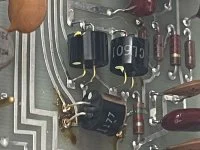
For audio engineers and vintage electronics enthusiasts, the Sound Technology (ST) 1700 series—including the iconic 1710A—represents a benchmark in analog test equipment. Renowned for its ability to perform high-precision Total Harmonic Distortion (THD) analysis without the intrusive cooling fans found in modern automated systems, these units remain staples in many professional labs. However, as these machines enter their fourth and fifth decades of service, they face a critical "Achilles’ heel": the degradation of proprietary Light Dependent Resistor (LDR) optocouplers.
This report examines the ongoing technical community effort to diagnose, source, and replace these failing components, highlighting the challenges of maintaining legacy precision instrumentation in an era where original manufacturer support has long since vanished.
Main Facts: The LDR Dilemma
At the heart of the Sound Technology 17xx series’ performance is a complex circuit that relies on optocouplers to transition between "fast" and "low distortion" modes. These optocouplers consist of an internal LED paired with an LDR (photoresistor).
When the analyzer switches to low-distortion mode, it engages these LDRs to manage signal nulling and gain. Over time, these components—often marked with cryptic part numbers like "CL614m" or "CL601"—begin to fail. The failure manifests as unstable distortion readings, erratic needle behavior, and an inability for the unit to maintain calibration bias values as specified in the original service manuals. Because the original manufacturers (such as the early iterations of Vactec) have evolved or disappeared, finding "drop-in" replacements is nearly impossible, forcing technicians into a process of experimentation, characterization, and custom modification.
Chronology of Community Troubleshooting
The effort to solve the ST-17xx LDR issue has been a decade-long collaborative project, primarily documented within specialized audio engineering forums.
2010: The Initial Discovery
In June 2010, the community began a systematic effort to identify suitable replacements. Users noted that the 17xx models shared similar LDR circuit architectures across both the Oscillator and Analyzer boards. The consensus during this period was that the original parts were a "black hole" in terms of documentation. Early suggestions focused on Vactec or Silonex Audiohm optocouplers, with the VTL5C10 being identified as a potential candidate for testing.

2020: The "Counterfeit" Crisis
A decade later, as vintage stocks dwindled, users began reporting a new issue: the quality of modern replacement LDRs. Steven, a long-time enthusiast, reported that his newly purchased VTL5C units from an online marketplace were exhibiting extreme sensitivity to ambient light. Testing revealed that the "black plastic" casings were not fully opaque. If the casing was not perfectly shielded, the unit’s internal resistance would fluctuate simply because the technician moved their hand near the component. This highlighted a significant failure mode for those attempting repairs: light leakage rendering the precision instrument entirely inaccurate.
2024–2026: The Era of "Socketing" and Characterization
Most recently, the conversation has shifted toward modern methodologies. Users like "Stefanoo" have successfully revived units by adopting a "socketing" approach. By installing IC-style sockets for the LDRs on the PCB, technicians can now swap and test different components without subjecting the delicate board traces to repeated thermal stress from soldering. This era is defined by rigorous testing—injecting precise 20mA currents into the LED side and measuring the resulting resistance to select the best possible matches for the circuit’s original design requirements.
Supporting Data and Technical Observations
The technical hurdles involve more than just finding a component that fits; it is about matching the transfer function of the original device.
The Sensitivity Problem
As noted by community experts, an LDR’s performance is defined by its resistance range at specific LED currents. The original ST parts are suspected to have a "low" state resistance in the range of 200 ohms, with parallel resistances of 10K ohms. When replacing these with modern parts like the CLM6000 or similar clones, technicians have found:
- Thermal Sensitivity: Heat from soldering or even prolonged operation can shift the bias points, making immediate calibration after installation ineffective.
- Non-Linearity: If the replacement LDR’s curve does not match the original, the auto-leveling circuit in the ST-17xx will struggle, leading to the "wiggle" or instability observed by users when measuring low-level distortion.
- Light Leakage: As identified in 2020, modern molded packages may not be fully opaque. Shielding with copper foil or specialized heat-shrink tubing is often required to ensure the LDR is controlled solely by the internal LED.
The "Banging Needle" Phenomenon
A common symptom of a failing LDR in the ST-1710A is the needle "banging" against the end-stop during mode switches. This occurs because the integrator and nulling circuits are not receiving the expected resistance feedback, causing the unit to overshoot its target value. Experienced users now recommend that owners avoid switching into THD mode while the generator is active; instead, they suggest starting in "Volts" mode, waiting for the system to stabilize, and then transitioning to THD once the circuitry has settled.
Implications for Vintage Equipment Owners
The maintenance of the Sound Technology ST-17xx series carries significant implications for the professional audio world.

1. The Death of Plug-and-Play
The primary implication is that "vintage" no longer means "serviceable by the book." The original service manuals, while excellent, reference parts that are now obsolete. Owners must now become data-sheet analysts and experimental physicists. The need to "trace the curve" of 25+ individual components to find a match for a single repair is a high barrier to entry for the casual user.
2. The Rise of "Socketing" as a Standard
The community’s move toward socketing represents a major shift in vintage repair philosophy. It acknowledges that the component failure rate is high and that the quality of replacement parts is inconsistent. By making the LDRs modular, technicians protect the integrity of the original PCB while facilitating the necessary trial-and-error approach required to find a suitable replacement.
3. Verification through Modern Standards
It is telling that the community now uses the "gold standard"—Audio Precision (AP) systems—to verify the performance of their repaired Sound Technology units. This "cross-pollination" of old and new technology is essential. When an ST-1710A shows 0.00035% distortion while an AP system shows 0.00022%, the technician has a clear goal for how much further they need to tune the bias.
Conclusion: A Legacy Worth Preserving
Despite the frustration of sourcing obscure parts and the necessity of custom modifications, the commitment of the DIY audio community to the Sound Technology ST-17xx series remains steadfast. These units offer a tactile, quiet, and highly capable alternative to modern, fan-cooled digital analyzers.
The consensus among those who have successfully navigated these repairs is clear: the ST-17xx is not a "lost cause," but it is a project machine. Success requires a methodical approach:
- Socket the PCB: Never solder an LDR directly; use IC pins to allow for future tuning.
- Characterize Before Installing: Use a controlled DC source to test the resistance range of the replacement LDR before it ever touches the board.
- Shielding is Mandatory: Do not trust the factory packaging of modern LDRs; use additional opaque materials to ensure no ambient light interferes with the critical nulling circuit.
- Accept the "Wiggle": Understand that these units are analog, and while they can achieve impressive specs, they may never be as "perfectly" stable as a modern digital analyzer.
The ST-17xx may have been designed in a different era, but through the collective intelligence of modern engineering forums, it continues to serve as a vital tool in the modern audio laboratory. The "black hole" of the CL614m part number has been replaced by a community-driven database of experience, ensuring that these analog marvels can continue to provide their unique service for years to come.


