
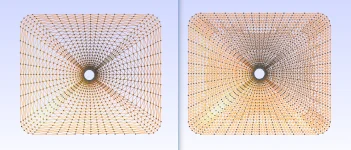
In the niche but highly technical world of high-fidelity audio engineering, the pursuit of the "perfect" acoustic horn—a device designed to improve the directivity and efficiency of sound reproduction—has long been a domain restricted by complex mathematics and expensive, proprietary software. However, a significant shift occurred in the DIY audio community when an engineer known by the handle "mabat" released a new tool, "ATH4," aimed at democratizing the design of acoustic horns.
This development has ignited a flurry of activity on specialist forums, as hobbyists and professionals alike explore the intersection of automated mesh generation, 3D modeling, and acoustic simulation. This article explores the emergence of the ATH4 project, the technical hurdles faced by early adopters, and the broader implications for the field of DIY loudspeaker design.
Main Facts: The ATH4 Project
The ATH4 project, introduced to the diyAudio community in June 2019, represents a significant leap forward for DIY horn designers. At its core, the software automates the generation of complex horn geometries and prepares them for Boundary Element Method (BEM) simulation via ABEC (Acoustic Boundary Element Calculator).
Traditionally, designing a horn that maintains consistent directivity across a wide frequency range required advanced CAD skills and a deep understanding of wave physics. Mabat’s software abstracts much of this labor, providing a script-based environment that outputs files ready for 3D printing or further manipulation in professional CAD suites like Fusion 360 or SolidWorks.

The primary innovation of ATH4 is its integration with Gmsh, a powerful finite element mesh generator. By leveraging the Gmsh Software Development Kit (SDK), the software can translate theoretical horn profiles into high-quality meshes that can be analyzed for acoustic performance before a single piece of material is ever cut or printed.
Chronology: The First Days of Deployment
The initial release of the ATH4 software prompted an immediate, albeit technically challenging, rollout within the community.
- June 5, 2019: Mabat announces the release of the software on the diyAudio community forums, inviting feedback and testing from fellow enthusiasts.
- June 6, 2019 (Early Hours): Early adopters, including users FredrikC and NiToNi, begin testing the software. The excitement is palpable, but technical friction emerges almost immediately. Users report difficulty with missing library files, specifically the
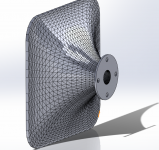
gmsh.dll, which was not explicitly bundled in the initial release. - June 6, 2019 (Mid-Day): The conversation shifts from initial praise to technical troubleshooting. FredrikC clarifies that he successfully imported the generated STL (Stereolithography) files into SolidWorks, proving that the software’s output was compatible with professional industrial design workflows.
- June 6, 2019 (Evening): A collaborative troubleshooting session ensues. John van Ommen provides a crucial roadmap for users, detailing the necessity of downloading the specific Gmsh SDK rather than the standalone executable. This revelation clears the path for a wider user base to begin running simulations.
- Late June 6, 2019: Discussions pivot toward the discrepancy in mesh density. Users note significant differences in the resolution of output files, leading to a debate on whether the software’s reliance on Gmsh was introducing variable performance based on the host computer’s architecture or configuration.
Supporting Data: The Technical Friction
The discourse surrounding ATH4 provides a fascinating look into the challenges of open-source software distribution in a niche field.
The Dependency Challenge
The primary hurdle for users was the reliance on the Gmsh SDK. As John van Ommen noted, "installing Gmsh by itself won’t satisfy the dependency." This highlighted a common issue in open-source engineering tools: the "missing link" of environment configuration. For many, this was their first time interacting with an SDK-driven workflow, which is significantly more complex than installing a standard desktop application.
Mesh Resolution and Divergence
A notable point of contention and confusion was the variance in mesh density. Users comparing their output files—specifically the STL and MSH (Mesh) files—reported vastly different vertex and face counts. For example, some users observed 1,344 vertices and 2,592 faces, while others saw significantly higher densities.
Mabat acknowledged this complexity, noting that the software writes different files for different purposes: the STL/MSH files for geometry and the ABEC mesh for simulation. The discrepancy in density, which in some cases was as high as a factor of five, suggested that the way the Gmsh engine interacts with the host environment’s hardware—or potentially minor variations in user-defined script parameters—could lead to vastly different results. This prompted a deeper investigation into whether multi-threading or hardware-specific acceleration was influencing the mesh generation process.
Official Responses and Developer Insight
The developer, mabat, remained highly active throughout the troubleshooting process, providing near-real-time responses to user queries.
In response to concerns about the "finish" of the STL files, mabat offered a humble perspective: "Until now everyone complained about the STLs… maybe they just did it wrong." This shifted the burden of success toward the user’s ability to manipulate the mesh, rather than the software’s inability to provide a "perfect" surface.
When confronted with the technical anomaly of varying mesh densities, mabat’s response was one of scientific curiosity rather than defensiveness. By asking users to upload their files, the developer sought to isolate whether the issue was a flaw in the code or an environmental quirk of the Gmsh library. This iterative, community-driven debugging process is characteristic of high-end hobbyist engineering, where the developer and the end-user effectively become co-researchers.
Implications for the Audio Industry
The introduction of tools like ATH4 has profound implications for the audio industry, both for professional manufacturers and the DIY community.
Democratization of High-End Design
Historically, the tools required to design waveguides and horns were proprietary or prohibitively expensive. By providing an accessible, script-based tool, the entry barrier has been lowered. This allows small-scale builders to create waveguides that rival the performance of those produced by major commercial entities, provided they have the patience to learn the underlying physics and simulation tools.
The Rise of "Prosumer" Additive Manufacturing
The ability to generate an STL file from an acoustic script, and then successfully thicken that surface for 3D printing (as demonstrated by FredrikC), creates a closed-loop system. A user can design, simulate, and manufacture a custom acoustic component entirely from their desktop. This reduces the prototyping cycle from months to days.

Future Integration of Simulation
The collaboration between ATH4, Gmsh, and ABEC suggests a future where loudspeaker design is increasingly simulation-first. Rather than relying on trial-and-error—a staple of traditional speaker building—the industry is moving toward a model where the acoustic performance is predicted and verified in a virtual space.
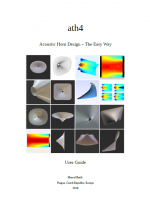
As software like ATH4 continues to mature, we can expect to see a surge in high-performance, DIY-designed horns. The technical hurdles faced in the early days of the project are not just obstacles; they are the growing pains of a new, highly efficient paradigm in acoustic engineering. As documentation improves and the community builds a repository of shared scripts and settings, the "easy way" to design acoustic horns—as the project title suggests—may well become the standard way.
In conclusion, the ATH4 project serves as a microcosm of the power of open-source development. By facilitating the exchange of complex technical data and fostering a culture of collaborative troubleshooting, mabat has provided the tools for a new generation of engineers to reshape the landscape of sound reproduction. The journey from a missing library file to a fully realized 3D-printed horn is a testament to the dedication of the diyAudio community and the evolving capabilities of modern, accessible design software.


