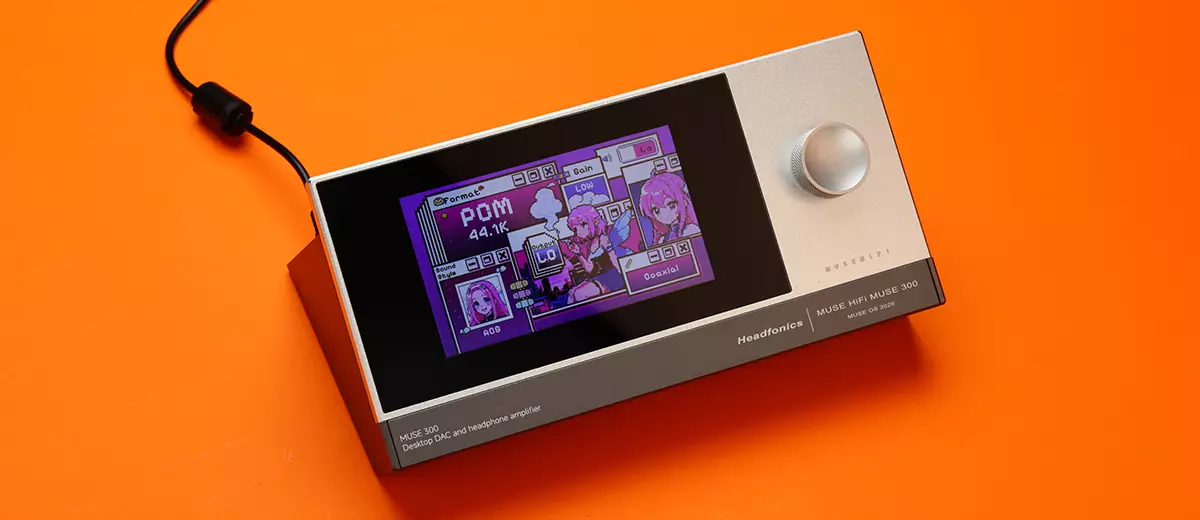
In the rapidly evolving landscape of high-fidelity audio, the intersection of desktop performance and user-centric design has become the new frontier. Enter the MUSE HiFi MUSE 300—a device that claims the title of the world’s first desktop DAC/Amp and wireless streamer to feature a proprietary operating system paired with a dedicated 5-inch display. Priced at $439.99 (with early-bird Kickstarter pricing starting at $349.99), the MUSE 300 attempts to bridge the gap between complex audiophile equipment and the intuitive nature of modern consumer electronics.
Main Facts: Redefining the Desktop Experience
The MUSE 300 is not merely a digital-to-analog converter; it is a holistic audio ecosystem housed in an unconventional, ergonomic chassis. At its core lies the ESS Sabre ES9039 DAC chip, a powerhouse of high-resolution decoding that serves as the foundation for the unit’s transparent and highly resolving sound signature.
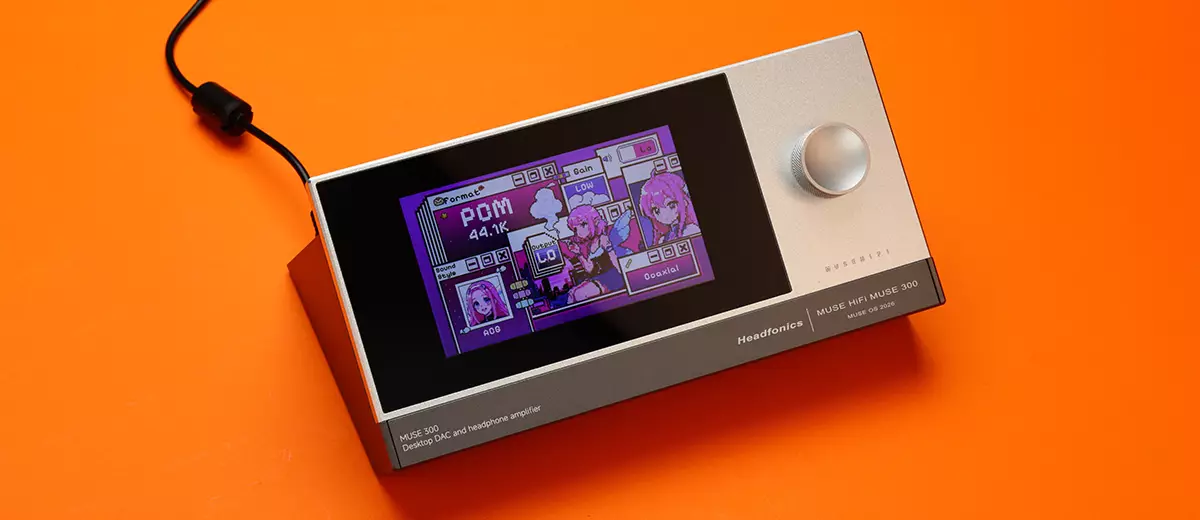
What distinguishes the MUSE 300 from its peers is the implementation of "MUSE OS," a custom-built, 32-bit microcontroller-based operating system. Unlike traditional Android-based Digital Audio Players (DAPs) or standard plug-and-play desktop units, the MUSE OS is engineered for a singular purpose: optimized, low-latency audio processing. This hardware-software synergy ensures that system resources are dedicated exclusively to audio fidelity, avoiding the bloatware and interference common in general-purpose operating systems.
Chronology of Development and Design
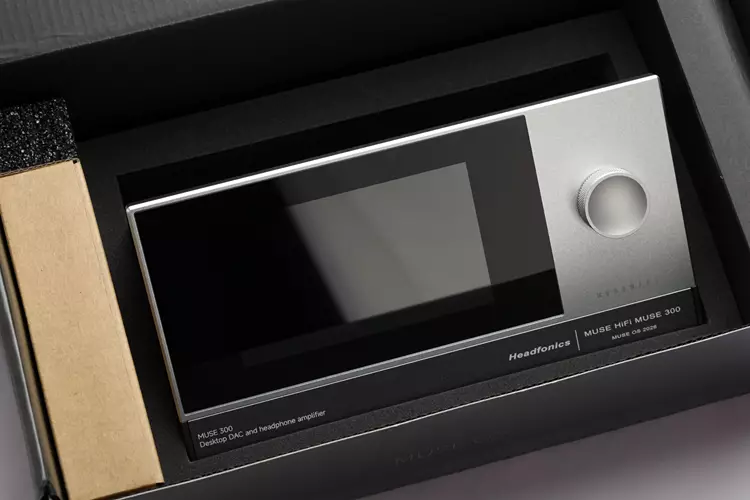
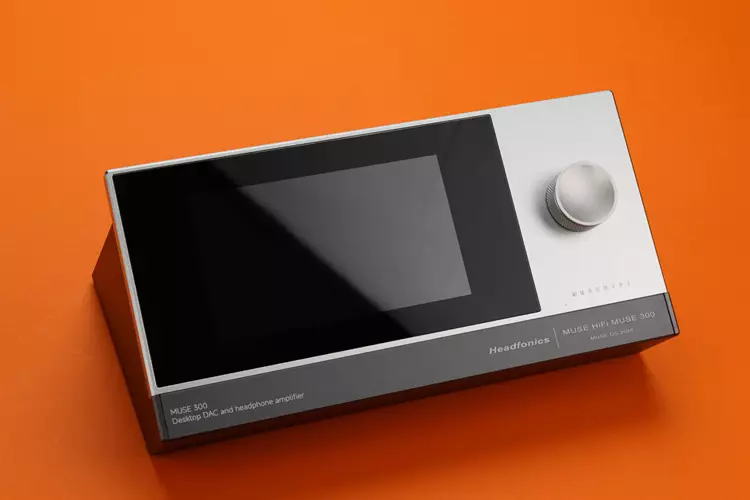
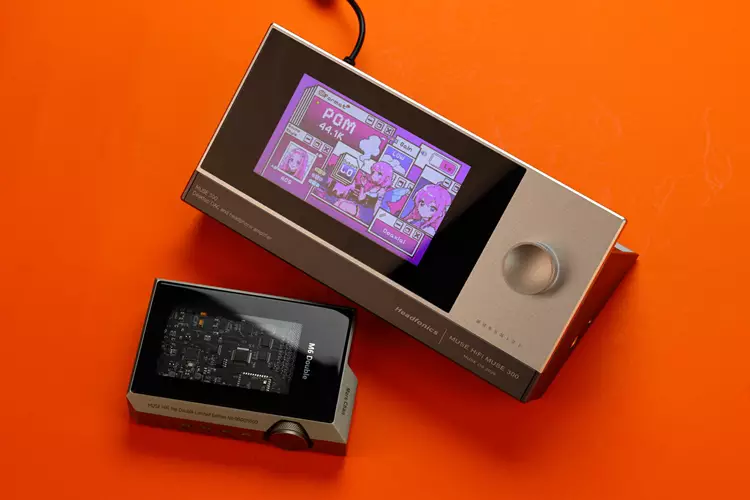
The design philosophy behind the MUSE 300 represents a departure from the "black box" aesthetic that has dominated the desktop audio market for decades. The unit features an 8-mm-thick, silver-anodized aluminum faceplate that angles the 5-inch IPS display directly toward the listener. This ergonomic choice acknowledges that desktop users are typically seated; by canting the controls and screen upward, MUSE HiFi has improved both visibility and operational comfort.
The chassis itself is a masterclass in structural integrity, constructed from 3-mm-thick aluminum casting. Measuring 228 mm x 140 mm x 100 mm, the device feels substantial and deliberate. The evolution from the brand’s previous successes, such as the M6 Double, is evident here. While the M6 focused on portable power, the MUSE 300 is a statement piece for the office or the home listening station, incorporating a single, tactile push-button rotary knob that manages all navigation—a minimalist approach that belies the complexity within.
Supporting Data: Analog Tuning and Technical Specifications
Perhaps the most radical departure from contemporary design trends is the MUSE 300’s approach to sound shaping. In an industry increasingly reliant on Digital Signal Processing (DSP) and software-based equalization to color the sound, MUSE HiFi has opted for the "old-school" approach of physical analog circuitry.
The Three Pillars of Sound
The MUSE 300 utilizes discrete analog components—resistors and capacitors—to achieve three distinct sonic profiles:
- Balanced Sound Style: This mode is the reference point. It provides a flat, accurate, and highly transparent frequency response. It is the ideal choice for classical music enthusiasts and studio monitoring, where the goal is absolute fidelity to the original recording.
- Tube Amplifier Sound Style: By routing the signal through specific analog stages, this mode introduces a subtle second-order harmonic distortion, effectively emulating the warmth and "lushness" of vacuum tubes. It rounds off the transient peaks, making it an excellent pairing for bright headphones or fatigue-prone recordings.
- ACG (Animation, Comics, and Games) Style: This mode is a genre-specific tuning. It leans into the upper-midrange and treble energy typical of modern J-pop and soundtracks. The bass is tightened and pulled back to ensure that complex electronic layers in game music remain separated and distinct.
Internal Hardware
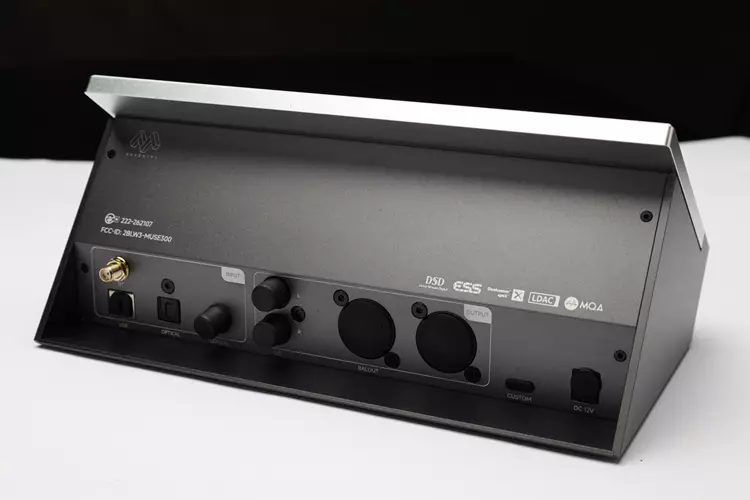
The internal architecture utilizes a balanced output configuration, employing two OPA1612 operational amplifiers, two ES9603 drivers, and two TPA6120A buffers. This configuration supports a maximum output of 2,200 mW, which is more than sufficient for power-hungry planar magnetic headphones or high-impedance dynamic cans. With a signal-to-noise ratio of 129 dB and distortion levels below 0.0006%, the MUSE 300 offers technical performance that rivals units at double its price point.
Official Responses and Firmware Considerations
During testing, the unit’s interface proved to be highly responsive, though not without minor teething issues typical of a version 1.0 firmware release. MUSE HiFi has been transparent about the device’s current limitations, specifically regarding the display. Currently, the screen lacks a "sleep" or "off" mode—a feature frequently requested by users who prefer a dark room during late-night listening sessions.
The company has acknowledged these limitations, noting that the proprietary nature of the MUSE OS allows for streamlined firmware updates. Unlike complex OS environments, the MUSE OS can be patched quickly to include features like screen-off timers or a triple-press command on the rotary knob to toggle the display. This modularity suggests that the MUSE 300 is a "living" device that will likely gain functionality over its lifespan.
Implications for the Hi-Fi Industry
The MUSE 300 serves as a litmus test for the future of desktop audio. For years, the industry has trended toward software-heavy solutions, often integrating Android to support streaming apps like Tidal, Spotify, and Roon. By creating a closed, high-performance ecosystem, MUSE HiFi is challenging the notion that "more is better."
The Verdict on Sound
For the critical listener, the MUSE 300 offers a level of transparency that is rare at the $400 price point. The staging is expansive, with an airy presentation that provides excellent instrument separation. While the depth of the soundstage is not as profound as some ultra-high-end dedicated desktop rigs, it is remarkably coherent. The ability to switch between "Balanced" and "Tube" modes without engaging a digital menu—relying instead on the inherent properties of the analog circuit—is a feature that purists will find particularly compelling.
Challenges and Future Outlook
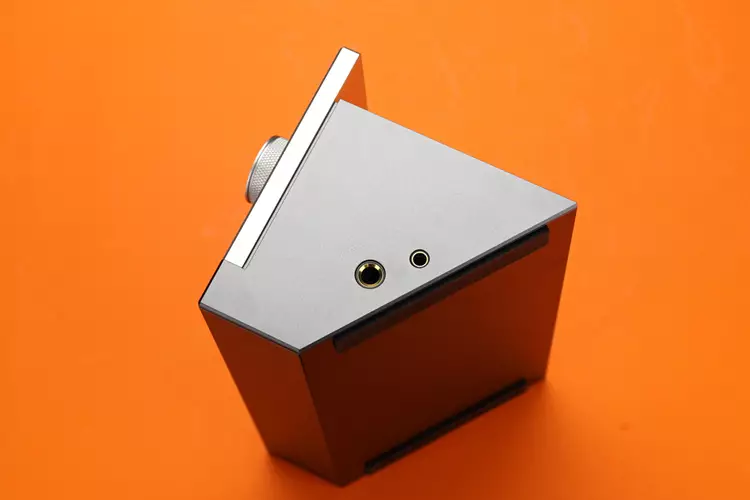
The primary hurdle for the MUSE 300 remains the lack of touch-screen functionality. In a world where even the most entry-level devices utilize capacitive touch, the reliance on a single rotary knob is a bold aesthetic choice, but one that may alienate users accustomed to smartphone-like interfaces. Furthermore, the inclusion of rubber port covers is a welcome "pro-sumer" touch, reflecting a level of care for the longevity of the connectors that is often ignored by larger manufacturers.
As the device moves from its Kickstarter phase into general retail, its success will hinge on the company’s ability to iterate on the firmware. If MUSE HiFi can refine the spectrum analyzer and VU meter animations to be more reactive and implement the requested display-off modes, they will have created a definitive piece of hardware.
Conclusion
The MUSE HiFi MUSE 300 is an ambitious, well-executed, and sonically superior piece of equipment. By prioritizing analog sound-shaping over digital trickery and utilizing a custom, high-speed operating system, it carves out a unique niche in a crowded market. Whether you are a fan of anime-inspired ACG tonality, a lover of tube-like warmth, or a professional seeking analytical accuracy, the MUSE 300 provides a versatile platform that respects the integrity of the signal path. For those willing to embrace its unique, forward-facing design and slightly idiosyncratic interface, it offers a listening experience that is, quite literally, designed for the modern desk.