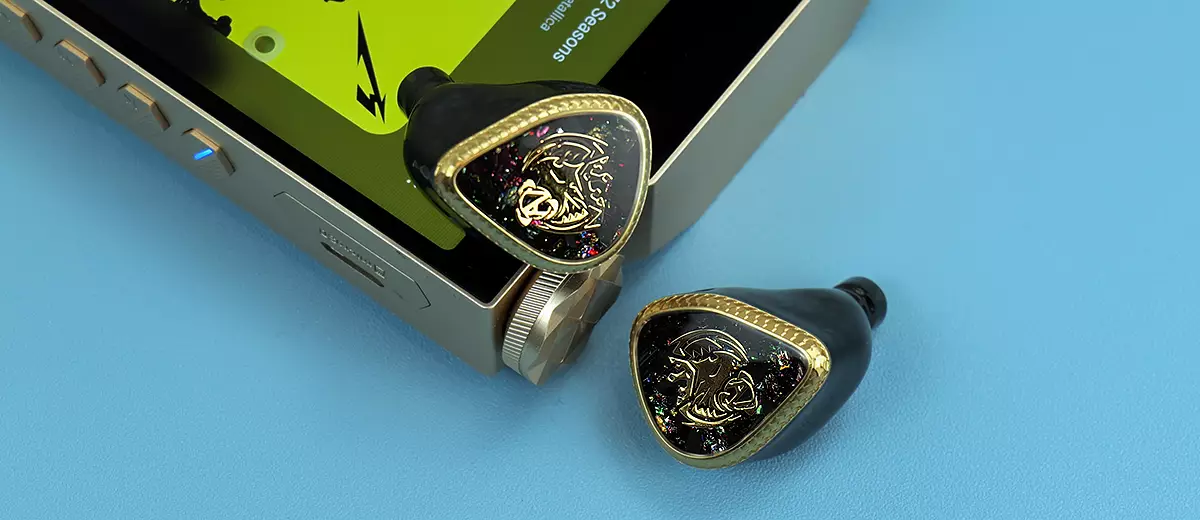
In the rarefied atmosphere of "Summit-Fi," where price tags frequently push into the thousands and technical complexity is treated as a form of high art, Nostalgia Audio has carved out a distinct reputation. Their latest release, the Pendragon, is an ambitious 14-driver quad-hybrid universal in-ear monitor (IEM) that arrives with a formidable MSRP of $3,799.00.
Positioned as the definitive flagship in their current 2026 lineup, the Pendragon represents a culmination of years of iterative engineering. By moving beyond the niche, limited-run status of the $32,000 Royal Camelot, Nostalgia Audio is making a statement: they are ready to dominate the high-end market with a product that balances technical prowess with a refined, fatigue-free sound signature.
Main Facts: Architecture and Engineering
The Pendragon is not merely a collection of high-end components; it is a masterclass in acoustic orchestration. Under the hood, the monitor utilizes an intricate 14-driver configuration designed to cover the entire frequency spectrum with precision:
- Ultra-Lows: Dual 9.2mm dynamic drivers.
- Mid-Lows: Two dual-diaphragm bone conduction drivers.
- Mids and Highs: 6 Balanced Armature (BA) drivers.
- Ultra-Highs: 4 electrostatic (EST) drivers.
The technical specifications—19Ω impedance and an SPL of 115 dB/mW—suggest a monitor that is surprisingly efficient. Unlike older EST implementations that required massive amplification to achieve peak performance, the Pendragon utilizes next-generation electrostatic drivers that offer greater sensitivity, allowing for more headroom with portable digital audio players (DAPs).
A standout feature is the integration of the XBS II (Extreme Bass System). This system utilizes upgraded titanium alloy connection materials instead of traditional copper, combined with micro-nano 3D printing for improved airflow. This ensures that the low-end transients are not only powerful but remarkably clean. Furthermore, the Spiral Flow Device (SFD) II technology, now in its second generation, uses 3D-printed helical tubes to manage midrange resolution, ensuring vocal performance remains clear and textured despite the warmth of the low-end.
Chronology: The Evolution of the Flagship
To understand the Pendragon, one must look at the lineage that preceded it. Nostalgia Audio has moved through several distinct phases of development over the last few years:
- The Tesseract Era: Introduced a "cyberpunk" aesthetic and focused on experimental BA-heavy tunings. While technically impressive, it was a limited run that has since been retired.
- The Camelot and Durandal Phase: The Camelot introduced the world to the brand’s high-end aspirations, while the Durandal brought the initial iteration of the SFD technology to a more "accessible" high-end price point.
- The Pendragon Arrival (2026): The Pendragon effectively consolidates the lessons learned from the Durandal and the technical engineering of the Camelot. It is designed to be the primary, scalable flagship for the brand, replacing the retired units and setting the standard for the company’s future releases.
Supporting Data: Tuning and Performance
The Pendragon offers a sound signature that can be described as "natural-to-warm." It is a departure from the clinical, analytical sound often found in other flagship monitors.
The Low-End Foundation
The bass shelf peaks aggressively between 20Hz and 60Hz. Because of the dual dynamic drivers, the Pendragon provides a sense of "gravitas" that is rarely found in BA-only or planar-magnetic setups. It is not necessarily "fast" in the traditional sense, but the decay is natural, making it an exceptional choice for genres like synthwave, R&B, and modern soul.
The Midrange and Treble Balance
The midrange, particularly the lower-mids, carries a warm, lush presentation. While this provides a fatigue-free experience, it does introduce a slight trade-off in contrast. Vocals are smooth and sibilant-free, but they sit further back in the mix compared to more forward-sounding monitors.
Our testing indicates that the Pendragon is highly source-dependent. When paired with neutral, energetic sources like the iBasso DX320 MAX Ti or the FiiO M27, the Pendragon finds a perfect equilibrium. The added treble energy from these sources compensates for the Pendragon’s relaxed high-end, resulting in a more open soundstage. For users who prefer a warmer source (like the HiBy RS8 II), a small PEQ adjustment—specifically a narrow peaking filter at 4kHz—is recommended to restore vocal presence.

Official Responses and Design Philosophy
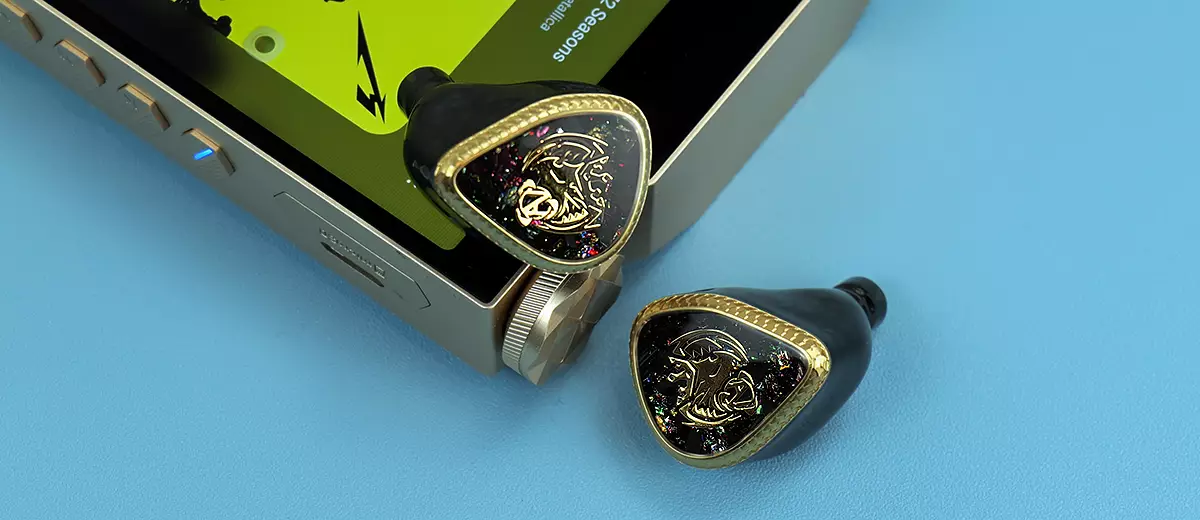
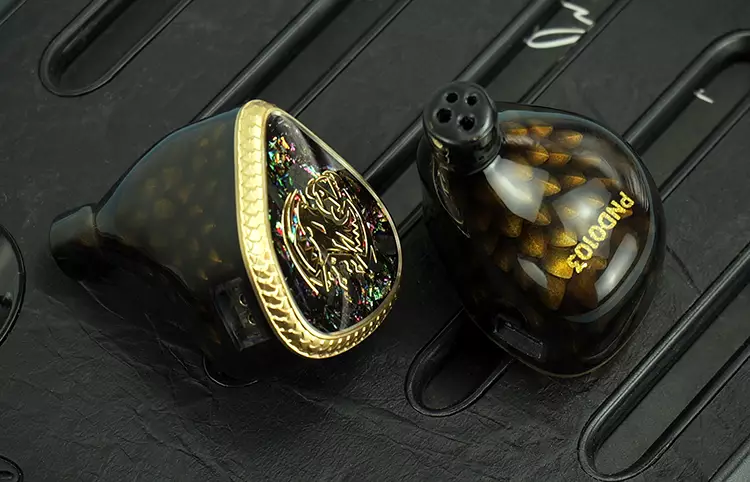
Nostalgia Audio has maintained a consistent design language centered on the Arthurian legend. The Pendragon is no exception. The chassis is a sophisticated blend of 3D-printed resin and CNC-machined aluminum. The "dragonscale" aesthetic on the underside is both tactile and visually striking, while the gold-plated "fender" on the top of the shell adds a layer of luxury befitting the price point.
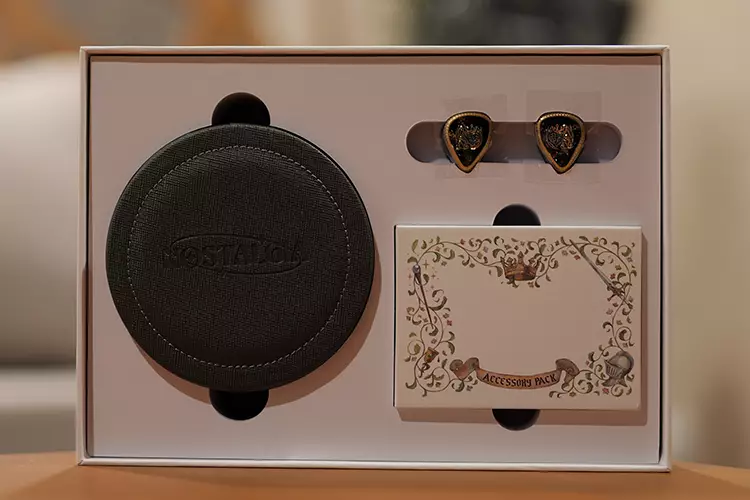
The packaging experience is equally meticulous. From the tapestry-inspired artwork on the box to the "roundstone" case for the ear tips, the company emphasizes the emotional connection to the product. As noted in our evaluation, this level of attention to detail is essential at the $3,799 price point, where the user expects a premium, cohesive "unboxing" journey.
Implications: The Market Landscape
The release of the Pendragon has significant implications for the high-end IEM market:
- The Rise of Quad-Hybrid Versatility: The Pendragon proves that 14-driver arrays do not have to result in a disjointed sound. By utilizing specific drivers for distinct frequency bands, Nostalgia Audio has achieved a cohesive, full-bodied performance that challenges competitors like the PLUSSOUND Allegro II.
- The "Fatigue-Free" Shift: There is a growing consumer trend away from "hyper-detailed" or "bright" tunings. The Pendragon’s success suggests that listeners are increasingly prioritizing long-term listening comfort and musicality over raw technicality.
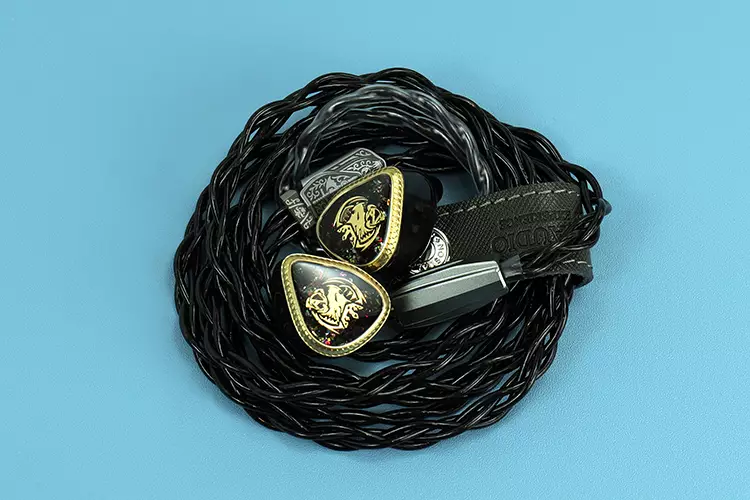
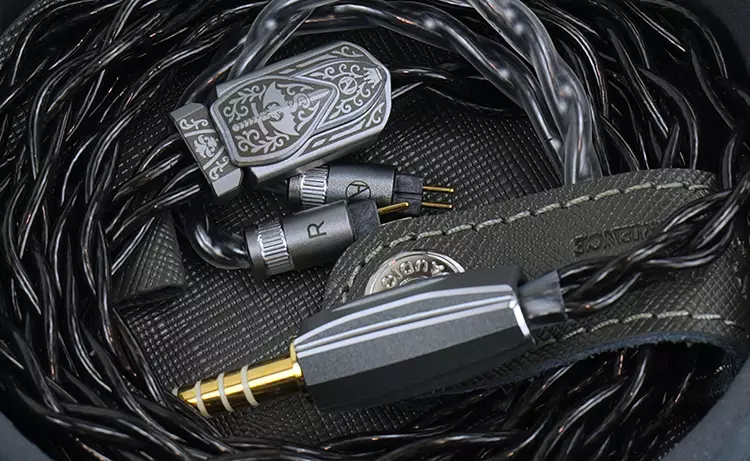
- The Importance of Accessory Ecosystems: The inclusion of the "Caliburn" stock cable—a Litz Type 4S four-wire configuration with silver-plated OFC shielding—demonstrates that flagship buyers expect a "complete package." The cable is not just an afterthought; it is an integral component of the sound signature.
Final Verdict: The Trade-Offs
While the Pendragon is a triumph, it is not without minor caveats. The dynamic driver flex noise remains a point of contention during initial insertion, and the sheer size of the shell may present fitment challenges for users with smaller ears. Furthermore, those seeking a "sparkling" or "bitten" treble response may find the Pendragon’s tuning slightly too reserved out of the box.
However, for the listener who values texture, layering, and a rich, cinematic sound, the Pendragon is a formidable contender. It manages to balance the complexity of 14 drivers with an approachable, emotive, and deeply musical signature that justifies its place at the top of the Nostalgia Audio hierarchy.
As the brand moves forward into the latter half of 2026, the Pendragon will undoubtedly serve as the benchmark for their future engineering efforts, proving that even in the world of high-tech audio, the soul of the music is just as important as the specs on the box.