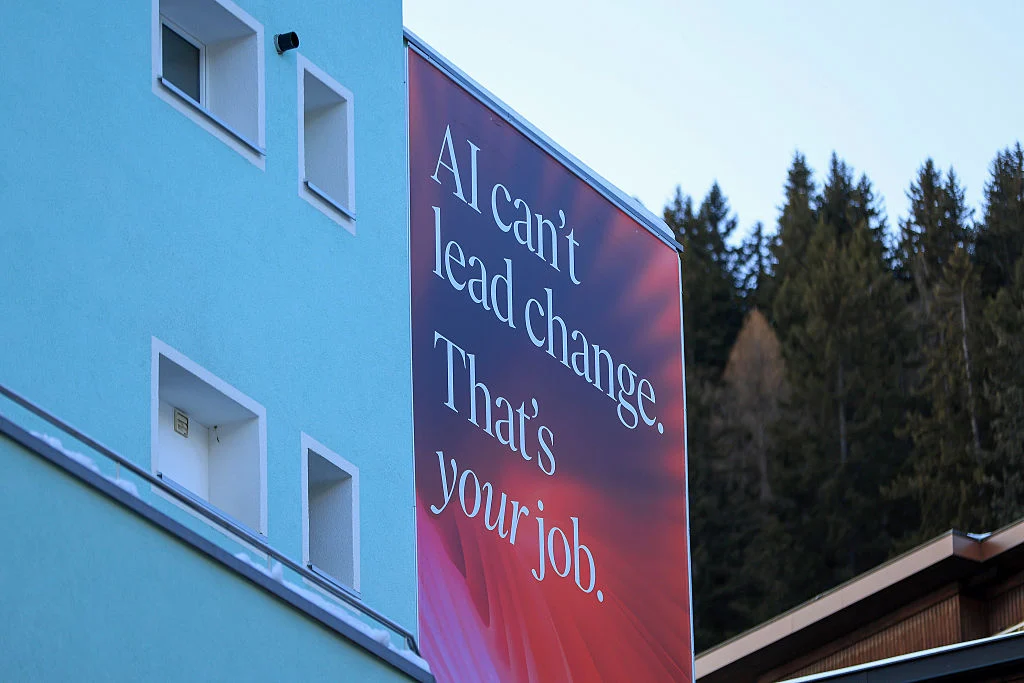
As the calendar turned toward mid-2026, the global workforce found itself gripped by a singular, pervasive anxiety: the fear that artificial intelligence is no longer just an augmentative tool, but an aggressive replacement for human labor. With nearly 90,000 job cuts explicitly linked to AI through the first five months of the year, the narrative of a "robotic takeover" has moved from the realm of science fiction into the cold reality of corporate earnings calls and HR spreadsheets.
Yet, a provocative new study released by Ramp and Revelio Labs—analyzing enterprise AI spending and workforce records across 22,000 companies—suggests that the reality is far more nuanced, and perhaps more optimistic, than the headlines imply. The data reveals a counterintuitive truth: companies that lean most heavily into AI adoption are not shedding staff, but are actually expanding their headcount at a rate that defies the current climate of austerity.
The Chronology of Concern: A Year of Unease
To understand the current tension, one must look at the timeline of the 2026 labor market. The year began with a series of high-profile "AI-efficiency" layoffs, where tech giants and legacy firms alike cited the need to streamline operations by replacing human-led workflows with generative AI agents.
- January–March 2026: The initial wave of layoffs hit, with major tech firms reporting that they were restructuring around AI, leading to the first headlines regarding the erosion of entry-level and junior positions.
- April 2026: Goldman Sachs released research indicating that AI was responsible for a net loss of approximately 16,000 jobs per month over the previous year. The data specifically highlighted that Gen Z and entry-level professionals were disproportionately affected, fueling a "hiring freeze" fear among recent college graduates.
- May 2026: Cumulative AI-linked job losses approached the 90,000 mark. Projections from various consultancies suggested that up to 15% of all U.S. jobs could be on the chopping block within the next five years.
- June 2026: The release of the Ramp and Revelio Labs report provided the first major pushback against the "jobless future" narrative, offering a granular look at how aggressive AI spending correlates with actual human hiring patterns.
Dissecting the Data: The "High-Intensity" Adopter
The core finding of the report hinges on the behavior of what the researchers call "high-intensity adopters." These are firms that committed an average of $30 per employee per month to AI tools during the first quarter of their implementation.
Contrary to the expectation that these firms would use AI to shrink their payroll, the study found that high-intensity adopters saw their total headcount increase by 10.2%. This growth was not isolated to niche tech roles; it permeated across functions, including engineering, sales, administration, customer service, finance, and marketing.
Breaking the Junior Job Myth
Perhaps the most significant pushback provided by the data concerns the fate of entry-level workers. While broader market trends suggest a drought for junior roles, firms that invested deeply in AI saw their entry-level headcount rise by 12%.
This suggests that for companies at the frontier of technology, AI is not a substitute for human intuition but a multiplier of human capacity. By lowering the "cost of production"—whether that be code, internal tools, or documentation—these companies effectively lower the barriers to scaling their operations. When a firm can produce more for less, the return on expanding the entire team (and not just the software engineering department) becomes mathematically attractive.
Supporting Perspectives: Efficiency vs. Expansion
The distinction between "substituting" and "expanding" is critical to understanding why some companies cut jobs while others hire. The report highlights that AI’s utility is largely realized through a flywheel effect:
- Workflow Compression: AI automates the "drudge work" of debugging, technical writing, and administrative overhead.
- Cost Reduction: The overhead per project drops significantly.
- Expansion Incentive: With higher margins, the firm decides to tackle more complex, larger-scale projects.
- Hiring Surge: The company requires more human project managers, sales professionals, and specialized engineers to execute these new, expanded objectives.
However, the report includes a cautionary note for the "casual" adopter. Companies that simply pay for AI subscriptions or run experimental pilots without sustained, deep-seated investment rarely see these headcount gains. They remain in a state of technological flux, failing to integrate the tools into their core business model, which may explain why many firms currently cutting jobs are the ones failing to see the productivity dividends of their AI spend.
The "Tech-Forward" Bias: An Important Caveat
Despite the encouraging statistics, the authors of the report are quick to manage expectations. The dataset skews heavily toward "tech-forward," knowledge-work firms—entities that are often venture-backed and already in a growth phase.
This leads to a "chicken and egg" problem: Is AI causing these companies to hire, or are they hiring because they are successful, high-growth startups that happen to use a lot of AI? The authors admit, "This paper does not show that AI universally creates jobs, but it does counter claims that AI will lead to broad job losses."
This nuance is essential for policymakers and economists. The benefits of AI may not be evenly distributed. We are seeing the emergence of a "productivity divide," where firms with the resources—capital, specialized talent, and management bandwidth—can harness AI to scale aggressively, while companies without these foundational advantages risk being left behind, or worse, using AI as a crutch for declining business models.
Implications: A Widening Skills and Resource Gap
The potential for a "widening gap" between firms is perhaps the most sobering implication of the study. If AI-led growth is predicated on having the existing infrastructure to integrate complex new tools, then the digital divide is set to expand.
- For Founders and Management: The takeaway is that AI is not a "set it and forget it" cost-saving mechanism. It requires deep integration and, paradoxically, more human capital to manage the output of AI systems.
- For the Workforce: The demand for "AI-literate" employees is clearly rising. The "most resilient" jobs identified in the report are those that involve managing, refining, and strategizing around AI-generated output.
- For Policy: There is a pressing need to ensure that the benefits of AI are not restricted to a small cohort of VC-backed firms. If small and medium-sized enterprises (SMEs) are unable to access the same "high-intensity" benefits, the labor market could experience significant structural instability.
The Road Ahead
As we look toward the second half of 2026, the debate over AI and labor will likely intensify. The fear of job loss is not unfounded—thousands have indeed lost their livelihoods—but the narrative that AI is a monolithic "job killer" is being challenged by the data.
The future of work may not be defined by the elimination of roles, but by a radical shift in what those roles require. As the Ramp and Revelio Labs report suggests, the firms that win in this era will not be those that use AI to do the same things with fewer people, but those that use AI to do exponentially more things, requiring a larger, more skilled workforce to guide the machines.
The "powder keg" of AI layoffs may be real, but for those who successfully transition from pilot-stage users to high-intensity adopters, the narrative is not one of replacement—it is one of potential. The question for the next five years is not whether AI will replace humans, but which companies will be capable of using it to unlock the human potential they have been missing all along.