Introduction: Resurrecting a Golden Era of Audio Engineering
In the landscape of high-fidelity audio, few institutions command as much reverence as the British Broadcasting Corporation (BBC) Research and Development department of the mid-to-late 20th century. During this golden era, BBC engineers established acoustic standards that defined the "British Sound"—a sonic signature characterized by midrange purity, vocal realism, and tireless presentation.
Among the legendary designs birthed during this period, the Graham Audio LS5/9 standmount loudspeaker stands as a testament to the longevity of brilliant engineering. Originally developed in 1983 as a high-grade, critical-listening studio monitor, the LS5/9 has been faithfully resurrected by Devon-based specialist manufacturer Graham Audio.
This comprehensive review explores how a design over four decades old fares in the modern high-end audio market, analyzing its technical architecture, historical lineage, setup requirements, and sonic performance.
1. Main Facts: The Graham Audio LS5/9 at a Glance
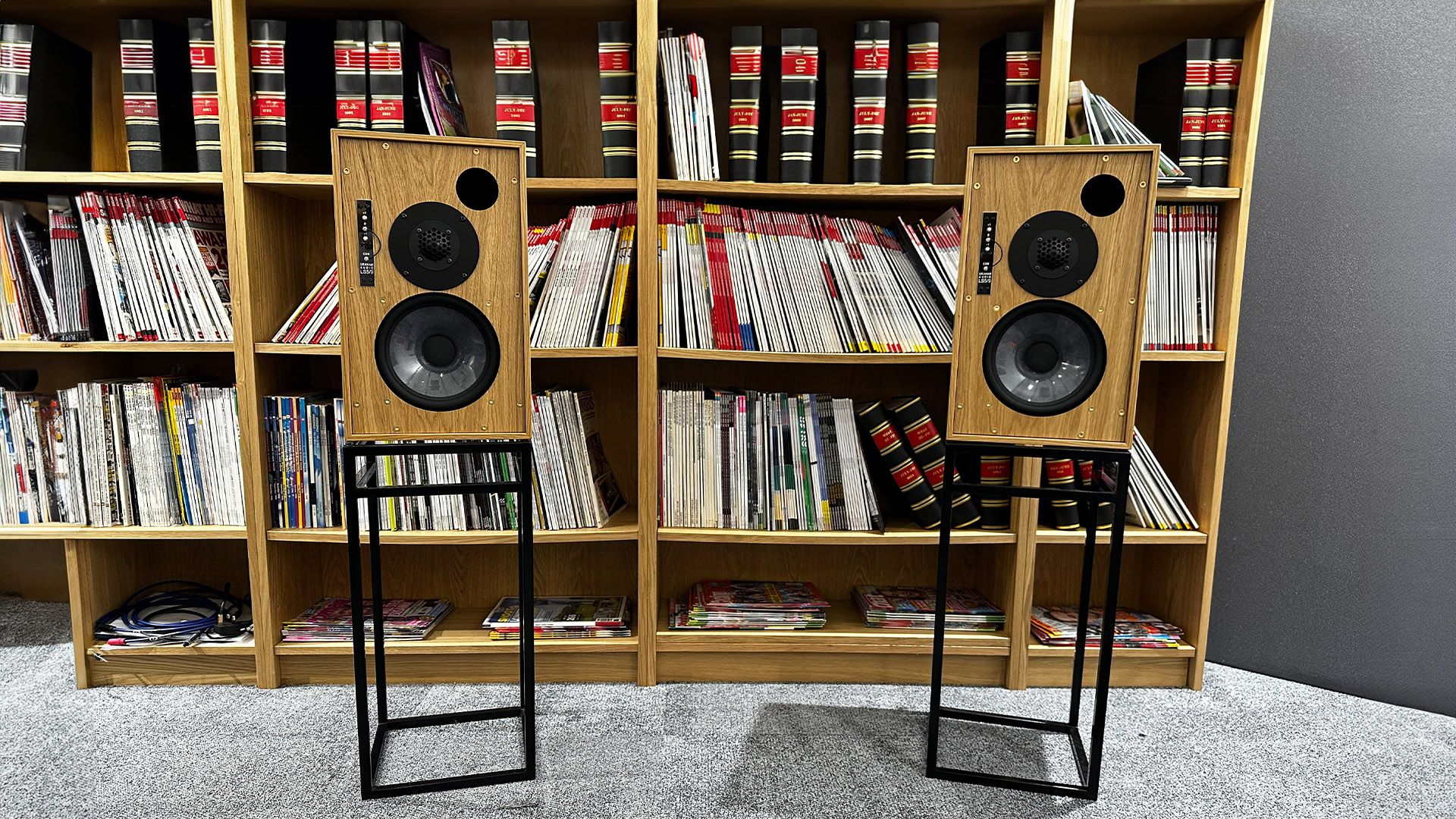
The Graham Audio LS5/9 is a premium, medium-sized, two-way standmount monitor handcrafted in the United Kingdom. Built under official license from the BBC, it is designed for audiophiles and professional engineers who prioritize absolute neutrality, midrange resolution, and low-distortion vocal reproduction.
Key Product Highlights
- Official BBC Licensing: Built to the exact acoustic and structural specifications laid out in the original BBC RD 1983/10 design brief.
- Thin-Wall Cabinet Construction: Utilizes 9mm birch plywood panels, heavily damped to shift cabinet resonances away from the critical midrange.
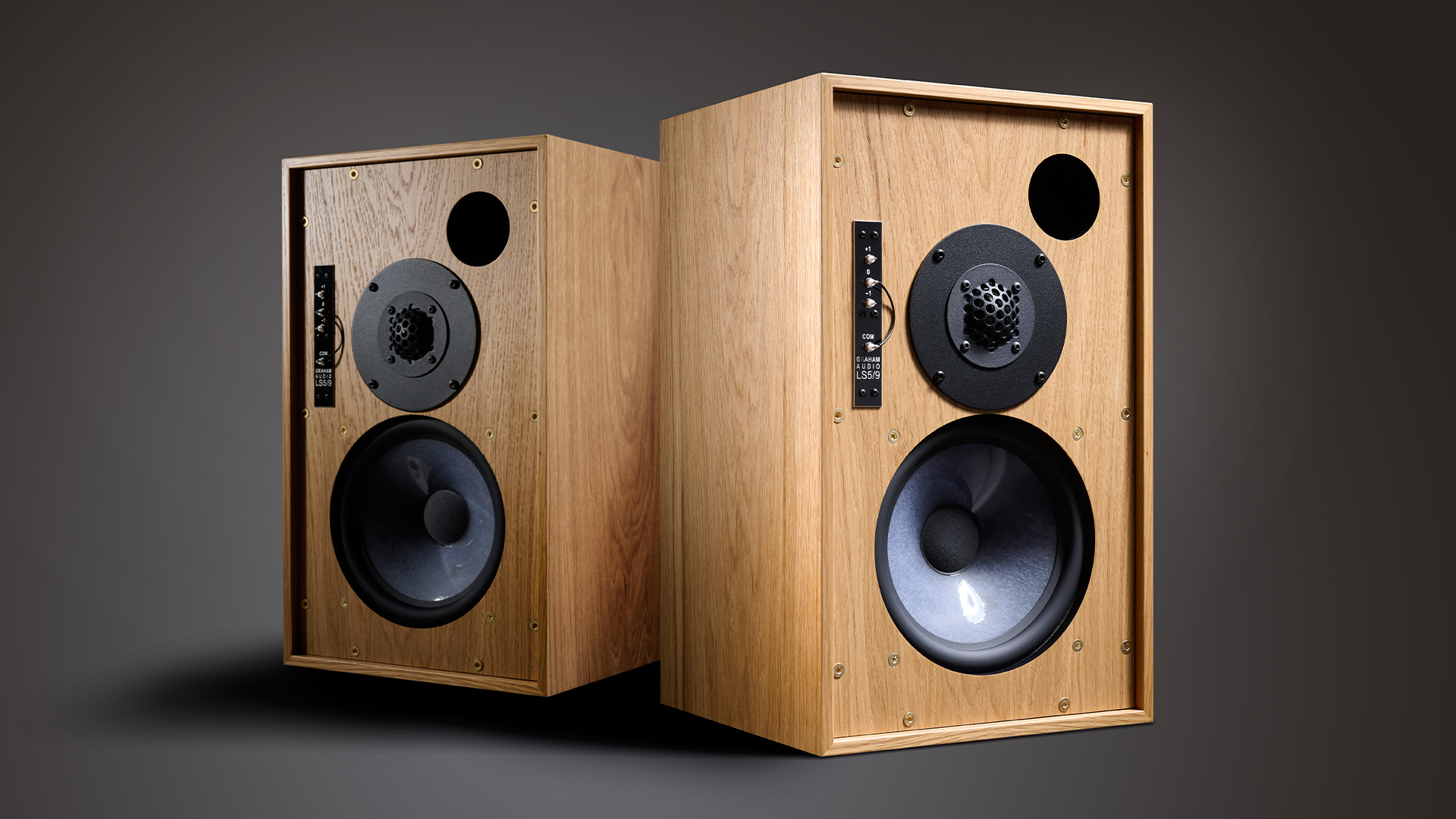
- Custom Driver Technology: Features a bespoke 20cm polypropylene mid/bass driver developed in collaboration with Volt Loudspeakers, paired with an authentic 34mm Audax soft-dome tweeter.
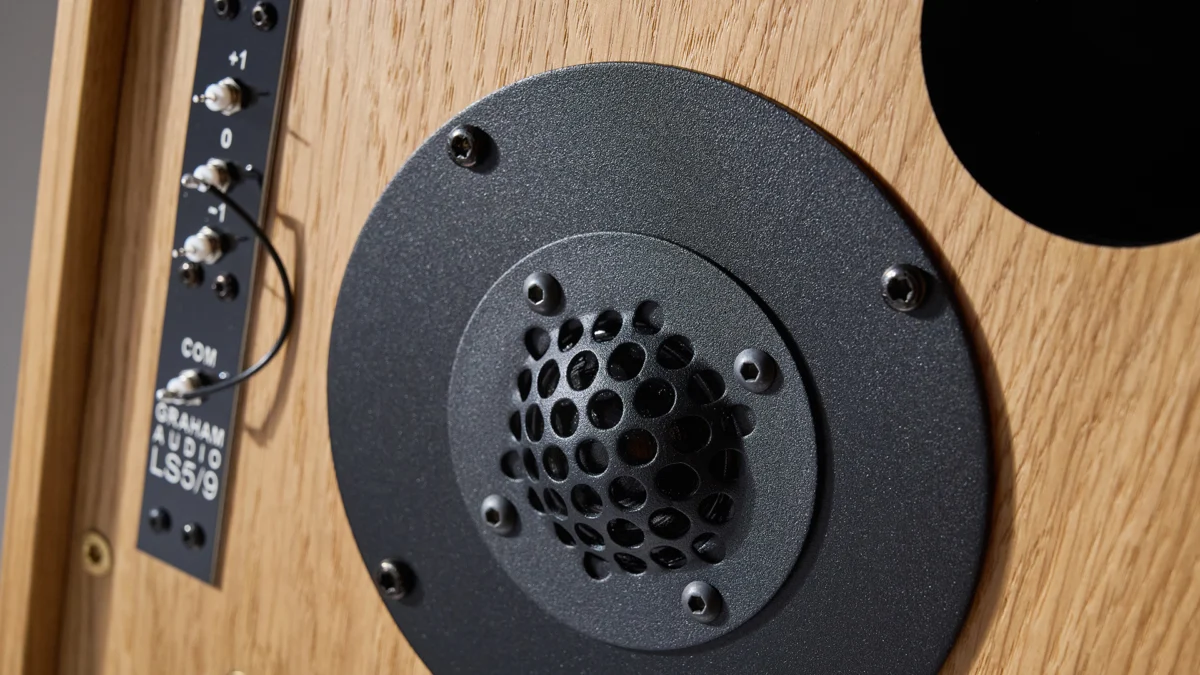
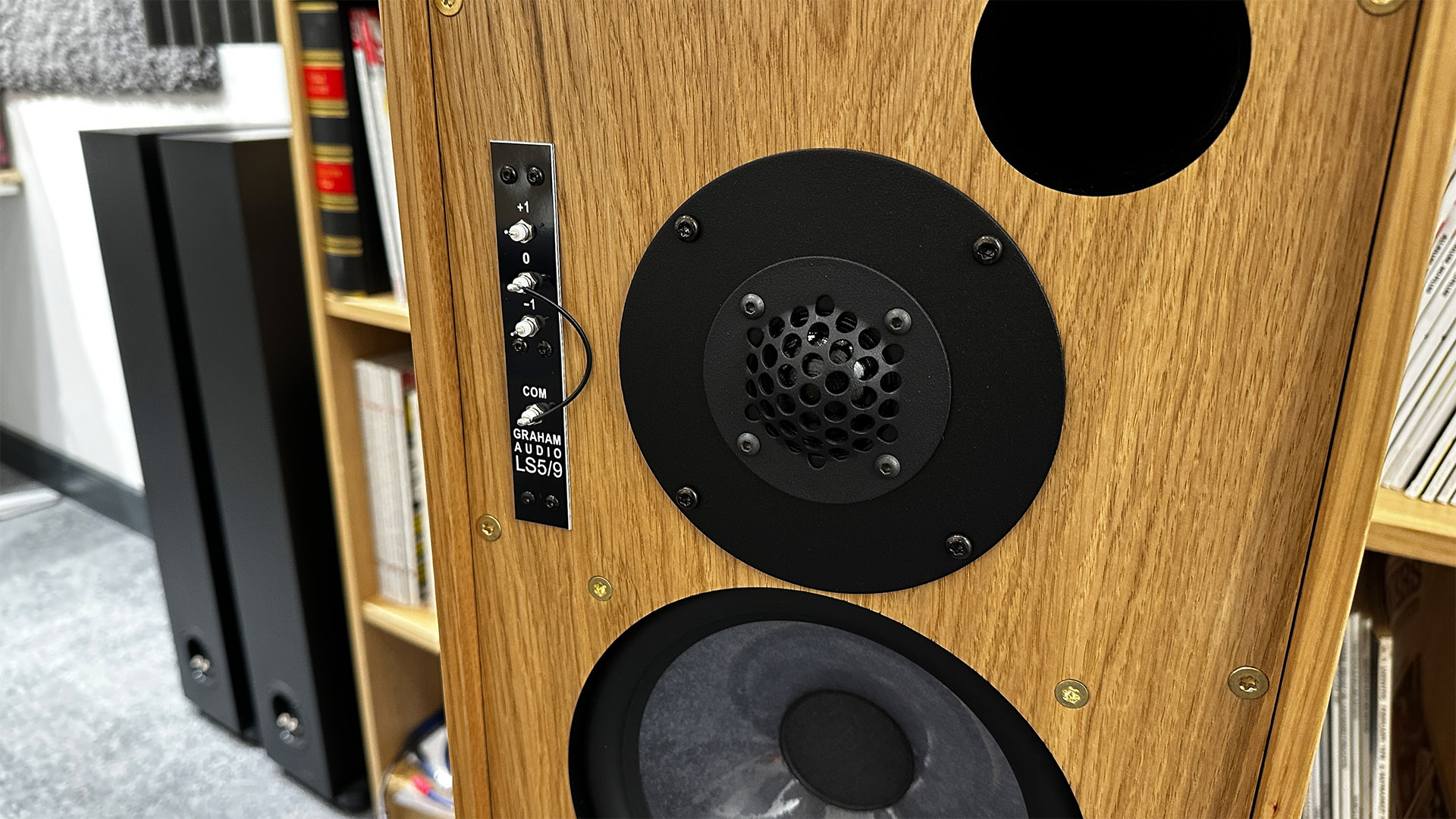
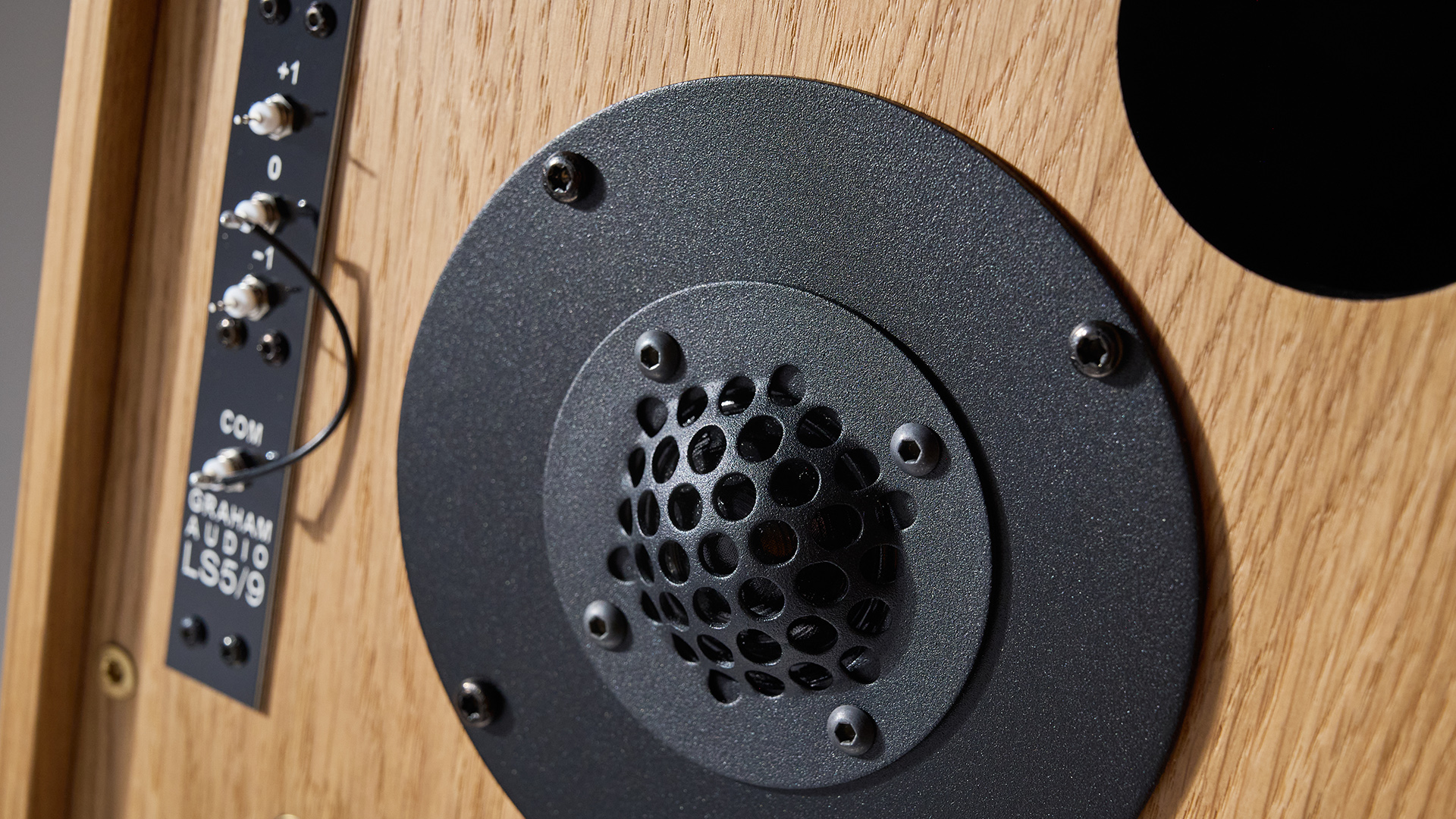
- Adjustable Tweeter Output: Features exposed front-panel solder terminals allowing the tweeter level to be adjusted by -1dB, 0dB, or +1dB to suit different acoustic environments.
- Premium Real-Wood Finishes: Available in five hand-matched real-wood veneers, complete with modern magnetically attached grilles.
2. Chronology: The Evolution of BBC Monitor Designs
To fully appreciate the significance of the LS5/9, one must understand the historical timeline of the BBC’s loudspeaker development program.
[1975] BBC introduces LS3/5A (5-Liter Mini-Monitor for Mobile Vans)
  │
  └─── Limitations: Restricted dynamics, limited bass extension, low maximum SPL
  │
[1983] BBC develops LS5/9 (28-Liter Monitor for Mid-Sized Studios)
  │
  └─── Objectives: Natural midrange of LS3/5A with 100dB SPL capability and deeper bass
  │
[Modern Era] Graham Audio secures official BBC License to manufacture the LS5/9
  │
  └─── Innovation: Collaboration with Volt & Audax to recreate discontinued components
The 1975 Milestone: The LS3/5A
In 1975, the BBC introduced the LS3/5A, a tiny 5-liter mini-monitor designed primarily for speech monitoring in cramped outside-broadcast vans. The speaker achieved legendary status among home audiophiles due to its uncanny realism with vocals and superb holographic imaging. However, its physical limitations were obvious: it could not play loud, lacked deep bass, and struggled with large-scale orchestral dynamics.
The 1983 Solution: The LS5/9
Recognizing the need for a larger monitor that retained the vocal magic of the LS3/5A but could handle higher sound pressure levels (SPL) and offer greater low-frequency extension, the BBC engineering team spent years developing the LS5/9. Released in 1983, the LS5/9 featured a 28-liter enclosure—more than five times the volume of the LS3/5A. Its primary mission was to serve as a critical-listening monitor in mid-sized control rooms, allowing engineers to make precise decisions regarding microphone placement, tonal balance, and broadcast quality.
The Modern Revival
Because the BBC was a broadcaster rather than a commercial manufacturer, it licensed its designs to external British companies. Over the years, original parts became scarce, and production ceased. Enter Graham Audio, based in Devon, England. The company secured the official BBC license, painstakingly sourcing and developing modern equivalent drivers to bring the LS5/9 back to life for modern audiophiles, ensuring the design remained faithful to the 1983 specifications.
3. Supporting Data: Technical Specifications and Cabinet Design
The engineering philosophy of the LS5/9 runs contrary to almost all modern loudspeaker design trends. Where contemporary manufacturers favor thick, ultra-rigid MDF cabinets designed to resist vibration entirely, the BBC embraced a "lossy" thin-wall cabinet methodology.
Thin-Wall Cabinet Philosophy
The LS5/9’s cabinet is constructed from thin, 9mm birch plywood. Rather than trying to eliminate cabinet resonance completely—which often results in high-frequency, high-Q resonances that occur in the sensitive midrange—the BBC engineers allowed the cabinet to flex slightly. By applying heavy bituminous damping pads to the inner walls, they lowered the resonant frequency of the enclosure and pushed it down into the low bass region, where human hearing is far less sensitive to distortion.
| Technical Parameter | Specification / Detail |
|---|---|
| Enclosure Type | Two-way, front-ported standmount |
| Cabinet Construction | 9mm birch plywood, thin-wall construction, heavily damped |
| Internal Volume | 28 Liters |
| Dimensions (H x W x D) | 46 x 28 x 27.5 cm |
| Weight | 14.0 kg per speaker |
| Mid/Bass Driver | 20cm Diaphnatone polypropylene cone (developed with Volt Loudspeakers) |
| Tweeter | 34mm Audax HD13D34 soft dome with protective metal grille |
| Sensitivity | 87 dB / W / m |
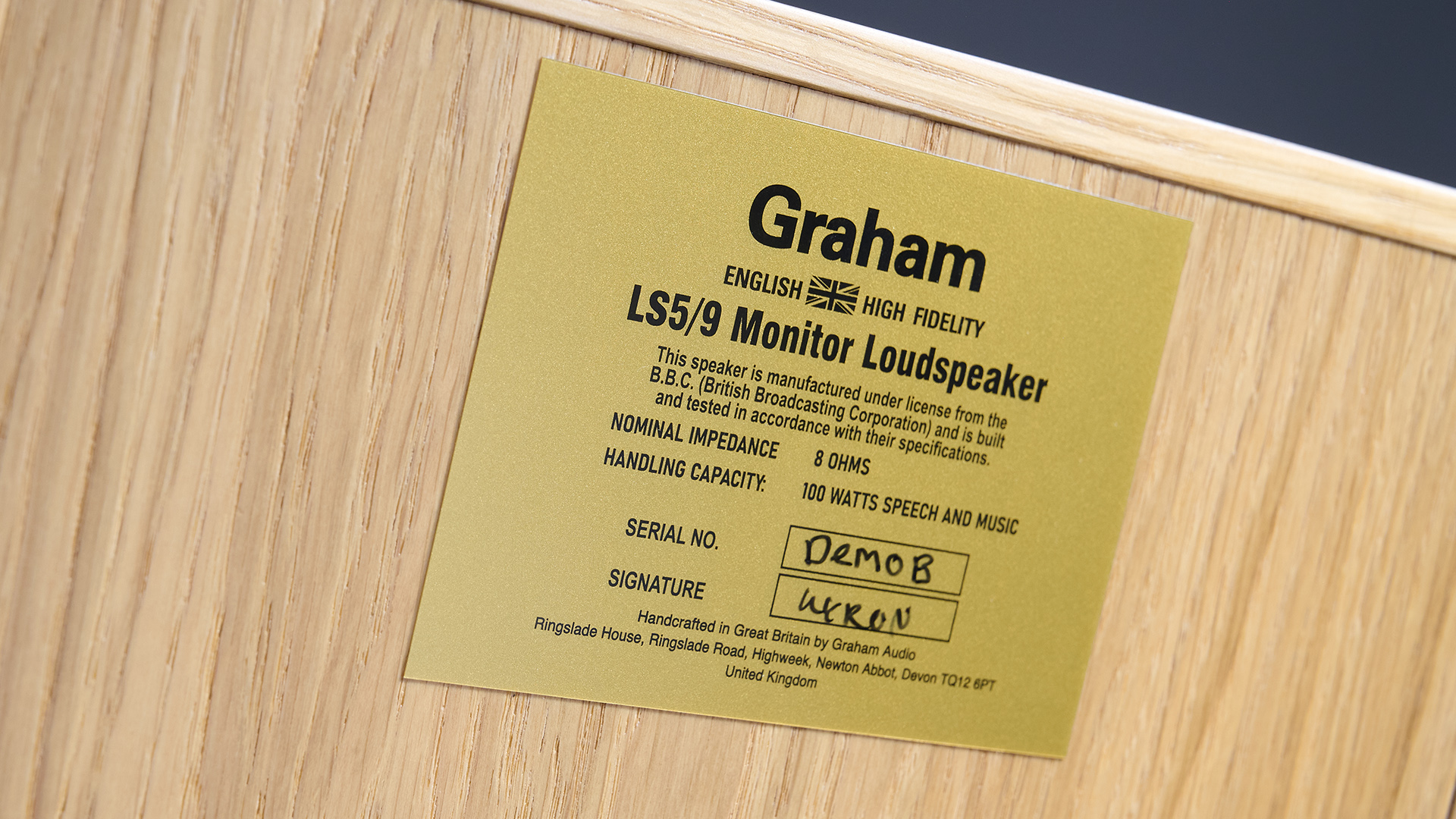
| Nominal Impedance | 8 Ohms |
| Crossover Design | Complex network with polypropylene capacitors and tapped autotransformer |
| Standard Finishes | Cherry, Oak |
| Premium Finishes | Ebony, Rosewood, Walnut |
Custom Transducers and Crossover Architecture
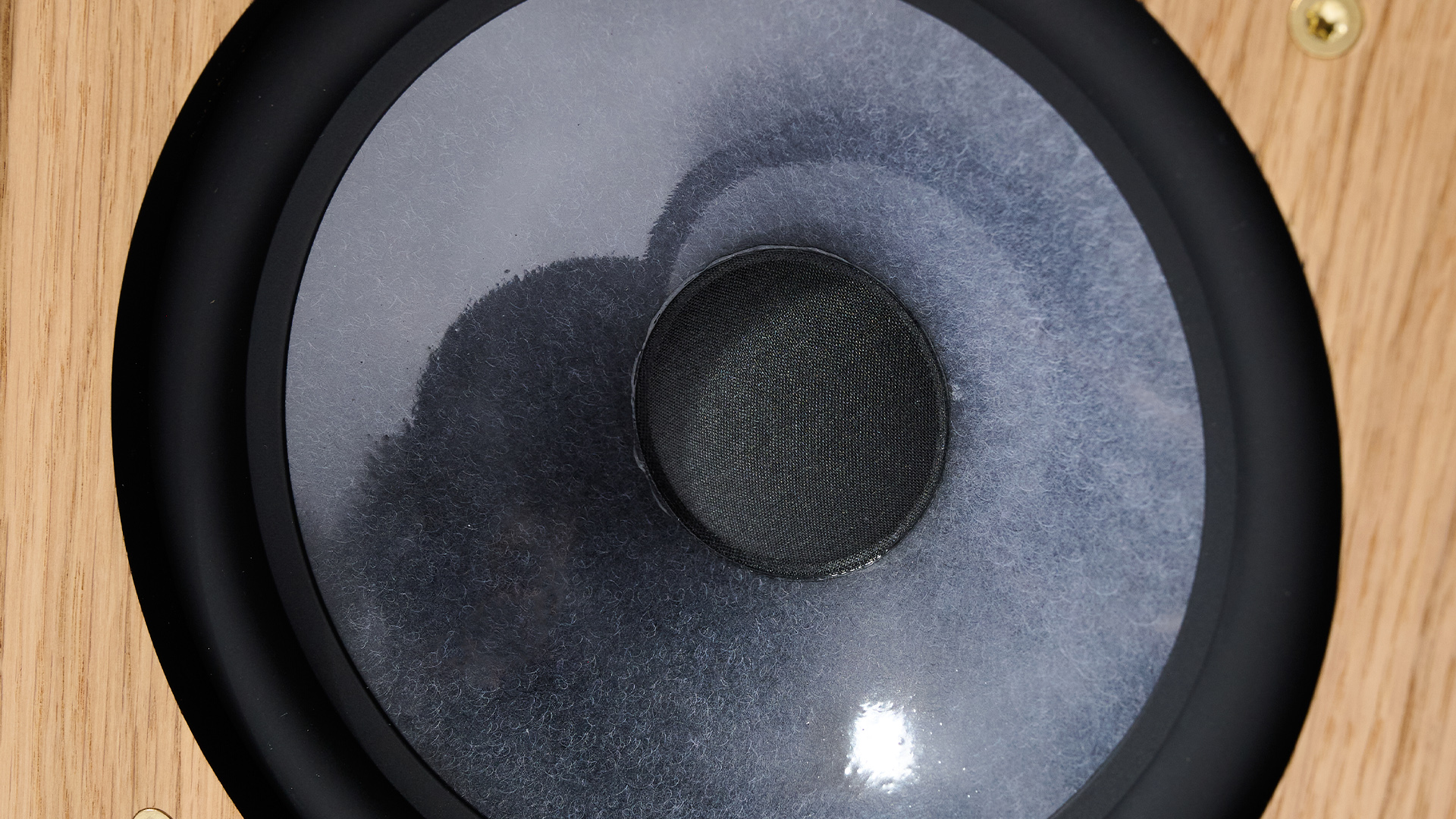
Because the original 20cm mid/bass driver was no longer in production, Graham Audio partnered with British driver specialists Volt Loudspeakers to develop a modern replacement. This custom unit utilizes a translucent polypropylene cone, a rigid die-cast aluminum chassis, and a massive motor assembly. Each driver is hand-assembled and measured to guarantee compliance with the original BBC specifications.
The high frequencies are handled by the official Audax 34mm soft-dome tweeter, which is still manufactured today. This exceptionally large dome tweeter allows for a lower crossover frequency, improving integration with the 20cm mid/bass unit. The tweeter is protected by a heavy-duty, perforated metal grille.
The crossover network is highly complex, utilizing premium polypropylene capacitors and a tapped autotransformer. The autotransformer is a rare inclusion in modern speakers, used here to match the sensitivity of the tweeter to the woofer without introducing the resistive thermal compression typical of standard resistor networks.
4. Performance, Compatibility, and Setup Dynamics
The Graham Audio LS5/9 is highly revealing of upstream electronics, meaning it requires careful matching with amplifiers and source components to perform at its best.
[Source: Naim ND555 Streamer / Technics SL-1000R Turntable]
                          │
                          ▼
[Preamplifier/Phono: Cyrus Phono Signature / Burmester 088]
                          │
                          ▼
[Amplifier Options: Arcam A15 (Budget-Friendly) / Burmester 911 MkIII (Reference)]
                          │
                          ▼
[Loudspeakers: Graham Audio LS5/9 (Optimized: 70cm from wall, angled in, grilles on)]
Amplification and Source Selection
With a sensitivity of 87dB and an 8-ohm nominal impedance, the LS5/9 is not exceptionally difficult to drive, but it thrives on high-quality current. During evaluation, we tested the speakers with a wide array of amplification:
- Entry-Level/Mid-Range: The Arcam A15 integrated amplifier provided a clean, muscular, and engaging presentation.
- Premium Solid-State: The Cyrus 40 AMP offered excellent control, resolution, and transient speed.
- Reference Class: Our reference Burmester 088/911 MkIII pre/power amplifier combination unlocked the full dynamic and spatial potential of the monitors, demonstrating their high ceiling of performance.
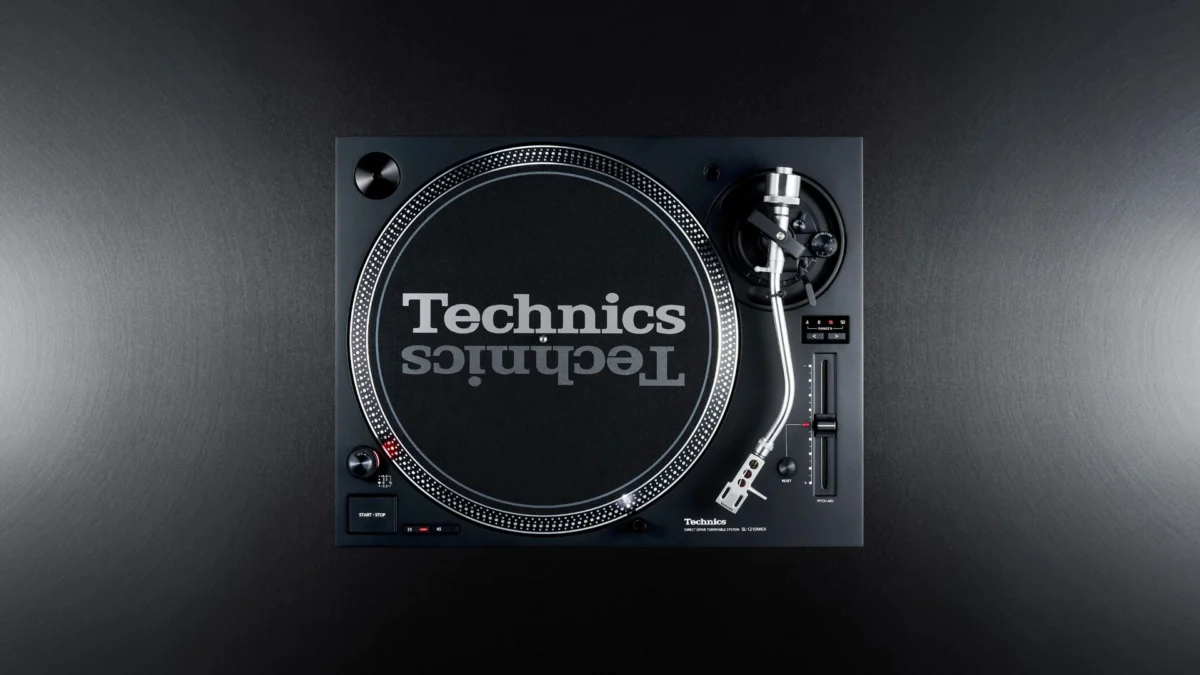
Our primary sources included the ultra-resolving Naim ND555/555 PS DR music streamer for digital playback, and the Technics SL-1000R turntable fitted with a Kiseki Purpleheart moving coil cartridge, running through a Cyrus Phono Signature/PSX-R2 phono stage for analog testing.
Room Placement and Tuning
To achieve optimal performance in our 3 x 7 x 5-meter listening room, we found the following placement strategy to be most effective:
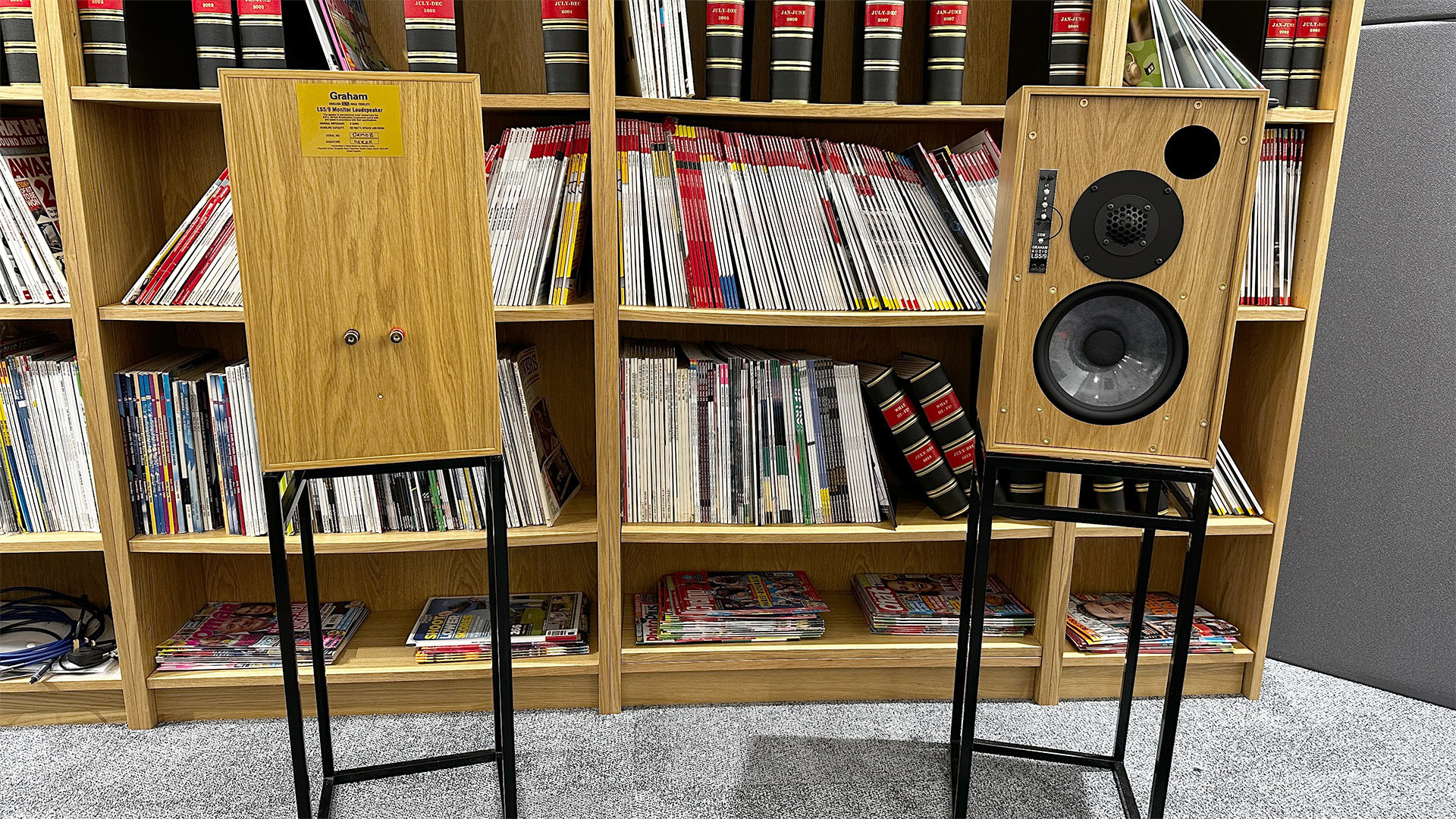
- Distance from Walls: Placing the speakers approximately 70cm away from the rear wall balanced the low-frequency boundary reinforcement without muddying the mid-bass. Thanks to the front-firing port, they can be placed closer to walls than rear-ported designs if space is limited.
- Toe-In: Angling the speakers directly toward the listening position snapped the stereo image into sharp focus.
- Grilles On vs. Grilles Off: Unlike most modern speakers where grilles are an afterthought, the LS5/9 is voiced to be played with its fabric grilles on. Removing the grilles results in a slightly forward, overly bright treble response.
- Height Alignment: For the most balanced frequency response, the speakers should be placed on heavy, rigid stands that position the large 34mm tweeters at ear height.
5. Sonic Analysis: Midrange Purity vs. Modern Dynamic Demands
The sonic presentation of the Graham Audio LS5/9 is highly revealing, natural, and remarkably coherent. However, it displays a distinct character that reflects its studio-monitoring heritage.
Vocal Realism and Midrange Transparency
The undisputed crown jewel of the LS5/9’s performance is its midrange. Listening to vocal powerhouses like Aretha Franklin and Gladys Knight, the speakers convey an uncanny sense of physical presence. The textures of the human voice are rendered with rich, unforced body, devoid of the artificial "etching" or sibilance that plagues many modern speakers designed with hyper-detailed ceramic or metal drivers. The LS5/9 achieves a rare balance of delivering immense detail while remaining incredibly smooth and listenable over long sessions.
Low-Frequency Performance
Despite its medium cabinet size, the LS5/9 does not attempt to reproduce room-shaking sub-bass. Instead, it focuses on delivering articulate, textured, and incredibly fast low frequencies.
When playing Kendrick Lamar’s Humble, the synthesized bass lines are rendered with impressive speed and pitch definition. The transition from the upper bass to the lower midrange is seamless, showing no signs of the crossover dip common in poorly integrated two-way designs. Furthermore, the LS5/9 handles high volume levels with ease, meeting the original BBC specification of sustained 100dB monitoring without audible compression or thermal distress.
Imaging, Scale, and Soundstage
In orchestral works such as Tchaikovsky’s 1812 Overture, the LS5/9 showcases excellent spatial accuracy. The positioning of woodwinds, brass, and percussion instruments is rock-solid. The depth of the soundstage is particularly impressive, allowing the listener to easily perceive the distance between the front and back of the orchestra. While the soundstage is not the widest on the market, its dimensional layering is highly convincing.
Areas of Limitation: The Age of the Design Shows
While the LS5/9 excels in resolution and tonal accuracy, it has two primary limitations when compared to modern high-end rivals:
- Large-Scale Dynamic Contrast: While it is superb at micro-dynamics—such as the subtle changes in breath during a vocal performance or the gentle bowing of a violin—it lacks the explosive, slam-inducing macro-dynamics of modern designs like the Epos ES-14N or Fyne Audio 701.
- Rhythmic Drive and Timing: The LS5/9 has a polite, analytical approach to rhythm. When playing rhythmically driven tracks like Michael Jackson’s Black or White, it can sound slightly reserved, lacking the ultimate sense of propulsive drive and forward momentum that some listeners prefer.
6. Official Responses and Manufacturer Perspectives
Graham Audio’s commitment to the BBC heritage is central to their identity. In an industry where "vintage" is often used as a marketing buzzword, Graham Audio places immense emphasis on their official BBC licensing.
According to the manufacturer, the license is not merely a branding exercise; it is a guarantee of acoustic authenticity. Every speaker batch must undergo rigorous testing to ensure it conforms to the original reference curves stored in the BBC archives.
Graham Audio’s collaboration with Volt Loudspeakers and Audax represents a major engineering achievement. By keeping the manufacturing of the cabinet, crossover, and drivers within the UK and Europe, Graham Audio ensures that the quality control remains high enough to satisfy both vintage hi-fi purists and professional broadcast studios. This dedication is reflected in the excellent build quality, pristine real-wood veneers, and precise fit-and-finish of the review samples.
7. Implications for the Modern Hi-Fi Industry
The continued relevance of the Graham Audio LS5/9 carries profound implications for the modern high-fidelity audio industry.
First, it challenges the narrative of linear progress in speaker design. While materials science has advanced, introducing exotic driver materials like beryllium, diamond, and graphene, the psychoacoustic research conducted by BBC engineers in the 1970s and 1980s remains fundamentally correct. A well-implemented, lossy thin-wall cabinet with a high-quality polypropylene mid/bass driver can still outperform modern, ultra-rigid designs in midrange realism and vocal authenticity.
Second, the LS5/9 highlights a growing divide in audiophile preferences:
- The Modern School: Prioritizes hyper-detail, lightning-fast transient response, massive soundstage width, and explosive dynamics.
- The BBC School: Prioritizes tonal naturalness, long-term listenability, midrange purity, and vocal presence.
By bringing the LS5/9 back to market, Graham Audio has provided a crucial bridge between these two worlds, proving that a piece of audio history can not only survive in the modern era but actively challenge today’s best designs. For the music lover who values the human voice above all else, this classic design remains a compelling, deeply satisfying masterpiece.