By [Your Name/Journalistic Staff]
June 28, 2026
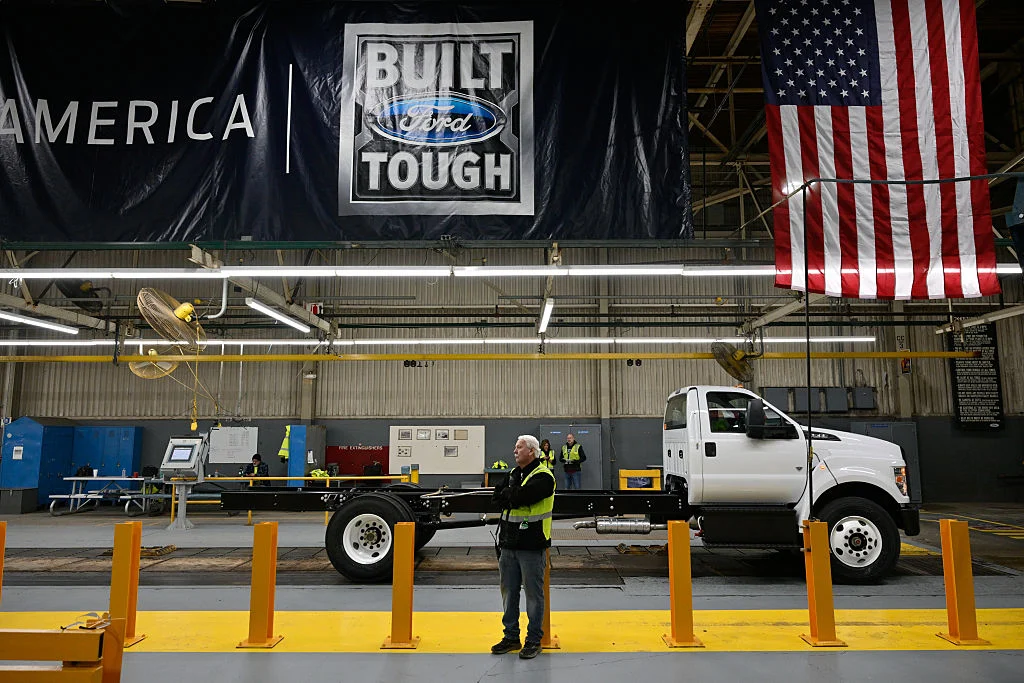
In an era where the automotive industry has been racing to integrate artificial intelligence into every facet of the supply chain and manufacturing floor, Ford Motor Company has offered a sobering reality check. In a move that signals a broader shift in corporate strategy, the automaker recently revealed that it has hired 350 veteran engineers—many of them seasoned former employees or industry experts—to rectify quality control issues that arose after the company became overly reliant on automated systems.
The revelation, first reported by Bloomberg, highlights a growing tension in the manufacturing sector: the friction between the efficiency promises of AI and the nuanced, tactile experience required to build complex machines like modern automobiles. As Ford executives candidly admitted, the pursuit of total automation was not the panacea they once envisioned.
Main Facts: A Return to Roots
The core of the issue lies in Ford’s recent attempt to streamline its vehicle development through heavy reliance on AI-driven quality assurance. According to Kumar Galhotra, Ford’s Chief Operating Officer, the company’s shift toward automated systems failed to meet the rigorous quality standards expected by consumers and the brand’s own internal benchmarks.
"We had been relying more and more on automated quality systems," Galhotra told journalists during a recent briefing. The result was a disconnect between design requirements and the physical realities of vehicle production. To bridge this gap, Ford initiated an aggressive hiring campaign, bringing back "gray beard" engineers—a colloquialism for veteran specialists with decades of experience.
These 350 experts are not merely placeholders; they are acting as a "human firewall," hunting for failure points in parts and designs before they ever reach the plant floor. By reintroducing human intuition into the quality loop, Ford has begun to stabilize its manufacturing processes, proving that while AI can process vast amounts of data, it often lacks the context-aware skepticism required to catch subtle, yet catastrophic, manufacturing flaws.
Chronology of a Corporate Pivot
The timeline of this transition traces back to the industry-wide push for "Industry 4.0" adoption between 2022 and 2025.
- 2023–2024: Ford, like many of its competitors, scaled up its investment in AI to optimize design cycles, simulate crash tests, and monitor production line defects. At the time, the narrative was one of rapid digital transformation.
- Early 2025: As new models rolled off the line, internal data and early customer feedback began to suggest that the "algorithmic oversight" was missing critical quality defects that human eyes would have easily flagged.
- Late 2025: Recognizing a trend of rising warranty costs and concerns regarding vehicle reliability, Ford’s leadership team began the quiet, strategic re-recruitment of veteran engineers.
- June 2026: The initiative reaches a public milestone as Ford confirms the hiring of 350 specialists. Simultaneously, the company records a significant turnaround in the J.D. Power Initial Quality Survey, reclaiming the top spot among mainstream brands.
Supporting Data: The Cost of Automation vs. The Value of Expertise
The financial implications of this shift are profound. In the automotive industry, warranty claims and vehicle recalls represent some of the largest "hidden" costs on a balance sheet. When a design flaw makes it to the consumer, the expense of rectifying the issue—through labor, logistics, and parts replacement—can scale into the billions.
Ford CEO Jim Farley recently noted that the integration of these veteran engineers into the quality-control process has already begun to yield significant dividends. Farley described the results as "literally hundreds and hundreds of millions of dollars of a tailwind for Ford on cost." By shifting from a purely reactive model (fixing things after they break) to a proactive, human-led model (preventing issues during the design phase), Ford is effectively protecting its bottom line.
The effectiveness of this strategy was validated by the industry’s most prestigious benchmark: the J.D. Power Initial Quality Survey. Ford’s ascent to the top of the mainstream brand rankings in June 2026 serves as a quantitative rebuttal to the idea that AI-first manufacturing is inherently superior.
Official Responses: The Philosophy of "Gray Beard" Wisdom
The leadership at Ford has been remarkably transparent about the miscalculation. Charles Poon, Ford’s vice president of vehicle hardware engineering, provided a candid assessment of the company’s previous mindset.

"Mistakenly, we thought that by just introducing artificial intelligence and ingesting the design requirements that we had, that that would produce a high-quality product," Poon explained. This admission serves as a cautionary tale for the wider tech industry: AI is a powerful tool, but it is not a replacement for domain expertise.
It is important to note that Ford is not abandoning AI. Instead, they are evolving their approach to it. The "gray beard" engineers are tasked with two primary objectives:
- Mentorship: Passing down decades of institutional knowledge to the next generation of engineers who have grown up in a digital-first environment.
- Reprogramming: Using their experience to "train" the AI tools, correcting the flawed logic or incomplete datasets that led to the original quality issues.
This hybrid approach—where AI handles the heavy lifting of data processing, while humans provide the high-level judgment and oversight—appears to be the new blueprint for Ford’s operations.
Implications for the Future of Manufacturing
The Ford case study holds massive implications for the future of industrial design and the labor market.
The Devaluation of "Tech-Only" Strategies
For years, the industry narrative has been that software and automation would eventually eliminate the need for human intervention in technical fields. Ford’s pivot suggests that for complex physical products, there is a "complexity floor" that AI cannot yet navigate alone. The industry may now see a resurgence in demand for experienced engineers, as companies realize that the most efficient system is one where machines and humans work in tandem.
The "Black Box" Problem
One of the key issues Ford faced was likely the "black box" nature of AI. When an automated system signs off on a design, it is often difficult for humans to understand why it reached that conclusion. By requiring human sign-off from veteran engineers, Ford is re-inserting accountability and explainability into its production pipeline.
The Shift in Recruitment Trends
As Ford brings back retirees and pulls talent from suppliers, we may see a wider industry trend of companies aggressively courting older, retired experts. The "gray beard" workforce, once thought to be an aging demographic destined for obsolescence, is now becoming the most valuable asset in the fight for quality dominance.
Conclusion: A Balanced Future
Ford’s decision to hire 350 veteran engineers is not a retreat from innovation; it is a recalibration of what innovation looks like. The company has demonstrated the maturity to identify a structural flaw in its approach and the agility to fix it by blending old-school expertise with modern technology.
As the automotive industry continues to grapple with the complexities of electric vehicle production, autonomous driving software, and increasingly digitized supply chains, the lesson from Ford is clear: Technology is the engine, but human expertise remains the steering wheel. If companies fail to maintain that human connection to the product, they risk not just losing their place in the J.D. Power rankings, but losing the trust of the consumers who rely on their machines for safety, transportation, and daily life.
Ford has effectively pivoted from a culture of "AI-first" to "Quality-first," proving that while machines can build cars, only humans can ensure they are built correctly.