India’s digital payment landscape, anchored by the Unified Payments Interface (UPI), has undergone a metamorphosis that has left global financial markets stunned. From a nascent experimental system to a behemoth processing over 750 million transactions every single day, UPI has become the backbone of the Indian economy. However, as the National Payments Corporation of India (NPCI) sets its sights on the next milestone—surpassing a billion daily transactions—the strategy is shifting from mere expansion to intelligent optimization.
At the heart of this evolution lies Artificial Intelligence (AI). According to Dilip Asbe, Managing Director and CEO of the NPCI, the next phase of India’s digital payment revolution will not be defined solely by connectivity, but by the sophistication of the AI systems governing security, user acquisition, and credit distribution.
The Architecture of the Next Billion
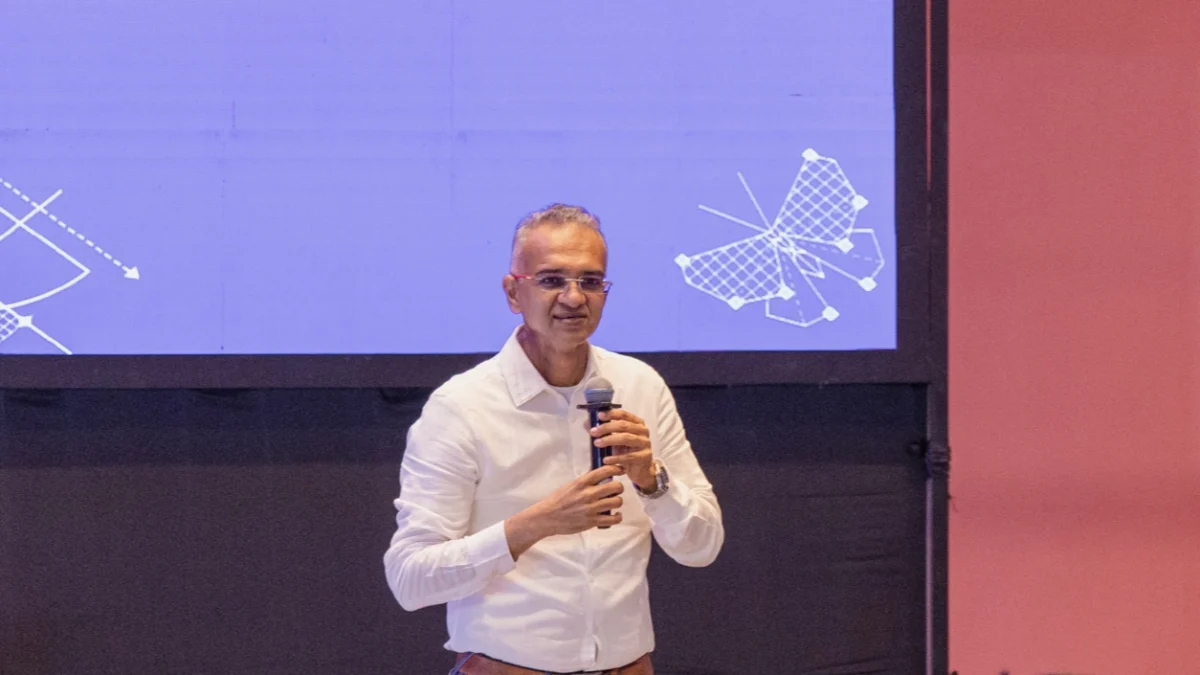
During an exclusive interview at Mumbai Tech Week (MTW) 2026, Asbe outlined a vision where AI acts as the primary engine for the next "half a billion" users. This goal is not an isolated pursuit; it is a collaborative endeavor involving the Reserve Bank of India (RBI), the central government, and the broader fintech ecosystem.
The roadmap for this growth is multifaceted. Asbe emphasized that AI is no longer a peripheral feature but a core necessity for the infrastructure. "AI will be used very effectively when we look at the next wave of UPI, and that includes all aspects, including reaching new users," Asbe stated. The strategy focuses on three pillars: security, financial inclusion through credit, and the simplification of the onboarding process via multilingual, voice-activated interfaces.
Chronology of UPI’s Rise and the AI Shift
The journey of UPI has been characterized by rapid, iterative growth.
- 2016: The launch of UPI by the NPCI, providing an instant real-time payment system that facilitated inter-bank transactions.
- 2020-2022: A massive surge in adoption during and post-pandemic, cementing UPI as the default payment method for everyone from street vendors to luxury retailers.
- 2023: NPCI pivots toward innovation, launching a voice-assistant-based interactive system to bridge the digital divide.
- 2024: The organization launches FIMI, an AI-driven language model designed to handle user disputes, marking a critical transition toward automated grievance redressal.
- 2025: Pilot programs for "agentic commerce" are launched in partnership with industry players like Razorpay, testing the waters for AI-led transaction flows.
- 2026 (Present): NPCI formalizes the strategy to utilize Small Language Models (SLMs) to optimize the payment ecosystem, aiming for the billion-transaction mark by leveraging data-driven insights.
Supporting Data: The Concentration Challenge
While UPI’s growth is undeniable, the ecosystem faces a distinct "concentration risk." Currently, the market is dominated by two primary players: Walmart-owned PhonePe and Google Pay. Together, they command over 80% of the total market share.
This duopoly has invited intense regulatory scrutiny. The NPCI’s plan to cap any single application’s market share at 30% is a critical policy instrument designed to foster a more competitive environment. While the deadline for this cap has been pushed back multiple times—with the current target date set for December 31, 2026—the pressure to diversify the app ecosystem remains high.
Asbe attributes this concentration to the lack of "viable commercial models" for smaller entrants. He noted that the cost of user acquisition and the infrastructure requirements for building a competitive payment app are immense. "The moment we see the commercial model being available to the ecosystem, I believe newer players will start investing very heavily," he explained.
In an effort to lead by example, the NPCI spun off its own BHIM UPI app into a wholly-owned subsidiary in 2024. While its current market share hovers around 1%, its role is not to dominate, but to serve as a secure, sovereign alternative that sets the standard for reliability and user trust.
Official Responses: Navigating the AI-Finance Nexus
The global financial community is watching India’s integration of AI with interest. In the United States, companies like Coinbase and Robinhood are already deploying agents to execute trades, while OpenAI is integrating financial data into ChatGPT. India, however, is taking a more cautious, regulated approach.
AI for Security and Fraud Prevention
A primary concern for the NPCI is the rise of sophisticated financial fraud. As UPI scales, the threat of "mules" and fraudulent actors increases. Asbe argues that AI is the only tool capable of scaling alongside the volume of transactions to provide real-time protection. "We must use AI effectively to protect our current citizens, to find fraud, and to find mules," he asserted. By analyzing behavioral patterns and transaction histories, AI can act as a gatekeeper, identifying anomalous behavior before a transaction is completed.
The Role of Small Language Models (SLMs)
One of the most intriguing developments is the NPCI’s shift away from massive, generalized AI models toward "Small Language Models." Asbe believes these are better suited for the Indian context. "We believe that the models will differentiate from each other based on the data sets that are made available to them," he said. By building models that are "sharp, specific, and as deterministic as possible," the Indian fintech sector can avoid the hallucinations often associated with larger models while maintaining high accuracy in financial decision-making.
The FIMI model, currently handling over a million user disputes, serves as a proof-of-concept for this strategy. It demonstrates that when AI is trained on specific, high-quality regulatory and transaction data, it can significantly reduce the burden on human support staff.
Implications for the Future
The implications of this strategy are vast. If successful, India will not only achieve a billion daily transactions but will also export a blueprint for "sovereign AI" in finance.
1. Democratizing Credit
One of the most profound impacts of AI will be in credit distribution. Millions of Indians have a "digital footprint" via UPI but lack a traditional credit score. AI models can analyze these transaction histories to offer micro-loans and credit facilities to merchants and users who were previously invisible to traditional banking institutions.
2. The Voice Revolution
While Asbe admits that voice-as-an-interface is in its "early days," he remains bullish on its potential. As voice models become more accurate and better equipped to handle India’s vast linguistic diversity, the barrier to entry for the next wave of users—particularly those in rural areas—will evaporate. A simple voice command could soon replace complex UI navigation.
3. Regulatory Frameworks
The NPCI is keenly aware that AI in finance carries inherent risks. The organization is working on a robust regulatory framework that emphasizes transparency, user consent, and risk mitigation. If an AI agent makes a mistake, the system must be able to trace the decision back to the user’s original instructions. This "explainability" is a cornerstone of the NPCI’s approach to AI-led finance.
Conclusion
India is currently positioned at the intersection of massive digital scale and cutting-edge intelligence. The transition from a payment gateway to an AI-powered financial ecosystem is fraught with technical and regulatory challenges, yet the momentum is undeniable.
As the NPCI pushes toward the billion-transaction threshold, the focus is clearly moving beyond the "how" of making payments to the "why" and "what else." By leveraging small, deterministic language models and fostering a more competitive app ecosystem, India is not just growing its digital economy—it is defining the future of global financial technology. The next five years will be the litmus test for whether AI can truly democratize finance on a national scale, turning the complexity of a billion transactions into a seamless, daily convenience for every citizen.