COPPELL, TX — In the rapidly evolving landscape of live entertainment, the "DroneArt Show," produced by global experience platform Fever, has emerged as a vanguard of 21st-century spectacle. Combining the precision of hundreds of synchronized unmanned aerial vehicles (UAVs) with the emotional weight of a live string quartet, the production represents a complex marriage of visual technology and high-fidelity audio. To navigate the logistical and acoustic hurdles of a tour that spans open-air fields, professional baseball stadiums, and echoing cricket arenas, Mercury Sound & Lighting has deployed a sophisticated, all-EAW (Eastern Acoustic Works) audio solution centered around the groundbreaking ADAPTive system.
As the tour progresses through its 2026 season, the technical demands have reached an all-time high. The requirement is simple yet daunting: the audio must be seamless, immersive, and consistent, regardless of whether the audience is seated in a flat festival field or a multi-tiered sporting complex.
I. Main Facts: The Intersection of Precision Engineering and Artistic Vision
The DroneArt Show is not a traditional concert, nor is it a simple light display. It is a multi-sensory experience where 3D drone formations are choreographed to a live score performed by a four-string quartet. This necessitates an audio system that can provide the delicate nuance required for classical instruments while maintaining the "gut-punch" impact of a modern cinematic soundscape.
The Touring Rig
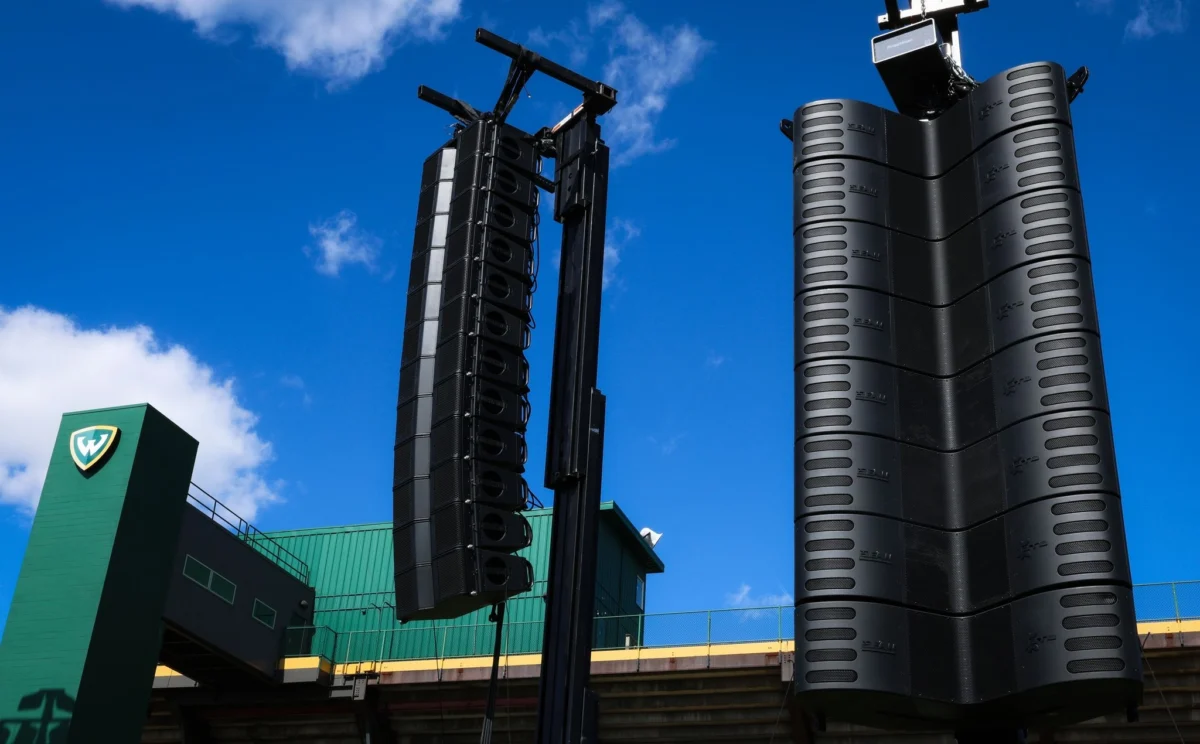
To meet these challenges, Mercury Sound & Lighting, based in Coppell, Texas, has invested in a comprehensive EAW ecosystem. The current touring inventory includes:
- 16 EAW Anna ADAPTive Modules: The flagship of the system, providing software-defined coverage.
- 4 EAW Otto ADAPTive Subwoofers: Delivering low-frequency extension that can be felt across vast stadium distances.
- 28 EAW NT206L Compact Line Array Loudspeakers: Utilized for out-fills, front-fills, and specialized coverage.
- EAW Resolution 2 Software: The proprietary processing "brain" that allows the team to map venues and adjust acoustic coverage in real-time.
The Venue Challenge
The primary difficulty facing the DroneArt Show is the radical variation in venue geometry. Unlike a traditional theater tour where acoustics are somewhat predictable, the DroneArt Show moves between:
- Open Fields: Where wind and lack of reflective surfaces can cause sound to dissipate quickly.
- Baseball Stadiums: Known for their asymmetrical seating and "dead zones" behind home plate or along the foul lines.
- Cricket Arenas: Often featuring steep, circular seating banks that create complex echoes and focal points.
Mercury’s choice of EAW ADAPTive technology allows them to address these discrepancies through software rather than physical re-rigging, ensuring that every seat in the house—from the front row to the highest bleacher—receives the same sonic profile.
II. Chronology: From Concept to Global Execution
The partnership between Mercury Sound & Lighting and EAW is the result of years of field-testing and a long-standing relationship between Mercury founder Dave Johnson and the engineering team at EAW.
The Selection Process (Early 2025)
When Fever first approached Mercury Sound & Lighting to handle the audio for the DroneArt Show, the mandate was clear: the system had to be scalable and rapidly deployable. Dave Johnson, having utilized EAW systems for decades, recognized that traditional "J-curve" line arrays would require too much manual labor and physical adjustment to meet the tour’s aggressive schedule.
The ADAPTive Transition (Late 2025)
By late 2025, Mercury transitioned their primary touring inventory to the ADAPTive series. The decision was driven by the need for "electronic steering." In traditional setups, if a venue has a balcony, the speakers must be physically angled. With the Anna modules, the speakers are hung in a straight vertical column, and the sound is steered electronically via EAW’s Resolution software.
The 2026 Tour Launch
The tour officially kicked off in the spring of 2026. Early stops in regional fields proved the system’s ability to handle outdoor environmental factors. As the tour moved into larger stadiums in the summer, the scalability of the NT206L fills became apparent, allowing the crew to expand the horizontal coverage to match the wide-angle viewing requirements of a drone show.
III. Supporting Data: The Physics of ADAPTive Audio
The technical success of the DroneArt Show relies on the specific engineering capabilities of the Anna and Otto modules. To understand why this system was chosen, one must look at the data driving the performance.
Software-Defined Coverage
The EAW Resolution 2 software allows A1 Jonathan Ball to create a 3D model of each venue. Once the dimensions are entered, the software calculates the optimal processing for each individual transducer within the Anna modules. Each Anna module contains 14 high-frequency drivers, four 5-inch mid-frequency drivers, and two 10-inch low-frequency drivers—each with its own dedicated amplifier and DSP channel.
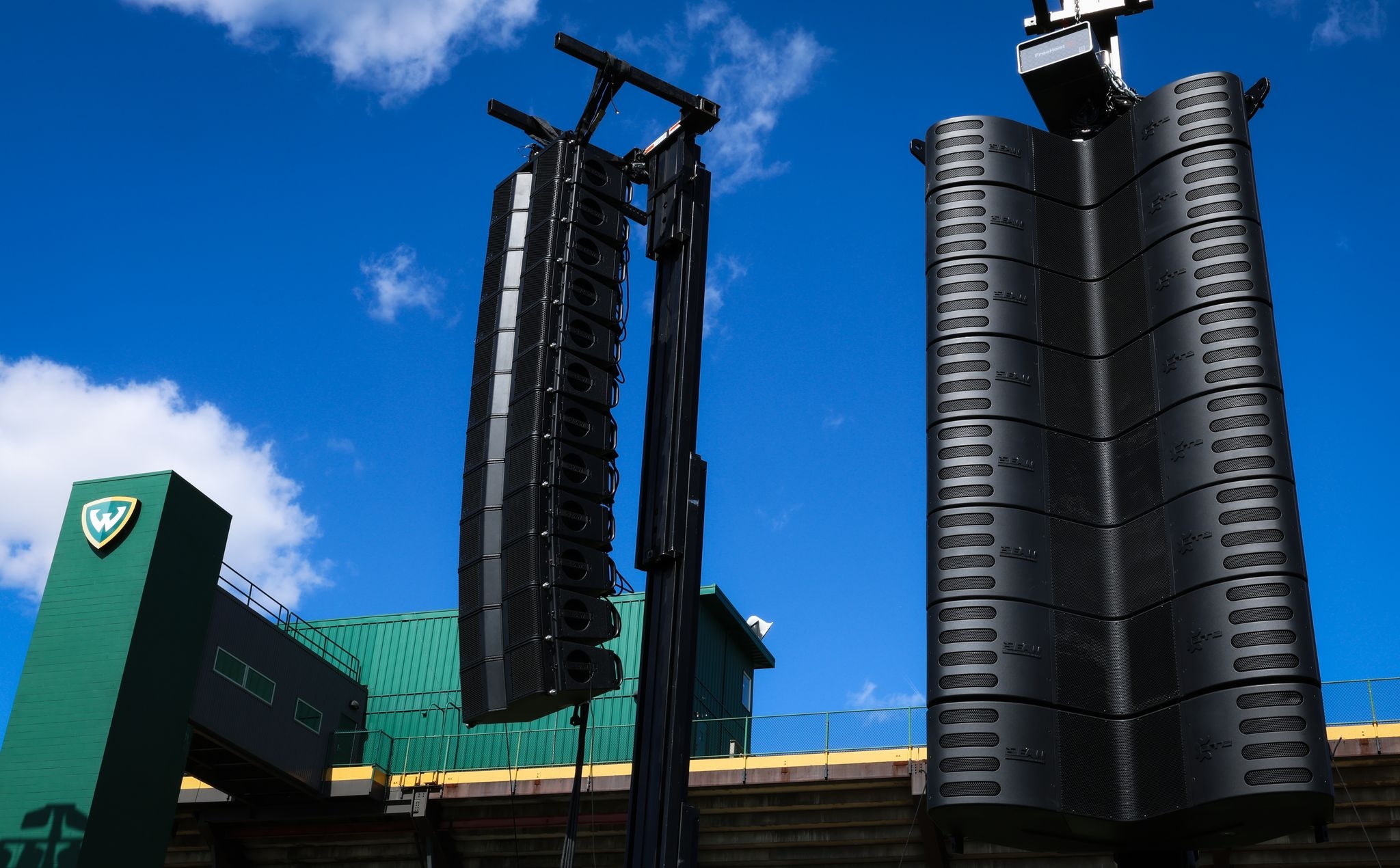
This level of granularity allows the system to:
- Cancel Reflections: By identifying hard surfaces like stadium glass or concrete walls, the system can "steer" sound away from those areas to prevent echoes.
- Uniform SPL: The system ensures that Sound Pressure Levels (SPL) remain consistent throughout the audience area, preventing "hot spots" near the stage and "cold spots" in the back.
Low-Frequency Management
The Otto subwoofers are equally advanced. Unlike traditional subwoofers that radiate sound in all directions (omni-directional), Otto utilizes two 18-inch drivers to create a cardioid or hyper-cardioid pattern. This means the bass is directed toward the audience and cancelled out behind the speakers, which is critical for the live string quartet. If too much bass "leaks" onto the stage, it can cause feedback in the cello and viola microphones, ruining the clarity of the performance.
The NT206L "Bite"
While the Anna modules handle the heavy lifting, the NT206L speakers provide the necessary definition. These compact, self-powered speakers are utilized to fill gaps in the coverage. With 24 units active at any given show, the team can pivot the audio image to follow the drones as they move across the sky, creating a truly immersive environment.
IV. Official Responses: Insights from the Field
Key personnel from Mercury Sound & Lighting have noted that the EAW system has redefined their workflow and the audience’s reaction to the show.
Jonathan Ball, A1 and System Engineer:
"We’re seeing excellent coverage with them," Ball stated during a recent tour stop. "The more we tweak, the more we build out the file within Resolution, the better results we’re seeing. It’s like magic. You see reflections in the venue model, and then you hit that ADAPTive button and things go away. You start hearing things more clearly."
Ball emphasized the importance of the NT206L modules in providing the "visceral" feel of the show. "The NT206s have a bite to them. When you add them in, it gives the system that definition that just drives and hits you in the gut. It’s that extra layer of clarity that makes the drones feel like they are part of the music."
Regarding the Live Quartet:
Ball also highlighted the challenge of mixing classical instruments in high-noise environments. "We have a four-string quartet, so we have a cello player and a viola player that are really hitting down there in the low frequencies. The Anna boxes have an incredible amount of low end already, but then you add the Ottos in and you can feel the resonance of those instruments all the way back into the stands. It turns a visual show into a physical experience."
V. Implications: The Future of Immersive Spectacle
The success of the DroneArt Show tour signals a shift in the entertainment industry. As drone technology replaces traditional fireworks due to environmental concerns and the desire for more complex storytelling, the role of audio is being reimagined.
The Death of "Good Enough" Audio
In the past, stadium events often suffered from poor audio quality due to the sheer size of the venues. However, as audiences become accustomed to high-fidelity "spatial audio" in their homes and headphones, their expectations for live events have risen. The use of EAW’s ADAPTive technology suggests that "good enough" audio is no longer acceptable for premium experiences.
Environmental and Logistical Efficiency
From a production standpoint, the ability to hang a straight array (Anna) rather than a curved one significantly reduces load-in and load-out times. This efficiency allows production companies like Mercury Sound & Lighting to maintain tighter schedules and reduce labor costs, a critical factor in the post-2025 touring economy.
Setting a New Benchmark
The DroneArt Show serves as a proof-of-concept for future "hybrid" events. By successfully integrating live classical performance with high-tech UAVs and adaptive sound reinforcement, Fever and Mercury Sound & Lighting have set a new benchmark for the industry. It proves that even in the most acoustically hostile environments—like a massive cricket arena—technology can bridge the gap between the performer and the furthest spectator.
As the tour continues its global trek, the "magic" of the EAW ADAPTive system remains the invisible thread holding the spectacle together, ensuring that the sound of a single cello can soar as high as the drones above.