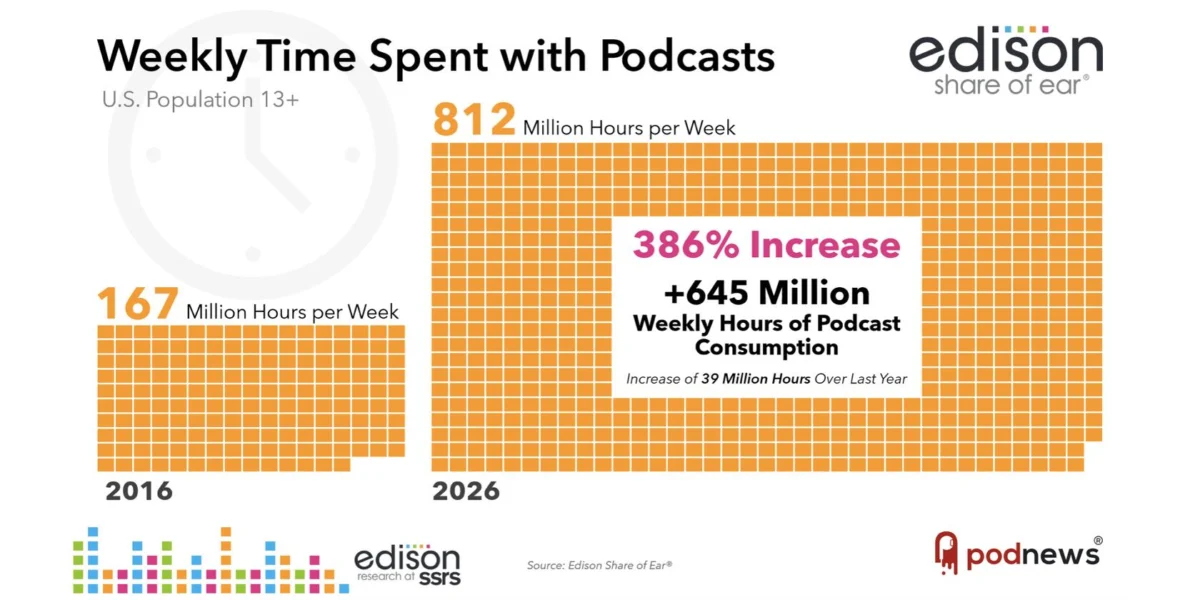
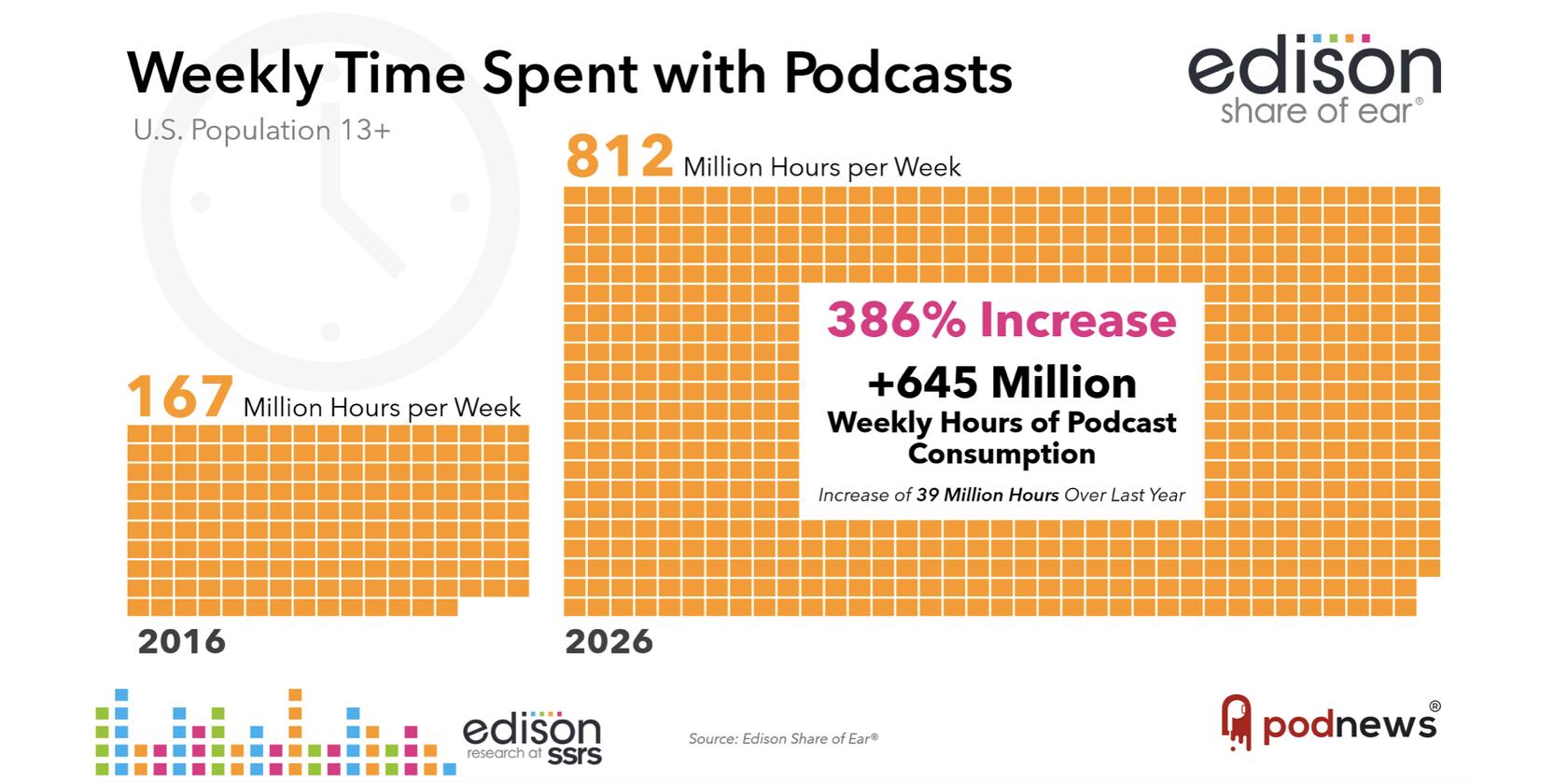
The podcasting landscape continues to evolve at a breakneck pace. As recent data from Edison Research reveals that Americans are now consuming a staggering 812 million hours of podcast content every single week, the medium has cemented itself as a cornerstone of modern digital media. From the high-stakes world of corporate marketing to the intimate, immersive storytelling that defines independent audio, the industry is experiencing a renaissance of both reach and professionalization.
However, as the audience grows, so too does the need for infrastructure—ranging from sophisticated marketing strategies to fundamental business protections. As creators and brands alike look to capture the attention of this massive, engaged listenership, understanding the shifting dynamics of the industry has never been more critical.
The Landscape of Consumption: A Data-Driven Overview
The figure of 812 million hours per week is more than just a metric; it is a testament to the habit-forming nature of audio. As listeners integrate podcasts into their commutes, chores, and downtime, the medium has achieved a level of "intimacy at scale" that traditional radio and television often struggle to replicate.
This massive consumption is mirrored by the shifting hierarchies on major platforms. Current charts reflect a mix of established titans and nimble newcomers. The Daily remains a perennial powerhouse on Apple Podcasts in the United States, while The Joe Rogan Experience continues to command the top spot on Spotify. These shows represent the "top of the funnel" for the industry, driving mass awareness, while a diverse array of niche programs—such as The Great Simplification with Nate Hagens or Haunted City—demonstrate that the "long tail" of podcasting is healthier and more commercially viable than ever before.

Professionalization and the "No Gear, No Gig" Reality
As the podcasting industry matures, the distinction between a hobbyist and a professional creator is becoming increasingly defined by business acumen. One of the most significant, yet frequently overlooked, aspects of this professionalization is asset protection.
The Homeowner’s Insurance Trap
For many independent podcasters, the "home studio" is the heart of their creative process. However, a common misconception can lead to financial catastrophe: the belief that homeowner’s insurance covers professional-grade recording equipment.

In most insurance policies, equipment used to generate income is classified as "business equipment." Should a fire, theft, or flood occur, standard residential policies frequently deny claims related to income-producing tools. This leaves the creator not only without their livelihood but also without the means to replace it.
Specialized Protection
Companies like MusicPro Insurance, which boasts over two decades of experience, have emerged to fill this critical gap. Backed by industry stalwarts like ASCAP and Sterling Risk, these firms understand that a podcaster’s gear—microphones, interfaces, acoustic treatment, and high-end computers—represents a specialized investment.

The industry consensus is clear: if you are monetizing your content, your gear must be treated as a business asset. Professional-grade insurance offers a "white-glove" safety net that ensures when the unexpected happens, the production—and the business—can recover quickly.
Chronology of Innovation: A Week in Review
The current week has seen a flurry of activity across the audio sector, highlighting the diversity of the medium.

- Monday: The launch of A Different Take from Forbes, hosted by Linda Boff, signaled a shift toward corporate-backed, high-production-value marketing podcasts. By exploring the intersection of AI and advertising through the lens of iconic brands like Coca-Cola, the show positions itself as a must-listen for industry professionals.
- Tuesday: The debut of gay-i from Bubbler Media and iHeartPodcasts marked a significant step in the maturation of identity-focused content. By examining marketing and culture through an LGBTQ+ lens, the show underscores the industry’s shift toward more nuanced, targeted storytelling.
- Wednesday: The return of Tales From The Æther (Season 3) showcased the enduring popularity of scripted anthology series. Writer Jackie Jorgenson’s exploration of 19th-century New York provides a masterclass in how immersive audio can transport listeners, proving that scripted fiction remains a vital pillar of the podcast economy.
- Thursday: Industry data trackers noted a significant rise in interest for tabletop gaming podcasts, with Haunted City seeing a sharp uptick in engagement, suggesting that "actual play" content remains a primary driver for community-led growth.
Supporting Data: Why Content Diversity Matters
The success of these varied programs highlights a fundamental truth about the current podcast market: audience fragmentation is not a weakness; it is a strength.
When we look at the charts, we see a clear pattern:

- News/Daily Briefings: Still dominate in total reach (The Daily).
- Narrative/Scripted: Continue to capture the highest "time-spent" per episode metrics (Tales From The Æther).
- Specialized/Professional: Are seeing the highest growth in B2B engagement (A Different Take).
The rise of abandoned: The All-American Ruins Podcast is perhaps the most compelling example of the "immersive sound" trend. By blending history, economics, and mental health, the show demonstrates that audiences are not just looking for passive entertainment—they are looking for intellectual activation. The recent focus on the "Mojave Shoe Station" illustrates the power of high-concept storytelling to turn obscure locations into metaphors for the human experience.
Official Responses and Industry Outlook
Industry analysts are increasingly optimistic about the role of artificial intelligence and advanced production techniques in shaping the future of audio.

"We are moving out of the ‘Wild West’ phase of podcasting," says one industry strategist. "The focus now is on sustainability—both in terms of production and monetization. Creators who treat their setup as a business and their audience as a community are the ones who are surviving the market consolidation."
Furthermore, the rise of network-backed podcasts—such as those launched by iHeartPodcasts and Forbes—suggests that major media companies are no longer just experimenting with audio. They are making it a core component of their brand identity. This institutional backing brings with it higher production standards, better marketing, and a more robust ecosystem for creators to thrive.

Implications for the Future: What Creators Must Know
As we look toward the remainder of the year, several key implications emerge for anyone involved in the podcasting space:
1. The Professional Imperative
Whether it is through insuring your equipment or securing professional legal and financial advice, the "garage podcaster" era is giving way to the "entrepreneurial creator" era. Protecting your gear is just the first step; professionalizing your workflow is the next.

2. The Power of "Niche"
The success of shows like gay-i and The Great Simplification proves that there is no longer a need to appeal to "everyone." In fact, the most successful podcasts are those that define a specific, passionate audience and serve them with high-quality, relevant content.
3. The "Discovery" Challenge
With millions of hours of content available, discoverability remains the industry’s greatest hurdle. For creators, this means that "just recording" is not enough. Leveraging platforms like Airwave and engaging in strategic cross-promotion is now as important as the quality of the audio itself.

4. Sustainability
The most successful shows are those that find a balance between artistic integrity and commercial viability. Whether through listener support, brand partnerships, or internal marketing, creators must build a business model that supports the long-term production of their work.
Conclusion: The Path Ahead
The podcasting industry is in a state of robust health. The 812 million hours of weekly consumption in the U.S. alone proves that audio has become an essential part of the human experience. As the industry continues to professionalize, the barriers to entry may rise, but so too will the potential for success.

For those willing to invest in their gear, refine their storytelling, and treat their podcasting efforts as a legitimate enterprise, the future is bright. The stories waiting to be told—whether they are about the history of American ruins or the future of artificial intelligence—are more diverse, more accessible, and more influential than ever before.
In this rapidly evolving environment, the mantra remains simple: Prepare for the unexpected, honor the craft, and never stop listening. The next big trend is only one episode away.