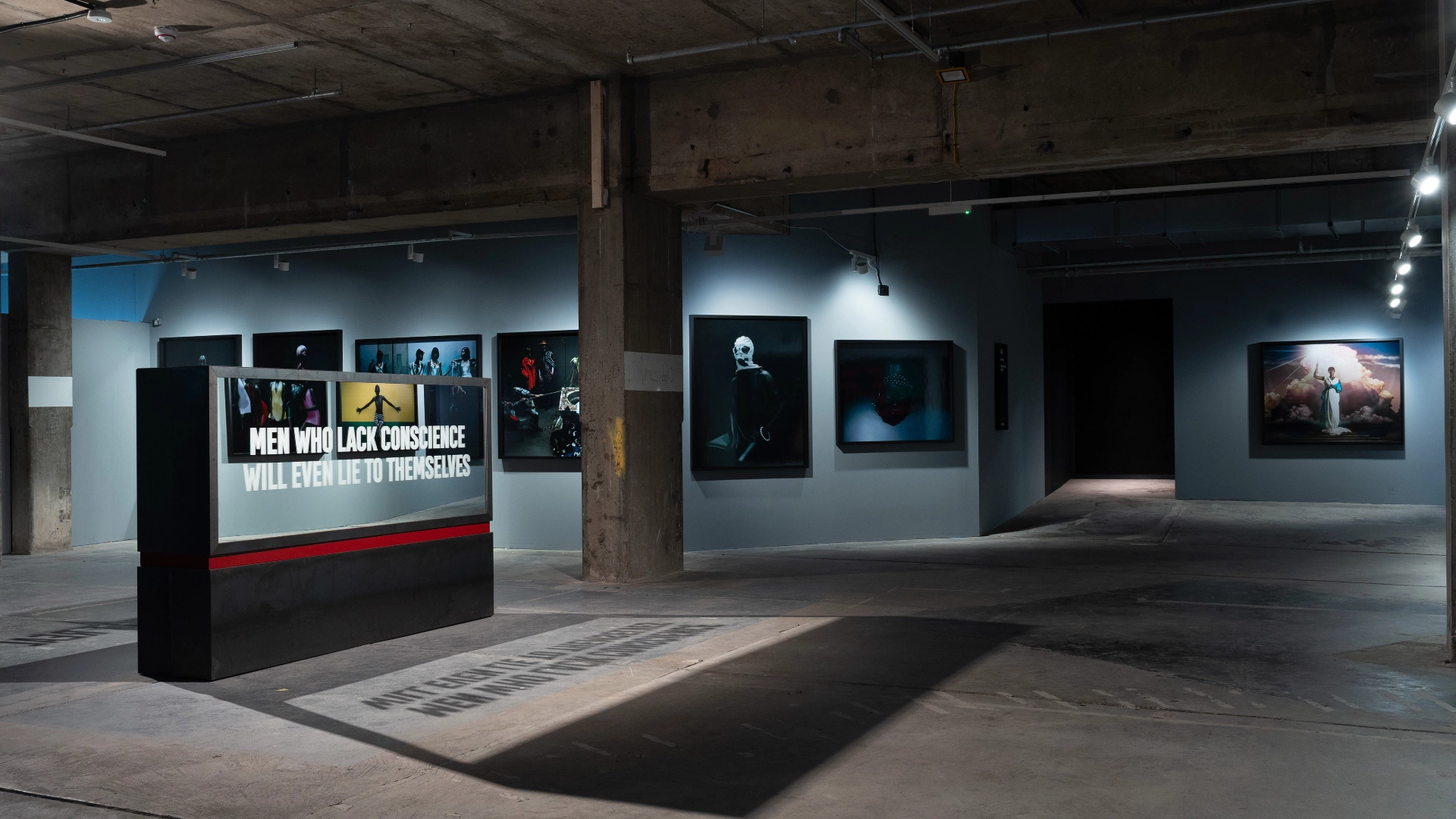
In the rapidly shifting landscape of contemporary visual culture, few figures have bridged the gap between high-fashion editorial, raw documentary photography, and avant-garde filmmaking as seamlessly as Gabriel Moses. The London-based artist, whose lens has captured the most iconic faces in music, sport, and luxury fashion, has returned to 180 Studios for his most ambitious undertaking yet: Selah.
Following the resounding success of his 2023 debut solo exhibition, Regina, which firmly established him as a singular voice in visual storytelling, Selah represents a profound maturation of his craft. Occupying two sprawling floors of the iconic 180 Studios space, the exhibition is not merely a retrospective; it is an immersive, multisensory environment that challenges the traditional boundaries of the gallery experience.
Main Facts: A Canvas of Cultural Curation
Selah is an expansive celebration of Moses’s trajectory, featuring over 70 large-scale photographic prints and a collection of 10 films that highlight his versatility. His work, which has graced the pages of global fashion bibles and documented the grit of sporting icons, is presented here in a context that feels both intimate and monumental.
The centerpiece of the exhibition is the premiere of The Last Hour, a short film that further cements Moses’s transition from a still-image photographer to a narrative filmmaker. The show also incorporates a series of bespoke installations and sculptures, moving away from the conventional "white cube" gallery model toward a more tactile, architectural presentation.
For Moses, the exhibition is an exploration of time, stillness, and the "pause"—a definition rooted in the etymology of Selah. By inviting the audience to inhabit the space alongside his subjects, he effectively demands a level of engagement that digital consumption often denies.
Chronology: From ‘Regina’ to ‘Selah’
To understand the significance of Selah, one must look back at the developmental arc of Moses’s career over the past two years. His 2023 debut, Regina, was a critical and commercial watershed. It served as a love letter to his roots, family, and the visual textures of his upbringing. It was a show that resonated because of its vulnerability.
"I’ve grown a lot in those two years," Moses reflects, sitting down for an exclusive conversation. "I’ve developed more as an artist. With Regina, I was learning how to occupy that space. With Selah, I knew exactly what I wanted the visitor to feel. It was important to me to create a show that felt so much more immersive and interactive. I wanted the work to breathe."
The period between the two exhibitions has been one of hyper-productivity. Moses has navigated high-profile collaborations with global brands, directed music videos that redefine visual aesthetics, and refined his cinematic language. If Regina was the introduction, Selah is the manifesto.
Supporting Data: The Scale of Ambition
The sheer scale of the Selah exhibition at 180 Studios underscores the artist’s current cultural standing. The exhibition, which is scheduled to run until August 31, 2025, utilizes a complex, two-floor layout designed to guide the viewer through a narrative sequence rather than a static display.
Key Exhibition Metrics:
- Total Photographic Works: 70+ high-definition, large-format prints.
- Cinematic Portfolio: 10 curated films spanning music, fashion, and sport.
- New Work: The Last Hour, a premiere short film marking a new chapter in his directorial career.
- Spatial Design: A multi-floor installation incorporating sculpture and structural light design to dictate viewer flow.
These numbers, while impressive, are secondary to the emotional labor embedded in the work. The technical execution—the way light plays off the sculptures, the rhythmic editing of his film reels, and the curated silence within the gallery—all speak to a creator who is meticulously controlling the atmosphere of his audience’s experience.
Official Responses and Artistic Philosophy
When discussing the shift in his approach, Moses emphasizes the importance of community and collaboration. His work has always been characterized by a certain warmth; his subjects appear comfortable, unguarded, and deeply human.
"When you are looking at these images, I don’t want you to feel like an observer," Moses notes. "I want you to feel like a participant. The inclusion of sculptures and installations is about breaking the glass—it’s about making the work tactile."
Critics and industry insiders have lauded the exhibition for its technical prowess. 180 Studios, a hub known for hosting high-concept art shows, has positioned Selah as a marquee event. The decision to extend the run through the summer of 2025 suggests an expectation of high visitor traffic and a belief that the show possesses a lasting cultural resonance.
Moses’s collaborators, ranging from stylists to musical artists, often cite his ability to strip away the artifice of celebrity. By focusing on the "last hour"—the final moments of a performance, the quiet breath before a game, the stillness after a shoot—he captures a human essence that is rarely seen in the commercial sphere.
Implications: The Future of Visual Storytelling
What does the success of Selah mean for the future of the artist? It signifies a shift in the traditional career path of the commercial photographer. We are seeing a move toward the "Artist-Director" model, where the distinction between a fashion campaign, a music video, and a gallery installation is increasingly blurred.
Moses is arguably at the vanguard of this movement. By using 180 Studios as his laboratory, he is demonstrating that the commercial work of today can—and should—hold its own in the halls of contemporary art. This has implications for the broader industry:
- The Death of the Static Portfolio: Moses is proving that audiences are no longer satisfied with digital feeds. There is an increasing demand for physical, "experience-first" art consumption.
- Cross-Disciplinary Mastery: The success of Selah suggests that mastery in one medium (photography) is a gateway to others (film and sculpture). The market is rewarding artists who offer a holistic vision.
- The "Slow Content" Movement: In an age of rapid-fire scrolling, Moses is leaning into the "Selah"—the pause. By creating an environment that demands time and attention, he is countering the trend of ephemeral content.
Conclusion: A Call to Witness
As Selah continues its extended run at 180 Studios, it serves as a testament to the power of artistic evolution. For those who have followed Gabriel Moses from his early days in London, the exhibition feels like a homecoming. For those new to his work, it is a startling introduction to a visionary capable of finding beauty in the most fleeting of moments.
The exhibition is not merely a collection of frames on a wall; it is a statement on the state of contemporary identity. Through the lens of fashion, the rhythm of music, and the intensity of sport, Moses has curated a reflection of our times.
Tickets are available now, and given the nature of the exhibition—an evolving, living space—it is highly recommended to experience it in person. As Moses continues to push the boundaries of his own capabilities, Selah stands as the definitive marker of his current artistic peak. It is a show that invites you to stop, look, and ultimately, to listen.
For more information on tickets and exhibition hours, please visit the official 180 Studios website.