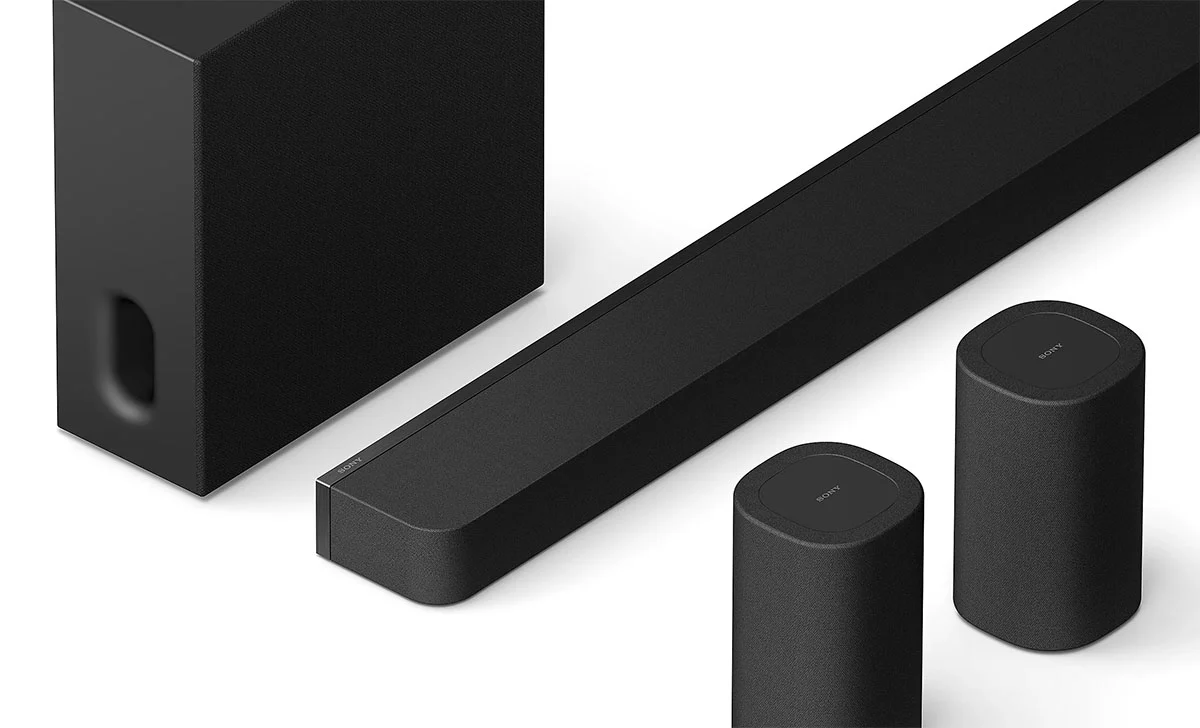
In an era where home entertainment has shifted from bulky, rack-mounted receiver systems to streamlined, minimalist living spaces, Sony has positioned itself at the forefront of the “High-End Wireless” movement. The release of the Theater Bar 7, paired with the Sub 7 and Surround 8 satellites, represents a sophisticated evolution in consumer audio. By blending high-fidelity performance with the convenience of a wire-free setup, Sony is challenging the notion that a true cinematic experience requires a professional-grade installation and a mountain of tangled cables.
Main Facts: Redefining the Living Room Soundscape
At the core of this $1,994 (as tested) system is the Theater Bar 7, a powerhouse nine-speaker array designed to handle the most demanding audio formats, including Dolby Atmos and DTS:X. The system’s primary objective is to replace the lackluster output of modern flat-panel television speakers with a 9.1.2 configuration that fills the room with immersive, object-based sound.
The system is highly modular, allowing consumers to build their theater as their budget permits. While the soundbar itself serves as the anchor, the addition of the 100-watt, 5.1-inch driver Sub 7 provides the necessary low-end impact for action-heavy films. The true secret weapon, however, is the integration of the Surround 8 satellite speakers. When utilized as a set of four, they create a robust “sound envelope” that moves audio around the listener with remarkable precision.
Perhaps the most significant technological breakthrough here is the 360 Spatial Sound Mapping. By utilizing the Bravia Connect app, the system performs an automated room correction that calibrates the audio output based on the specific geometry of the user’s living room. This process effectively removes the “sweet spot” limitation, ensuring that every seat in the room receives a balanced, high-quality audio experience.
The Chronology of Development: From Concept to Living Room
The development of the Theater Bar 7 ecosystem reflects Sony’s long-standing philosophy of accessibility in AV engineering. For decades, the barrier to entry for home theater was not just price, but complexity. Users had to manage separate amplifiers, long runs of copper wire, and complex menu systems that required a degree in electrical engineering to calibrate.
- The Design Phase: Sony engineers prioritized a "plug-and-play" architecture. By leveraging high-bandwidth wireless protocols, they ensured that latency—the historical enemy of wireless surround sound—was effectively eliminated.
- The Integration Phase: The transition to the Bravia Connect app marked a shift in control. By centralizing setup, room correction, and firmware updates into a mobile application, Sony moved the "brain" of the theater from a bulky rack unit to the user’s smartphone.
- The Rollout: The system arrived in stages, allowing users to start with the soundbar ($770) and expand to the full 9.1.2 configuration ($1,994) over time. The setup process, as observed in our initial testing, is streamlined: a single HDMI eARC connection to the TV acts as the primary data pipe, with the app managing the wireless handshake between the bar, sub, and satellites.
Supporting Data: Technical Specifications and Performance Metrics
Understanding the capability of the Theater Bar 7 requires a look at its raw technical specifications. The system is designed to bridge the gap between audiophile performance and lifestyle convenience.
Core Components:
- Theater Bar 7: Nine-speaker array optimized for wide-dispersion audio.
- Sub 7: 100-watt active subwoofer, featuring a 5.1-inch driver housed in a slim, ported enclosure designed to fit unobtrusively in modern apartments.
- Surround 8 Satellites: High-fidelity wireless speakers that communicate via a dedicated, interference-resistant frequency band.
Connectivity & Codec Support:
- I/O: Single HDMI input and one HDMI eARC port for high-bitrate audio return.
- Wireless Protocols: Bluetooth and AirPlay integration, allowing for high-quality music streaming without the need for additional playback devices.
- Codec Compatibility: Full support for Dolby Atmos and DTS:X, ensuring compatibility with modern streaming platforms and Blu-ray media.
The Bravia Connect app serves as the administrative hub. During our testing, the graphical wizard provided an intuitive interface for room correction. The system emits a series of test tones, measures the acoustic response of the room, and adjusts the phase and delay of each satellite to ensure that the sound stage remains coherent, regardless of irregular room shapes or furniture placement.
Official Responses and Strategic Positioning
Sony’s internal rhetoric regarding the Theater Bar 7 is clear: they are targeting the “discerning minimalist.” Company representatives have noted that the market for traditional “component-style” home theater is shrinking, while the demand for “premium lifestyle audio” is ballooning.

“Our goal was to eliminate the compromise,” says a representative from Sony’s AV division. “Previously, if you wanted surround sound, you accepted a messy room. If you wanted a clean room, you accepted mediocre sound. With the Theater Bar 7, we’ve proven that you can have both.”
This strategic shift is also reflected in the modular pricing model. By offering the components a la carte, Sony acknowledges that different users have different spatial constraints. An apartment dweller might opt for the bar and sub, while a homeowner with a dedicated media room can opt for the full four-satellite surround package. This flexibility is a direct response to consumer feedback demanding more control over their AV investments.
Implications for the Home Audio Market
The success of the Sony Theater Bar 7 has significant implications for the broader audio industry.
1. The Decline of the Dedicated Receiver
As wireless protocols continue to improve, the traditional AV receiver (AVR) faces an existential threat. For the average consumer, the convenience of a wireless system that performs at 90% of the quality of a wired, component-based system is an easy trade-off to make. The reduction in cable management and the ability to hide speakers in a living room without major renovations are features that the traditional market cannot easily match.
2. Room Correction as the New Standard
Sony’s investment in 360 Spatial Sound Mapping suggests that the future of audio is not just about speaker hardware, but about software processing. The ability of a system to "read" a room and compensate for acoustic anomalies is becoming more important than the raw wattage of an amplifier. As AI-driven room correction becomes more affordable, we can expect to see these features trickle down to entry-level systems.
3. Sustainability and Modular Upgrades
The modular nature of the Theater Bar 7 ecosystem also points toward a more sustainable consumer model. Because the system can be upgraded component by component, users are less likely to dispose of an entire system when they want to improve their sound. If a new, more powerful subwoofer is released, the user can upgrade that single component without needing to replace the soundbar or the satellites.
Conclusion: A Shift in Expectations
The Sony Theater Bar 7, Sub 7, and Surround 8 system represents a sophisticated, well-engineered solution to a modern problem. It manages to deliver a genuine, object-based surround sound experience while respecting the aesthetic integrity of a home.
While the system does require a wall outlet for each component—a minor drawback for those hoping for a truly "cordless" experience—the performance trade-off is well worth it. By combining cutting-edge spatial processing with a high-quality hardware suite, Sony has successfully brought the theater experience into the home without the need for a professional installer.
As we continue to test this system over the coming weeks, our focus will remain on how it handles long-term daily use, music streaming via AirPlay, and the subtle nuances of high-bitrate film soundtracks. For now, however, the Theater Bar 7 stands as a strong contender for anyone looking to modernize their home cinema setup. Stay tuned to the SECRETS website for our comprehensive, final performance review.