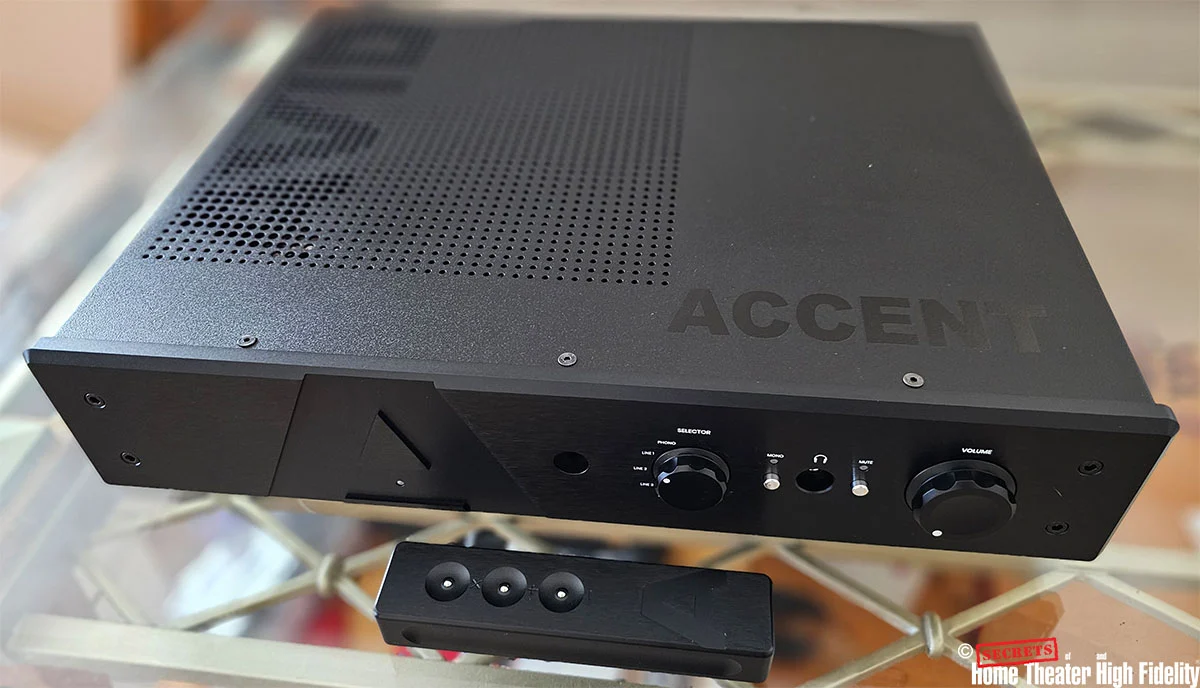
In the rapidly evolving landscape of high-fidelity audio—a sector currently obsessed with digital streaming, room correction software, and complex network integration—British manufacturer AVID HIFI has chosen a different path. With the release of the Accent Integrated Amplifier, AVID is doubling down on the fundamentals of analog purity. By distilling decades of turntable engineering and signal-path mastery into a singular, chassis-bound component, the company is making a bold statement: true high-end performance is not about the number of features, but the integrity of the signal.
The Main Facts: Engineering Without Compromise
The AVID Accent is not merely an entry-level integrated amplifier; it is a distillation of the company’s reference-grade philosophies. At its core, the Accent is a fully discrete Class AB design, delivering 70 watts per channel into 8 ohms. While those specifications might appear modest in an era of high-wattage Class D amplifiers, AVID prioritizes current delivery and dynamic headroom over raw power figures.
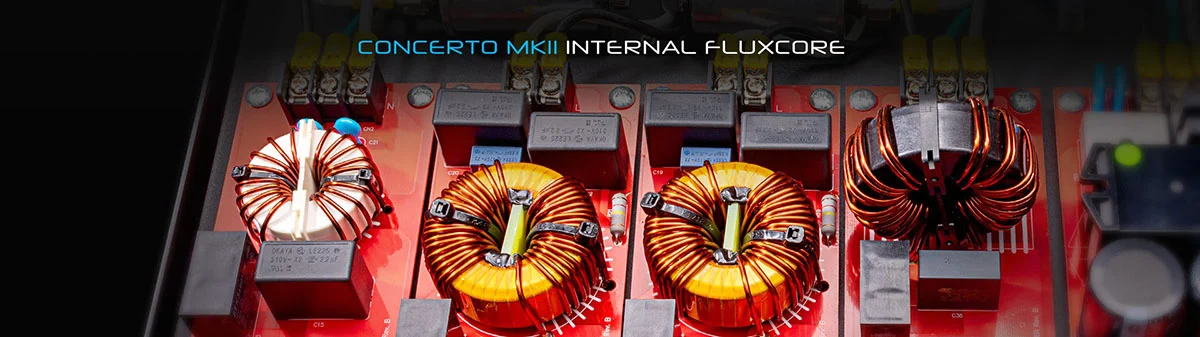
The secret to the Accent’s "heavyweight" sound lies in its power supply. The unit is anchored by a massive 617 VA toroidal transformer paired with 40,000 µF of power-supply capacitance. This robust architecture ensures that the amplifier remains unflappable under dynamic musical loads, maintaining tight control over loudspeaker drivers even during complex orchestral crescendos or demanding transients.
Beyond the amplification stage, the Accent features a bespoke phono preamplifier circuit directly derived from AVID’s acclaimed Pellar standalone phono stage. This is a critical inclusion, signaling that the Accent is built specifically for the vinyl enthusiast. With selectable gain settings and user-adjustable loading, it offers a level of compatibility usually reserved for separate, high-end phono preamps, effectively removing the need for additional cabling and external power supplies in an analog-focused system.
Chronology: A Legacy of Analog Excellence
To understand the Accent, one must understand the provenance of AVID HIFI. Founded in 1995 by Conrad Mas, the company initially gained international acclaim for its uncompromising approach to turntable design. Mas, an engineer by trade, approached the challenges of vinyl playback with an obsession for vibration control and mechanical stability.
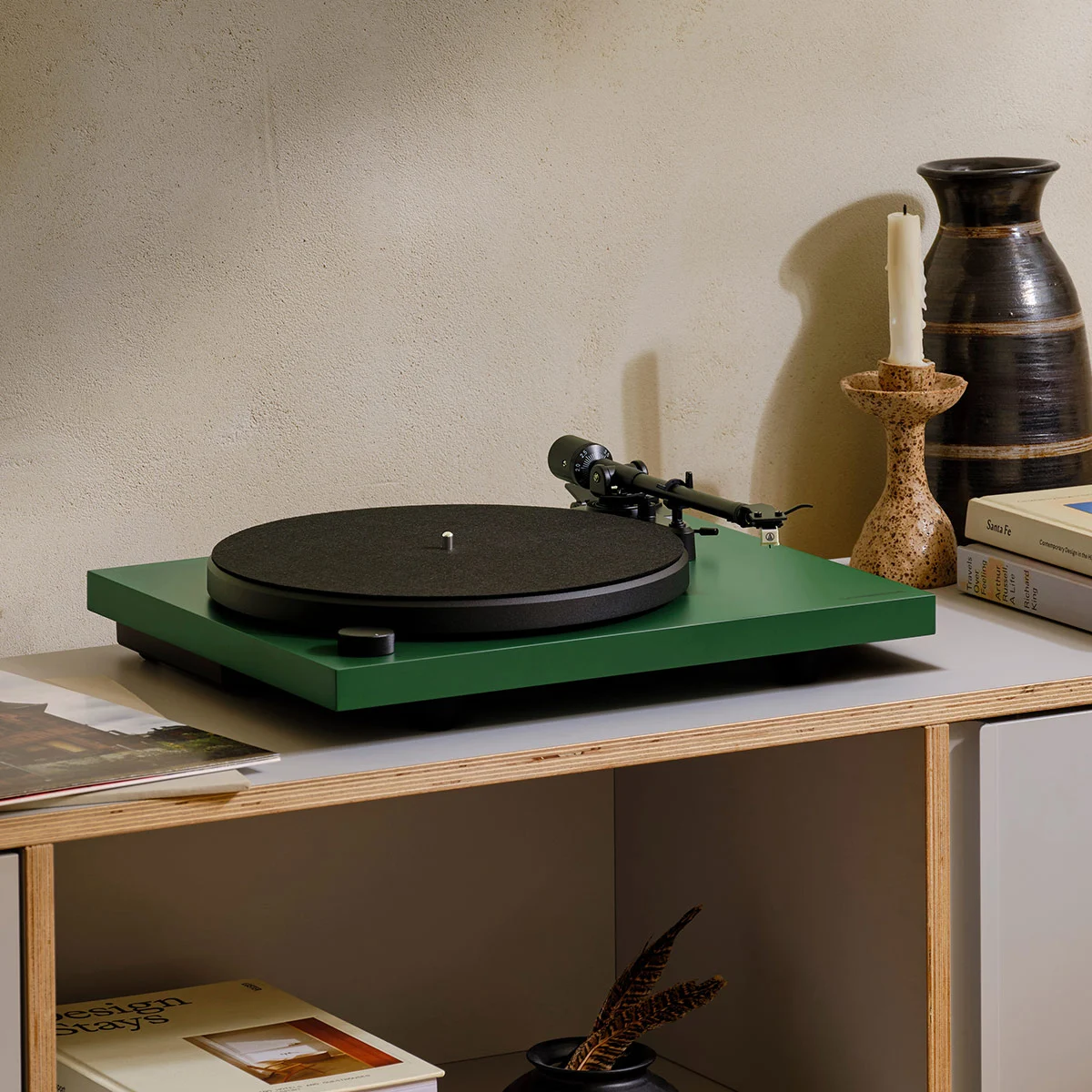
For decades, the AVID name was synonymous with turntables—products that redefined how signal extraction from a vinyl groove could be handled. However, the company’s internal roadmap always pointed toward a broader goal: total control of the signal chain.

- 1995: Conrad Mas establishes AVID HIFI in the United Kingdom, focusing on precision-engineered analog playback systems.
- Early 2000s–2010s: AVID expands its research and development, moving from mechanical isolation into the realm of electronics. The company begins applying its principles of high-mass construction and signal integrity to phono stages and amplifiers.
- 2023: The Accent Integrated Amplifier is officially introduced to the market. It serves as the culmination of years of trickle-down research, bringing the company’s "reference" sound to a more accessible, integrated form factor.
- Present Day: The Accent stands as the cornerstone of AVID’s integrated lineup, proving that a "back-to-basics" approach can hold its own against modern, feature-laden competition.
Supporting Data: The Anatomy of the Accent
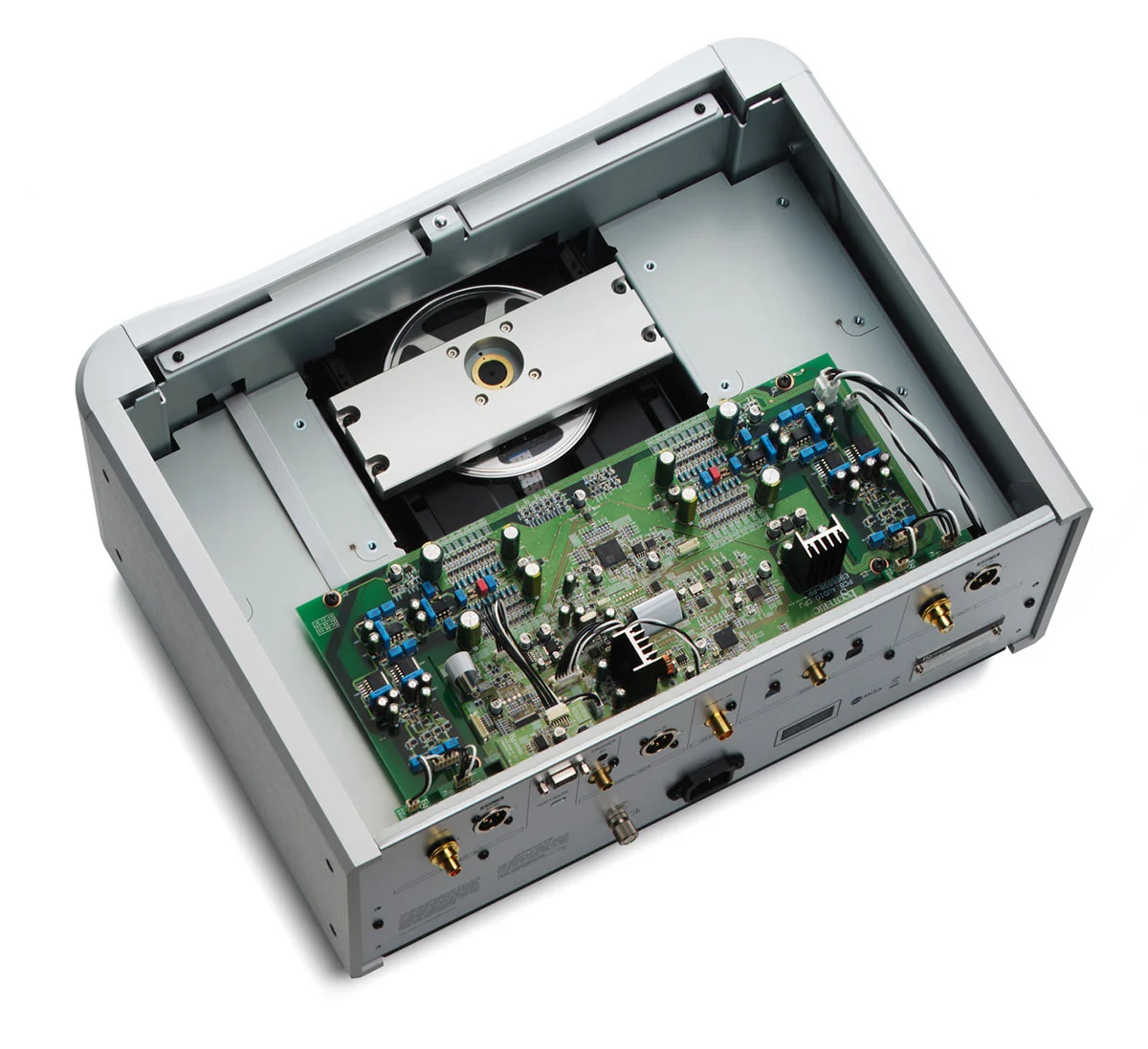
The performance of the AVID Accent is backed by rigorous build standards and high-quality component selection. Unlike mass-market integrated amplifiers that rely on integrated circuits (ICs) for critical gain stages, AVID utilizes a fully discrete design. This allows the engineering team to optimize every aspect of the circuit for sonic performance rather than cost or space efficiency.
Technical Specifications at a Glance
- Output Power: 70 W/ch into 8 ohms, capable of driving loads between 4–16 ohms.
- Power Topology: Discrete Class AB design.
- Phono Versatility: Integrated Pellar-derived stage with selectable gain (48 dB, 60 dB, 70 dB).
- Headphone Performance: High-quality output stage supporting 20–600 ohm impedances.
- Build Quality: A solid steel chassis shielded by an aluminum front panel, totaling 32 lbs (14.5 kg).
The use of custom polypropylene capacitors within the signal path demonstrates the company’s commitment to low-coloration, high-transparency audio reproduction. Furthermore, the volume control is managed by a high-grade ALPS potentiometer, providing a tactile, precise, and electrically silent interface that eschews the digital degradation often found in lower-tier electronic volume controls.
Official Responses and Philosophy
AVID HIFI has been vocal about its design philosophy, which stands in direct opposition to the "disposable" nature of many modern electronics. In an industry where components are often updated annually to include new DAC chips or network protocols, AVID focuses on longevity.
Conrad Mas and the AVID engineering team have frequently noted that their goal is to provide a "lifetime" investment. By avoiding digital-to-analog converters (DACs) and streaming modules, the Accent is insulated from the rapid pace of technological obsolescence. If a user wants to upgrade their digital source, they can simply purchase an external DAC; the amplifier itself remains a neutral, high-performance canvas that will not be rendered "outdated" by a new software standard or streaming codec.
This "musical purity" mantra extends to the chassis construction. The distinct, machined "A" motif on the aluminum front panel is not just branding—it is an aesthetic representation of the company’s structural integrity. The 32-pound weight is a testament to the internal shielding and the sheer mass of the power supply, both of which are essential for minimizing electromagnetic interference and mechanical resonance.
Implications: The Future of the Integrated Amplifier
The release of the Accent has significant implications for the audiophile market. It serves as a litmus test for the "purist" movement in high-end audio.

- The Rise of the "Pure Analog" System: By offering a high-performance phono stage as the centerpiece of an integrated amp, AVID is catering to a demographic that values physical media. The Accent suggests that for many, the integrated amplifier is not a hub for all things digital, but a dedicated engine for the analog experience.
- Performance vs. Feature Creep: In the current market, consumers are often forced to pay for features they do not use, such as Bluetooth receivers, DSP, or multi-room audio capabilities. The Accent challenges this by suggesting that the budget allocated to those features is better spent on higher-quality power transformers, capacitors, and chassis construction.
- Headphone Integration: With the rise of high-end personal audio, the inclusion of a high-quality headphone amplifier (driving 20–600 ohms) is a strategic move. It allows the Accent to serve as a dual-purpose device: a powerful speaker driver for the listening room and a reference-level headphone amp for private, late-night sessions.
Awaiting the Full Verdict
While the technical metrics and the design philosophy are compelling, the true test of any amplifier remains the listening experience. The Accent has already garnered praise for its "composure and refinement," but how does it handle the nuances of a complex, demanding recording?
We are currently conducting a long-term evaluation of the unit to determine how its sonic signature—specifically its handling of micro-dynamics and soundstage depth—compares to other reference-level integrated amplifiers. As we continue to test the unit, we look forward to exploring the synergy between the Accent’s phono stage and various moving-coil cartridges.
For those who view their audio system as a sanctuary for music rather than a tech gadget, the AVID HIFI Accent represents a refreshing return to what truly matters. It is a product that trusts the listener’s ear, honors the source material, and refuses to apologize for being exactly what it is: an uncompromising, beautifully engineered amplifier.
For readers interested in learning more about the heritage behind this build, we highly recommend viewing the recent factory tour by Editor-In-Chief Carlo Lo Raso, which provides a fascinating glimpse into the precision manufacturing standards maintained by the AVID team in the United Kingdom.