In the rapidly evolving landscape of high-end personal audio, few segments remain as fiercely competitive—and as philosophically debated—as the single dynamic driver In-Ear Monitor (IEM). While multi-driver configurations often grab headlines for their technical complexity, a new contender has emerged to challenge the status quo: the TXN Diamond. Priced at $1,999, the Diamond represents a bold statement from TXN Sound, a brand previously known for its elusive and highly regarded "unobtanium" series, the Dest and Dest Ti.
The TXN Diamond is not merely a piece of hardware; it is an engineering exercise in maximizing the potential of a single, full-range transducer. By utilizing a pure diamond diaphragm, TXN Sound is positioning itself against industry giants, aiming to prove that simplicity, when executed with obsessive precision, can outshine the most complex crossover designs.
Main Facts: The Anatomy of the Diamond
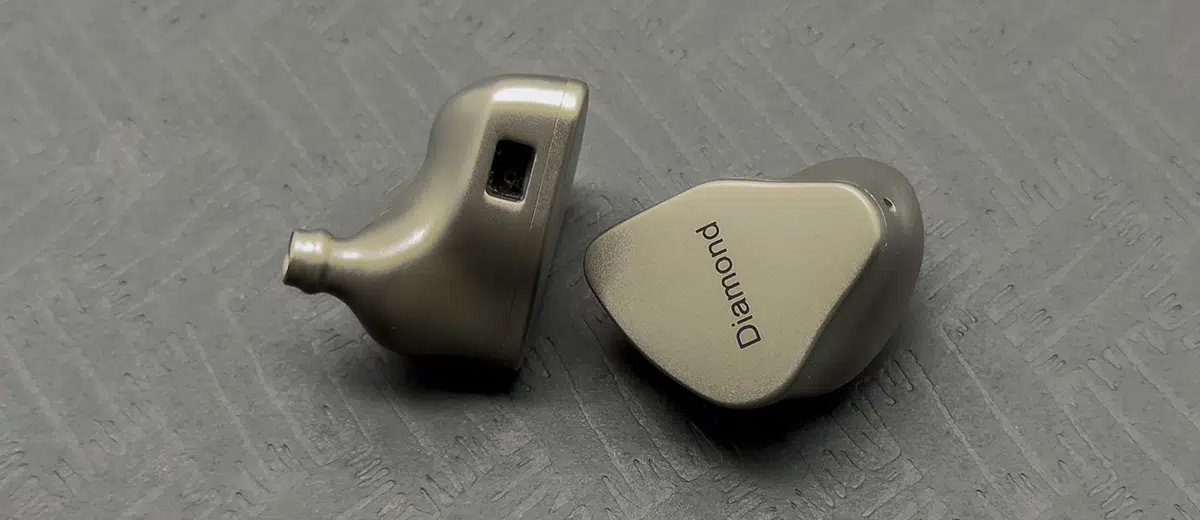
At the heart of the TXN Diamond lies a proprietary dome-shaped single dynamic driver. Unlike common materials such as beryllium, titanium, or PET, this driver is crafted through high-temperature crystal deposition, creating a pure diamond diaphragm.
Core Specifications:
- Driver Type: Single Dynamic Driver (Diamond Diaphragm)
- Shell Material: Aerospace-grade Titanium (5-axis CNC machined)
- Cable: "Aegis" 4-wire 7N OCC Copper (Taiwanese origin)
- Connector: 0.78mm 2-pin (Japanese-manufactured)
- Price: $1,999.00 USD
The primary advantage of the diamond diaphragm is its extreme rigidity. This physical property allows for significantly faster transients and a near-total reduction in unwanted harmonic distortion. By pushing the boundaries of material science, TXN Sound claims to have achieved a level of acoustic precision that preserves the integrity of the original recording with surgical accuracy.
Chronology and Market Context
TXN Sound has spent the last few years cultivating a reputation within the regional Vietnamese audiophile scene. Their previous releases, the Dest and Dest Ti, were cult classics, though they lacked a global distribution footprint. The release of the Diamond marks a strategic pivot toward the international flagship market.
This launch arrives at a critical juncture for the industry. Over the past several months, we have witnessed a resurgence of "flagship" dynamic drivers, such as the Faith Audio E1000 and the DITA Audio Ventura. The market is currently experiencing a "less is more" trend, where enthusiasts are increasingly favoring the tonal coherence and natural timbre of single-driver systems over the often-disjointed sound profiles of massive multi-BA (Balanced Armature) arrays. The Diamond enters this arena not as a budget-friendly option, but as a direct competitor to established veterans like the Campfire Audio Andromeda 10 and the THIEAUDIO Valhalla.
Design Philosophy and Ergonomics
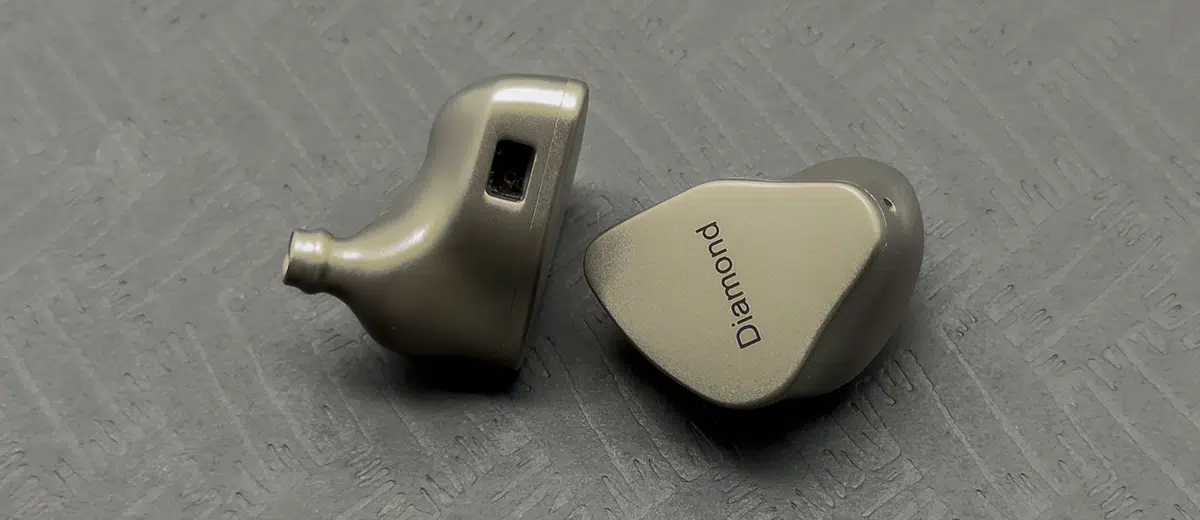
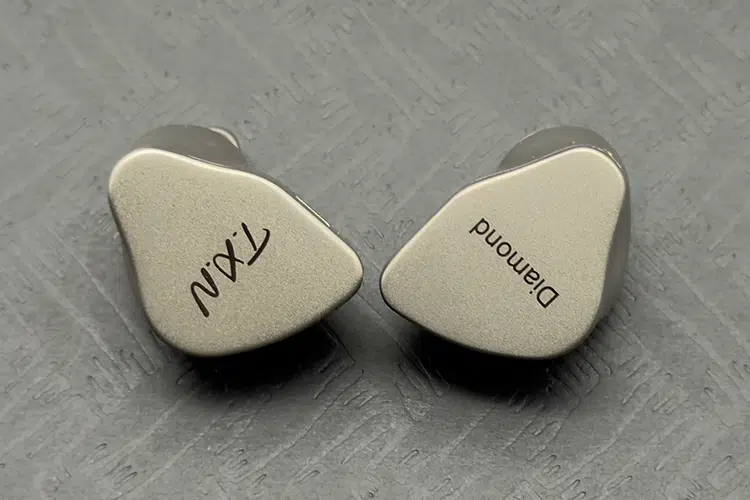
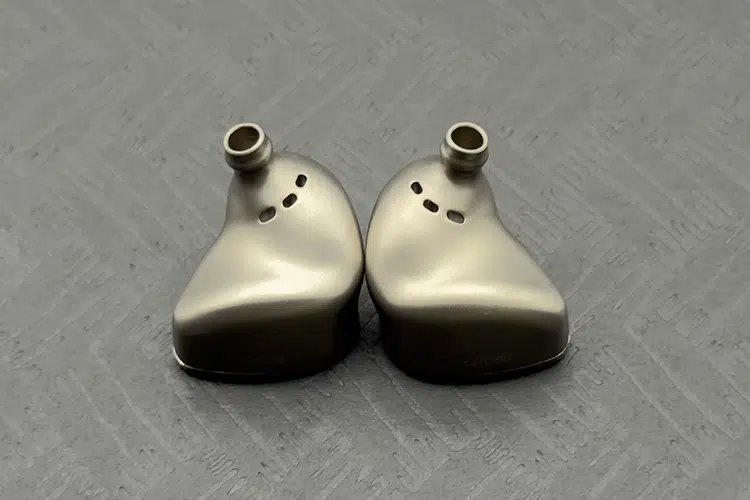
The physical construction of the Diamond reflects its premium price point. The shells are sculpted from a solid block of aerospace-grade titanium. The use of 5-axis CNC machining allows for complex, organic curves that are not possible with traditional casting methods.
The Aesthetics of Function
The matte finish of the titanium shell is a practical masterstroke; it avoids the unsightly micro-scratches that plague mirror-polished flagship IEMs. The internal geometry is particularly noteworthy—the curvature of the inner shell is designed to distribute pressure evenly, ensuring that long-term listening sessions remain fatigue-free.
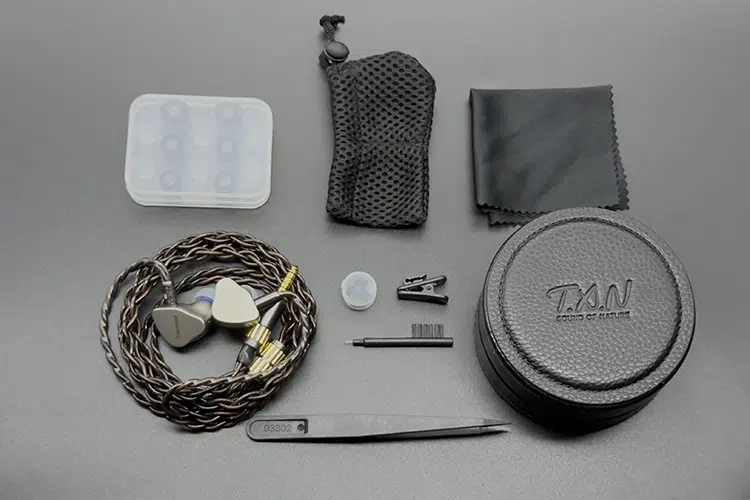
Perhaps the most discussed feature is the front-chamber venting system. Three large vents are situated below the nozzles, which are essential for achieving the Diamond’s expansive, open-soundstage characteristics. While some may worry about debris ingress, TXN provides a set of user-replaceable acoustic foams and a pair of precision tweezers, allowing the user to protect the internal chamber while simultaneously fine-tuning the frequency response.
Supporting Data: Comfort, Cable, and Accessories
Comfort is often the Achilles’ heel of high-end, metal-shelled IEMs, yet the Diamond manages to defy this trend. Unlike the Faith Audio E1000, which has a notoriously challenging fit for many users, the Diamond offers an average-sized footprint that sits securely and deeply.
The "Aegis" Cable
The included Aegis cable is a testament to TXN’s attention to detail. Utilizing 7N OCC copper, each conductor is individually shielded—a feature rarely seen in stock cables. The Japanese-manufactured 4.4mm balanced plug and 2-pin connectors provide a tactile, robust connection. While the gold-accented finish may be prone to wear over years of heavy use, its performance and physical handling—which is tangle-free and lightweight—set a high bar for stock accessories.
The Packaging Paradox
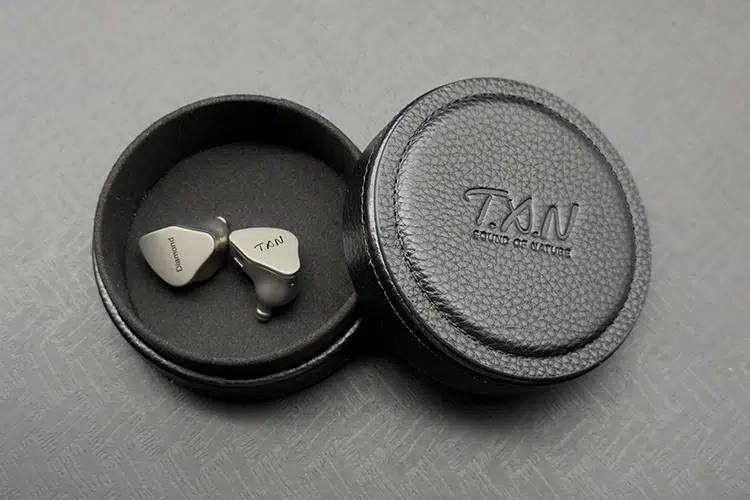
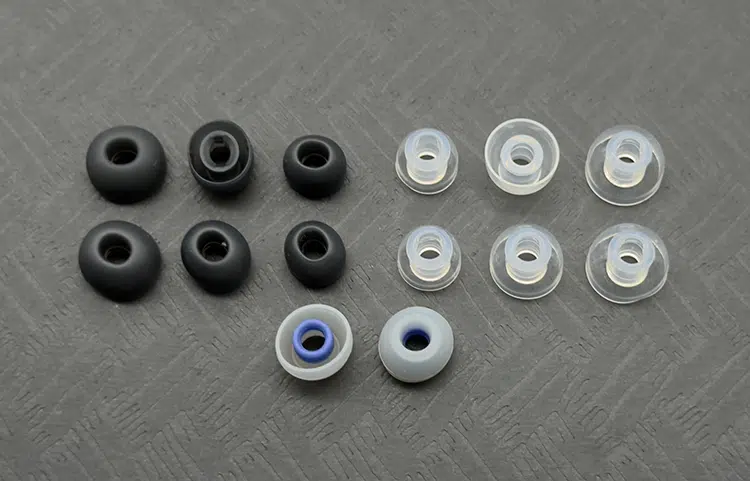
The unboxing experience is functional but perhaps the only area where the Diamond feels less than "boutique." The packaging is minimalist, with a black-and-silver color scheme. While the inclusion of a high-quality leather, puck-style carry case is appreciated, it sits on the edge of practicality. It is large enough to comfortably store the IEMs, but it lacks the internal organizational space to accommodate the secondary mesh pouch comfortably. For a $1,999 investment, the packaging experience is reliable, though it lacks the opulent "wow" factor found in some European or Japanese counterparts.
Official Responses and Engineering Goals
TXN Sound has been transparent about the engineering hurdles of the Diamond. Their primary objective was to overcome the inherent "heat buildup" that occurs in high-speed drivers during complex passages. By utilizing the thermal conductivity of the diamond diaphragm and the specific venting architecture, the company claims to have achieved a driver that remains "cool" and distortion-free even under intense playback.
When asked about the choice of a single driver in a multi-driver world, the engineers at TXN emphasized the "coherence factor." They argue that the absence of a crossover network removes the phase-related anomalies that characterize multi-driver IEMs, resulting in a more cohesive, "live-sounding" presentation.

Implications for the Industry
The success of the TXN Diamond could signal a significant shift in consumer preference. If a $1,999 single dynamic driver can match the technical resolution of a 10-driver hybrid, the industry may see a reduction in the "driver wars."
Furthermore, TXN Sound’s transition from a local, niche brand to a global competitor serves as a case study for the democratization of high-end audio. Through the use of advanced CNC machining and exotic materials, smaller firms are now capable of producing build quality that equals or exceeds that of established brands that have been in the market for decades.
Final Verdict: A New Standard?
The TXN Diamond is not for the bass-head looking for earth-shaking, artificial sub-bass impact. It is a tool for the listener who values transparency, spatial positioning, and a midrange that feels intimate and tangible. While it lacks the high-level isolation of closed-back designs, the trade-off is an airy, open soundstage that is arguably among the best in its class.
As we look toward the future of the flagship market, the TXN Diamond stands as a testament to the power of focus. By ignoring the trends of "more is better" and refining the core fundamentals of sound reproduction, TXN Sound has effectively carved out a space for itself at the top of the food chain. Whether it can hold that space against the next wave of flagship releases remains to be seen, but for now, the Diamond shines with a clarity that is hard to ignore.