
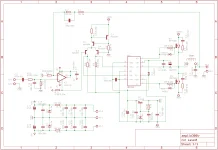
In the world of DIY audio, the quest for the "perfect" amplifier is a pursuit that often bridges the gap between engineering brilliance and dangerous experimentation. A decade ago, a specific technical discussion erupted on the diyAudio community forums that serves as a cautionary tale for electronics enthusiasts. The subject was an ambitious, high-power Class D amplifier design—purported to deliver between 25 and 1,200 watts—that sparked a fierce debate regarding safety, design integrity, and intellectual property.
What began as a simple inquiry by a forum member quickly spiraled into a complex discussion involving original designers, technical peer review, and a stark warning about the hazards of "copy-paste" engineering in high-voltage electronics.
The Genesis of the Inquiry
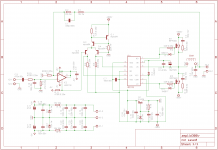
The controversy began on May 3, 2010, when a user identified as andrewlebon posted a request on the diyAudio community board. Seeking validation for a project he had discovered elsewhere, he shared a schematic for an amplifier that claimed to push massive power using only two MOSFETs.

For the uninitiated, Class D amplifiers—often referred to as "switching" amplifiers—are highly efficient because the output transistors operate as switches rather than linear devices. However, they are notoriously difficult to design correctly. The circuit shared by andrewlebon suggested a rail voltage of +/-300V. This figure immediately raised red flags among experienced engineers on the forum.
Chronology of the Debate
The timeline of this digital confrontation highlights how quickly misinformation can spread in hobbyist communities and how vital expert moderation is to preventing accidents.
- May 3, 2010: The initial post is made. Within hours, skepticism arises. User Viennatom_new points out that the IRFP460 MOSFET, specified in the design, is a 500V component from the 1990s. He notes that using it for a bridge amplifier at +/-300V is technically unsound and dangerous, citing the device’s poor body-diode reverse recovery characteristics.
- May 3–4, 2010: Technical analysis deepens. User luka joins the fray, noting that 1200W of output does not require such extreme rail voltages, suggesting the design is fundamentally flawed.
- May 4, 2010: The plot thickens as user Cacho identifies the true origin of the design. It was the work of Eduardo Tagle (ejtagle), an Argentine engineer. Cacho emphasizes that the version posted by andrewlebon is a modified, "bastardized" version of the original.
- May 4, 2010: Eduardo Tagle himself enters the conversation. He confirms that the schematics being circulated on the forum are dangerous, unauthorized derivations. He warns that the circuit is a severe shock hazard and that the modifications made by others have rendered the amplifier inefficient and prone to overheating.
- May 5–7, 2010: The community pivots toward damage control. Tagle provides context, clarifying his relationship with the UCD (Universal Class D) technology and providing guidance on where to find the verified, safe, and optimized PCB layout.
Technical Analysis: Why the Design Failed
The primary concern regarding the "1200W" design was the reckless disregard for component limitations. In high-power audio design, efficiency and thermal management are paramount.
The MOSFET Dilemma
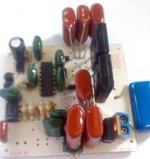
The use of the IRFP460 MOSFET was identified as a critical failure point. In a Class D bridge configuration, the switching speed and the reverse recovery charge ($Qrr$) of the body diode are essential. A MOSFET with high $Qrr$ will dissipate massive amounts of heat during the dead-time between switching, often leading to "shoot-through"—a condition where both the high-side and low-side transistors are momentarily conductive, effectively shorting the power supply.
The Voltage Hazard
The proposed +/-300V rail is exceptionally high for a hobbyist audio project. At these levels, standard electrical insulation and PCB layout techniques are insufficient. Arcing, component breakdown, and the risk of lethal electric shock become statistical certainties rather than mere possibilities. Professional-grade amplifiers utilizing such rails require specialized high-voltage engineering practices that are rarely documented in basic hobbyist schematics.
Intellectual Property and "Modified" Schematics
A recurring theme in the discussion was the unauthorized modification of Tagle’s original work. The "modders" who had circulated the corrupted schematic had likely attempted to increase the power output by simply bumping up the voltage rails without redesigning the gate drive circuitry or the output filter. This is a common trap for novice engineers: believing that power is merely a function of voltage, ignoring the physics of impedance and thermal dissipation.
Official Responses and Expert Input
The intervention of Eduardo Tagle (ejtagle) served as the definitive "final word" in the debate. Tagle’s response was measured but firm. He acknowledged his debt to Bruno Putzeys, the developer of the original UCD technology, and emphasized that while the design was a powerful tool for personal experimentation, it was never intended to be a commercial product or an invitation for unsafe modification.
Tagle’s stance was clear: "Please, don’t build it as it is." He directed users to the official, community-vetted documents hosted on the Foros de Electrónica community. By doing so, he effectively shifted the conversation from a dangerous, speculative project to a legitimate educational exercise. He also addressed the frustration of international users, acknowledging that language barriers (the original documentation was in Spanish) often led to the "truncation" of data and the subsequent creation of dangerous, incomplete copies.
The Implications for the DIY Community
The andrewlebon incident is a microcosm of the risks inherent in the "Open Source Hardware" movement within the audio community. While the sharing of schematics and designs is a cornerstone of innovation, it creates a pipeline for misinformation.

The Dangers of "Black Box" Engineering
When users copy a schematic without understanding the underlying math—such as the relationship between MOSFET gate charge, switching frequency, and output filter inductance—they are essentially building "black boxes." If the box works, they are satisfied; if it catches fire or causes an injury, they are often ill-equipped to diagnose the failure.
The Ethics of Credit
The episode also underscored the importance of attribution. By attributing the design to its rightful author, the community was able to find the source of truth. Had Cacho not identified Tagle, the forum might have continued to debate the merits of a dangerous, incorrectly designed circuit, potentially leading to property damage or personal injury.
A Path Forward for DIY Enthusiasts
The resolution of the 1200W amplifier debate highlights a best-practice model for online technical communities:

- Peer Review: Experienced members must actively challenge claims of "extreme" performance.
- Source Verification: Always seek the original designer’s documentation rather than relying on third-party re-posts.
- Safety First: When a design involves high-voltage rails, users must assume that the schematic is a starting point, not a finished product, and conduct their own rigorous safety analysis.
Conclusion: Lessons from the High-Voltage Trenches
The 1200W Class D amplifier saga concluded not with a singular, perfected unit, but with a community-wide realization of the limits of amateur audio engineering. Eduardo Tagle’s ultimate request—that users should stop "starting the 3rd world war" over his designs—remains a poignant reminder of the passion and occasional recklessness that drives the DIY audio community.
For those interested in high-power Class D amplification, the lesson is clear: efficiency and power are not gained through brute-force voltage increases. They are the result of meticulous engineering, proper component selection, and a deep respect for the physical limitations of the hardware. The diyAudio forums, in this instance, functioned exactly as they should: as a crucible where the heat of debate eventually forged a safer, more informed path for the hobbyist.


