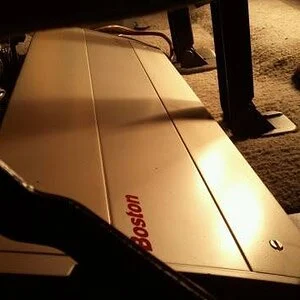
The pursuit of high-fidelity sound within the confines of a modern passenger vehicle is a pursuit that balances electrical engineering, spatial geometry, and acoustic physics. In a recent project documented by enthusiast "ThxOne," the Chevrolet Equinox has become the canvas for an ambitious audio overhaul. This article examines the progression of this build, exploring the technical hurdles, the component selection, and the ongoing debate regarding power distribution systems in high-wattage mobile audio setups.
Main Facts: The Vision for a Mobile Soundstage
The project, titled "The Equinox That Rocks," centers on transforming a standard Chevrolet Equinox into a high-performance audio environment. The build is not merely about adding a subwoofer; it is a holistic approach to automotive customization.

The primary objectives outlined by the builder include:
- Cosmetic Modernization: Transitioning all interior and exterior lighting to LED technology.
- Acoustic Architecture: Designing a custom enclosure that optimizes the limited space of the Equinox hatch area while maintaining structural integrity.
- Electrical Infrastructure: Scaling the vehicle’s charging system to support significant current draws, specifically focusing on the integration of secondary amplification and potentially multiple subwoofers.
- Component Selection: Evaluating specialized midbass drivers and high-output subwoofers capable of maintaining clarity at high decibel levels.
Chronology of the Build
November 2024: The Foundation
The project began with basic cosmetic improvements. The builder identified that the vehicle’s stock lighting system relied heavily on 194-style bulbs. By sourcing a 10-pack of high-output white LEDs, the builder upgraded the five overhead interior lamps and the two rear license plate (tag) lights. This served as a low-stakes initiation into the vehicle’s electrical system, establishing a clean, modern aesthetic before the more intensive work began.

Late November 2024: Moving Toward Power
By mid-November, the project shifted from aesthetics to performance. Having harvested components from a previous vehicle—a Hyundai Elantra—the builder began the planning phase for the Equinox’s bass section. The initial plan involved installing a pair of 12-inch subwoofers with an enclosure design featuring upward-firing subs and rear-facing ports.
The technical challenge arose when determining how to power this setup. The Equinox comes stock with a 125–130-amp alternator, which is insufficient for the planned high-wattage amplifiers (specifically the JP630 series). The builder proposed a "Big 3" wiring upgrade (upgrading the alternator-to-battery, engine block-to-chassis, and chassis-to-battery grounds) and considered an alternator replacement to 220+ amps.
Late November 2024: Spatial Optimization
The final phase of the recorded progress saw the builder physically installing the amplifier rack atop the subwoofer box. By utilizing L-brackets and heavy-duty screws, the equipment was secured within the narrow 37.5-inch width available in the cargo area. The builder also began weighing the trade-offs between using a pair of 12-inch subwoofers versus a single, high-displacement 15-inch subwoofer, noting that the spare tire well offered enough depth to accommodate a larger driver if the subfloor foam were removed.
Supporting Data: Electrical and Acoustic Considerations
The Power Distribution Debate
One of the most critical discussions within this project involves the path of electricity from the alternator to the amplifiers. In the thread, the builder asked for community verification on the wiring path:

Alt -> Short cable run -> Fuse/Relay -> Cable run to the rear -> JP630(x2) -> Distribution blocks -> Amps
Fellow enthusiast "deez283" noted that standard practice in the car audio community is to run the alternator power to the primary battery, and then from the battery to the rear. This creates a buffer that protects the alternator from direct load spikes and ensures a more stable voltage. This distinction is vital in high-performance builds, as direct alternator-to-amplifier runs without a robust battery bridge can lead to voltage instability, potentially damaging the amplifier or the vehicle’s ECU.

Subwoofer Physics and Spatial Constraints
The choice of driver size is a common point of contention in audio design. The builder noted a past achievement in a Jeep Grand Cherokee, where two JBL P1224 subwoofers, powered by a 1kW Alpine amplifier, achieved 145 dB at 37 Hz. This data point serves as the benchmark for the Equinox build.
However, the transition to 10-inch or 12-inch drivers requires different enclosure volumes. "Spokey9," a frequent contributor, suggested that an "SQL-15" (Sound Quality/Loudness hybrid 15-inch subwoofer) could potentially offer better output in a smaller footprint than a pair of smaller drivers, challenging the builder’s initial plan for dual 12s. The consensus remains that the specific T/S (Thiele/Small) parameters of the chosen driver will dictate the final enclosure volume requirements.

Official Perspectives and Community Consensus
The community interaction surrounding this build highlights the importance of "real-world" experience versus theoretical design. When the builder inquired about Def Bonce 6.5-inch midbass drivers, the community response was one of cautious verification. The question—"Are they actual midbasses?"—is a common query in the world of pro-audio-style car builds, where many "midrange" drivers are marketed as "midbass" despite having high resonant frequencies (Fs) that prevent them from playing deep into the lower-mid frequencies (80Hz–200Hz).
The builder’s persistence in researching the specific performance of these drivers demonstrates a commitment to a balanced sound stage, moving beyond just "bass" and into "fidelity."
Implications: The Future of the "Equinox That Rocks"
The implications of this build are twofold:
- Technical Scalability: The project proves that even a standard SUV can be adapted for professional-grade audio if the owner is willing to perform "Big 3" electrical upgrades and custom fabrication. The transition from 10-inch to 15-inch potential shows that the build is evolving, rather than being static.
- Community Knowledge Transfer: This thread acts as a case study for new installers. By documenting the move from the Elantra to the Equinox, the builder provides a roadmap of common pitfalls—such as underestimating alternator capacity or ignoring the necessity of a secondary battery in the rear—that others can learn from.
Conclusion
As the project continues to evolve, the "Equinox That Rocks" serves as a testament to the intersection of mechanical modification and audio engineering. By addressing the electrical limitations through a systematic approach to charging and distribution, and by critically evaluating driver selection based on enclosure volume and desired SPL (Sound Pressure Level), the builder is positioning this vehicle to be a formidable presence in the mobile audio landscape.

The next phase of the project will likely involve the finalized wiring of the power distribution blocks and the selection of a final subwoofer configuration. Whether the builder opts for the aggressive punch of dual 12s or the deep, efficient resonance of a single 15-inch driver, the foundation laid in November 2024 provides the necessary infrastructure to ensure the system remains stable and high-performing for the long term.
The build remains a work-in-progress, reflecting the reality that true high-fidelity car audio is never "finished"—it is only ever at a different stage of refinement.