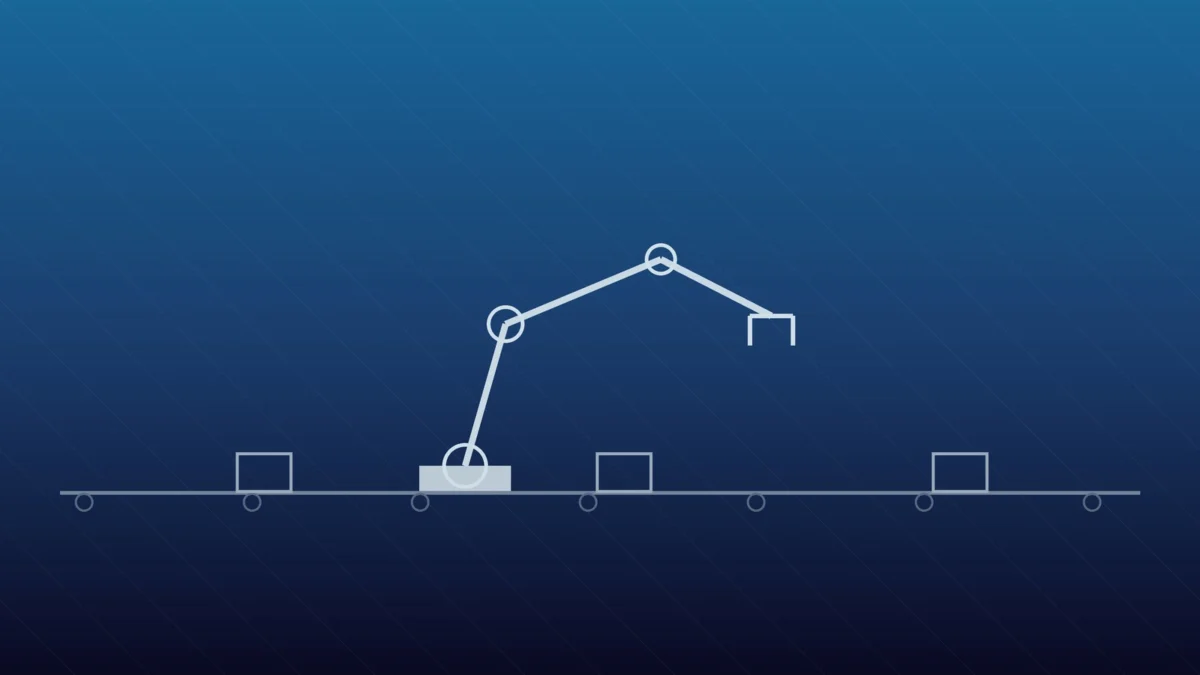
CHICAGO — For decades, the factory floor has been defined by a rigid dichotomy: the blinding speed of industrial robotics versus the fragile safety of the human worker. This divide has been physically manifested in the form of steel cages, light curtains, and safety fencing—infrastructure that consumes precious square footage and dictates the rhythm of modern manufacturing.
On June 16, 2026, Cincinnati-based industrial safety startup Sensory Robotics announced a transformative shift in this paradigm. Ahead of the highly anticipated Automate 2026 conference in Chicago, the company unveiled its SR-1 system, a sophisticated safety solution that replaces physical barriers with a "live, invisible" protective zone. By utilizing advanced 3D time-of-flight (ToF) sensing, Sensory Robotics is enabling high-speed, heavy-payload industrial robots to share workspace with humans, effectively dismantling the physical walls that have constrained manufacturing for half a century.
The Genesis of the SR-1: A Chronology of Innovation
The path to the SR-1 was not a traditional trajectory of industrial engineering. Sensory Robotics was founded by CEO Chris Edwards and CTO Tristan Fogt, two technology veterans whose expertise was forged in the high-stakes world of virtual reality (VR) gaming.
From Virtual Worlds to Real-World Safety
The company’s origins inside Cincinnati’s 1819 Innovation Hub provided a unique cross-disciplinary environment. The founders brought a "VR mindset" to the factory floor—a focus on spatial awareness, depth perception, and real-time interaction—which differed sharply from the traditional logic of industrial automation.
- 2023–2024: The company began prototyping 3D sensing arrays designed to map industrial environments in real-time. Unlike standard cameras, the ToF sensors were chosen for their ability to provide high-fidelity, millisecond-latency data on human movement within a 3D volume.
- 2025: Sensory Robotics initiated the rigorous process of certification. Recognizing that technical performance is secondary to regulatory compliance in industrial environments, the team focused on meeting the most stringent global safety standards.
- June 2026: The culmination of these efforts, the SR-1 system, receives its official launch platform at Automate 2026. The company prepares to showcase live demonstrations, proving that the technology is not merely theoretical but ready for deployment on active, high-output production lines.
The Technology: How 3D Sensing Replaces Steel
The core innovation of the SR-1 lies in its ability to modulate robot behavior based on proximity. Traditional industrial robots operate in a binary state: "On" behind a fence or "Off" when the gate is opened. The SR-1 introduces a dynamic, graduated approach to safety.
Dynamic Velocity Control
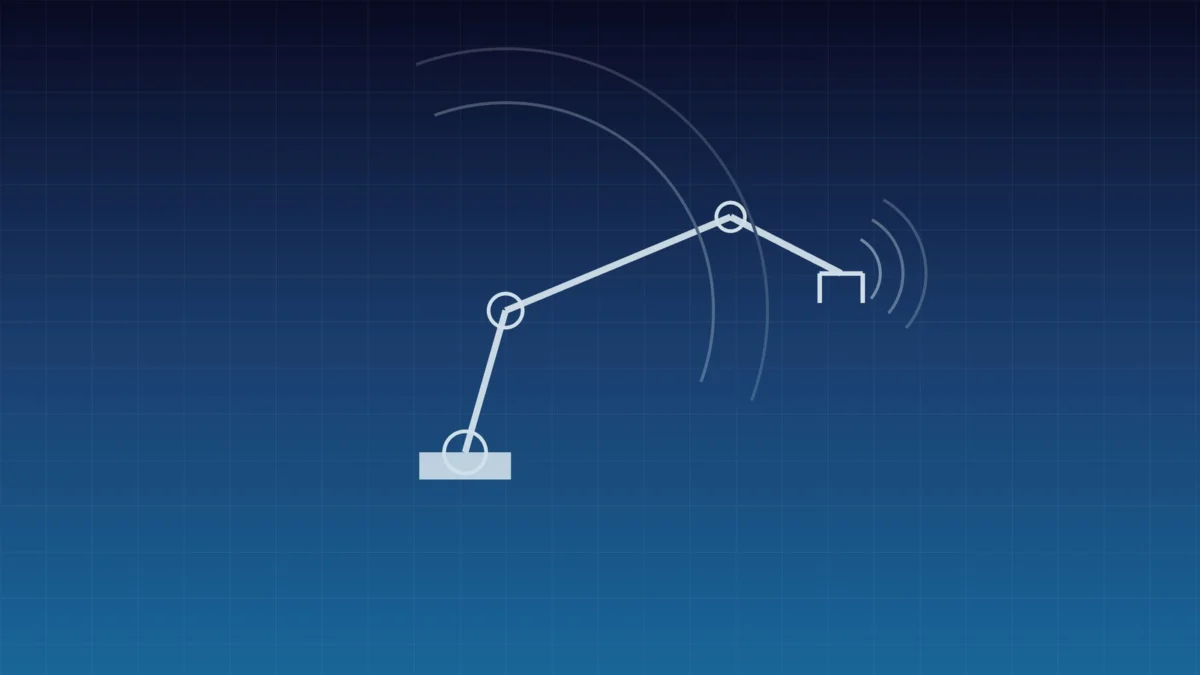
The SR-1 system creates a multi-layered, invisible safety bubble around the robot.
- Full-Speed Operation: When the workspace is clear, the robot maintains maximum velocity and payload capacity, ensuring no loss in manufacturing throughput.
- Proactive Deceleration: As a human operator approaches the "warning zone," the SR-1 communicates directly with the robot’s controller, triggering a seamless reduction in speed.
- Instant Stop: If an operator or object enters the "critical zone," the system executes an instantaneous stop, preventing contact before it occurs.
This system effectively solves the "collaborative robot paradox." For years, manufacturers had to choose between "cobots"—which were safe but too slow and weak for heavy industrial tasks—and traditional robots, which were powerful but required total isolation. The SR-1 allows for the marriage of heavy-duty power and human-centric safety.
Regulatory Hurdles and the "Certification Barrier"
In the manufacturing sector, the primary obstacle to innovation has rarely been the technology itself; it has been the bureaucracy of safety. Insurance companies, internal corporate compliance departments, and federal safety regulators (such as OSHA in the United States) have long favored the "known quantity" of a physical cage.
The Certification Milestone
Sensory Robotics recognized that without third-party validation, the SR-1 would remain a laboratory curiosity. To gain entry to the factory floor, the company pursued and achieved:
- UL 1740 (cULus) Certification: A critical benchmark for robotic equipment safety in North America.
- ISO 13849 Compliance: The system has been validated to Performance Level d, Category 3.
- PFHd Rating: The system achieved a Probability of Dangerous Failure per Hour (PFHd) of 1.73 x 10⁻⁸.
This technical achievement is significant. In the world of industrial safety, reaching such a low PFHd rating is notoriously difficult. It provides the legal and ethical framework for plant managers to remove fences without exposing their companies to catastrophic liability.
Official Perspectives: Trusting the Machine
Mark Gagas, Chief Operating Officer of Sensory Robotics, emphasized that the certification process was never about filling out paperwork, but about establishing a baseline of human trust.
"This kind of certification is one of the hardest things to achieve in our industry, and that is the point," Gagas stated during the lead-up to the Automate 2026 unveil. "It is what lets a regulated manufacturer trust a fenceless system enough to put it on a real production line. The milestone is not the paperwork. It is the confidence it gives the people who work next to these machines every day."
CEO Chris Edwards echoed this sentiment, highlighting the historical context of industrial robotics. "Industrial robots were never designed to work next to people. They were powerful machines built to be isolated," Edwards remarked. "What has changed is that the industry now has both the technology and, just as importantly, the certified proof that people and robots can share a space safely."
Implications: The Future of the Factory Floor
The introduction of the SR-1 at Automate 2026 is expected to trigger a ripple effect across several manufacturing verticals, including automotive assembly, aerospace, and high-volume electronics manufacturing.
1. Reclaiming Floor Space
Physical fencing often dictates factory layouts, leading to "dead zones" where space is unusable. Removing these barriers allows for a more fluid, modular shop floor, potentially increasing facility output without the need for physical expansion.
2. Enhanced Workflow Ergonomics
When robots and humans can operate in close proximity, workflows can be redesigned to favor human-robot handoffs. For instance, a robot can perform the heavy lifting and high-speed movement of a component, while a human performs the delicate, dexterous assembly work on the same part at the same station, without the human having to walk to a separate, fenced-off cell.
3. The Shift in Labor Dynamics
There is a profound human element to this shift. By removing the cage, the relationship between the operator and the machine changes from one of "separation" to "cooperation." This could lead to higher job satisfaction as operators transition from "cage monitors" to "robot supervisors," managing more sophisticated tasks while the SR-1 handles the safety protocols in the background.
4. The Broader Automation Ecosystem
Sensory Robotics, as a partner of the University of Cincinnati 1819 Innovation Hub, represents the growing influence of academic-industry partnerships in the "Rust Belt’s" industrial renaissance. The success of the SR-1 could encourage further investment in localized, high-tech safety solutions that keep manufacturing competitive in a global market.
Conclusion: A New Standard for Interaction
As the industry gathers in Chicago for Automate 2026, the SR-1 stands as a testament to the idea that safety and productivity are not mutually exclusive. By leveraging the principles of 3D time-of-flight sensing and meeting the most stringent international certification standards, Sensory Robotics has provided a roadmap for a new era of manufacturing.
The cage, a fixture of the industrial age, is beginning to disappear. In its place, companies like Sensory Robotics are building a future where the proximity of human intelligence and robotic power is no longer a safety risk, but a core component of the next generation of industrial efficiency. The live demonstrations in Chicago this June serve as the final proof: the fence is coming down, and the modern factory is opening up.