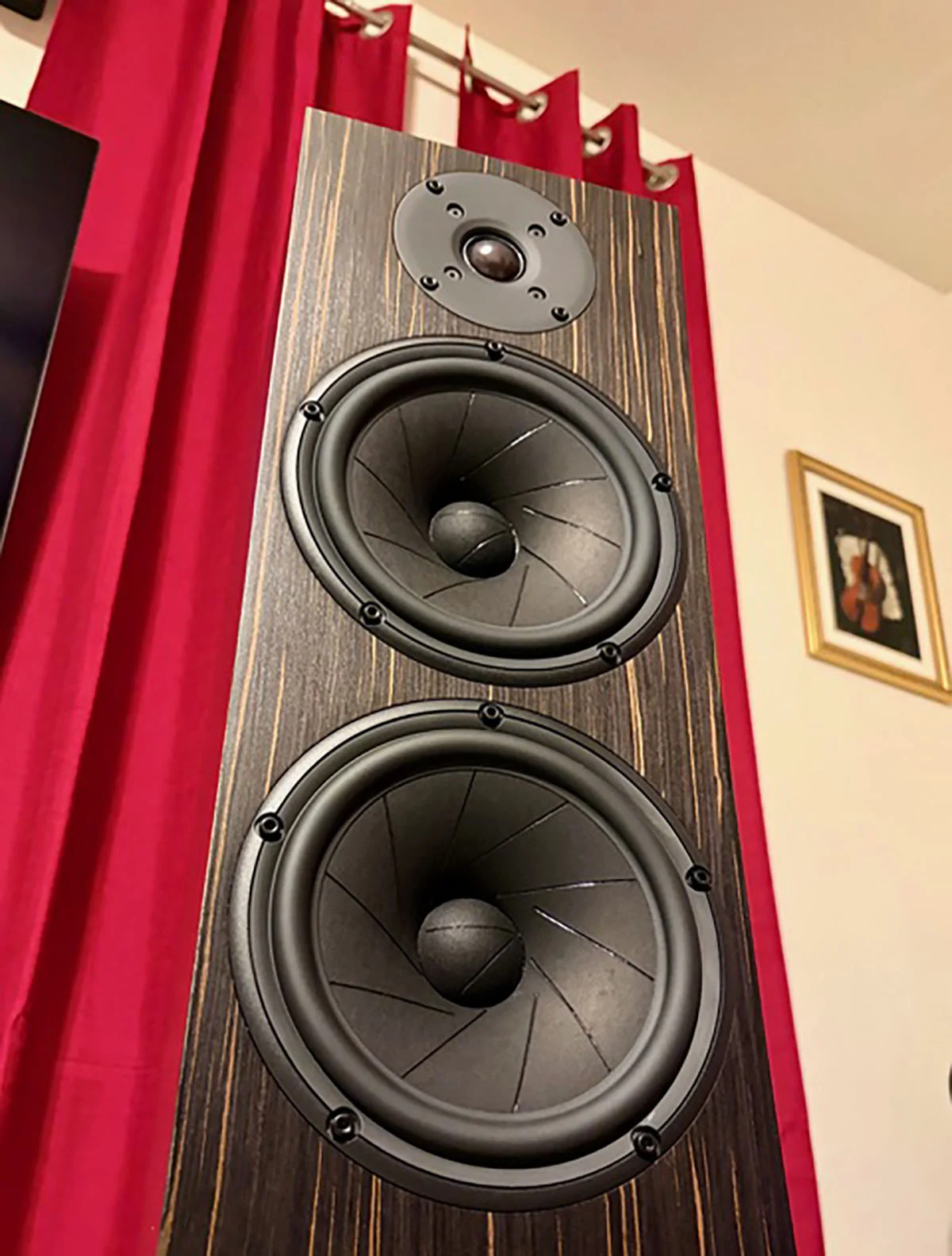
In the rarefied world of high-end audio, the pursuit of the "perfect" loudspeaker has traditionally been a battle against physics. Designers have spent decades wrestling with standing waves, cabinet coloration, and the limitations of traditional wood-based enclosures. However, a new paradigm is emerging from the workshop of award-winning designer Lucca Chesky. By integrating cutting-edge 3D-printing technology with sophisticated internal geometry, Chesky Audio is not merely manufacturing speakers; they are sculpting acoustic environments that challenge the boundaries of sonic transparency.
The Convergence of Geometry and Fidelity
At its core, the Chesky Audio philosophy rests on a fundamental rejection of the conventional "box" speaker. Traditional loudspeakers often struggle with internal resonance—vibrations trapped within the cabinet that muddy the mid-range and distort the decay of instruments.
Lucca Chesky’s approach leverages additive manufacturing to create complex, non-parallel internal structures that would be impossible to achieve with traditional woodworking or CNC machining. By printing enclosures with mathematically optimized internal lattices and proprietary sound-dampening polymers, the company has effectively neutralized the cabinet as a source of color.
The result, according to early adopters and audiophiles, is a speaker that "disappears." In the high-fidelity community, this is the ultimate accolade. When a speaker vanishes, the listener is left with nothing but a vast, three-dimensional soundstage where instruments occupy specific, tactile locations in the room, creating an effortless realism that mimics a live performance.
A Chronology of Innovation: From Concept to Sonic Reality
The journey of Chesky Audio is a testament to the intersection of industrial design and acoustic engineering. While the company is relatively young in the context of the century-old audio industry, its trajectory has been rapid.
- 2015 – The Foundation: The brand is formally established, rooted in the desire to move beyond the aesthetic and structural limitations of traditional MDF (Medium Density Fiberboard) cabinets.
- 2016–2018 – The R&D Phase: Lucca Chesky spends three years experimenting with various 3D-printing materials. The challenge was not just printing a shape, but finding a material density that could withstand the high-pressure environment of low-frequency sound waves without vibrating.
- 2019 – The Prototype Breakthrough: The first successful "resonance-free" enclosure is unveiled to a select group of sound engineers. The prototype utilizes an organic, fluid-like internal geometry that breaks up standing waves before they can form.
- 2021 – Commercial Launch: Chesky Audio officially enters the consumer market. The initial response from the audiophile press is overwhelmingly positive, with particular praise for the speakers’ "startling" bass response, which belies the compact size of the printed enclosures.
- 2023–Present – Refinement and Expansion: The company shifts focus toward refining the aesthetic appeal of their products, merging industrial art with acoustic performance. Today, Chesky Audio stands as a leader in the niche market of "bespoke acoustic art."
Supporting Data: The Science of the "Invisible" Speaker
To understand why these speakers sound different, one must look at the physics of enclosure design. In a standard rectangular speaker, sound waves bounce off flat, parallel walls, creating "nodes"—points where bass frequencies either cancel each other out or boom uncontrollably.
Chesky Audio’s 3D-printed designs utilize "Acoustic Diffusion Mapping." By printing internal walls with randomized, fractal-like textures, the speakers scatter internal sound energy in a controlled manner.
Key Technical Advantages:
- Stiffness-to-Weight Ratio: The proprietary polymer used by Chesky provides the rigidity of dense hardwood but at a fraction of the weight, allowing for faster, more accurate transient response.
- Internal Standing Wave Suppression: The lack of sharp, 90-degree corners prevents the buildup of internal pressure, leading to a much tighter, more articulate bass performance.
- Phase Coherency: By optimizing the physical distance of the drivers within the printed geometry, the sound waves from the tweeter and woofer arrive at the listener’s ear at the exact same time, preserving the phase information of the original recording.
Official Perspectives: The Vision of Lucca Chesky
In recent communications, the leadership at Chesky Audio has emphasized that their mission is not just to sell hardware, but to preserve the intent of the artist.
"When we look at the history of audio, we see too many compromises," Lucca Chesky noted in a recent company briefing. "We’ve been limited by the saw, the router, and the glue. 3D printing has liberated us from those chains. Our goal is to create a canvas—a blank space—where the music can exist exactly as it was recorded, without the interference of the cabinet’s ‘voice.’ When the listener forgets the speaker is there, we have succeeded."
The company remains committed to a boutique model, focusing on the quality of output over mass production. Their website serves as the primary gateway for clients to engage with their design philosophy, offering deep dives into the technical specifications of each model.
Implications for the Future of High-End Audio
The success of Chesky Audio signals a broader shift in the high-fidelity industry. As additive manufacturing becomes more affordable and materials science advances, the "factory-made, rectangular box" standard is increasingly being challenged by boutique firms that prioritize personalized, scientifically driven design.
Impact on Industry Standards
- Democratization of Complex Geometry: Other manufacturers are beginning to explore 3D printing for internal components, such as waveguides and port tubes, following the trail blazed by Chesky.
- Sustainability and Waste: Traditional manufacturing creates significant waste, particularly with rare woods and complex CNC routing. 3D printing is an additive process, meaning it uses only the material required for the final product, potentially offering a more sustainable future for luxury audio.
- Design Flexibility: Because these speakers are printed, they can be customized to the acoustic profile of a specific room. This leads to a future where "bespoke audio" becomes the standard rather than the exception.
The Listener Experience: What to Expect
For those accustomed to traditional audio setups, the first experience with a Chesky Audio system is often described as "disorienting." The lack of box coloration means that sounds that were previously buried in the mix—the soft intake of a vocalist’s breath, the subtle decay of a piano string, the resonance of a cello body—become starkly apparent.
This level of detail requires high-quality source material, but it rewards the listener with a sense of "presence." It is an experience that bridges the gap between the studio and the living room, effectively turning the home listening space into an extension of the recording environment.
Contact and Further Information
For those interested in exploring the Chesky Audio catalog, the company maintains a centralized hub for inquiries and technical consultations.
- Official Website: https://www.cheskyaudio.com/
- Direct Inquiries: Prospective clients and industry partners are encouraged to reach out via their dedicated email channel to discuss custom commissions or to schedule a private listening session.
As the industry moves toward 2025, Chesky Audio remains a benchmark for what is possible when design, technology, and a deep respect for acoustic purity converge. They have proven that the future of audio isn’t just about louder or bigger speakers—it is about the refinement of the space between the notes. By stripping away the physical constraints of the past, they have invited the music to speak for itself, clear and resonant, in a way that truly redefines the listening experience.