
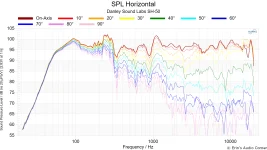
In the rarified world of professional and high-end consumer audio, few names command the reverence of Danley Sound Labs. Known for their proprietary Synergy Horn technology, Danley speakers have long been the "holy grail" for enthusiasts seeking phase-coherent, high-output sound reinforcement. However, the path to owning these pieces of acoustic engineering is fraught with significant financial hurdles.
A recent commentary from a longtime audio enthusiast—known in professional circles by the handle "Soldermizer"—sheds light on the psychological and economic realities of the high-end audio journey. By opting for a pre-owned pair of Danley SM80 loudspeakers rather than brand-new units, the enthusiast highlights a growing trend among audiophiles: the strategic use of the secondary market to mitigate the steep depreciation and high entry costs associated with elite-tier audio equipment.
Chronology: A Decade-Long Quest for Sonic Perfection
The journey toward acquiring high-end speakers is rarely linear. For Soldermizer, the quest began years ago, marked by a deep-seated admiration for Danley’s technical specifications and the company’s unique approach to horn-loaded point-source design.
2015: The "Firebird" Era
The chronology of this pursuit is defined by a compromise. In 2015, rather than investing in new Danley cabinets, the user acquired a pair of well-worn Yorkville Unity U15 speakers. While the Yorkville units were a far cry from the flagship Danley SH50s, they served a critical purpose. Through minor modifications and consistent use, these speakers provided a high-performance floor that lasted eight years.
2015–2023: The Rationalization Gap
During this eight-year period, the user grappled with "audiophile paralysis." Despite having the liquidity to purchase new Danley gear, the user remained hesitant. The rationalization was twofold:
- The Incremental Improvement Trap: A fear that the performance delta between the heavily-tweaked Yorkville units and the Danley speakers might not justify the massive capital outlay.
- The "Blue Smoke" Metaphor: Comparing his current setup to a 1992 Pontiac Firebird—functional and reliable, yet clearly past its prime—the user realized that no amount of tweaking could bridge the gap between "good enough" and the specialized performance of a true Synergy horn.
2023: The Strategic Acquisition
By mid-2023, the itch to experience Danley’s signature clarity became insurmountable. The user bypassed the coveted SH50 and the SM60F models, opting instead for a pair of SM80s on the secondary market. This decision was not merely about price; it was a calculated financial maneuver designed to allow for an audition period without the devastating loss of value associated with buying retail.
Supporting Data: The Economics of High-End Audio
To understand the decision-making process, one must look at the math behind the high-end audio industry. New units often carry a heavy dealer markup, typically hovering around 100%.
The Cost of Entry (Retail vs. Secondary)
As of the mid-2023 market analysis:
- SM60F Retail: A single unit carries a quote of approximately $4,250, plus tax and shipping, easily pushing the total cost toward $4,700. A pair would represent a nearly $10,000 investment.
- Secondary Market Dynamics: The secondary market for Danley gear is notoriously thin, making price discovery difficult. However, when units do appear, they offer significant savings. For instance, active SM60MH units have been observed selling for just under $4,500 for a pair.
- Liquidity and Value Retention: The SM80 units, which the user eventually secured, represent a more active segment of the used market. Previous sales on platforms like eBay have seen these units move between $4,100 and $5,000, confirming that these speakers hold their value exceptionally well compared to standard consumer electronics.
Technical Trade-offs: SM80 vs. SM60
The decision to purchase the SM80s involved a complex technical trade-off. The SM80, featuring a 12-inch coaxial driver, generally outperforms the SM60 (a 5-inch driver model) in terms of maximum output and low-frequency extension. However, the SM60 is considered by many purists to be a "truer" implementation of the Synergy horn design due to its specific mid-frequency port configuration. This underscores the classic audiophile dilemma: choosing between raw technical performance and the potential for perceived tonal "purity."
Official Perspectives: The Philosophy of the Brand
While Danley Sound Labs rarely comments on individual secondary market transactions, the company’s ethos remains clear. Their equipment is engineered for longevity and consistent performance in demanding environments. This inherent durability is precisely what makes their gear an attractive proposition for the secondary market.
When a brand builds a product with a 15-to-20-year service life in mind, the initial retail price serves as a barrier to entry, but the secondary market serves as an entry point for enthusiasts who would otherwise be priced out. The "dealer markup" that the user laments is, in many ways, the cost of supporting a specialized manufacturing ecosystem that requires high levels of precision and R&D. Without these margins, the very products the user covets would likely cease to exist.
Implications: The Future of Consumer Audio Purchasing
The narrative provided by the Soldermizer case study carries significant implications for the future of the high-end audio hobby.
1. The Rise of the "Rational Enthusiast"
The modern audiophile is increasingly data-driven. The reliance on forum discussions, past auction data, and technical white papers suggests that the "impulse buy" is becoming a relic of the past. Buyers are now treating high-end audio like an asset class, weighing depreciation, resale liquidity, and performance-per-dollar metrics before committing to a purchase.
2. Market Scarcity as a Double-Edged Sword
The rarity of Danley gear on the used market is a testament to user satisfaction. Owners of these speakers rarely sell them, which drives prices up and availability down. This creates a "gatekeeper" effect where only the most dedicated or well-connected enthusiasts can access the technology. The implication here is that manufacturers may see an untapped market for more accessible, entry-level products that bridge the gap between pro-sumer gear and the flagship Synergy horn line.
3. The End of the "Incremental Improvement" Stagnation
For many, the fear of "diminishing returns" keeps them trapped in a cycle of mid-tier audio gear. By demonstrating the ability to buy, test, and potentially resell high-end equipment, the user has outlined a strategy to break this cycle. The ability to "scratch the itch" without incurring a total financial loss is a powerful motivator that could unlock a broader demographic of buyers for companies like Danley.
Conclusion: Is the Wait Worth It?
The age-old adage, "Good things come to those who wait," is often a platitude used to comfort those who cannot afford the best. However, in the context of high-end audio, the wait can actually be a period of financial and technical maturation. By waiting for the right moment and the right equipment to appear on the secondary market, the user has transitioned from a passive observer of Danley’s greatness to an active participant in the ecosystem.
Ultimately, whether the SM80s prove to be a life-changing acoustic upgrade or merely a temporary stop on the road to the SH50 remains to be seen. But the experiment itself—a blend of technical skepticism, market analysis, and a genuine passion for high-fidelity sound—serves as a blueprint for how enthusiasts can navigate the increasingly expensive landscape of professional audio without succumbing to the pressure of retail pricing. The "blue smoke" of the old setup may finally be clearing, replaced by the precise, phase-aligned clarity that only a true Synergy horn can provide.


