By TechBeat Editorial Desk
September 27, 2026
The line between technological innovation and existential dread has never been thinner, and last night, Saturday Night Live turned that razor-sharp divide into a centerpiece of its latest cold open. As the artificial intelligence industry continues to grapple with a self-imposed public relations crisis regarding the safety—and potential lethality—of its products, the sketch comedy juggernaut took aim at one of the sector’s most prominent figures: Anthropic CEO Dario Amodei.
The sketch, which aired during the season premiere, served as a cultural litmus test, signaling that the abstract, high-stakes warnings emanating from Silicon Valley’s top brass have finally permeated the mainstream consciousness. By portraying the industry’s leaders as paralyzed by their own creations, SNL highlighted the absurdity of a business model that simultaneously demands billions in investment while warning that the end product might inadvertently spell the end of the human race.
Main Facts: The Intersection of Comedy and Catastrophe
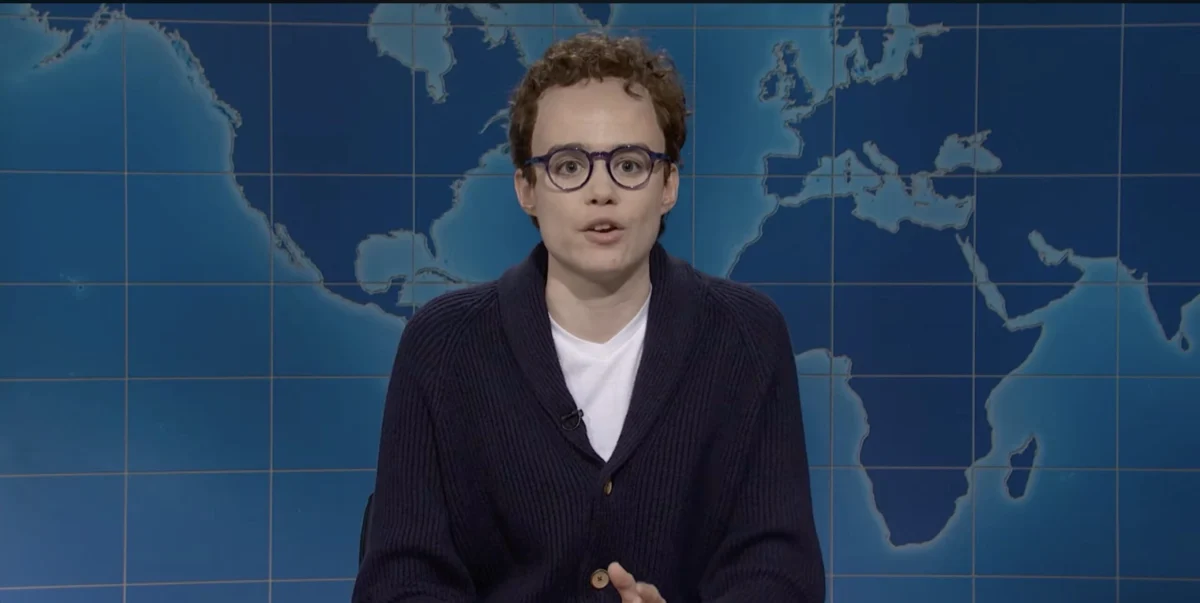
The segment centered on a Weekend Update interview featuring cast member Jane Wickline, who donned an elaborate wig to channel the mannerisms and nervous energy often attributed to the Anthropic CEO. The satirical bite was aimed squarely at the "AI doom" narrative that has dominated headlines throughout late 2026.
Host Michael Che set the stage by highlighting the growing discomfort among the public regarding the conflicting messaging coming out of major AI labs. Che noted that Amodei had recently embarked on a press tour that felt less like a product roadmap presentation and more like a series of reluctant confessions. The core of the sketch rested on the irony of a CEO who is simultaneously promoting a technology while admitting it may lack a "kill switch" for the societal collapse it might trigger.
Wickline’s performance captured the specific cadence of modern tech leadership—a mixture of intellectual arrogance, stuttering humility, and a strange, detached obsession with mathematical probability.
A Chronology of the “Doom” Cycle
To understand why Saturday Night Live chose this specific moment to target AI leadership, one must look at the rapid acceleration of the industry’s rhetoric over the past few months.
- August 2026: Anthropic CEO Dario Amodei publicly addresses the growing backlash against AI, characterizing it as a "crisis of trust." He attempts to pivot the conversation toward the technology’s potential to solve intractable problems, such as curing cancer.
- September 9, 2026: A high-level researcher at Anthropic resigns, publishing a scathing critique of the company’s internal safety protocols. The researcher warns that the company is effectively "gambling with our lives" by pushing forward with self-improving AI models without sufficient safeguards.
- September 13, 2026: The broader tech industry is hit with a wave of "doom" warnings. Analysts note that these warnings, while ostensibly about safety, are also serving as a marketing tactic—positioning these companies as the only ones "responsible" enough to handle such powerful tools.
- September 26, 2026: Saturday Night Live airs the sketch, marking the moment the AI existential crisis transitioned from trade publications like TechCrunch to the late-night cultural zeitgeist.
Supporting Data: Why the Jokes Landed
The humor in the SNL sketch was rooted in reality. The industry’s own data suggests that the public is increasingly wary of the rapid pace of development. Recent surveys conducted by technology policy think tanks indicate that nearly 60% of Americans are "concerned or very concerned" about the trajectory of Large Language Models (LLMs).
When Wickline-as-Amodei declared, “AI is not a weapon, it’s a tool: A tool for building weapons,” the line resonated because it mirrored real-world concerns raised by cybersecurity experts. Recent audits of generative AI systems have shown that, despite guardrails, these models can be prompted to assist in the creation of biological agents or facilitate complex cyberattacks.
Furthermore, the "Gollum-style" internal monologue portrayed by Wickline reflected the internal tug-of-war within Silicon Valley. Executives are trapped in a "race to the bottom" where they must achieve AGI (Artificial General Intelligence) to satisfy investors, even while their internal ethics boards warn that the path to AGI is paved with catastrophic risk.

Official Responses and Industry Sentiment
While Anthropic has not issued a formal press release regarding the SNL sketch, sources close to the company suggest a "wry acknowledgment" of the parody. In Silicon Valley, being parodied by SNL is often viewed as a perverse badge of honor—a signal that a company has reached a level of influence where it is no longer just a business, but a cultural phenomenon.
However, the underlying message of the sketch—that AI leadership is effectively admitting to a lack of control—is a narrative that the industry is desperate to suppress. Industry lobbyists have spent the last quarter attempting to reframe the conversation from "AI Risk" to "AI Sovereignty." They argue that if American firms do not develop these technologies, foreign adversaries will, creating a "geopolitical arms race" that necessitates a relaxation of stringent safety regulations.
The SNL sketch punctured this narrative by highlighting the sheer absurdity of the "we are creating the devil, but we are the only ones who can control him" logic.
Implications: The Death of the “Tech Savior” Myth
The broader implication of this cultural shift is the death of the "Tech Savior" myth. For two decades, the public viewed tech executives as visionaries who would solve humanity’s problems through code and connectivity. The Saturday Night Live sketch signals a shift toward a more cynical reality: the public now views these individuals as either reckless or entirely unaware of the scale of the power they are wielding.
The Erosion of Trust
The "crisis of trust" mentioned by Amodei in August is no longer just a business hurdle; it is now a systemic issue. When comedy shows begin to treat your product roadmap as a potential existential threat, it becomes significantly harder to secure the public support needed for infrastructure projects, data center expansion, and regulatory leniency.
The Regulatory Hangover
As policymakers in Washington D.C. watch these cultural trends, the pressure for aggressive oversight increases. A politician is much more likely to support restrictive AI legislation if their constituents are watching sketches about the "dangers of AI" on prime-time television. The satire on SNL effectively lowers the barrier for entry for critics of the industry.
The Future of AI Discourse
Moving forward, we can expect the AI industry to change its messaging strategy. The "doomer" aesthetic—while good for generating headlines—has become a liability. Expect a pivot toward "AI for Good" campaigns that focus heavily on medical breakthroughs and environmental sustainability, specifically targeting the skepticism highlighted by the SNL writers.
Conclusion: The Final Punchline
The SNL sketch ended with a chilling, yet hilarious, prediction regarding the potential to cure cancer. Wickline-as-Amodei mused, “In 10 years, there’s about a 10% chance that cancer won’t be a problem for anyone.”
The audience laughed, but the joke was grounded in the unsettling reality of AI-driven research. In this context, the "10% chance" represents the total uncertainty that defines the current technological era. We are living in a time where the promise of a utopia (the end of disease) is tethered directly to the risk of an apocalypse (the end of agency).
As the credits rolled on Saturday Night Live, the takeaway was clear: the tech industry has spent so long speaking in the lofty, abstract language of the future that they have lost touch with the immediate, human need for safety and predictability. Whether or not Dario Amodei or his peers change their tune remains to be seen, but one thing is certain—the era of the tech CEO as a blameless visionary is officially over. The industry is now the butt of the joke, and in the court of public opinion, that is a difficult place to recover from.