By Audio Journalism Staff
Published: August 2026
Main Facts
Swiss high-end audio manufacturer Nagra has officially expanded its footprint in the ultra-compact component market with the introduction of the Nagra Compact Player. Designed for audiophiles seeking uncompromising sonic performance within a drastically minimized footprint, the device functions as an elite digital-to-analog converter (DAC), network streamer, and media player.
Measuring a mere 7.2 x 6.5 x 1.6 inches, the Compact Player matches the exact physical dimensions of its sibling, the Nagra Compact Phono stage. Despite its diminutive, desktop-friendly enclosure, the unit features full native DSD decoding capabilities alongside robust Roon Ready integration. The minimalist hardware architecture deliberately eschews traditional physical controls—it does not even feature a power switch—relying instead on an always-on operational philosophy indicated by a single, understated LED light.
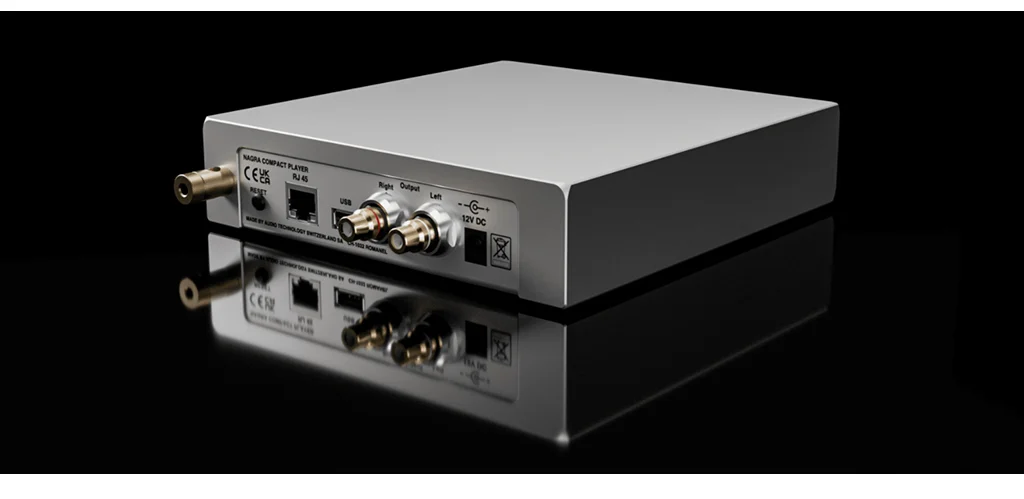
Out of the box, the unit relies on a compact external power supply, but it offers substantial upgrade paths. Owners can swap the stock power brick for the dedicated Nagra Compact PSU or integrate the device into higher-tier setups using existing Nagra power solutions such as the MPS or Classic PSU. Connectivity is streamlined to essentials: an RJ-45 Ethernet port for network streaming and a USB input to accommodate external hard drives or memory sticks. While purists note the absence of legacy S/PDIF digital inputs, Nagra’s design choices focus strictly on network and direct storage playback to preserve signal integrity and minimize internal chipset complexity.
Early evaluations from industry veterans—including initial hands-on impressions by TONEAudio publisher Jeff Dorgay—describe the sound as unmistakably "Nagra": lightning-fast, tonally accurate, deeply musical, and devoid of artificial coloration. Destined for a full, extended review in the near future, the Nagra Compact Player has already secured an early, enthusiastic endorsement as a tour de force in micro-audiophile engineering.
Chronology
To understand how Nagra arrived at a digital player the size of a paperback book without sacrificing reference-grade sound quality, it is helpful to trace the trajectory of the company’s recent engineering philosophy:
- The Heritage Foundation (Decades Prior): Kudelski Group, the parent company of Nagra, built a legendary reputation supplying portable analog and digital recorders to broadcast professionals, field recordists, and high-end consumer audio enthusiasts worldwide. Precision mechanics and ultra-low noise floors became synonymous with the brand.
- The Shift to Compact Form Factors: Recognizing a growing demand for space-saving components that do not compromise on sonic pedigree, Nagra conceptualized its Compact series. The introduction of the Compact Phono established the benchmark for how much performance could be extracted from a chassis measuring under eight inches wide.
- Development of the Compact Player: Engineers distilled the company’s flagship digital playback technology—honed through decades of proprietary DAC development—down to its absolute functional core. Unnecessary UI elements, redundant analog/digital inputs, and bulky user interfaces were systematically stripped away to maximize signal path purity and reduce electromagnetic interference.
- Integration and Launch (Mid-2026): The Nagra Compact Player quietly enters the global market, arriving with native Roon Ready certification. Initial units ship to reviewers and select high-end audio dealers, achieving plug-and-play network integration within 30 seconds of unboxing.
- Future Outlook (Late 2026 and Beyond): With early praise establishing the Compact Player as a heavyweight contender in the high-end digital space, a comprehensive, extended review cycle is slated to roll out, accompanied by market availability for compatible power supply upgrades like the Compact PSU.
Supporting Data & Technical Specifications
When evaluating ultra-compact audio gear, skeptics often question how thermal management, jitter reduction, and power supply isolation are handled within tight physical constraints. Nagra’s engineering choices provide clear insight into the hardware’s capabilities:
Physical Dimensions & Build Quality
- Chassis Dimensions: 7.2 inches (Width) x 6.5 inches (Depth) x 1.6 inches (Height).
- Form Factor Alignment: Perfectly matches the Nagra Compact Phono, allowing for neat, tower-style stacking or side-by-side desktop placement.
- Aesthetic Parallel: Industry commentators have likened the build quality and philosophy of the Compact series to high-end horology—specifically comparing the Compact Player to the Tudor Black Bay of the digital audio world: rugged, precision-engineered, historically rooted, and stripped of unnecessary ornamentation.
Connectivity & Compatibility
- Network Streaming: RJ-45 Ethernet port, fully Roon Ready certified. Supports seamless integration into complex multi-room or dedicated listening room network topologies.
- Local Storage: USB input designed for connecting external hard drives, solid-state drives (SSDs), or high-capacity memory sticks.
- Digital Formats: Full DSD capability, alongside comprehensive PCM support handling resolutions ranging from standard CD-quality 16-bit/44.1kHz up to high-resolution 24-bit/192kHz files.
- Omissions: Intentionally lacks legacy digital inputs (such as coaxial or optical S/PDIF) to avoid adding chipset complexity, internal conversion stages, and potential sources of jitter.
Power Management & Upgradability
- Stock Configuration: Ships with a high-quality small external power supply.
- Operational State: Employs an "always-on" design philosophy featuring zero physical power switches. A single, discrete LED indicates operational readiness. The unit requires approximately 24 hours of continuous power to achieve complete electrical and thermal stabilization.
- Upgrade Path: Compatible with the dedicated Nagra Compact PSU. For users invested in broader Nagra ecosystems, the unit can also be powered by higher-end external power supplies such as the MPS or Classic PSU, unlocking even greater dynamic headroom, lower noise floors, and enhanced micro-dynamics.
Official Responses & Industry Perspectives
The high-end audio community has responded with a mixture of awe and analytical curiosity regarding Nagra’s decision to limit the Compact Player’s feature set while elevating its core acoustic performance.
In his initial dispatch for TONEAudio, publisher Jeff Dorgay captured the sentiment of early evaluators:
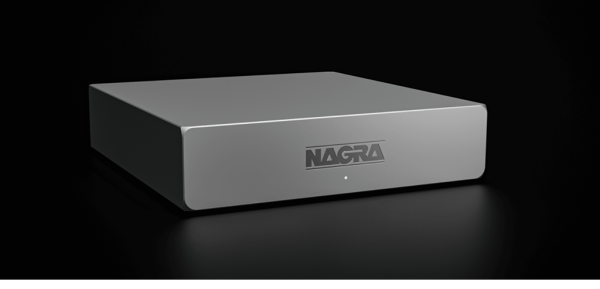
"If you’re thinking ‘how can Nagra get so much performance out of such a small box?’ The reason is simple. They have distilled the functionality down to the absolute minimum—there isn’t even a power switch! Plug it in and leave it on. One tiny LED lets you know it’s working… The sound is pure Nagra, honed by decades of building some of the world’s finest gear… Lightning fast, tonally correct, musical and involving—yet without embellishment or coloration."
Industry analysts note that Nagra’s move reflects a broader paradigm shift in ultra-high-end audio. While mass-market streamers chase endless feature lists—incorporating Bluetooth codecs, HDMI ARC, multi-channel processing, and complex onboard touchscreens—ultra-luxury manufacturers are discovering that a segment of the audiophile market actively desires radical simplification. By removing user interfaces and extraneous routing components, manufacturers eliminate sources of digital noise and mechanical resonance, directly benefiting the analog output stage.
Furthermore, retailers and custom installers have praised the Roon Ready implementation. Requiring merely an Ethernet connection, power, and a single click within the Roon control software to "enable" the endpoint, the Compact Player bypasses the notorious software friction that plagues many network-attached audio devices.
Implications for the High-End Audio Market
The release of the Nagra Compact Player carries several significant implications for manufacturers, consumers, and the broader audiophile ecosystem:
1. The Legitimization of Desktop Ultra-High-End Audio
For decades, reference-grade sound was inextricably linked to massive, heavy chassis filled with oversized toroidal transformers and sprawling circuit boards. By demonstrating that world-class D/A conversion and streaming can be housed in a chassis smaller than a standard hardcover book, Nagra validates the desktop and space-constrained audiophile market. High-net-worth consumers living in metropolitan apartments, urban pieds-à-terre, or executive offices no longer need to sacrifice sonic purity to save floor or rack space.
2. The Modular Power Supply Economy
By designing the Compact Player to accept modular power supply upgrades (ranging from the stock brick to the Compact PSU, MPS, and Classic PSU), Nagra has created an ecosystem approach similar to high-end turntable and phono stage configurations. This allows entry-level buyers within the brand’s ecosystem to experience core Nagra conversion technology at a lower initial threshold, while offering a clear, scalable upgrade path that protects their long-term investment.
3. Minimalism as a Performance Multiplier
The philosophical choice to omit physical power switches, displays, and legacy digital inputs serves as a masterclass in modern electronic design. By refusing to cater to universal connectivity demands, Nagra protects the integrity of the signal path. This may force competing ultra-high-end brands to reevaluate whether feature-bloated streaming preamplifiers are inadvertently compromising audio fidelity in the pursuit of versatility.
Conclusion
The Nagra Compact Player proves that when decades of Swiss precision engineering are concentrated into a singular, uncompromising purpose, physical size becomes entirely secondary to sonic impact. As the audio industry moves deeper into the streaming era, Nagra’s minimalist marvel sets a formidable new standard for what micro-form-factor digital components can achieve.